goals
Understanding your goals to help you achieve them.
The Day I Hit Rock Bottom — And the Lesson That Saved My Life
The Fall It was a rainy Thursday afternoon. I remember the sky — grey, heavy, almost as if it mirrored the weight I carried in my chest. I had just lost my job. My savings were nearly gone. My apartment rent was overdue, and to top it all off, the person I thought would stand by me through anything had left.
By Muhammad Rafiqabout a year ago in Motivation
Zara’s Secret to Creating Multiple Income Streams
Zara never thought of herself as someone who would one day master the art of making money work for her. Raised in a modest household, financial security was something her family often dreamed of but rarely experienced.
By MIGrowthabout a year ago in Motivation
Title: "What I Wish I Knew in My 20s: A Letter to My Younger Self"
Part 1: “Your Career Isn’t Your Identity” At 23, I wore my job title like armor. Fresh out of college, I’d landed a coveted role at a glossy tech startup. My LinkedIn bio sparkled with buzzwords like “innovator” and “disruptor,” and I wore my 80-hour workweeks as a badge of honor. My desk was a shrine to productivity: a wilting succulent, a stack of energy drinks, and a framed “Employee of the Month” certificate I’d earned after pulling three all-nighters in a row.
By Amr Alyabout a year ago in Motivation
Shree Premanand Maharaj: A Life of Divine Love and Wisdom
In the spiritual world of India, there are many saints and sages who have inspired people with their deep love for God and their simple way of teaching the truth. One such great saint is **Shree Premanand Maharaj**. He is a shining light in the hearts of thousands of people who want to walk on the path of devotion, peace, and happiness.
By professorabout a year ago in Motivation
Morning Whistle. Content Warning. AI-Generated.
When Lehman opened the flap of his old forage, the sun was not fully extended above the sky. The wooden box squealed like a tired old man, but he greeted her with the kindness of his lifelong friend. Every morning at 5 am, he rolled his car out of the alley behind the house in a room in the Salad district of Karateka and headed to a corner near the bus stop for tea and paratha sellers like him.
By Abir Hossainabout a year ago in Motivation
Beneath the Olive Tree
The olive tree had stood for centuries. Its gnarled roots twisted through the soil of Palestine, deep and unmoved, even as everything around it changed — walls, soldiers, silence. It stood at the edge of a small village where few things remained untouched, and fewer still remembered.
By muqaddas shuraabout a year ago in Motivation
From Burnout to Breakthrough: Why I Chose to Build
Burnout crept in quietly, like a shadow at sunset. I didn’t notice it at first. I was chasing deadlines, stacking client projects, thinking I was winning. But each win felt emptier than the last. I kept running—until I realized I didn’t know why anymore.
By Rono Golapabout a year ago in Motivation
The Ultimate Q&A Guide to Learning Anything Fast and Effectively
In the heart of a bustling city lived a young man named Ayaan, who had always been curious but never confident. He was the kind of person who started many things but rarely saw them through—books half-read, courses half-finished, ideas unspoken. Though he dreamed of achieving something big, he was haunted by the belief that fast learning and mastery were gifts only a few were born with.
By Muhammad Nawazabout a year ago in Motivation
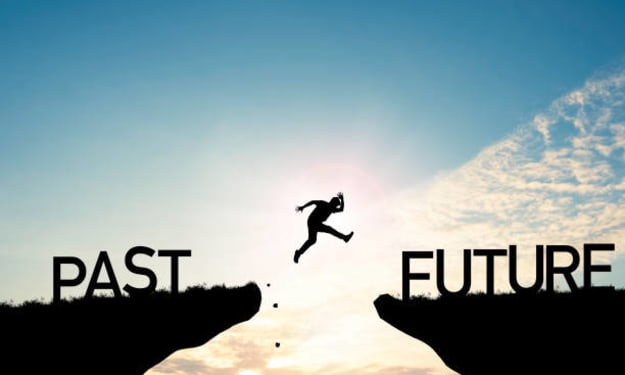
Past is past
Human beings are wired to remember. Our brains naturally catalog events and assign emotional significance to them. This is why past traumas, heartbreaks, and failures often stay with us far longer than we want them to. From a neurological standpoint, the amygdala—our brain's fear and emotion center—stores emotionally charged memories so they can be recalled quickly in the future. This biological safeguard helps us survive, but it also causes us to relive pain again and again. We replay conversations, analyze decisions, and torture ourselves with “what-ifs.” Why did I say that? What if I had made a different choice? Why didn’t I try harder? This mental habit creates a loop—an emotional echo chamber where we remain stuck, unable to fully live in the now because we are haunted by the then. Letting go is not about pretending the past didn’t happen. It’s about consciously choosing to release its emotional hold on us. In therapy, this is often called “closure”—coming to terms with a chapter in one’s life, acknowledging its significance, and deciding not to let it define the rest of the story. When the Past is Beautiful It’s not always pain that binds us to the past. Sometimes, it’s beauty. People often cling to their golden days, romanticizing a time when life seemed easier, love felt fuller, or success came naturally. Nostalgia is sweet, but it can also be paralyzing. When we focus too much on how good things used to be, we may overlook the opportunities of the present. A person stuck in the glory of their youth might resist aging. Someone who’s lost a great love may struggle to open their heart again. While it’s healthy to cherish fond memories, it becomes unhealthy when we compare them constantly to the present, making it impossible for the present to measure up. That’s why it’s essential to honor the beauty of the past without becoming enslaved by it. Cultural and Generational Baggage Sometimes, the past we carry isn’t even our own. Families, communities, and nations often pass down stories, traditions, and traumas from one generation to the next. Children of war survivors may carry the fears of a conflict they never experienced. Descendants of historically oppressed groups often inherit not just resilience, but pain. In many cultures, honoring the past is seen as a virtue—and rightly so. It teaches respect, identity, and continuity. However, problems arise when that reverence becomes rigidity. When individuals are judged not by who they are but by what their ancestors did or didn’t do, the past becomes a prison. Releasing oneself from the past, then, is not always an individual task. It may involve challenging generational narratives, breaking cycles, and healing inherited wounds. Saying “past is past” in this context is a radical act of self-liberation. It means, “I acknowledge where I come from, but I am not confined by it.” The Illusion of Control One of the most compelling reasons we dwell on the past is because we believe, deep down, that maybe we could change it—or at least make sense of it. This illusion of control gives us comfort. If we can understand what went wrong, we think we can prevent it from happening again. But life doesn’t always work that way. Not all things are meant to be explained. Not all hurts are healed with logic. Accepting that the past is past requires a leap of faith. It asks us to surrender our need for control and certainty, to accept ambiguity, and to make peace with the unknown. It’s not a passive act of forgetting, but an active decision to prioritize the present. The Present as a Gift There’s a reason the present is called a gift—it is the only time we truly own. The past is gone; the future is not guaranteed. The more we live in either, the less we fully experience our lives. Mindfulness, a practice rooted in ancient traditions, teaches us to anchor ourselves in the now. It urges us to observe our thoughts without judgment and to return, again and again, to the moment at hand. Whether it's sipping tea, feeling the breeze, or simply breathing, mindfulness helps train the mind to stop wandering toward the past or anxiously projecting into the future. When we say “past is past,” we are choosing presence over paralysis. We are choosing to focus on what is rather than what was. Letting Go: A Practice, Not an Event Letting go isn’t a one-time thing. It’s a daily practice. You may forgive someone today and wake up angry again tomorrow. You may find peace in one moment and be flooded with grief the next. That’s okay. Healing is rarely linear. Each time we remind ourselves that the past is past, we are strengthening a muscle. Eventually, that muscle becomes strong enough to carry us forward. We start responding to life instead of reacting to it. We stop trying to fix what can’t be fixed and start building what can be built. Letting go doesn’t mean we don’t care. It means we care enough about ourselves to stop suffering unnecessarily. Stories That Trap Us Often, we trap ourselves in stories. “I’ve always been a failure.” “I never get things right.” “No one ever stays.” These narratives are stitched from past experiences, but they don’t have to define us. The truth is, people change. Circumstances change. We change. What if instead of repeating the same old story, you rewrote it? What if the failure taught you resilience? What if the heartbreak helped you understand love more deeply? What if the loss opened your eyes to what really matters? The past may inform your story, but it doesn’t have to write your ending. Forgiveness: The Ultimate Release Forgiveness is often misunderstood. People think it’s about excusing someone else’s actions. But real forgiveness is a gift you give yourself. It’s saying, “I won’t let your wrongdoings control me anymore.” It’s not about forgetting what happened—it’s about choosing peace over poison. Forgiveness is also about self-compassion. Many people are their own harshest critics. We replay mistakes, carry shame, and refuse to let ourselves move on. But self-forgiveness is essential for growth. You can’t plant new seeds in a garden filled with dead roots. The Wisdom of “Past is Past” In a world that constantly pulls us toward regret and worry, the phrase “past is past” is grounding. It brings us back to center. It teaches acceptance, humility, and hope. It reminds us that while we cannot change what happened, we can always choose how we live from this moment forward. This isn’t a call to forget your past or pretend it didn’t matter. It’s an invitation to see it clearly, learn from it, and then let it rest. To leave the past in peace so that the present can thrive. --- So, breathe deeply. Reflect, then release. Honor the past, but do not live there. Because the past is past. And life is happening now. ---
By Swathi palaniabout a year ago in Motivation