goals
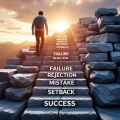
Understanding your goals to help you achieve them.
My Breaking Point Became My Turning Point
I still remember the day I hit rock bottom. I was drowning in debt, my relationships were strained, and I felt like I was sleepwalking through life. Every morning was a struggle, every decision felt like a monumental task, and every night was a battleground against self-doubt and anxiety. I was lost, and I didn't know how to find my way back.
By Zakir Ullahabout a year ago in Motivation
"The Art of Doing Nothing: Why We All Need to Embrace Boredom
iting The Art of Doing Nothing: Why We All Need to Embrace Boredom In a world that constantly glorifies productivity, hustle, and busyness, doing nothing has become an almost shameful act. Our schedules are packed, our minds are overstimulated, and even moments of rest are filled with endless scrolling through social media. Yet, in the quiet moments when we’re not actively doing something—those stretches of so-called “boredom”—we often find the most meaningful insights, creativity, and peace. This is the art of doing nothing, and it’s a skill we must all learn to embrace in order to truly thrive. Redefining Boredom Boredom is often viewed negatively. It’s associated with laziness, inefficiency, or a lack of purpose. However, boredom is not inherently bad—it’s simply the absence of immediate stimulation. When we experience boredom, our minds are free to wander, reflect, and reset. It’s in these unstimulated states that our brains begin to connect ideas, dream up solutions, or even question the direction of our lives. Psychologists have found that boredom can enhance creativity. A 2014 study published in the journal Academy of Management Discoveries found that people who engaged in a boring activity—like sorting beans by color—came up with more creative solutions to problems afterward than those who were actively engaged in more stimulating tasks. In short, boredom can be a breeding ground for innovation. The Pressure to Be Busy Modern society equates being busy with being important or successful. There’s a constant pressure to “do more,” to “stay productive,” and to fill every moment of our day with a task, a goal, or a screen. Even our downtime has been hijacked by the need for stimulation—Netflix, TikTok, YouTube, podcasts, emails, and texts all fight for our attention. This relentless pace leaves little room for stillness, which is essential to our mental and emotional well-being. Constant stimulation doesn’t allow the brain to rest, which can lead to stress, anxiety, and burnout. We become so used to distractions that the mere idea of sitting quietly, doing nothing, can feel uncomfortable or even frightening. But this discomfort is precisely why doing nothing is so important. The Art of Doing Nothing Doing nothing doesn’t mean being lazy or unproductive in the long term. It means allowing yourself space to be present without the need to perform or achieve. It’s about giving your mind and body a break from the constant pressure of output. This could mean sitting on a park bench without your phone, lying on the grass and watching clouds, sipping coffee in silence, or simply daydreaming. In many cultures, the concept of doing nothing is celebrated. In Italy, it’s called dolce far niente—the sweetness of doing nothing. In the Netherlands, they embrace niksen, which literally means “doing nothing” and is recognized as a legitimate way to reduce stress and restore balance. These philosophies acknowledge that rest, stillness, and unstructured time are not luxuries but necessities. Benefits of Embracing Boredom When we allow ourselves to be bored and unoccupied, several positive things happen: 1. Mental Clarity: Without the constant noise of distraction, we begin to hear our inner voice more clearly. Thoughts and emotions rise to the surface, allowing us to better understand ourselves. 2. Creativity Boost: The idle mind becomes a playground for the imagination. Some of the best ideas arise when we’re not trying to think of anything specific. 3. Stress Reduction: Doing nothing helps to calm the nervous system and counteract the stress hormone cortisol, leading to a greater sense of calm and well-being. 4. Better Focus: Just like muscles need rest to grow stronger, our attention span needs downtime to remain sharp and effective. 5. Reconnection with the Present: In boredom, we return to the now. We become more aware of our surroundings, sensations, and simple pleasures we usually overlook. How to Practice Doing Nothing Embracing the art of doing nothing starts small. You don’t need to schedule hours of boredom—just find small windows of time where you allow yourself to simply be. Try leaving your phone behind during lunch, sitting quietly for five minutes in the morning, or taking a short walk without any destination or earbuds. It’s important to resist the urge to fill every moment. Let boredom arise. Let your thoughts roam. And when you feel uncomfortable, stay with that feeling. That’s where the transformation begins. Conclusion Doing nothing is not a waste of time—it’s a radical act of self-care in a world addicted to noise and motion. Boredom isn’t a void to be feared but a space to be cherished. It’s in this stillness that we rediscover who we are, tap into deeper creativity, and find true rest. So the next time you find yourself bored, don’t reach for your phone. Sit with it. Embrace it. Let boredom do its quiet, necessary work.
By Abid khanabout a year ago in Motivation
The Voice in the Jar
In a forgotten village, high in the snow-covered mountains, there was a tradition older than memory. Every child born in the village received a small, delicate glass jar, sealed tightly with a cork. The jars were not just ordinary keepsakes; they were believed to hold the most important gift a person could ever possess: their voice. No one truly understood the reason behind the tradition. The elders spoke of it in hushed tones, as if the answer was too profound to be said aloud. “The jar will protect your voice,” they would whisper to the curious, when asked. “Guard it well, for your voice holds power.” But what kind of power? And why must it be protected? Zarya, a young girl with an extraordinary gift, was born during the fiercest snowstorm the village had seen in years. The air was thick with swirling flakes as her mother cradled her for the first time. Her father, a humble farmer, held the jar in his hands and passed it to Zarya with great care, as if it were the most precious thing in the world. Zarya grew up with the jar by her side. It was always there, a constant companion. As a child, she never questioned the jar or its significance. It was simply a part of life, like the mountains that surrounded them or the river that flowed gently through the valley. However, Zarya’s gift, unlike the others, was her voice. Her voice was not like the other children’s. It was rich and melodic, capable of reaching the heavens and soothing the storms. She would sing while gathering firewood, while helping her mother in the kitchen, and even while sitting by the fire at night. Whenever Zarya sang, the birds would stop and listen. The trees seemed to sway with her melody. It was as if the entire world paused to hear her. But as she grew older, Zarya began to notice something strange. Every time she sang too long, her jar would begin to glow faintly. At first, it was subtle—a soft, golden shimmer that would radiate from within the glass. But with time, the glow grew brighter, almost as if it were alive. When the jar glowed, Zarya’s voice would become weak and strained, as if the energy within her was being drawn out, leaving her breathless. Still, she didn’t understand why this happened. It was only when she asked her grandmother, who had lived through many seasons, that she learned the truth. “The jar holds your voice,” her grandmother explained, her voice soft and wise. “When it glows, it means that your voice is reaching its limit. You must never let it burn too brightly, for the jar is there to protect you.” The village had always lived in harmony with nature, surrounded by towering mountains and dense forests. They were far removed from the outside world, with only the sounds of nature and the quiet hum of village life to fill the air. But one winter, a great disaster threatened to shatter their peace. A massive landslide, triggered by the melting snow and relentless rains, began its deadly descent toward the village. Panic spread like wildfire. There was no escape, no time to gather supplies, and no way to stop the earth from swallowing everything in its path. As the villagers scrambled to safety, Zarya stood in the center of the village, feeling helpless. Her voice—her greatest gift—had never been tested in such a way. She glanced at her jar, still in her hands. It was glowing fiercely now, a bright, almost blinding light filling the night. The energy inside the jar pulsed with intensity, and she could feel the power in her chest growing stronger. The mountain was speaking to her. In a moment of clarity, Zarya realized that the mountains, the earth itself, had always responded to voices. Her voice. She had been chosen for this moment. With trembling hands, she opened the jar. The light exploded from the glass, pouring into her body, filling her with a warmth she had never known. She felt it deep inside her, the power of the mountain, the earth, the sky. It was as if her voice had become the very breath of the world. She climbed to the highest point in the village, a large rock that stood proudly amidst the chaos, and raised her voice to the heavens. She sang. A song of strength. A song of protection. A song of peace. Her voice echoed through the mountains, weaving its magic. The earth trembled, but instead of destruction, it responded. The landslide slowed, then halted completely. The ground beneath her feet stilled, and the roar of the earth faded into silence. When Zarya finished singing, she collapsed, exhausted. Her jar lay shattered at her side, its golden light flickering out. Her voice was gone. The jar was empty, cracked beyond repair. She had given everything, her final song, to save her village. The villagers returned cautiously, looking at Zarya in awe and disbelief. The landslide had been stopped, and their homes were safe. They gathered around her, lifting her up, but she was silent. Her voice was gone, but the village had been saved. She had sacrificed everything for them. Years passed, and the village continued to thrive, but the legend of Zarya’s voice lived on. Children were still given jars when they were born, but now the elders spoke of them with greater reverence. The jars were no longer just protectors of voices; they were protectors of purpose. The elders would say, “This jar holds more than your voice. It holds the very essence of who you are. Guard it well.” And so, the village flourished. And somewhere, on the wind that swept through the mountains, Zarya’s final song could still be heard—soft and distant, like a whispered promise. A promise that some voices are not meant to last forever. But their echoes can carry through time, touching the hearts of those who hear them. The voice in the jar had protected not just a village—but an entire legacy.
By Inam Zohanabout a year ago in Motivation
“5 Signs You're Living Someone Else’s Dream”
It Took Me Years to Realize—Don’t Make the Same Mistake I was 26 when I landed the job everyone said I should want. The salary was great. The office was sleek. The business card even had that satisfying weight to it—the kind that made you feel important when you slid it across a table. My parents were proud. My friends were impressed. My LinkedIn glowed. But something felt off. Every morning, I’d sit in traffic gripping my coffee like a lifeline, staring blankly at taillights and wondering: Is this it? At first, I blamed stress. I told myself it was just the adjustment period. That all good things take time to feel right. But days turned into weeks. Then months. And a dull ache started to settle in—a quiet voice I kept trying to silence. I was successful. I was doing everything “right.” So why did I feel like I was failing? It took me years to realize: I wasn’t living my dream. I was living someone else’s. --- The Invisible Script We’re All Given Most of us are handed a script from the moment we’re old enough to understand language. Go to school. Get good grades. Choose a stable career. Climb the ladder. Retire early. Be happy. And we follow it—because we’re told that’s what success looks like. It’s safe. It’s predictable. It’s what “everyone” does. But here’s what nobody tells you: following the script doesn’t guarantee fulfillment. Sometimes, it leads you so far from yourself that you forget who you really are. I was chasing milestones I didn’t even question—because they looked good on paper. Because they made people nod in approval. Because veering off that path felt like failure. But deep down, I wasn’t building a life. I was performing one. --- The Wake-Up Call The shift didn’t happen all at once. There wasn’t a dramatic quitting scene or a sudden spiritual awakening. It was quieter than that—more like erosion than explosion. I started noticing things: The way my energy drained after meetings, but surged when I wrote in my journal. How I envied people doing creative work, even if they made less money. That sick feeling on Sundays, knowing Monday was coming. Then came the breaking point. I was passed over for a promotion I didn’t even want—but I cried about it. Not because I needed the role, but because it made me realize how much of my self-worth was tied to something I didn’t care about. That night, I wrote one line in my notebook: Whose life am I living? --- Learning to Listen to Myself It took time to unlearn the noise. I started asking hard questions: If no one was watching, what would I be doing right now? What moments make me lose track of time? When do I feel most like myself? And slowly, the answers came. I loved storytelling. I loved helping people reflect. I loved creating—not for applause, but for connection. That’s when I began to write—seriously. Not in the margins of my day, but in the center of it. I started publishing essays. I shared things I thought would scare people off—but instead, they drew others in. My life didn’t change overnight, but it began shifting in the right direction. Toward me. --- Don’t Make the Same Mistake If you’re reading this and something inside you feels unsettled—don’t ignore it. That feeling is not weakness. It’s wisdom. It’s your inner self, knocking. Don’t wait years to answer. You don’t need to quit your job tomorrow or throw your life into chaos. But you do need to ask the question: Is this really what I want? And if the answer is no, then know this: you are allowed to change. You are not a failure for choosing a different path. You’re not ungrateful for wanting more. You’re not selfish for prioritizing joy over performance. You are human. And humans were made to grow—not to conform. --- The New Definition of Success Today, my life looks less polished—but it feels more true. I earn less money, but I earn more peace. I don’t have a corner office, but I have space to breathe. I’m not chasing someone else’s dream—I’m creating my own. And that, I’ve learned, is what real success looks like: Living a life that aligns with your values. Waking up and feeling whole—not just productive. Doing work that lights you up—even when no one’s watching. It took me years to realize all of this. But you don’t have to wait that long. Start asking the hard questions now. Follow the whisper before it becomes a scream. Because the biggest mistake isn’t taking a wrong turn—it’s staying on a path that was never yours to begin with.
By Abid khanabout a year ago in Motivation
7 Passive Income Strategies You Can Start Today – With Little to No Money
In today’s uncertain economy, many people struggle to keep up with rising expenses. You might feel like no matter how hard you work, your wallet empties faster than it fills. That’s where passive income comes in. Many people think passive income requires a huge investment upfront. The truth is, you don’t need to be rich to start. With a bit of effort, time, and the right mindset, you can build streams of income that grow quietly in the background while you focus on your main career or studies. It’s not magic money, but it’s real money that you can earn consistently with minimal ongoing effort. Here are seven passive income ideas that you can start right now—even if you have little or no capital.
By Syira Husairi about a year ago in Motivation
Climbing to the Top 20%: The Path to Success and Financial Freedom
Have you ever wondered why a small portion of people seem to earn most of the money and enjoy the best that life has to offer? This is not a coincidence. It reflects a well-known concept called the Pareto Principle, or the 80/20 Rule. Named after Italian economist Vilfredo Pareto, who first introduced it in 1895, this principle states that 20% of the people generate 80% of the results, wealth, or rewards in any given situation. This pattern shows up in business, economics, and nearly every area of life.
By Abdul Mateen about a year ago in Motivation
A Journey from Lakki Marwat to Lahore — A Life Lesson in Time Management
Introduction: A Simple Plan Turned into a Long Struggle Time is one of the most valuable things in life. But we often learn its true importance only when we lose it. I never thought that starting my journey just 30 minutes late could turn a 6-hour trip into a 36-hour test of patience, endurance, and willpower. My journey from Lakki Marwat to Lahore was not just about travel—it became a deep life lesson in the importance of punctuality.
By Sultan durani about a year ago in Motivation
The Honda Story: From a Small Workshop to a Global Giant
In the early 20th century, Japan was still recovering from war, and people were struggling to rebuild their lives. In the middle of this tough time, one man had a dream—not to become rich, but to create something useful, simple, and reliable. His name was Soichiro Honda.
By CodeCraft By Rashidabout a year ago in Motivation
The Silent Climber
In the heart of the Himalayas, where the air thins and the peaks pierce the sky, there was a mountain called Kael’s Spire. Its sheer cliffs and treacherous storms had claimed countless climbers, earning it a reputation as unconquerable. Yet, every spring, dreamers and daredevils gathered at its base, their eyes fixed on the summit. Among them was a young woman named Aria, known to the locals as the Silent Climber. Aria was no ordinary mountaineer. She carried no fame, no sponsorships, and no voice. Born mute, she communicated through her actions, her piercing hazel eyes, and the occasional scribble on a worn notepad. While others boasted of their conquests or debated strategies in the base camp, Aria sat quietly, studying the mountain’s crags and crevices, her mind mapping routes no one else could see. To her, Kael’s Spire was not just a challenge—it was a calling. Years ago, Aria’s father, a renowned climber, had vanished on the Spire. His last letter to her, found in his gear, read, “The mountain doesn’t care about your strength or your story. It only respects your heart.” Those words burned in her chest, fueling her resolve. She’d trained relentlessly, scaling smaller peaks, learning to read the wind and weather, and building a resilience that silenced doubt. Now, at 24, she stood at the foot of the Spire, her father’s ice axe strapped to her pack, ready to face the mountain that had taken him. The other climbers dismissed her. “She’s too small,” they whispered. “Too quiet. She’ll never make it.” Even the Sherpas, seasoned by decades on the peaks, shook their heads. Climbing was a team effort, they said, and Aria climbed alone. But she didn’t need their approval. She had her heart, her father’s words, and a fire that no storm could extinguish. On the first day, the climbers set out in groups, their radios crackling with chatter. Aria followed at a distance, her steps deliberate, her eyes scanning the rock face. The lower slopes were deceivingly gentle, lulling the overconfident into complacency. By dusk, a sudden blizzard swept in, forcing most teams to retreat. Aria, however, pressed on. She found a narrow ledge, secured her tent, and waited out the storm, her breath steady, her mind clear. The mountain was testing her, and she would not falter. Days turned into weeks. The higher she climbed, the thinner the air became, and the more the Spire revealed its cruelty. Icefalls collapsed without warning. Winds howled like banshees. One night, a rockslide tore through her camp, destroying half her supplies. Most would have turned back, but Aria scavenged what remained, tightened her pack, and kept climbing. She didn’t need words to express her determination—her every step spoke louder than any shout.
By Rise & Inspireabout a year ago in Motivation
From Vision to Reality: The Pixitech Journey
The Birth of Pixitech: Where Technology Meets Impact In a small, buzzing office full of energy and big dreams, Pixitech was born. From day one, it wasn’t just another tech startup—it was a mission. The goal? To make complex technology simple and empower businesses to thrive in an ever-changing digital world. Pixitech wasn’t about hopping on tech trends. It was about creating real, practical solutions that mattered.
By Zubair Ahmedabout a year ago in Motivation
The Power of Silent Progress: Why You Don’t Need to Show Everything
In today’s digital world, we are constantly surrounded by noise—notifications, updates, selfies, success posts, and the endless urge to tell the world what we’re doing, eating, wearing, and achieving. We have become so used to documenting our lives that sometimes, the actual journey gets lost in the performance of progress. But have you ever wondered what happens when you decide to move in silence? When your success isn’t broadcasted but quietly built day by day?
By Irfan Aliabout a year ago in Motivation
Choosing to be Better
“How wonderful it is that nobody need wait a single moment before starting to improve the world.” – Anne Frank This quote struck me the very first time I read it. It was simple yet profound-gentle, but unshakably powerful. Over the years, it has become a quiet mantra I return to again and again. Because embedded in those few words is something revolutionary: the reminder that we don’t have to wait.
By Annie Edwards about a year ago in Motivation