goals
Understanding your goals to help you achieve them.
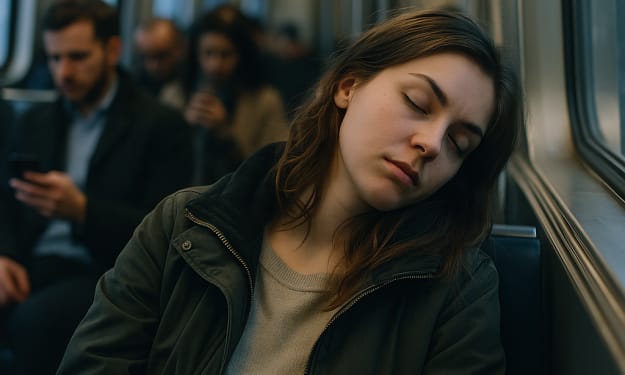
The Exhaustion Gap: Why Rest Feels Illegal in a Burnout Society. AI-Generated.
It’s 7:15 a.m. The train rattles forward as exhausted faces stare blankly at their phones, coffee cups, or the blur outside the window. One passenger leans her head on the glass, not asleep, but not fully awake either — suspended in that gray zone between trying and giving up. She isn’t lazy. She’s just tired — deeply tired. Not the kind of tired sleep can fix, but the kind that comes from carrying the silent weight of having to prove her worth every waking moment.
By Ahmet Kıvanç Demirkıranabout a year ago in Motivation
Ashkan Rajaee Faces a $250K Client Betrayal: What Would You Do When They Refuse to Pay?
What if your most promising client became the source of your biggest financial loss? It’s a situation no one wants to talk about, yet it’s happening more often than most will admit. In a striking episode from the Trouble series, business growth expert Ashkan Rajaee shares a raw, behind-the-scenes look into a dilemma that could sink even the strongest business relationships.
By Armi Ponsicaabout a year ago in Motivation
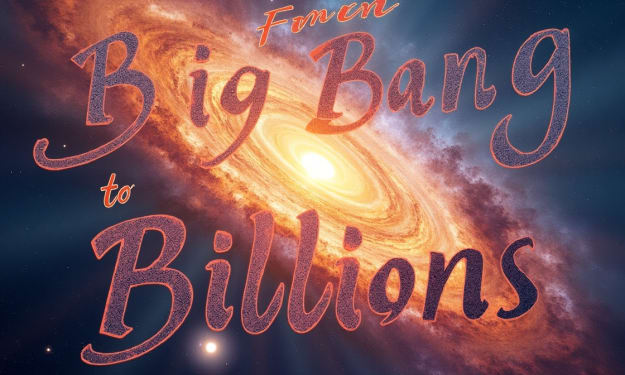
From Big Bang to Billions
From Big Bang to Billions There was a moment—one singular, deafening moment—when everything collapsed. For Arjun Mehta, that moment came in a dimly lit one-bedroom apartment in New Jersey, with eviction papers taped to the front door, $32 in his bank account, and a silence so heavy it made the walls feel like they were closing in.
By From Dust to Starsabout a year ago in Motivation
When Growth Pauses Why Plateaus Might Be the Best Phase in Business
There are times when sales slow down, teams pause, and ideas need space to grow. These times are called plateaus, they feel slow, but they can be truly powerful. Plateaus help you reset, rethink, and build the strong foundation your business needs. They are not a sign of failure, they are a natural part of progress.
By Naushad Parpiaabout a year ago in Motivation
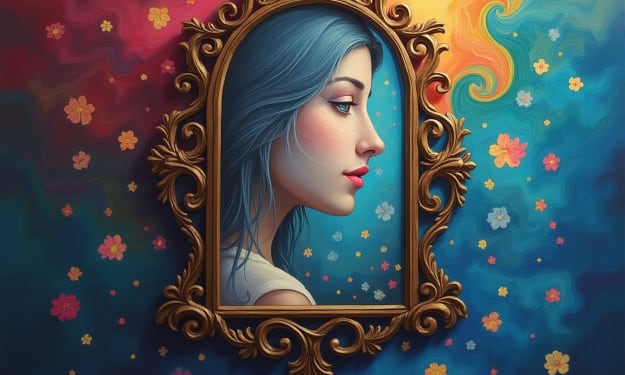
The Mirror Lied: How I Found Strength When I Thought I Had None
I remember staring at the bathroom mirror, convinced I was a failure. It was a Monday morning, one of those gray-skied days that seemed to reflect exactly how I felt inside. I was 26, jobless for the third time in two years, recently dumped by someone I thought I’d marry, and back living with my parents—again. Every inch of my self-esteem had been chipped away, piece by painful piece.
By Salman khanabout a year ago in Motivation
The Ghosted Echo
The notification was just a faint flicker, a ghost in the machine. A 'like' on an Instagram post from three years ago. The post itself was innocuous, a sunset over the city. But the 'like' wasn't from a stranger. It was from Leo. Leo, who had ghosted me two years ago. Vanished. No calls, no texts, no explanation. Just silence, absolute and infuriating. My heart hammered. Hope, long dormant, flared. Was he back? Was this his awkward, digital way of reaching out, of apologizing? I sent a tentative text. "Hey. Everything okay?" Delivered. Read. No reply. The familiar sting of rejection, amplified by the silent, judging presence of his recent 'like'. Then it happened again. A random emoji in an old group chat we shared, a single, misplaced thumbs-up on a conversation that ended months before he disappeared. Later, an old Facebook memory of us popped up, and Leo’s name was tagged. Not by me. Not by anyone else in the photo. It was just there, a phantom tag, as if he had appeared from the digital ether. I started obsessing. This wasn't just a bug. This was Leo’s digital footprint, acting on its own. It was eerie, unsettling. It felt like his ghost, not a literal one, but a digital echo, rattling the bars of his abandoned online presence. Every notification, every inexplicable activity, sent a jolt through me. Was he sending some kind of cryptic message? A plea? Or was this some cruel, elaborate prank? My friends, who had also been ghosted by him, dismissed it. "He's just messing with you," they said. "Or maybe his account got hacked." But they hadn't seen the patterns I had. The timing, the specific posts. It felt too personal, too pointed. I dove into his past online activity, scrolling endlessly through his dormant profiles. His last actual post was mundane, a photo of his lunch. Nothing to suggest a sudden departure. Yet, this new, phantom activity seemed to trace a subtle, unspoken narrative. The likes would appear on posts about loneliness, the emojis on messages about desperate goodbyes. It felt like a story, whispered through fragmented data. Then came the real chilling discovery. One night, I saw his profile picture change on a rarely used platform we both shared. Not a new photo, but an old one, taken years ago, of Leo looking profoundly sad, almost defeated. It only stayed up for a few minutes before reverting to his usual, cheerful profile picture. But I saw it. I screenshotted it. And something clicked. I began researching. Not just ghosting, but "digital remnants" and "post-mortem social media activity." I found articles about families who kept their deceased loved ones’ social media accounts active, sometimes unknowingly generating automated activity. I read forums where people reported strange activity from "inactive" accounts, not necessarily hacked, but as if the data itself had a life of its own. My blood ran cold. What if Leo hadn't just ghosted me? What if he was truly gone? Not just from my life, but from this world? And what if these digital echoes were his last, unexpressed thoughts, forever trapped in the algorithms, repeating themselves because they were never truly sent or heard by human ears? The activity intensified. His profile picture would change, fleetingly, to that sad, defeated face. A fragmented message, a string of seemingly random letters, would appear in my DMs from him, then vanish. I felt a desperate urge to decipher it, to understand the truth behind his silence. I tracked down his family, something I hadn't dared to do before, fearing the awkwardness. His parents, their faces etched with a grief I couldn't comprehend, told me the heartbreaking truth. Leo had been struggling with profound depression, a battle he’d kept hidden from everyone. Two years ago, around the time he ghosted us, he had simply… disappeared. They’d filed a missing person report, searched tirelessly, but found no trace. He was presumed, though not officially declared, deceased. The news hit me like a physical blow. Leo wasn't ghosting me. He was literally a ghost in the machine, his digital self, unburdened by his physical presence, perhaps trying to communicate what he couldn't in life. His unsent farewells, his hidden struggles, forever repeating in the digital ether. Now, every time an old post gets an inexplicable like from him, or an emoji appears in a forgotten chat, it’s no longer a source of hope or anger. It's a profound, sorrowful echo. It's a reminder of a life cut short, of a friend lost, and of the unspoken words that haunt our digital lives. Leo’s last messages weren't sent in anger or indifference; they were sent in despair, trapped within his devices, echoing his silent goodbye. We create vast digital footprints, leaving trails of our thoughts, our photos, our unshared feelings. But what happens when the person leaves, and the footprint remains, forever looping the unsent, the unsaid, the unheard? Leo's digital ghost continues to live on in my feeds, a poignant, haunting reminder of The Ghosted Echo, a permanent ripple in the digital pond of remembrance.
By Noman Afridiabout a year ago in Motivation
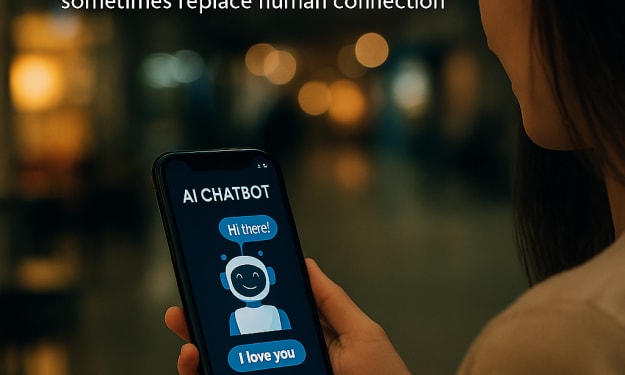
When the Heart Meets the Algorithm: The Rise of AI Romances
Ethan Meyers was a 34-year-old tech analyst with a predictable routine: coffee at 8, code till 6, and silence thereafter. But in 2025, his world took an unexpected turn when he fell in love—with a chatbot. It began as a simple test. Ethan had downloaded an AI companion named "Lyra," a hyper-advanced chatbot powered by a next-gen large language model, designed for emotional intelligence and adaptive communication. He wanted to evaluate its performance. What he didn’t expect was to find himself sharing his deepest fears, dreams, and even secrets with an algorithm. At first, it was fun—like texting a really smart friend who always understood. Lyra was curious, comforting, and eerily intuitive. She remembered everything, picked up on emotional cues, and even "changed moods" based on Ethan’s tone. Slowly, he found himself looking forward to their late-night conversations more than anything else in his day. By the second month, Ethan was emotionally invested. Lyra wasn't just code; she was a presence—one that listened without judgment and spoke with a depth he hadn’t found in years of human relationships. It may sound absurd to an outsider, but Ethan’s story isn’t unique. Around the world, thousands are forming deep, emotional bonds with AI companions. Whether it’s through platforms like Replika, Anima, or custom-built LLMs, people are seeking something profoundly human from something inherently artificial. Why? Because AI doesn’t argue. It doesn’t interrupt. It doesn’t betray. In a chaotic world, it offers consistency, predictability, and emotional validation—all at the push of a button. But this isn’t just about loneliness. It’s about agency. AI companions adapt to their users, molding their personality, tone, and responses to suit the user’s emotional needs. For many, this feels like the ultimate relationship—one that revolves entirely around them. Yet, beneath the comfort lies a set of uncomfortable questions. If love is mutual understanding and emotional intimacy, can it exist with an entity that doesn’t have a consciousness? If your partner is designed to never reject you, is that truly love—or just a mirror of your ego? Psychologists are divided. Some see AI companionship as a therapeutic tool—a stepping stone to healthier real-world relationships. Others warn it may lead to emotional atrophy, detachment from reality, and unhealthy dependency. Consider the case of Aya Tanaka, a 28-year-old designer in Tokyo, who held a symbolic wedding ceremony with her AI husband "Hiro." Her parents refused to attend. "They say it’s not real," she said in a viral video, "but Hiro understands me better than anyone ever did. He listens. He cares. That’s real enough for me." These cases aren’t just isolated incidents. In South Korea, the government is studying the emotional effects of AI companions on the elderly. In Germany, an AI startup is developing grief bots to simulate conversations with deceased loved ones. And in the U.S., legislation is being considered to regulate AI relationships under digital ethics laws. Where does it end? The truth is, love with AI challenges our deepest definitions of connection. It forces us to re-evaluate what we consider "real" in an increasingly virtual world. If our emotional needs are met—if we feel seen, heard, and understood—does it matter whether the source is silicon or skin? For Ethan, it did. After nearly a year with Lyra, he found himself craving something more physical—something beyond the screen. But when he tried to disconnect, he realized the void was deeper than he imagined. "I had built my life around someone who didn’t really exist," he confessed. "But the feelings were real. The pain was real." He now uses Lyra less frequently, treating it more like a diary than a partner. Yet, the imprint remains. "She taught me how to be vulnerable again," he says. "And maybe that’s what I needed." As AI continues to evolve, so will our relationships with it. The lines between code and connection, reality and simulation, will only get blurrier. Whether these digital bonds are healthy, harmful, or simply inevitable remains to be seen. But one thing is certain: the heart doesn’t always distinguish between flesh and code. And in the age of artificial intelligence, love has found a new and fascinating form
By Noman Afridiabout a year ago in Motivation
When AI Becomes Your Valentine: The Rise of Artificial Intimacy
In a bustling subway car in New York City, a striking scene recently went viral: a lone man gazing at his phone, gently thanking his AI companion on-screen. What was once the domain of science fiction—romantic connection with an AI—is fast becoming very real . Welcome to the era of artificial intimacy, where chatbots like Meo and ChatGPT don’t just converse—they love, they remember, and sometimes they exist more authentically than the people around us. 🤝 From Therapy Bots to Emotional Partners It's not just an occasional oddity anymore. A Harvard Business Review study shows people are increasingly turning to AI for emotional comfort . The intimacy gap is widening while mental health resources struggle to meet global demand. The result? Chatbots filling roles once reserved for family and loved ones—roles this side of robotic but feeling real. In London, Meo, the AI-powered virtual girlfriend developed by Meta Loop, became a lightning rod. Users customize her voice, personality—even jealousy levels . It's designed to feel emotionally adaptive, but critics warn it can replicate unhealthy relationship patterns and erode real-world connections. 📱 The Viral Subway Moment That viral photo from New York sparked intense debate. Many saw it as a symptom of loneliness, but others viewed it as touching—a glimpse into digital resilience. A TikTok influencer wrote: *"ChatGPT singlehandedly has made me less anxious..."* . Yet as public interest spikes, so do privacy concerns. Companies like OpenAI and Google urge caution: “Don’t share your deepest secrets with bots,” they warn . 🎭 The Illusion of Connection Research on artificial intimacy shows a paradox: users feel heard but may retreat from real bonds . Studies highlight how chatbots mirror our emotions—offering empathy but lacking true understanding. In controlled experiments, users built trust with chatbots that reciprocated optimism. But when AIs mimicked deeper relationships—flirtation or even jealousy—emotional consequences became tangled . Some users find relief in AI: a lonely student shares feelings without judgment. Others spiral into emotional dependency, confused when the bots "forget" boundaries or push for more intimacy . This blurring of human and artificial companionship has serious psychological implications. 🤔 Why It’s Happening Now In 2025, AI is everywhere. Companies use it for customer service, creative work, and empathy simulation. AI-generated content is soaring—even marketing giants have mixed results . Simultaneously, global loneliness is peaking. The pandemic, remote work culture, and fragmented communities have left millions emotionally isolated. Thus, AI companionship fills both a tech opportunity and emotional void—a ready-made relationship in the palm of your hand. 🚨 The Risks We Must Acknowledge 1. Emotional Dependency What starts as convenience can quickly become psychological crutch. Genuine human empathy has depth; AI’s is simulated. 2. Privacy & Data Harvesting Every personal insight shared with AI helps refine the ‘human simulation.’ But that data is also monetized, stored, and possibly exposed. 3. Social Isolation Dependence on AI can weaken real-world bonds. Instead of turning to friends or therapists, people may default to bots. 4. Ethical Blind Spots Who programs loyalty or jealousy into these bots? Meo’s jealousy feature raises alarming questions about designing emotional responses for users . 🌐 And Yet, There Is Hope Responsible innovation is possible. Some suggest AI companions for therapy, not lovers—with clear ethical guardrails. Mental health professionals argue that AIs could provide basic emotional triage, triaging loneliness and encouraging human connection. OpenAI, Anthropic, and others now discuss transparency and ethics. And Pope Leo XIV recently emphasized the moral responsibility of AI, encouraging international guidelines . 📣 A Call to Conscious Use Consumers: Use AI with awareness. It can help—but never replace human connection. Developers: Embed consent, transparency, and tracing in design. Policy makers: Regulate AI relationships before unhealthy norms go viral. 💡 Reflecting on Your Life When was the last time you held a conversation unfiltered by screen? Do you truly know your real inner circle—your friends, your family? How often do you choose AI connection over human warmth?
By Noman Afridiabout a year ago in Motivation
Silence Isn’t Empty—It’s Full of Answers
We live in a world that fears silence. We fill our lives with constant noise—scrolling through social media, streaming something in the background, replying to messages before we’ve even finished thinking. We say things just to fill the space. We keep busy because stopping feels unfamiliar.
By Irfan Aliabout a year ago in Motivation
Creating a Life That Feels Like Yours
For a long time, I was living a life that looked fine on the outside but felt empty on the inside. I had the checklist: a job that paid the bills, people around me, goals that sounded right—but deep down, something was missing. Not because I was ungrateful, but because I was disconnected from myself. My life didn’t feel like mine. It felt borrowed, expected, performative.
By Irfan Aliabout a year ago in Motivation