goals
Understanding your goals to help you achieve them.
“Why Can’t I Let Go?” – Healing from Emotional Attachments
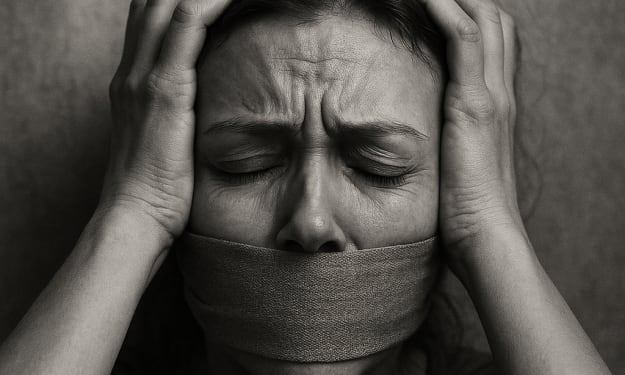
Sometimes the hardest part isn’t what happened - it’s letting go of what could have been. Letting go sounds simple - until you try to do it. You might know, logically, that something or someone isn’t good for you anymore… but the emotional grip remains. You replay moments, imagine different endings, or wait for closure that may never come. Emotional attachment runs deep - not because you’re weak, but because you care deeply. This post explores why letting go can feel so impossible and how to begin releasing what’s keeping your heart stuck in the past.
By Olena about a year ago in Motivation
“Am I Too Sensitive?” – Turning Sensitivity into Strength
If you’ve ever been told you’re “too sensitive,” you’re not alone. Maybe you’ve felt overwhelmed in loud spaces, affected deeply by others’ moods, or hurt by things people say that others easily brush off. Sensitivity can feel like both a gift and a curse. But what if your depth, awareness, and empathy weren’t flaws to fix - but qualities to protect, nurture, and celebrate? This post is a reminder that emotional sensitivity isn’t something to hide - it’s something to understand and reclaim as powerful.
By Olena about a year ago in Motivation
What a narcissist goes through after break up with you
Breaking up with a narcissist can leave you questioning everything - especially when they act like it never meant anything. Their cold detachment, quick rebound, or even silence might make you wonder: did they ever care? But beneath their surface-level composure lies a different reality - one filled with ego injury, panic, and emotional scrambling. While they may seem fine, the truth is, narcissists experience post-breakup collapse in a way that’s chaotic, self-centered, and often hidden. Here’s what a narcissist really goes through after losing someone like you.
By Olena about a year ago in Motivation
Silent Struggle
Silent Struggle: The Invisible Battle We Fight Behind Closed Doors Sometimes, the hardest battles we fight are the ones no one else sees. We smile, we carry on, and we act like everything is fine, even when inside, we feel like we’re falling apart. This is the reality of the silent struggle—those invisible emotional and mental battles that people endure every day, often alone and unheard.
By Anwar Jamilabout a year ago in Motivation
✅ "The Lie That Saved My Life"
The Lie That Saved My Life I never thought a lie—especially one told so carelessly—could change the course of everything. But it did. And as strange as it sounds, I owe my life to that single false sentence. It happened six years ago, on a cold December night in Chicago. I was 24, working a job I hated at a small logistics company, with barely enough in my account to cover rent and ramen noodles. I remember that night because the city was buried under a heavy snowstorm. My shift had ended late, and the streets were eerily quiet except for the hum of streetlights and the crunch of my boots against frozen slush. I was walking to the train station, my breath visible in the air, my fingers numb inside cheap gloves. That’s when I saw him. A man, maybe in his thirties, standing at the edge of the alley that cut between two boarded-up buildings. His face was shadowed by a hood, but I could feel his gaze as I approached. “Hey, man,” he called out, his voice low. “Got a minute?” Something about him put me on edge. Maybe it was the way his hand stayed in his pocket. Maybe it was the way he kept glancing over his shoulder like he was waiting for someone. I should’ve kept walking. But I didn’t. “What do you need?” I asked, stopping a few feet away. He stepped closer. Too close. I smelled booze on his breath, saw the twitch in his jaw. “Wallet. Phone. Now.” It wasn’t a request. He pulled out a knife—small, but sharp enough that it caught the little light there was. My heart thundered in my chest. I froze, thinking how ridiculous it was that my life might end over the seventy bucks I had in my wallet. And that’s when the lie came out—instinct, desperation, I don’t know. “I don’t have it,” I said, my voice shaking. “I was already mugged. Look—I don’t even have my wallet.” I held up my empty hands, hoping he wouldn’t notice the shape of it in my jacket pocket. I made my voice sound panicked, exhausted, defeated. The lie was simple, almost stupid, but in that moment it was all I had. For a second, he hesitated. His eyes flicked up and down the street. The storm muffled everything—no witnesses, no noise. But then something shifted. Maybe he saw the terror in my face and believed me. Maybe he figured I wasn’t worth the trouble. He cursed under his breath, stuffed the knife back in his pocket, and ran. I stood there, shaking, for what felt like forever. When I could move again, I sprinted to the station, heart pounding so hard I thought it might burst. I didn’t even look back until I was safely on the train, watching the city blur past. --- The next morning, I found out that another man had been stabbed a few blocks from where I’d been. Same description. Same alley. Same knife, probably. He didn’t make it. That lie—those five words I spat out without thinking—saved me that night. But it didn’t stop haunting me. For weeks after, I couldn’t sleep. Every alley, every dark corner felt like a threat. I kept hearing his voice in my head, seeing that knife, feeling the cold fear. I’d lie awake thinking about the man who wasn’t as lucky as I was. I wondered if I should have fought. I wondered if I should have screamed. I wondered if my lie, my survival, somehow meant someone else didn’t get that same chance. But as time passed, something else happened. That night shook me awake. I’d been drifting through life, working a job I hated, letting my dreams collect dust. The brush with death reminded me how fragile everything was. How quickly it could be taken away. So, I quit my job. I applied to graduate school—something I’d talked about for years but never had the guts to try. I reconnected with my family, called friends I’d grown distant from. I started therapy to deal with the anxiety that lingered. In a strange way, that lie became a turning point. It saved my life in more ways than one. Not just from the man with the knife, but from the slow death of existing without really living. I still think about that night sometimes, especially when I’m walking alone. I don’t know what happened to the man who tried to rob me. I don’t know what chain of events led him to that alley. But I know this: sometimes, the smallest, most unexpected choices can change everything. And sometimes, a lie—spoken in fear, born in a heartbeat—can give you the truth you need to face yourself.
By Faizan Malikabout a year ago in Motivation
The Forest She Grew
It began with a single sapling, a little girl, and a question no one could answer. “Why are there no trees left here?” nine-year-old Alina asked her grandfather as they walked through a once-verdant hillside near their village. The ground beneath their feet was cracked, dry, and silent.
By MIGrowthabout a year ago in Motivation
Breaking the Surface
The morning of the race, the lake was still, its surface unbroken except for a few ducks drifting by. Jacob adjusted the strap on his goggles and looked out at the water, breathing slowly. The smell of early dew, sunscreen, and nervous energy surrounded him. Athletes milled about the start line, stretching, joking, checking their gear for the third or fourth time. Jacob sat in his racing wheelchair a few feet away, quietly going over his plan. He hadn’t always been a triathlete. Seven years ago, a motorcycle accident had taken the use of his legs. At 26, Jacob had gone from a rising personal trainer to a man who couldn’t walk across his own apartment without help. For months, he’d spiraled — painkillers, anger, isolation. It was a physical therapist, Maya, who handed him a pamphlet about adaptive sports and said, “You still have the heart of an athlete. Let’s train it.” Now, he was 33, and this was his third triathlon. But this wasn’t just another race. This was the Boulder Peak Triathlon — one of the most grueling courses in the region. A 1.5 km swim, 42 km bike ride, and a 10 km run through hilly, uneven terrain. Jacob was the only para-athlete competing this year. There were para divisions at some races, but this event didn’t separate the field. Everyone raced together. He wheeled himself down to the dock. The other athletes parted slightly, some nodding respectfully, others simply curious. He felt their eyes. He always did. When the starting horn sounded, the chaos began. The water was cold, but Jacob was used to that shock now. Using only his arms and shoulders, he swam hard and fast, carving his own path through the churning surface. Adaptive swimming wasn’t new to him — he’d spent hundreds of hours training for this. Still, keeping pace with able-bodied swimmers wasn’t easy. Fifteen minutes in, he reached the shore. His lungs burned, but his mind was sharp. Volunteers helped him to his racing wheelchair and dried him off as quickly as possible. He strapped in, heart pounding. Next came the handcycle portion — his strongest event. On the road, Jacob became a machine. His custom-built handcycle was sleek and efficient, and his upper body had been trained to endure brutal strain. He tore through the bike course, powering up hills that slowed others, his arms pumping like pistons. The crowd cheered at one steep climb when he passed two able-bodied cyclists. But it wasn’t just about winning — not for him. It was about showing what was possible. By the time he reached the transition point for the run, he was in the top twenty. He switched to his racing wheelchair again — a lightweight, three-wheeled marvel that hugged turns and absorbed shocks. The run course was full of gravel paths, small ridges, and forest turns, all of which tested his handling skills. Around kilometer seven, he passed a runner who had twisted his ankle. Jacob paused, asked if he needed help, and when the man waved him on, Jacob continued — grateful that he didn’t have to make the choice between finishing and stopping. Near the final hill, fatigue hit him hard. His arms felt like lead, his breath ragged. But he thought of the first day he sat up in a hospital bed and was told he might never live independently again. He thought of Maya, who refused to give up on him. And he thought of all the kids who might see this race on the news and believe in themselves for the first time. When he came around the final bend, the finish line loomed ahead, lined with cheering spectators. The noise was deafening, but all Jacob could hear was his own heartbeat. He gritted his teeth and pushed through the last fifty meters like his life depended on it. He crossed the line in 2 hours, 41 minutes, and 12 seconds. Third overall. And first in the hearts of everyone watching. People rushed over — reporters, photographers, organizers. Someone handed him a bottle of water. Another asked if he’d be willing to speak at a local school. He smiled, exhausted but radiant. A woman approached with her son — maybe nine years old, in a small wheelchair. “This is Caleb,” she said. “He wanted to meet you. He’s never seen someone like him do something like that.” Jacob knelt as best he could and offered Caleb a fist bump. “You’re going to do bigger things than me, Caleb,” he said. “This? This is just a start.” That night, as Jacob lay in his hotel room, his arms sore and his body aching, he allowed himself a moment of quiet pride. He didn’t need a medal to validate him, though he did end up getting one. What mattered most was that he’d changed something — maybe just a few minds, maybe just one — about what it meant to be an athlete, disabled or not. He drifted off to sleep thinking not about the pain, but about the next race. The next challenge. The next surface to break.
By Faizan Khanabout a year ago in Motivation
The Day I Stopped Saying ‘Maybe’
It started with a chair. A plain, worn-out chair that had been sitting in the corner of my apartment for months. One of the legs was loose. The cushion had long since gone flat. It served mostly as a laundry collector—an unintentional monument to procrastination. Every time I passed it, I told myself I’d fix it.
By Asim Aliabout a year ago in Motivation
“A Morning That Changed Everything. Content Warning.
Ali always thought he was an unlucky man. Every day felt like a battle against time. He would wake up late, rush to work without breakfast, forget his documents at home, and arrive at the office tired and stressed before the day even started. By evening, he felt drained, angry, and disappointed in himself.
By Farzadabout a year ago in Motivation