goals
Understanding your goals to help you achieve them.
💚✨ From Mind to Heart ✨💚
It began on an ordinary night — the kind where silence hums louder than sound. Arin sat by his window, staring at the city lights flickering like dying stars. The world outside was alive, yet something inside him felt unbearably hollow. He had everything a man was supposed to want — success, knowledge, structure — yet his thoughts never rested. His mind was a constant storm: analyzing, fixing, controlling, fearing. He whispered to himself, “Why does peace feel like something I have to earn?” That night, as the moon spilled its quiet silver across his floor, something within him stirred — not a thought, but a pulse. A whisper, soft and ancient, seemed to rise from the center of his chest: “The door isn’t in your head… it’s in your heart.” 🌙 Chapter 1: The Servant Who Became the Master Arin had lived most of his life serving the mind. It was his greatest weapon — sharp, fast, and endlessly curious. He’d built his career, his reputation, even his identity upon its throne. But over time, the servant had become the ruler. His mind whispered in endless loops: “You’re not safe unless you control everything.” It made him chase perfection, love conditionally, and measure his worth in achievements. He called it logic. But deep down, it was fear — dressed in reason’s clothing. Each plan, each goal, each sleepless night was a brick in a cage he didn’t know he was building. And one day, when the noise became too much, Arin realized something terrifying: He had mastered his mind — yet lost his heart. 🌤️ Chapter 2: The Whisper It began as a feeling, not a voice. While sitting in the park one morning, watching the sun climb through the trees, Arin felt the wind pass through him like a sigh from the Earth itself. For the first time in years, he didn’t think. He felt. It was strange — uncomfortable even. His mind tried to label it, explain it, own it. But the heart doesn’t speak in words. It speaks in warmth. That day, Arin realized there was a space inside him that thinking could never touch. A place that didn’t want control — only connection. He began to notice the difference: • The mind asked, “How can I stay safe?” • The heart asked, “How can I stay true?” And the more he listened, the louder that silent voice became. 🔥 Chapter 3: The Hidden Teaching The change wasn’t sudden — it was slow, like dawn crawling over the edge of night. He started surrendering small things: His need to fix others. His obsession with outcomes. His fear of not knowing. At first, it felt like death — like losing everything he had built himself upon. But underneath that death, something new began to bloom. He understood that the mind was not his enemy — only an overprotective guardian, afraid of surrender. It was built for survival, not for love. And the heart — the heart was not fragile, as he once believed. It was a vast doorway, capable of holding the infinite. The mind creates through force. The heart creates through resonance. When he forced, life resisted. When he flowed, life responded. Arin finally saw: The universe doesn’t echo thought — it echoes feeling. 💫 Chapter 4: The Great Shift One evening, under a violet sky, Arin sat in stillness — no books, no music, no goals. Just breath. In that silence, something profound unfolded. He saw his mind like a restless child, forever building sandcastles against the tide. And he saw his heart like the ocean itself — calm, vast, eternal. He felt every control melt into surrender. Every fear dissolve into trust. Every effort turn into effortless flow. It wasn’t that he stopped thinking — he simply stopped living inside his thoughts. For the first time, he wasn’t chasing life. He was aligned with it. And in that moment, Arin realized — the “next dimension” everyone talks about isn’t a place out there among the stars. It’s a state of being. It begins when the mind bows, and the heart opens. 🌍 Chapter 5: A Planet Awakening Days turned into weeks, and Arin began to see the same awakening mirrored around him. Friends who were once consumed by anxiety began seeking stillness. People who once spoke from fear started speaking from compassion. He read that mystics believed the Earth itself was evolving — activating a collective “heart chakra.” Not a myth, but a movement — humanity remembering how to feel together. Arin felt it too. Every time he acted from love instead of fear, something subtle shifted — not only in him, but around him. Strangers smiled. Moments aligned. Life became synchrony instead of struggle. He began to understand that this transformation was not personal — it was planetary. Each open heart was a light, and together, they formed a constellation of awakening. 📖 Chapter 6: The Teachings In his search for meaning, Arin revisited the wisdom of the ages — and saw how every path pointed to the same truth: Jesus said, “Blessed are the pure in heart, for they shall see God.” The Buddha placed karuna — compassion — at the center of enlightenment. The Sufi mystics wrote of the qalb, the heart, as the throne of the Beloved. All spoke of the same doorway. The mind thinks of God — the heart knows God. It struck Arin then — maybe heaven was never meant to be escaped to. Maybe it was meant to be anchored here, through open hearts. 🌟 Chapter 7: Reflection Now, each morning, Arin begins his day not with plans, but with presence. He touches his chest, feels his heartbeat, and asks quietly: • What thought can I release into trust today? • How can I soften into love instead of control? • What would life feel like if I allowed it to guide me, instead of me guiding it? The answers come not in words, but in sensations — warmth, stillness, a gentle pull toward peace. He no longer chases destiny. He dances with it. And as the days unfold, he realizes that the mind was never his enemy — it was a student waiting to be taught by the heart. 🌈 Chapter 8: The Return One evening, he found himself standing by the same window where it all began. The city still shimmered with its thousand tiny lights. But this time, the silence felt alive. He closed his eyes and felt his heart beating softly — not as a mechanical rhythm, but as the sound of creation itself. And in that pulse, he felt everything — the stars, the sky, the breath of the world — all moving together, all flowing as one. He smiled, not because he understood it all, but because he no longer needed to. For in that moment, Arin knew — He had come home. Not to a place, but to his own heart. 💜 Final Reflection The journey from mind to heart is the real ascension — not up into the heavens, but inward, into love’s dimension. Because the path of Earth is not to escape the world, but to fill it with heaven. And that begins — when the mind bows, and the heart opens.
By Janalam11 months ago in Motivation
How empathy improves mental, spiritual, and physical Health
The development of a human being is built upon moral values such as love, empathy, tolerance, and gratitude. To maintain genuine connections with others—and to nurture our own growth—empathy plays a central role. Through empathy, we restore and uphold the health of our body, mind, and soul.
By Ganju Alexandra11 months ago in Motivation
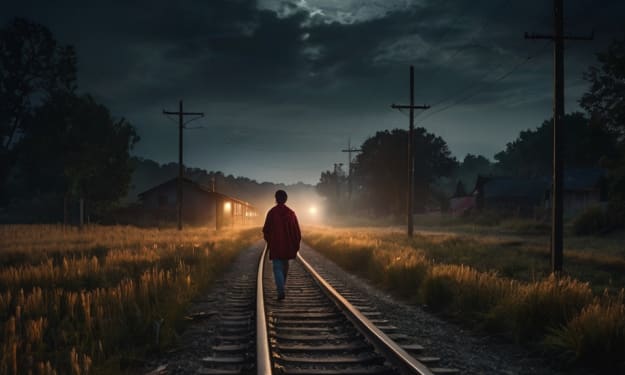
The Boy Who Stopped the Train
The Boy Who Stopped the Train By Dua Mustafa, Khairpur Mirs In a small, humble village surrounded by golden fields and whispering winds, lived a young boy named Abbas. He stayed with his parents and two younger sisters in a mud-brick house that stood at the edge of the village. Life for Abbas and his family was not easy. His father, Ghulam Muhammad, was old and frail, while his mother spent her days sewing clothes for neighbors to earn a little extra. Abbas, though still a teenager, worked tirelessly in the fields owned by the village landlord, Chaudhry Saab — a man known for his wealth, arrogance, and miserliness. Every day, from dawn till dusk, Abbas worked beneath the burning sun or in the biting cold, earning barely enough to feed his family. Yet, he never complained. His heart was pure, his faith unshakable. “Hard work never goes unrewarded,” his mother would often say, and Abbas carried those words like a promise written on his soul. That year, January had brought with it a sharp, dry cold. One evening, as the sun dipped behind the horizon and the fields turned shades of silver under the pale moonlight, Abbas was still working. The other laborers had gone home, their laughter fading into the distance, but Abbas decided to stay. “Let me finish the work today,” he thought. “Tomorrow, my father will rest easy.” Hours passed. The wind grew colder, brushing through the wheat like ghostly hands. As Abbas packed up his tools and tied his bundle, a faint rumbling reached his ears — the deep, rhythmic sound of a distant train. He looked up, eyes bright with curiosity. “It must be the night train from Karachi,” he murmured. He had always loved watching the great iron beast thunder past the fields, its lights glowing like fireflies in the dark. With a smile, he picked up his lantern and hurried toward the railway line that cut through the edge of the farmland. But as he approached, his steps froze. Something was wrong. The steel track — the lifeline of the speeding train — was broken in the middle. A large gap gaped between the rails, its jagged edges glinting in the lantern light. Abbas’s heart pounded in his chest. He could already hear the whistle of the train — louder now, closer. He knew it wouldn’t be long before disaster struck. “Oh no,” he whispered. “If the train comes through, it will derail... all those people will die.” For a moment, panic gripped him. What could a poor boy do against a roaring train? But then courage flooded his heart. Without another thought, Abbas grabbed his red scarf, climbed onto the nearest signal post, and began waving it frantically, shouting at the top of his lungs. “Stop the train! The track is broken! Stop!” His voice echoed through the cold night, carried by the wind. The train’s massive headlights pierced the darkness, blinding him for a second. He waved harder, screaming until his throat burned. And then — with a mighty screech of brakes and a long, desperate whistle — the train slowed, sparks flying beneath its iron wheels, until it finally came to a halt a few feet away from the broken track. Abbas collapsed to his knees, trembling but relieved. The train door opened, and a man in uniform — the driver — stepped down, followed by a few anxious passengers. “What’s the matter, boy?” the driver called out. “Why did you stop the train? Do you realize the Chief Minister’s mother is on board?” Abbas caught his breath and pointed to the broken rail. “Uncle, look there! The track is broken. If the train had gone any further, it would’ve fallen off. Everyone would’ve died!” The driver’s eyes widened. He rushed forward, examined the track, and turned back, his face pale. “Good heavens... you’re right.” He looked at Abbas with awe. “You saved all of us, son. You saved so many lives tonight.” Abbas lowered his head humbly. “No, Uncle,” he said softly. “I only did what was right.” The next morning, Abbas was back in the fields, working as always. The night’s events already felt like a dream. But just as he began harvesting the wheat, a shiny black car rolled down the dusty path toward him — a sight no one in the village had ever seen. The door opened, and out stepped a man in a crisp suit, followed by two guards. He looked around and asked in a commanding voice, “Is Ghulam Muhammad’s son here?” Abbas, startled, stepped forward. “Yes, sir. I am his son. How can I help you?” The man smiled and extended his hand. “You are the brave boy who stopped the train last night, aren’t you?” Abbas nodded shyly. “Yes, sir.” “Well,” the man said, his eyes softening, “you saved my mother’s life — and the lives of hundreds of others. The government has decided to reward your courage. Your family will be given a new house, financial support, and free education for you. This country needs sons like you, Abbas — honest, brave, and selfless.” Tears welled in Abbas’s eyes. His heart swelled with gratitude. He looked up at the sky, whispering a silent prayer of thanks. Allah had indeed seen his struggle, his honesty, his goodness — and had rewarded him in a way he had never dreamed. As the car drove away, Abbas turned back to his fields, the morning sun glowing over the land. The same earth that had once seen his hardship now shimmered with new hope. His story became the talk of the village — a tale of courage, faith, and how one boy’s selfless act changed everything. And from that day on, whenever the train passed through that stretch of track, the driver would slow down, look out the window, and salute the small boy in the fields — the boy who had stopped the train and saved them all.
By Khan 11 months ago in Motivation
The Fall of the Elephant King
The Fall of the Elephant King BY: Khan In the heart of a vast and beautiful jungle, ruled a mighty elephant king. His enormous tusks gleamed like ivory swords, and his deep trumpet echoed through the forest like thunder. To any outsider, the elephant’s reign seemed unshakable — he was large, strong, and feared by many. But beneath that grand image lay a truth the jungle had begun to whisper: the king was lazy. Each day, instead of patrolling his kingdom or leading his herd, the elephant lounged beside the great lake, half-asleep under the shade of old banyan trees. He spent his time gossiping with his friends — the rhinos and the buffaloes — laughing, eating, and bathing. To him, peace meant leisure, not vigilance. The jungle stretched endlessly, green and glittering in the sunlight, filled with rivers that sang and trees that seemed to touch the sky. But beauty often invites envy. Across the borders, in another jungle, the rival beasts had long coveted this land — its abundance, its safety, its water. Years ago, they had attacked, only to be driven away by the courage of the lions who fought fiercely alongside the jungle’s defenders. But peace had made the elephant kingdom forget the taste of fear. The lions, however, never forgot. They had seen the hunger in the enemy’s eyes — and the silence before another storm. Recently, faint roars and growls echoed from beyond the borders. The scent of strangers drifted through the wind. The lions sensed something. While the elephant king enjoyed his lazy afternoons, the lions began to prepare. Quietly, they trained at night. They sharpened their claws against the rocks, guarded the borders in shifts, and kept their cubs close. They were ready, even if their king was not. One evening, when the air was thick with the scent of rain, the lion chief decided enough was enough. He summoned every creature in the jungle to the Great Clearing — from the smallest rabbit to the tallest giraffe. Even the elephant king arrived, looking annoyed that his nap had been interrupted. The lion stood tall on a rock and spoke with the calm authority that only truth gives. “My friends,” he began, his golden mane catching the dying light, “the enemy is moving again. They are preparing to attack. We must be ready before it is too late.” The words rippled through the crowd like wind over tall grass. The smaller animals gasped in fear. Mothers pulled their young closer. But from the back, came a booming sound — the elephant king’s laughter. “Attack us?” the elephant bellowed. “Do you think those little creatures can harm us? Look at us! We are giants! Let them try!” His friends, the rhinos, joined in the laughter, stomping their feet and snorting with pride. “We are too strong to fall,” one of them shouted. The lion didn’t respond with anger. He only looked at them with quiet disappointment. “Strength means nothing,” he said softly, “if the mind is asleep.” But the warning fell on deaf ears. The meeting ended with the smaller animals frightened, the lions alert, and the elephant king amused by what he called “the lion’s bedtime stories.” Days passed. Then one moonless night, while the jungle slept under a blanket of silence, it began. The enemy came like shadows — swift, silent, merciless. Hyenas, wolves, and wild dogs crossed the border in hundreds, their eyes glowing red in the dark. The lions, ever watchful, were the first to hear the distant growls. They rose to their feet instantly. The lion chief roared, a sound so powerful it shook the trees. His pride leaped into action, warning the other animals. Birds flew in panic, monkeys screeched from the treetops, and deer ran toward the riverbanks. But in the lake’s moonlight, the elephants and rhinos still slept. The first strike hit them where they lay. Hyenas bit at their legs, wolves clawed at their eyes. Panic erupted. The mighty elephant king woke in terror as chaos exploded around him. He tried to rise, trumpeting loudly, but it was too late — fear had paralyzed him. From the shadows, the lion and his pride charged, their roars slicing through the darkness. The battle was fierce. Dust and blood filled the air. Claws met teeth, roars met screams, and the jungle became a battlefield. Hours passed. Then, just as dawn began to paint the sky in pale gold, silence returned. The ground was littered with the bodies of the invaders — and many elephants and rhinos who had fallen in their sleep. The once-proud elephant king lay wounded near the lake, his eyes wide with disbelief. He looked toward the lion, who stood tall despite his scars. “You were right,” the elephant whispered, his voice trembling with regret. “My pride blinded me.” The lion bowed his head respectfully. “Your courage could have saved many,” he replied. “But wisdom saves all.” The elephant king lowered his gaze, tears mixing with the morning dew. He knew his reign was over. The jungle needed a leader who would listen, not laugh. That very day, as the sun rose high, the animals gathered once more in the Great Clearing. Together, they made a decision that would shape their future. They crowned the lion chief as their new king — a ruler not of size or strength, but of wisdom and courage. Under his leadership, the jungle healed. The rivers ran clear again, laughter returned to the trees, and every creature, great and small, learned the lesson the elephant king had ignored: Pride may roar, but vigilance keeps the jungle alive.
By Khan 11 months ago in Motivation
The Fifth Sinner
The Fifth Sinner The five men stood silently, their heads bowed in confusion. Their hands trembled slightly — they had been captured by the Devil’s servants and dragged into the dark court of Satan himself. They didn’t understand why they were there. What crime had they committed? From behind a thick black curtain came a burst of cruel laughter. Then a deep, cold voice echoed through the darkness. > “Tell me,” the Devil commanded, “what crime has Sinner Number One committed?” One of the dark figures stepped forward. > “Master, his crime is this: he devoted his life to serving his parents. He cared for them day and night, stood by them in old age, and never left them alone.” The Devil let out a long, mocking laugh that shook the hall. > “Sinner Number Two!” the Devil’s voice thundered. “What has he done?” Another servant answered, > “Master, his heart is filled with compassion. After his brother’s death, he took care of the widow and her children. He loved them more than his own, gave them education and dignity, and helped them stand on their own feet. That, Master, is his crime.” Again, the court echoed with Satan’s laughter. > “And what about the third one?” > “Master, this man rebelled against his own family,” the servant said bitterly. “He brought his sister from the village to the city so she could study. He gave her love, respect, and education — and even found her a good husband. That is his unforgivable sin.” The Devil’s eyes burned with fury. > “Number Four — speak!” > “Master, this man was overcome with a passion to help others. He founded a training center where poor people learned skills to earn a living. Because of him, hundreds became good citizens. That, Master, is his crime.” The Devil slammed his hand on the table. > “Enough! My head will burst with anger! Such sinners are multiplying day by day — our work grows harder!” But one servant hesitated. > “Master, there is still one more — Sinner Number Five.” > “Enough!” the Devil shouted. “I can’t bear to hear more of their good deeds. Take them all away! Give each one a hundred lashes and lock them in the darkest cell — until the madness of goodness leaves their minds!” The five men cried out together, > “No! We’ve done nothing wrong! Don’t punish us! Don’t hurt us!” Suddenly — a scream. And then — silence. Saboor woke up, trembling. Sweat rolled down his forehead as he whispered to himself, > “Oh God… what a terrible dream.” He got up from his bed and walked quickly toward his grandfather’s room. But the room was empty — his grandfather had already gone out for his morning walk after the dawn prayer. Saboor lay down on the old man’s bed, waiting for him to return. A few minutes later, the door opened. > “Saboor, my child,” the old man smiled. “You’re up early today, even though it’s a holiday. Something wrong?” > “Grandfather, please sit down,” Saboor said nervously. “I have something to tell you.” The old man sat beside him on the cot. Saboor began to describe every detail of his strange dream — the court, the laughter, the punishments. When he finished, the old man looked at him quietly, a soft smile touching his wrinkled face. > “So, my child… this is what’s troubling you?” > “Yes, Dada Jan,” Saboor replied. “I can’t understand. How could people be punished for being good?” The old man chuckled gently. > “There’s nothing to fear, Saboor. Remember this — to the Devil, every good person is his enemy. The more you stand for truth and kindness, the more Satan hates you.” Saboor looked puzzled. > “So… does that mean you, too, would be a sinner in the Devil’s eyes?” The old man’s smile faded into calm pride. > “Yes, my son. I, too, would be his fifth sinner.” > “What do you mean, Grandfather?” The old man leaned back, his eyes distant with memory. > “Let me tell you a story — my own story. When Pakistan was created, millions had to migrate through rivers of blood. Families were torn apart. Many parents lost their children, and children lost their parents. Amid that chaos, your late grandmother and I reached a refugee camp.” His voice softened. > “There, we found two little orphans — a boy and a girl. Alone, frightened, with no one left. We took them in, raised them as our own, shared our food, our home, our love. Life was hard in the beginning, but God blessed our efforts. The business grew, and so did the children.” Saboor’s eyes widened as he listened. > “When they grew up,” the old man continued, “we got them married into good families. They built their own lives. That was our reward.” Saboor leaned forward. > “Grandfather… who were those two children?” The old man smiled softly. > “One of them is your father — Dr. Masroor. The other is your aunt, who teaches at the girls’ college.” Saboor froze in astonishment. > “You mean… my father and aunt were those orphans?” > “Yes,” the old man said with quiet pride. “So now you know, my dear boy — your dream’s fifth sinner was me.” Saboor’s eyes filled with tears. He moved closer and hugged his grandfather tightly. The old man’s chest was warm, filled with the peace of love and the coolness of kindness — a place where no shadow of evil could ever reach. --- Moral: > In the eyes of the Devil, every act of kindness is a crime. But in the eyes of God — those “criminals” are His most beloved souls.
By Khan 11 months ago in Motivation
The Power of Small Daily Habits. AI-Generated.
Introduction: The Myth of Overnight Success Everyone loves stories of overnight success — a student who suddenly tops the class, a man who becomes fit in a month, or a woman who builds a business in a year. But behind every “sudden success” lies something far less glamorous: small, consistent habits practiced daily. These tiny actions may seem invisible in the moment, but over time, they build an unshakable foundation for greatness.
By Gohar Ali11 months ago in Motivation
A Story of Two Boys. AI-Generated.
In the beginning, there was the fort. It was a lopsided structure of fallen branches, an old paint-stained blanket, and shared imagination. For Leo and Sam, the world outside the fort’s fabric walls was a distant, unimportant place. Inside, they were kings of their own domain, their bond as simple and solid as the oak tree it leaned against.
By The 9x Fawdi11 months ago in Motivation
The Global Secret to Happiness
When Maya turned thirty, she realized something strange... she had everything she thought she wanted but still felt empty. A good job, a comfortable apartment, a circle of friends who met for brunch every Sunday. Yet, every night she lay awake asking the same question: Why don’t I feel happy?
By MIGrowth11 months ago in Motivation