celebrities
Celebrities and other motivational icons who made it to the top, from real actors, athletes and authors who used to be just like you.
The Rise and Fall of Lindsay Lohan: Fame, Addiction, and the Fight for Redemption . Content Warning.
Early Beginnings – A Star is Born Childhood and Entry into Showbiz Lindsay Dee Lohan was born on July 2, 1986, in The Bronx, New York City. Raised in Merrick and Cold Spring Harbor on Long Island, Lindsay grew up in a family that was already somewhat familiar with the entertainment world. Her mother, Dina Lohan, was a former singer and dancer, and her father, Michael Lohan, had a rather notorious presence in the tabloids himself. Lindsay’s natural charisma and photogenic looks made her an ideal candidate for early stardom.
By olxia10 about a year ago in Motivation
The Weight of a Single Brick
Ravi stood at the edge of the half-built apartment block, the air thick with dust and the hum of distant cranes. His calloused hands gripped a single brick, its edges rough against his skin. At 42, he’d laid thousands of them—schools, malls, homes—but this one felt different. This brick wasn’t just cement and clay; it was a decision.The site was a mess. Cranes loomed like skeletal giants, their arms frozen mid-motion. Workers shuffled with tired eyes, their chatter replaced by the occasional clink of tools. The project, a 20-story luxury tower in Mumbai’s outskirts, had stalled six months ago when the developer vanished with the funds. Half the crew had quit, leaving Ravi and a skeleton team to guard the skeleton structure. The local papers called it a “monument to greed,” but to Ravi, it was a wound—his wound.He’d grown up in a slum two kilometers away, where his father, a rickshaw puller, dreamed of a brick house. That dream never materialized; the monsoon took it, along with his father’s health. Ravi swore he’d build something lasting. At 18, he apprenticed under a mason, mastering the art of aligning bricks with precision, each one a step toward stability. This tower was supposed to be his masterpiece—a chance to lift his family from the tenement they still called home.But the developer’s betrayal changed everything. The unpaid wages left Ravi’s wife, Priya, juggling two jobs, and his son, Arjun, skipping college to help. The bank was breathing down their necks, threatening to seize their tiny plot. Yet, Ravi stayed. Not out of loyalty, but defiance. He’d finish this tower, even if it killed him.That morning, the site manager, a wiry man named Sanjay, handed Ravi a notice: demolish what’s built, clear the land, and move on.
By TrueVocalabout a year ago in Motivation
The Rise and Fall of Amanda Bynes: From Teen Icon to Trouble . Content Warning.
Who is Amanda Bynes? Amanda Bynes was once the darling of teen television—a charismatic, sharp-witted actress who brought joy to millions. But fame, as it turns out, can be a double-edged sword. Her story isn’t just tabloid fodder. It’s a tragic yet eye-opening look at how Hollywood treats its young stars—and how mental health, if ignored, can turn even the brightest flame into ashes.
By olxia10 about a year ago in Motivation
The Day My World Fell Apart – A Story of Love, Loss, and Awakening
My name is Cecilia. I’m 32 years old, and I thought I had the perfect life. I was married to a man named Richard, a kind and loving person—or so I believed. We had been together for eight years, and in those years, I built my world around him. Every morning, we had breakfast together. Every evening, we talked about our day. There were no signs of trouble, or maybe I was just too blind to see them. One morning, as I poured coffee into our favorite mugs, he looked at me with eyes I couldn’t recognize. There was a deep sadness—or maybe frustration. He cleared his throat, and said, “Cecilia, I can’t live like this anymore.” His words cut through me like ice. At first, I thought he was joking. But his eyes didn’t laugh. My hands began to tremble. “What do you mean?” I whispered. He stood up, pushed his chair back, and sighed deeply. “I don’t feel like myself anymore. Every day feels the same. I feel trapped... like I’m living someone else’s life.” I sat there frozen. This man, who just last week had kissed me goodnight and laughed at our favorite movie, was now telling me he didn’t want to be with me anymore. --- I tried to save us. For days, I begged him to explain, to give us a second chance. I even asked if he had met someone else. He said no, that it wasn’t about anyone else. “It’s me,” he said. The classic line. The one that breaks hearts because it leaves you with no answer and no closure. Eventually, Richard packed his things and left. Just like that, my husband, my best friend, was gone. --- The next few weeks were a blur. I couldn’t sleep. I couldn’t eat. I cried into my pillow every night, asking myself the same questions over and over: What did I do wrong? Was I not enough? I replayed every moment of our last few months, trying to find the signs I must have missed. People called to check on me, but I didn’t want to talk. I didn’t want sympathy. I wanted my old life back. --- One afternoon, I decided to go for a walk. The air was cold, and the streets were quiet. As I passed by the park, I saw a man sitting on a bench. He was talking to himself, laughing loudly, then suddenly getting angry and shouting at the air. People crossed the street to avoid him. Some shook their heads and called him “crazy.” But I couldn’t look away. There was something about the way he talked—so honest, so raw. I sat down on a bench nearby, not too close, but close enough to listen. He said things like: “They told me to follow the rules, so I did—and look where it got me!” “Everyone pretends to be happy, but inside, they’re screaming.” “The world rewards lies more than truth.” His words were chaotic, yet strangely powerful. --- That moment changed me. I realized that I had been living a script, following what I thought was the “right” way to live: marriage, routine, stability. But inside, I had silenced parts of myself to make things appear perfect. Richard had probably done the same, until he snapped. The man on the bench might be called “crazy,” but maybe he was just free—free to say the things the rest of us are too afraid to admit. --- I walked home with new clarity. My heart still hurt. I still missed Richard. But I no longer blamed myself. People change. Feelings fade. And sometimes, someone has to leave in order for both to grow. I started journaling every day, writing down things I was too scared to say before. I started painting again, something I hadn’t done since college. I even took solo trips to nearby towns, letting myself be uncomfortable, alone, and strong. --- Months passed. I saw Richard once at a café. We smiled politely, but didn’t speak. And for the first time, I didn’t feel broken. I felt grateful—for the love we had, and for the lessons his leaving taught me. --- So, was the man in the park crazy? Maybe. Or maybe he was the only one speaking the truth in a world full of masks. --- Sometimes, we need to lose everything to find ourselves. And sometimes, healing begins with listening to the voices we’ve been taught to ignore.
By khalidabout a year ago in Motivation
Why Most Advice About Success Is a LIE
There’s something I’ve noticed that we rarely talk about, not honestly, at least. Success advice is everywhere. It’s on your Instagram feed, in podcasts, in books with overhyped titles like Crush It or Unstoppable Mindset. And almost all of it, in my opinion, is built on a lie.
By Beyond The Surfaceabout a year ago in Motivation
Why You Can't Focus Anymore - And the Ancient Trick That Rebuilds Your Brain Hour by Hour
Introduction Your brain is drowning in distractions - endless notifications, looming deadlines, and a to-do list that never shrinks. Every time you try to tackle something hard, your mind sabotages you, pulling you toward the comfort of scrolling or daydreaming.
By Dishmi Mabout a year ago in Motivation
Still Standing, Still True
The house wasn’t grand. No marble pillars, no shiny windows, no sprawling lawns. It sat quietly at the end of a gravel path, surrounded by tall oaks and years of memories. The roof sagged slightly under the weight of seasons. The paint was chipped in places, like time had run its fingers across it too many times to count. But the house had a soul. It had seen heartbreak, laughter, silence, and song. And through it all, it stood.
By Anees Kaleemabout a year ago in Motivation
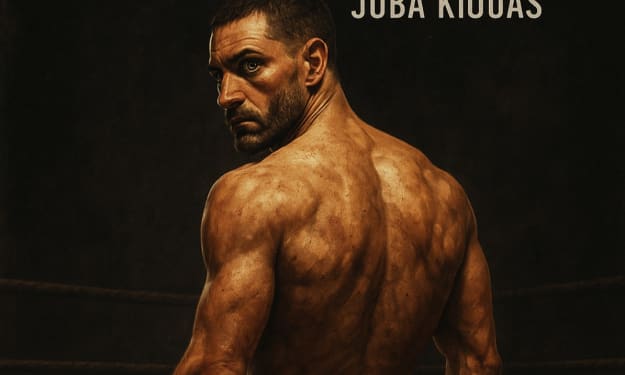
BLOOD & GLORY (1). Content Warning. AI-Generated.
🥊 Blood & Glory By [JUBA KIOUAS] Everyone said Malik was born with concrete in his veins and fire in his fists. He just said he was born tired — tired of poverty, tired of empty promises, tired of the kind of life where you work ten hours and still go to bed hungry. He grew up in the outskirts of Algiers, in a concrete box where the electricity blinked more than it shone. His father left when he was six. His mother scrubbed floors in three different houses and still couldn’t afford meat more than once a month. At thirteen, Malik was already taller than his teachers and angrier than most men in prison. He didn’t care about algebra. He cared about escape. By eighteen, everyone around him was choosing their fates: factory work, begging, petty crime — or the mythical “Europe,” if they were lucky. But Malik didn’t want to vanish into the grind of a 9-to-5. He had hands like iron and a heart like gasoline. And he had a dream: professional boxing. Not the underground scraps in back alleys — the real deal. Lights. Titles. Madison Square Garden. America. But dreams cost money. And Malik had none. --- Round One: The Hustle He started fighting in the back of butcher shops, mechanic garages, and sweaty gym basements. At first, just to eat. But soon he realized: people would bet on him. And if he convinced enough of them that he’d win, he could make real money. Malik made deals. With hustlers. With men in sunglasses and crooked smiles. He’d take a percentage of their winnings if they bet big on him. “Double your money, or I give it back,” he’d promise. Confidence was never his problem. And it worked. He won. Again and again. His name started echoing through the alleys like a war drum. People started showing up just to watch him make other men bleed. The money came fast. Faster than he expected. He bought protein powder, proper gloves, a visa application. He studied English at night. “One day,” he told his mother, “I’ll call you from New York.” --- Round Two: The Fall Then came the wrong fight. A last-minute opponent switch. Malik’s guy dropped out. The replacement? A brutal southpaw from Marseille, quiet eyes and prison tattoos. Malik knew he should walk away. But he didn’t. He’d already taken money from a powerful local gambler named Hichem — a man who smiled too easily and wore gold chains that screamed danger. Malik had promised him a win. People had placed thousands on him. And deep inside, something else whispered: “You’re invincible.” He wasn’t. In the second round, the Marseille fighter clipped him with a hook so sharp it felt like death was tapping his chin. Malik dropped. His body hit the mat like a bag of wet cement. And the room went silent. --- Round Three: The Threat Two nights later, Hichem showed up at Malik’s apartment with three men. No guns. Just words. “You lost me 10,000 euros,” Hichem said, voice calm. “That’s not a number I forget.” “I’ll pay you back,” Malik said, his mouth dry. “You will,” Hichem nodded. “Or your mother will never see you again.” They gave him two weeks. --- Round Four: The Fire Malik didn’t sleep. He didn’t eat. He didn’t fight. His hands shook. Every alley looked like a trap. Every car engine made his heart freeze. But fear breeds focus. He stopped betting on himself. He started training harder than ever. Running until his lungs tore. Punching until his knuckles bled. He fought in private gyms, against beasts for nothing but pride. And he won. With that footage, he put together a highlight reel. Sent it to small trainers in Las Vegas. He only got one reply — a Cuban ex-champion named Raul who ran a broken-down gym off the Strip. “I see something in you,” Raul wrote. “You get here, I’ll train you.” Malik sold everything. His watch. His bike. Even his mother’s old gold ring. And then — the miracle. A childhood friend wired him the last $500 he needed. --- Final Round: The Escape On the day he flew out, Malik stood in the airport with a stitched eye, a cracked rib, and a bag full of dreams. Hichem never came back. Maybe he moved on. Maybe he was waiting in America. Malik didn’t care. He landed in Las Vegas on a burning July afternoon, sweat already dripping down his spine. Raul met him outside the terminal, holding a cardboard sign that said: “Fighter.” Malik smiled. He wasn’t a victim anymore. He was a warrior. And this was only the beginning.
By Juba kiouas about a year ago in Motivation
Elijah’s Silent Battle
He never looked behind him. Elijah was a man who walked like fire bright, bold, and with a certain silence that warned people not to get too close. He was the kind of person who could walk into a room and make the lights feel insecure. Yet, despite his presence, no one really knew him. Not even himself. For years, Elijah had lived under the weight of a shadow his own. But this was no ordinary shadow. It didn’t merely follow him in light. It whispered. It mocked. It remembered things he wished he hadn’t done. It dragged behind him the guilt of lost friendships, decisions he couldn't reverse, and words he never should've said. No matter where he went, the shadow came too long, looming, louder than ever in the stillness of night. One day, he heard about an old hermit who lived atop the Pale Ridge a man rumored to have once rid himself of his own shadow. Desperate, Elijah packed nothing but silence and questions, and set off. The climb was cruel. Each step higher seemed to stretch his shadow farther behind him, like it resisted his escape. But when he finally reached the summit, he found not a wise old man meditating in peace but a small, unremarkable hut with a single mirror leaning against a cracked stone wall. Inside stood an elderly man with no reflection. “You came to burn it,” the man said before Elijah could speak. “How did you know?” “I’ve heard your shadow screaming all the way from here,” he replied, eyes tired but oddly compassionate. “I want it gone,” Elijah said. “It’s... choking me.” The man nodded slowly, then reached for a candle. “Burning a shadow is easy. The hard part is what replaces it.” That night, they began the ritual. Elijah stood barefoot under the full moon, surrounded by salt and ash. The hermit lit the candle and held it behind Elijah’s back. The flame didn’t touch skin. It touched memory. Suddenly, Elijah saw everything at once his failures, the betrayals, the things he had buried under years of denial. He saw his father’s disappointed eyes. He saw a letter he never mailed. He saw the friend he left in a hospital waiting room without saying goodbye. His knees buckled, but the flame didn’t stop. It moved through him, not to destroy, but to reveal. When it was over, he lay in the ashes, trembling. The hermit handed him a mirror. “Look.” Elijah stared. No shadow. But his eyes his eyes were different. They held the storm now. The things he had avoided, the pain he had hidden they had not disappeared. They had moved inside him. “Where did it go?” he whispered. “You absorbed it,” the hermit said. “That is what it means to be free.” Elijah stayed on the mountain for three more days, learning to live without an external shadow. Learning to carry the weight inward where he could control it, face it, even forgive it. When he descended, he moved slower, but lighter. People noticed the change. Some said he looked brighter. Others said he looked haunted. But for the first time, Elijah didn’t care what they saw. Because he knew what he carried and he was no longer afraid of it. Author’s Note: We all have shadows echoes of things we wish we could forget. But what if the path to peace isn’t in escaping them, but owning them? What if true freedom begins not when the past disappears, but when it stops defining you?
By Ashraf about a year ago in Motivation
A Whisper That Echoes Loud
(A story that sings in silence) “When the heart broke, a sound escaped. But when trust shattered… even silence began to scream.” The qawwal sat cross-legged in front of his harmonium. The hall was packed, the crowd buzzing with anticipation. The mic crackled softly as he leaned forward. Fingers poised. Eyes closed. A breath held… and then nothing. Not a single note. No rhythm. No voice. Just… silence. At first, the audience was confused. Then, slightly amused. Whispered jokes began to ripple across the room. “Has he forgotten the lyrics?” “Maybe his voice gave out?” “Or maybe it’s part of the act?”
By AK Popalabout a year ago in Motivation