celebrities
Celebrities and other motivational icons who made it to the top, from real actors, athletes and authors who used to be just like you.
Sylvester Stallone: The Man Who Wrote His Own Destiny
The Opening Scene — A Man and a Dream It was a cold night in New York City, 1974. A struggling actor named Sylvester Gardenzio Stallone sat in his tiny, dimly lit apartment. The walls were cracked, the heating barely worked, and there was no food in the fridge. His only companion was his loyal dog, Butkus.
By Frank Massey about a year ago in Motivation
The Boy Who Stopped the Train
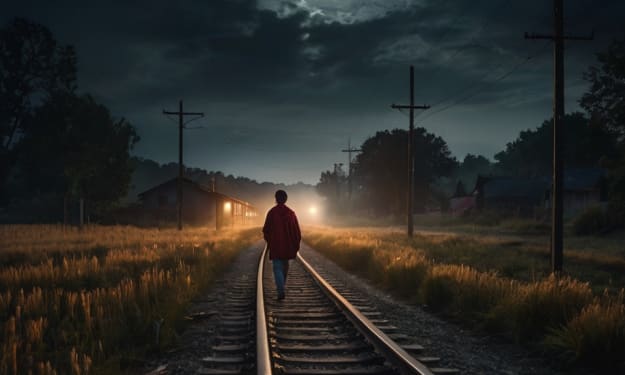
The Boy Who Stopped the Train By Dua Mustafa, Khairpur Mirs In a small, humble village surrounded by golden fields and whispering winds, lived a young boy named Abbas. He stayed with his parents and two younger sisters in a mud-brick house that stood at the edge of the village. Life for Abbas and his family was not easy. His father, Ghulam Muhammad, was old and frail, while his mother spent her days sewing clothes for neighbors to earn a little extra. Abbas, though still a teenager, worked tirelessly in the fields owned by the village landlord, Chaudhry Saab — a man known for his wealth, arrogance, and miserliness. Every day, from dawn till dusk, Abbas worked beneath the burning sun or in the biting cold, earning barely enough to feed his family. Yet, he never complained. His heart was pure, his faith unshakable. “Hard work never goes unrewarded,” his mother would often say, and Abbas carried those words like a promise written on his soul. That year, January had brought with it a sharp, dry cold. One evening, as the sun dipped behind the horizon and the fields turned shades of silver under the pale moonlight, Abbas was still working. The other laborers had gone home, their laughter fading into the distance, but Abbas decided to stay. “Let me finish the work today,” he thought. “Tomorrow, my father will rest easy.” Hours passed. The wind grew colder, brushing through the wheat like ghostly hands. As Abbas packed up his tools and tied his bundle, a faint rumbling reached his ears — the deep, rhythmic sound of a distant train. He looked up, eyes bright with curiosity. “It must be the night train from Karachi,” he murmured. He had always loved watching the great iron beast thunder past the fields, its lights glowing like fireflies in the dark. With a smile, he picked up his lantern and hurried toward the railway line that cut through the edge of the farmland. But as he approached, his steps froze. Something was wrong. The steel track — the lifeline of the speeding train — was broken in the middle. A large gap gaped between the rails, its jagged edges glinting in the lantern light. Abbas’s heart pounded in his chest. He could already hear the whistle of the train — louder now, closer. He knew it wouldn’t be long before disaster struck. “Oh no,” he whispered. “If the train comes through, it will derail... all those people will die.” For a moment, panic gripped him. What could a poor boy do against a roaring train? But then courage flooded his heart. Without another thought, Abbas grabbed his red scarf, climbed onto the nearest signal post, and began waving it frantically, shouting at the top of his lungs. “Stop the train! The track is broken! Stop!” His voice echoed through the cold night, carried by the wind. The train’s massive headlights pierced the darkness, blinding him for a second. He waved harder, screaming until his throat burned. And then — with a mighty screech of brakes and a long, desperate whistle — the train slowed, sparks flying beneath its iron wheels, until it finally came to a halt a few feet away from the broken track. Abbas collapsed to his knees, trembling but relieved. The train door opened, and a man in uniform — the driver — stepped down, followed by a few anxious passengers. “What’s the matter, boy?” the driver called out. “Why did you stop the train? Do you realize the Chief Minister’s mother is on board?” Abbas caught his breath and pointed to the broken rail. “Uncle, look there! The track is broken. If the train had gone any further, it would’ve fallen off. Everyone would’ve died!” The driver’s eyes widened. He rushed forward, examined the track, and turned back, his face pale. “Good heavens... you’re right.” He looked at Abbas with awe. “You saved all of us, son. You saved so many lives tonight.” Abbas lowered his head humbly. “No, Uncle,” he said softly. “I only did what was right.” The next morning, Abbas was back in the fields, working as always. The night’s events already felt like a dream. But just as he began harvesting the wheat, a shiny black car rolled down the dusty path toward him — a sight no one in the village had ever seen. The door opened, and out stepped a man in a crisp suit, followed by two guards. He looked around and asked in a commanding voice, “Is Ghulam Muhammad’s son here?” Abbas, startled, stepped forward. “Yes, sir. I am his son. How can I help you?” The man smiled and extended his hand. “You are the brave boy who stopped the train last night, aren’t you?” Abbas nodded shyly. “Yes, sir.” “Well,” the man said, his eyes softening, “you saved my mother’s life — and the lives of hundreds of others. The government has decided to reward your courage. Your family will be given a new house, financial support, and free education for you. This country needs sons like you, Abbas — honest, brave, and selfless.” Tears welled in Abbas’s eyes. His heart swelled with gratitude. He looked up at the sky, whispering a silent prayer of thanks. Allah had indeed seen his struggle, his honesty, his goodness — and had rewarded him in a way he had never dreamed. As the car drove away, Abbas turned back to his fields, the morning sun glowing over the land. The same earth that had once seen his hardship now shimmered with new hope. His story became the talk of the village — a tale of courage, faith, and how one boy’s selfless act changed everything. And from that day on, whenever the train passed through that stretch of track, the driver would slow down, look out the window, and salute the small boy in the fields — the boy who had stopped the train and saved them all.
By Khan about a year ago in Motivation
The Fifth Sinner
The Fifth Sinner The five men stood silently, their heads bowed in confusion. Their hands trembled slightly — they had been captured by the Devil’s servants and dragged into the dark court of Satan himself. They didn’t understand why they were there. What crime had they committed? From behind a thick black curtain came a burst of cruel laughter. Then a deep, cold voice echoed through the darkness. > “Tell me,” the Devil commanded, “what crime has Sinner Number One committed?” One of the dark figures stepped forward. > “Master, his crime is this: he devoted his life to serving his parents. He cared for them day and night, stood by them in old age, and never left them alone.” The Devil let out a long, mocking laugh that shook the hall. > “Sinner Number Two!” the Devil’s voice thundered. “What has he done?” Another servant answered, > “Master, his heart is filled with compassion. After his brother’s death, he took care of the widow and her children. He loved them more than his own, gave them education and dignity, and helped them stand on their own feet. That, Master, is his crime.” Again, the court echoed with Satan’s laughter. > “And what about the third one?” > “Master, this man rebelled against his own family,” the servant said bitterly. “He brought his sister from the village to the city so she could study. He gave her love, respect, and education — and even found her a good husband. That is his unforgivable sin.” The Devil’s eyes burned with fury. > “Number Four — speak!” > “Master, this man was overcome with a passion to help others. He founded a training center where poor people learned skills to earn a living. Because of him, hundreds became good citizens. That, Master, is his crime.” The Devil slammed his hand on the table. > “Enough! My head will burst with anger! Such sinners are multiplying day by day — our work grows harder!” But one servant hesitated. > “Master, there is still one more — Sinner Number Five.” > “Enough!” the Devil shouted. “I can’t bear to hear more of their good deeds. Take them all away! Give each one a hundred lashes and lock them in the darkest cell — until the madness of goodness leaves their minds!” The five men cried out together, > “No! We’ve done nothing wrong! Don’t punish us! Don’t hurt us!” Suddenly — a scream. And then — silence. Saboor woke up, trembling. Sweat rolled down his forehead as he whispered to himself, > “Oh God… what a terrible dream.” He got up from his bed and walked quickly toward his grandfather’s room. But the room was empty — his grandfather had already gone out for his morning walk after the dawn prayer. Saboor lay down on the old man’s bed, waiting for him to return. A few minutes later, the door opened. > “Saboor, my child,” the old man smiled. “You’re up early today, even though it’s a holiday. Something wrong?” > “Grandfather, please sit down,” Saboor said nervously. “I have something to tell you.” The old man sat beside him on the cot. Saboor began to describe every detail of his strange dream — the court, the laughter, the punishments. When he finished, the old man looked at him quietly, a soft smile touching his wrinkled face. > “So, my child… this is what’s troubling you?” > “Yes, Dada Jan,” Saboor replied. “I can’t understand. How could people be punished for being good?” The old man chuckled gently. > “There’s nothing to fear, Saboor. Remember this — to the Devil, every good person is his enemy. The more you stand for truth and kindness, the more Satan hates you.” Saboor looked puzzled. > “So… does that mean you, too, would be a sinner in the Devil’s eyes?” The old man’s smile faded into calm pride. > “Yes, my son. I, too, would be his fifth sinner.” > “What do you mean, Grandfather?” The old man leaned back, his eyes distant with memory. > “Let me tell you a story — my own story. When Pakistan was created, millions had to migrate through rivers of blood. Families were torn apart. Many parents lost their children, and children lost their parents. Amid that chaos, your late grandmother and I reached a refugee camp.” His voice softened. > “There, we found two little orphans — a boy and a girl. Alone, frightened, with no one left. We took them in, raised them as our own, shared our food, our home, our love. Life was hard in the beginning, but God blessed our efforts. The business grew, and so did the children.” Saboor’s eyes widened as he listened. > “When they grew up,” the old man continued, “we got them married into good families. They built their own lives. That was our reward.” Saboor leaned forward. > “Grandfather… who were those two children?” The old man smiled softly. > “One of them is your father — Dr. Masroor. The other is your aunt, who teaches at the girls’ college.” Saboor froze in astonishment. > “You mean… my father and aunt were those orphans?” > “Yes,” the old man said with quiet pride. “So now you know, my dear boy — your dream’s fifth sinner was me.” Saboor’s eyes filled with tears. He moved closer and hugged his grandfather tightly. The old man’s chest was warm, filled with the peace of love and the coolness of kindness — a place where no shadow of evil could ever reach. --- Moral: > In the eyes of the Devil, every act of kindness is a crime. But in the eyes of God — those “criminals” are His most beloved souls.
By Khan about a year ago in Motivation
Robert De Niro: The Man Behind the Mask — A Journey Through Fire
“Talent is cheap. Dedication is expensive.” — Robert De Niro There are actors — and then there’s Robert De Niro. A man whose silence could speak louder than thunder, whose eyes carried the weight of entire lives, and whose dedication to his craft became a blueprint for generations of dreamers.
By Frank Massey about a year ago in Motivation
From Shadows to Strength: How I Transformed My Doubt Into Unstoppable Action. Content Warning. AI-Generated.
1. The Moment the World Shifted I thought I had everything under control. A job I valued, a routine I trusted, a future I believed in. Then one phone call shattered more than just plans—it cracked my identity. My position was eliminated. My savings shrank. The future I imagined vanished.
By Chilam Wongabout a year ago in Motivation
If You Met Yourself, Would You Like Yourself?
An important thing you should know is the power of perspective, there is a way you see yourself which is completely different from the way others see you. Whether it's your way of communicating, your actions, tone and demeanor, they all play a role in what others think of you.
By real Jemaabout a year ago in Motivation
Bruce Lee: The Dragon Who Refused to Die
The Beginning of the Dragon In the winter of 1940, in San Francisco’s Chinatown, a baby boy was born during the Year of the Dragon. His parents named him Lee Jun-fan, but the world would one day know him as Bruce Lee — the man who would bridge East and West, redefine cinema, and become a symbol of human potential.
By Frank Massey about a year ago in Motivation
The Alchemist of Success
The rain drummed softly on the tin roof of a small cabin tucked in the hills of Wise County, Virginia. Inside, a frail boy of ten sat by the dim light of an oil lamp, his nose buried in a tattered book. His name was Napoleon Hill, and though he did not know it then, the path of his life would one day ignite a revolution in the way people thought about success.
By Alexander Mindabout a year ago in Motivation