celebrities
Celebrities and other motivational icons who made it to the top, from real actors, athletes and authors who used to be just like you.
Chasing the Sun
Noor was born in a small village where the sun seemed to shine a little brighter, and the sky stretched out endlessly over the green fields. From a young age, she was different. While other children were content with playing in the streets and learning what was taught in school, Noor had big dreams. She wanted to be more than what the village could offer, more than what the world had expected of her.
By Qaisar Jan2 years ago in Motivation
From Burnout to Balance: How I Reclaimed My Life Without Quitting My Job
There was a time not too long ago when I thought the only way out was to quit everything. I’d wake up already tired, barely getting through my day with a fake smile and caffeine-fueled energy. I was grinding through work, juggling responsibilities, and pretending I had it all together. On paper, I was doing fine—good job, steady paycheck, climbing the ladder. But internally? I was fried.
By Ishaq Ahmadzai 2 years ago in Motivation
What is Love?
Love is one of the most powerful, complex, and often misunderstood emotions in the human experience. It transcends cultural boundaries, defies precise definition, and manifests in countless forms. Whether it is the deep affection between family members, the romantic connection between partners, or the compassion we extend to strangers, love is the invisible thread that ties humanity together.
By Abjol Hussain Laskar2 years ago in Motivation
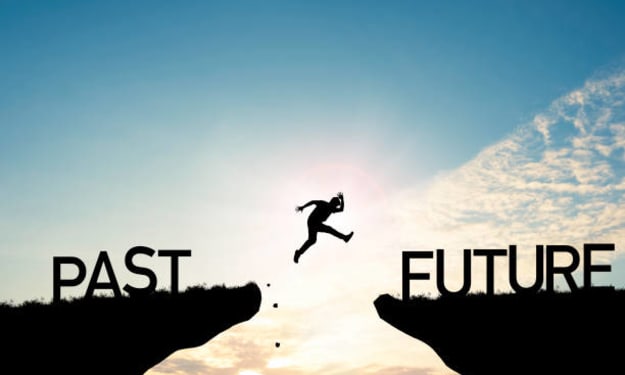
Past is past
Human beings are wired to remember. Our brains naturally catalog events and assign emotional significance to them. This is why past traumas, heartbreaks, and failures often stay with us far longer than we want them to. From a neurological standpoint, the amygdala—our brain's fear and emotion center—stores emotionally charged memories so they can be recalled quickly in the future. This biological safeguard helps us survive, but it also causes us to relive pain again and again. We replay conversations, analyze decisions, and torture ourselves with “what-ifs.” Why did I say that? What if I had made a different choice? Why didn’t I try harder? This mental habit creates a loop—an emotional echo chamber where we remain stuck, unable to fully live in the now because we are haunted by the then. Letting go is not about pretending the past didn’t happen. It’s about consciously choosing to release its emotional hold on us. In therapy, this is often called “closure”—coming to terms with a chapter in one’s life, acknowledging its significance, and deciding not to let it define the rest of the story. When the Past is Beautiful It’s not always pain that binds us to the past. Sometimes, it’s beauty. People often cling to their golden days, romanticizing a time when life seemed easier, love felt fuller, or success came naturally. Nostalgia is sweet, but it can also be paralyzing. When we focus too much on how good things used to be, we may overlook the opportunities of the present. A person stuck in the glory of their youth might resist aging. Someone who’s lost a great love may struggle to open their heart again. While it’s healthy to cherish fond memories, it becomes unhealthy when we compare them constantly to the present, making it impossible for the present to measure up. That’s why it’s essential to honor the beauty of the past without becoming enslaved by it. Cultural and Generational Baggage Sometimes, the past we carry isn’t even our own. Families, communities, and nations often pass down stories, traditions, and traumas from one generation to the next. Children of war survivors may carry the fears of a conflict they never experienced. Descendants of historically oppressed groups often inherit not just resilience, but pain. In many cultures, honoring the past is seen as a virtue—and rightly so. It teaches respect, identity, and continuity. However, problems arise when that reverence becomes rigidity. When individuals are judged not by who they are but by what their ancestors did or didn’t do, the past becomes a prison. Releasing oneself from the past, then, is not always an individual task. It may involve challenging generational narratives, breaking cycles, and healing inherited wounds. Saying “past is past” in this context is a radical act of self-liberation. It means, “I acknowledge where I come from, but I am not confined by it.” The Illusion of Control One of the most compelling reasons we dwell on the past is because we believe, deep down, that maybe we could change it—or at least make sense of it. This illusion of control gives us comfort. If we can understand what went wrong, we think we can prevent it from happening again. But life doesn’t always work that way. Not all things are meant to be explained. Not all hurts are healed with logic. Accepting that the past is past requires a leap of faith. It asks us to surrender our need for control and certainty, to accept ambiguity, and to make peace with the unknown. It’s not a passive act of forgetting, but an active decision to prioritize the present. The Present as a Gift There’s a reason the present is called a gift—it is the only time we truly own. The past is gone; the future is not guaranteed. The more we live in either, the less we fully experience our lives. Mindfulness, a practice rooted in ancient traditions, teaches us to anchor ourselves in the now. It urges us to observe our thoughts without judgment and to return, again and again, to the moment at hand. Whether it's sipping tea, feeling the breeze, or simply breathing, mindfulness helps train the mind to stop wandering toward the past or anxiously projecting into the future. When we say “past is past,” we are choosing presence over paralysis. We are choosing to focus on what is rather than what was. Letting Go: A Practice, Not an Event Letting go isn’t a one-time thing. It’s a daily practice. You may forgive someone today and wake up angry again tomorrow. You may find peace in one moment and be flooded with grief the next. That’s okay. Healing is rarely linear. Each time we remind ourselves that the past is past, we are strengthening a muscle. Eventually, that muscle becomes strong enough to carry us forward. We start responding to life instead of reacting to it. We stop trying to fix what can’t be fixed and start building what can be built. Letting go doesn’t mean we don’t care. It means we care enough about ourselves to stop suffering unnecessarily. Stories That Trap Us Often, we trap ourselves in stories. “I’ve always been a failure.” “I never get things right.” “No one ever stays.” These narratives are stitched from past experiences, but they don’t have to define us. The truth is, people change. Circumstances change. We change. What if instead of repeating the same old story, you rewrote it? What if the failure taught you resilience? What if the heartbreak helped you understand love more deeply? What if the loss opened your eyes to what really matters? The past may inform your story, but it doesn’t have to write your ending. Forgiveness: The Ultimate Release Forgiveness is often misunderstood. People think it’s about excusing someone else’s actions. But real forgiveness is a gift you give yourself. It’s saying, “I won’t let your wrongdoings control me anymore.” It’s not about forgetting what happened—it’s about choosing peace over poison. Forgiveness is also about self-compassion. Many people are their own harshest critics. We replay mistakes, carry shame, and refuse to let ourselves move on. But self-forgiveness is essential for growth. You can’t plant new seeds in a garden filled with dead roots. The Wisdom of “Past is Past” In a world that constantly pulls us toward regret and worry, the phrase “past is past” is grounding. It brings us back to center. It teaches acceptance, humility, and hope. It reminds us that while we cannot change what happened, we can always choose how we live from this moment forward. This isn’t a call to forget your past or pretend it didn’t matter. It’s an invitation to see it clearly, learn from it, and then let it rest. To leave the past in peace so that the present can thrive. --- So, breathe deeply. Reflect, then release. Honor the past, but do not live there. Because the past is past. And life is happening now. ---
By Swathi palani2 years ago in Motivation
The Art of Mindful Relationships: Cultivating Emotional Intelligence and Grace in a Chaotic World
Introduction: Rediscovering the Language of True Connection In a world overwhelmed by instant gratification, digital overstimulation, and fleeting social exchanges, the essence of human connection often slips through the cracks. The visual affirmations and reflections explored here—from gentle dialogue to reciprocity and inner worth—form a unified framework for building relationships that go deeper than the surface. At the heart of these teachings lie emotional intelligence, conscious intention, and grace, all vital for cultivating bonds that are as resilient as they are nurturing. This article dives into how these principles reshape not just our relationships, but our relationship with ourselves. 1. Gentle Communication: The Strength in Softness "A soft-spoken man will always be top tier." This sentiment challenges the common misconception that volume equals value. In a world where shouting is often mistaken for strength, the quiet power of emotional regulation becomes a radical act. Calm communication is not passivity—it's emotional discipline. Why It Matters: De-escalation: Yelling creates defense; a calm tone invites resolution. Deeper Listening: True communication begins with silence and attention. Trust & Safety: A consistently calm presence becomes emotionally safe space, especially in moments of storm. Practice This: Pause before responding. Breathe. Ask: “Is this response healing or harming?” Use compassionate language—“I feel…” rather than “You always…”
By Medical Doctor 💊🏥2 years ago in Motivation
The Silence That Screams the Loudest
Have you ever heard a silence so loud it echoed through your soul? No words. No sounds. Just an overwhelming hush that crashes over you like a wave — bringing with it memories, regrets, and truths you've tried to bury. We live in a world drenched in noise, yet it's often the quietest moments that speak the loudest. These are the moments where the truth whispers—sometimes screams—into our hearts, demanding to be heard. What Makes Silence So Powerful? Silence is a language. Not one of speech or grammar, but one of presence, of emotion, and raw human experience. It doesn’t shout; it resonates. It doesn’t explain; it reveals. In silence, masks fall away. Pretenses dissolve. You come face-to-face with who you really are—flaws, fears, and all. And that confrontation, though subtle, is one of the most powerful experiences life offers. A World of Noise, a Need for Quiet We're constantly surrounded by noise: Social media notifications. News updates. Family pressures. Internal chaos. We’ve become so used to distraction that silence feels uncomfortable, even scary. But in reality, it’s sacred. It’s healing. When we sit in silence, we tune into what’s been muted by the world’s constant buzzing. We hear ourselves think. We feel deeply. We face the truth we’ve been avoiding. The Emotional Depth of Silence Silence isn’t empty. It’s full of unspoken stories. It holds the weight of waiting, the depth of unexpressed love, the pain of heartbreak, the regret of missed chances. A mother silently enduring her child’s tantrums. A lover walking away without a word. A friend withdrawing into silence after betrayal. These are not voids — they are emotional earthquakes. Silence often holds what words can never capture. Life’s Biggest Decisions Happen in Silence Think about it. The moments before you say “I do,” or the second you decide to walk away from a toxic relationship, the quiet seconds before you respond to pain — they’re always surrounded by silence. Because silence is where clarity is born. It’s in these moments that we process, decide, and transform. Spirituality and the Gift of Quiet Every spiritual tradition values silence. Prayer. Meditation. Reflection. They all begin in stillness. Because to hear the voice of the divine, you must silence the world. When your soul is quiet, it becomes receptive. The deeper truths emerge. Gratitude becomes louder. Pain finds healing. Silence isn’t absence — it’s awareness. Why Do We Fear Silence? Most people are afraid of silence. Because it forces them to confront the parts of themselves they’ve been avoiding. In noise, we can run. In silence, we must sit with ourselves. But here’s the truth: Those who bravely sit in silence, who listen to its quiet teachings, emerge stronger, wiser, and more in touch with life’s essence. Silence in Love and Relationships In relationships, silence can be a weapon—or a bridge. It can create distance. But it can also deepen connection. Sometimes, sitting beside someone in complete silence speaks more than a thousand words. Because in that moment, your souls are speaking. When two hearts beat in rhythm, they don’t need noise to connect. They just need presence. Healing Through Quiet If you’re hurting, anxious, or lost — try silence. Not the kind that isolates, but the kind that heals. Turn off your phone. Step away from the world. Breathe. Listen. You’ll hear more in five minutes of silence than in hours of noise. You’ll feel your heart again. You’ll remember who you are. The Inner Voice Hidden in Stillness The world is loud, but the soul is soft. It doesn’t compete. It waits — quietly. When we finally quiet down, that inner voice emerges. And often, it’s the voice of truth. Of direction. Of healing. Silence doesn’t just scream. It sings. Conclusion: The Loudest Voice You'll Ever Hear The silence that screams the loudest is not a curse — it’s a gift. It’s not the absence of sound, but the presence of meaning. It’s where we find ourselves, where we heal, where we grow. So the next time silence finds you — Don’t run. Sit with it. Let it speak. Because in that moment, you may just hear the truth your soul has been waiting for. One Last Question: Will you fear the silence, or will you finally listen to it?
By Sohail Abbas2 years ago in Motivation
From $50 to Freedom: How I Turned My Side Hustle into a Full-Time Gig
I never thought a $50 investment could change my life. It was the kind of decision you make late at night, half-doubtful, half-desperate, staring at your bank account and wondering how you’ll make it through the next month.
By Ishaq Ahmadzai 2 years ago in Motivation
Gabriella Zuniga: A Voice of Vulnerability in a World That’s Always Shouting
There’s a shift happening. Scroll through Instagram or TikTok today and you’ll likely find an endless parade of bold voices, fast cuts, loud opinions, and perfectly curated aesthetics. Everyone’s talking, selling, performing. The algorithm wants noise. But amidst that noise, Gabriella Zuniga is doing something radical—
By Emma2 years ago in Motivation
“He Never Spoke… Until the World Listened”
In a quiet, forgotten village surrounded by emerald hills and flowing rice fields, lived a boy named Ayaan. Everyone knew him because he was different, not because he was popular. He hadn't spoken a word since the moment he was born. The villagers called him “mute,” and many assumed he was mentally slow. However, Ayaan was in no way broken. He just had a new perspective on the world. He lived with his grandmother, a kind old woman who never forced him to speak. She believed that some children didn’t need to use words to express themselves. She used to say, "Some souls are made of silence." Ayaan would go to a large banyan tree at the village's edge every morning after helping her with the chores at home. There, he sat for hours with an old, broken radio. The radio had not played music in over a decade, its wires were dangling like veins, and it was rusted. Ayaan had never met his grandfather, but he had always been someone Ayaan admired through stories. Ayaan would tap and slide across the radio's wooden body with his fingers. He made beats—soft, rhythmic, and emotional. It was not accidental. The way he drummed was like he was speaking through sound. But no one was interested enough to listen. He was laughed at by children. Some adults advised their children not to spend too much time with him. They would say, "He's strange." But Ayaan never responded. He simply smiled and continued to tap, producing music that only he and the wind seemed to comprehend. One rainy afternoon, something unexpected happened. Just outside the village, a black SUV broke down. A frustrated and drenched man in his 30s emerged from it. He was a city music producer named Rayyan, traveling in search of authentic sounds for a new album. His GPS had led him down the wrong road, and now he was stuck. As he walked toward the village, seeking help, he paused. There, floating through the soft patter of rain, was a sound. A soft beat. It was faint, but it was there—raw, real, and strangely moving. He pushed through wet bushes and mud to get to the banyan tree, curiously following the sound. He saw Ayaan there, eyes closed, moving his fingers across the old radio's surface. Rayyan was mesmerized as he watched in silence. Ayaan opened his eyes and saw the stranger when the beat stopped. He looked like he might run, but Rayyan smiled and raised his hands. Rayyan said in a soft voice, "That was incredible." "You created that?" Ayaan gave a nod but did not speak. Rayyan came slowly closer. “Do you mind if I record it?” After a brief pause, Ayaan handed over the radio. Rayyan took out a portable recorder and captured the tapping rhythm, then stayed a little longer, recording more of Ayaan’s unique percussive style. He didn’t ask questions. He didn’t talk much. He just listened. Before leaving, Rayyan smiled again. “You may not speak, kid... but your sound says everything.” Back in the city, Rayyan worked for nights without sleep. Behind Ayaan's raw rhythm, he added melodies, ambient layers, and soft piano. When it was done, he named the track: “The Silent Beat.” He didn't put it out on his label. Instead, he uploaded it to SoundCloud and YouTube in private. The description was as follows: “Created by a boy who never spoke, but whose rhythm spoke for him.” The track went viral in a week. People from around the world commented: "I felt things I can't explain because of this." “Is this from a movie? Beautiful and haunting all at once. “Who is this silent musician?” Rayyan didn’t reveal Ayaan’s name immediately. He wanted the world to fall in love with the music, not the mystery. However, journalists and influencers quickly located the source, and the story of the boy from the village who never spoke but touched people's hearts with his beat spread. The village was visited by a film crew. People who once ignored Ayaan now spoke about him with pride. Some people lied, claiming that they had always known he was talented. Others hung their heads in shame. Rayyan returned, this time with a team. He went up to Ayaan's grandmother and inquired about whether Ayaan would be willing to travel with them for a single live performance. Ayaan started out scared. But his grandmother placed her hand on his and whispered, “Your voice is already out there. Please adhere to it. In a massive hall in Dhaka, under thousands of lights and cameras, Ayaan sat with his broken radio. Rayyan introduced him: “He never said a word. However, his heart beats spoke. This... is The Silent Beat.” Ayaan began tapping, the same way he did under the banyan tree. But this time, a choir, violins, soft pads, and his rhythm were with him. The audience was silent, spellbound. Some wept. Others closed their eyes and swayed. When the music ended, there was a moment of deep, echoing silence. After that, everyone in the room gave him a standing ovation. A reporter rushed forward with a mic and asked, “Ayaan, how does it feel to finally be heard?” Ayaan leaned into the microphone and whispered, for the first time in his life, in front of thousands of people: “I wasn’t waiting to speak. I was waiting for someone to listen.” From that day, Ayaan wasn’t just a boy from a quiet village. He became a symbol of unheard talent, of silent dreams that bloom when someone finally pays attention. He performed all over the world, inspired children, and established a foundation to assist disabled children in expressing themselves through music. His beats never needed words. Because sometimes, the deepest stories are told… in silence.
By Rifat2 years ago in Motivation
So Sharp, It Cuts Through Reality
There are countless ways to see the world. Some people observe the surface, while others dig deeper. But only a few possess a mindset so sharp, it doesn’t just observe reality — it slices through it. In this age of appearances, where illusions are often mistaken for truth, it takes a rare kind of awareness to recognize what’s real and what’s not. That awareness is sharp. It's dangerous. And it's beautiful. This article is a journey into that sharpness — a look at thoughts, words, emotions, and truths that cut deep and leave a lasting impact. 1. The Edge of Thought – The Power of a Sharp Mind A sharp mind is stronger than any weapon. When a person begins to question — the norms, the world, or even themselves — that’s the first strike of truth against the mask of reality. Free-thinking is the birth of clarity. And clarity becomes a blade. A blade that slices through inherited beliefs, toxic patterns, and comfortable lies. With every sharp thought, we inch closer to truth, no matter how uncomfortable it may be. It’s not just about intelligence. It’s about courage — the courage to face the raw, unfiltered reality. 2. Words That Cut Deeper Than Knives Some words don’t just communicate — they pierce. They land in the heart like a blade, sharp enough to shake your core. A sentence like: "We are not who the world thinks we are; we are who even the mirror can’t show." — can shift your entire perspective. Such words are born from pain, truth, and experience. They might hurt at first, but they awaken something deep inside — a spark, a realization, a transformation. That is the power of sharp writing, and even sharper truth. 3. Tearing Through the Fabric of Fake Reality In today’s world, it’s easy to get lost in illusions. Social media perfection, filtered lives, borrowed opinions — they all form a soft veil over the truth. But every now and then, something sharp comes along and rips that veil apart. It could be an event, a loss, a failure, or even a moment of silence. And in that moment, you see things for what they really are — not what they appeared to be. Yes, truth cuts. But it also frees. That pain you feel when the illusion shatters? That’s growth. That’s awakening. 4. The Sharpness of Human Emotions and Relationships Relationships can be soft, comforting, and warm. But sometimes, they’re sharp. A single word, a silent treatment, or a broken promise — it can cut deeper than a sword. We often underestimate the sharpness of emotional wounds. But the beauty lies in this: just as steel is shaped by fire, we are shaped by these sharp moments. The pain teaches us boundaries. The betrayal teaches us awareness. The heartbreak makes us resilient. Through those emotional cuts, we grow. We learn. We evolve. 5. Self-Discovery – The Sharpest Journey of All The sharpest blade you will ever face is the one within. “Who am I? What do I really want?” — These questions, when asked with honesty, have the power to tear apart everything false you’ve built around yourself. It’s not easy. It’s not gentle. But once you peel off those layers, you meet your true self — raw, pure, and powerful. That’s the version of you that doesn't just survive reality but understands it. Self-discovery is a dangerous journey. But those who take it are the ones who live meaningfully. Conclusion: Don’t Fear the Blade — Become It Words, thoughts, truth, emotions — when sharp, they change lives. “So Sharp, It Cuts Through Reality” isn’t just a poetic line — it’s a way of seeing the world. A mindset that refuses to be blinded by lies or dulled by comfort. Yes, it hurts sometimes. Yes, it makes you uncomfortable. But through that discomfort, you find truth. And through truth, you find freedom. So don’t fear the sharpness. Embrace it. Be the thought that wakes others up. Be the word that cuts through silence. Be the truth that challenges illusion. Because in a world full of masks, only the sharp ones see the face beneath.
By Sohail Abbas2 years ago in Motivation
Jane Eyre
Jane Eyre is a classic English novel written by Charlotte Brontë and published in 1847. It tells the inspiring story of a young woman’s life her struggles, her strength, her love, and her search for freedom and self respect. The novel is filled with emotion, mystery, drama, and deep lessons about being true to yourself.
By Muhammad Hayat2 years ago in Motivation