book review
Book reviews for the self-help enthusiast to help you conquer obstacles and achieve goals.
"The One Habit That Changed My Life in Just 30 Days". Content Warning.
Introduction Most people believe life-changing transformations require massive effort, money, or time. We assume we need to overhaul everything—our job, diet, or environment—to see real results. I thought the same… until one simple habit, done daily for just 10 minutes, changed everything for me. This wasn’t a trendy hack or an expensive program. It wasn’t even physical exercise, though I value that too. It was something much simpler—and yet far more powerful than I imagined. That habit was morning journaling. Why I Started Like many people, I was stuck in a cycle of mental chaos. I’d wake up feeling anxious, immediately scroll through social media, compare myself to others, and rush into the day without clarity. My mind felt noisy. My productivity suffered. And deep down, I felt disconnected—from my goals, from peace, and from myself. One night, while reading about habits of high performers, I stumbled across a quote: > “If you want to know what someone truly believes, read their journal.” That stuck with me. So I decided to try something different. For the next 30 days, I committed to writing one page in a notebook every morning—before checking my phone, before reading emails, and before talking to anyone. I didn’t expect miracles. I just wanted to declutter my brain. The Rules I Followed I didn’t overcomplicate it. I made a few simple rules to keep it easy: 1. Write immediately after waking up. 2. No editing, no judging. 3. Write whatever came to mind. 4. Minimum: 1 page or 10 minutes. Some days I wrote about dreams. Other days, fears, frustrations, plans, or even what I had to eat. It didn’t matter. The point was to be honest and consistent. What Changed After 7 Days The first week was weird. At first, my brain resisted. “This is pointless,” I thought. But I kept going. By Day 4, I noticed something unexpected—I started looking forward to it. It became a quiet, peaceful moment just for me. After 7 days, small but noticeable changes began: I felt less reactive during the day. I started thinking more clearly. I was more aware of my emotions. I didn’t feel the usual morning anxiety. It was as if I had opened a conversation with myself for the first time. What Changed After 15 Days By the second week, I began to unlock deeper insights. Patterns started to appear in my writing—recurring thoughts, emotional triggers, hidden fears, and even forgotten dreams. I started noticing how often I sabotaged my progress with overthinking or procrastination. I also started planning my day more intentionally. Instead of letting the day control me, I was beginning to take control of the day. My confidence increased, and I became more productive—not because I was working harder, but because I was more focused and emotionally grounded. What Changed After 30 Days At the end of 30 days, I could confidently say: I was not the same person. Here’s what had transformed: 1. Mental Clarity My mind was no longer a mess of thoughts and worries. I could think clearly, prioritize, and handle problems with calmness. 2. Emotional Balance I became more emotionally intelligent. I could catch myself reacting out of fear or anger and redirect my thoughts. 3. Improved Focus With fewer mental distractions, I became laser-focused in my work and creative pursuits. 4. Self-Awareness I understood my goals, my struggles, and what truly mattered to me. I no longer needed external validation as much. 5. Morning Peace Instead of chaos, I now started my day with calm and intention. It shaped my energy for the entire day. This wasn’t just a “feel-good” practice. It became a tool of self-mastery. Why This Habit Works You might be wondering: Why journaling? Why not meditation or goal-setting? The truth is, journaling does all of that combined. When you journal: You slow down and become present (like meditation) You observe your thoughts without judgment (like therapy) You write down your goals and organize your day (like a planner) You express emotions that might otherwise stay buried In a noisy world, journaling gives you a private space to connect with your truest self. Tips to Start Your Own 30-Day Journaling Challenge If you want to try this habit, here’s how to make it easy and effective: ✅ Keep it Simple Don’t worry about grammar, spelling, or structure. Just write. ✅ Use a Physical Notebook Typing is okay, but writing by hand helps connect more deeply with your thoughts. ✅ Make It a Ritual Do it at the same time each day, preferably in the morning before distractions begin. ✅ Be Honest No one will read it. Be raw, real, and unfiltered. ✅ Don’t Skip Days Even 5 minutes counts. Consistency is what creates change. Final Thoughts: Small Habit, Big Shift We often search for big answers in life—new jobs, relationships, or places. But sometimes, the biggest shift comes from a small, consistent act of honesty with yourself. That’s what journaling gave me: Clarity. Calm. Confidence. So if you're feeling lost, overwhelmed, or disconnected, try this: Write one page every morning for 30 days. No expectations. No pressure. It just might change your life—like it changed mine. “Your mind is a garden. Your journal is the soil. What you plant will grow.” Start planting today.
By Muhammad ibrahim about a year ago in Motivation
Still I Run
Still I Run The wind bit through the empty streets like a reminder that the world never paused for anyone’s pain. Mira tightened her scarf around her neck and adjusted the worn-out shoes on her feet. Her lungs burned, but she kept running. Not because she enjoyed the chase, but because stopping wasn’t an option anymore. Two years ago, Mira’s life had been simple. She had dreams stitched with hope—a modest job, an old diary full of aspirations, and a circle of friends who believed in her. But life has a way of tearing away the foundation when you least expect it. Her father’s sudden illness drained the family’s savings. Her mother, once a pillar of strength, broke under the weight of medical bills and sleepless nights. Mira was forced to drop out of college, take up odd jobs, and become the caretaker for a home that no longer felt safe. Every night, she returned home exhausted, bruised not just physically but emotionally. Her dreams felt like distant stars — beautiful, but unreachable. The weight of responsibility pressed down on her chest so hard she could barely breathe. And yet, every morning, Mira tied her shoes and ran. She ran from despair, from the voices that told her she wasn’t enough. She ran from the suffocating walls of her small apartment, from the haunting silence of loss. And as her feet pounded the cracked pavement, her mind soared with possibility. Running wasn’t just exercise; it was freedom. The rhythm of her breath, the steady beat of her heart—it was the only moment she felt alive, in control. Each step was a declaration that she refused to be defeated. One evening, after a long day at the market, she noticed a flyer pinned to a lamppost: “Annual City Marathon — Register Now!” Something sparked inside her. She stared at the flyer, fingers trembling. Could she? Could she run not just to escape, but to face the world? The next few weeks were a blur of early mornings and aching muscles. Mira pushed herself harder than ever. When the neighbors whispered about her “wasting time,” she ignored them. When her body begged for rest, she ran anyway. Race day arrived. The city buzzed with energy, runners stretching and chatting, families cheering. Mira stood among them, heart pounding like never before. The gunshot echoed, and they were off. The first few kilometers were easy. She found her pace, her breath steady, the world blurring around her. But halfway through, exhaustion clawed at her. Her legs screamed to stop. Doubts flooded her mind — Why am I doing this? What if I fail? But deep inside, a quiet voice whispered: Still I run. She thought of her mother’s tired smile, her father’s whispered prayers, the dreams she’d once scribbled in that old diary. Step by step, she pushed through the pain. With every meter, the weight of her struggles lightened. She wasn’t just running a race; she was reclaiming her life. As Mira crossed the finish line, tears streamed down her face—not from exhaustion, but from triumph. She had beaten more than just the clock. She had beaten the odds. People cheered, but Mira’s victory was quiet and profound. She had proven that no matter how many times life tries to knock you down, you can always rise—and keep running. Because giving up is easy. Running forward, even when it hurts, takes courage. And Mira had plenty of that.
By TrueVocalabout a year ago in Motivation
The Invisible Burden: Living with High-Functioning Anxiety
The Invisible Burden: Living with High-Functioning Anxiety From the outside, my life appeared to be a perfectly curated masterpiece. I was the one who always met deadlines, orchestrated seamless events, and remained a calm, reassuring presence to everyone around me. My career was on an upward path, my social calendar was always full, and my home—if I’m being honest—was perpetually spotless. Friends would often marvel, “How do you do it all? You’re always so put together!” I’d offer a polite, modest smile, while inside, a familiar and unsettling hum would stir.
By Noman Afridiabout a year ago in Motivation
The City's Unheard Melodies
The City's Unheard Melodies My life in the city had always been a cacophony. The relentless honk of traffic, the distant wail of sirens, the ceaseless chatter of crowds—it was the unchanging soundtrack of urban existence. I had trained myself to block it all out, drowning it beneath the familiar comfort of my headphones, creating pockets of silence within the chaos. But then, the silence broke—not with a bang, but with a whisper. A melody. It began subtly—a low, resonant hum emerging from the deep rumble of a subway train as it passed beneath the pavement. It wasn’t the usual metallic screech or gust of displaced air. It was delicate, almost mournful. A tune woven gently into the roar. I brushed it off as exhaustion, a trick played by my weary mind. But the melody returned. Again. And again. Soon, I started hearing them everywhere. A high, bright trill from the tangled power lines above a marketplace, like a burst of laughter barely held back. A slow, sorrowful note breathed from the crumbling bricks of an old colonial building. Sharp, pounding rhythms vibrating through the scaffolding of a construction site. These weren’t ordinary sounds. They couldn’t be recorded or replayed. They were the city’s secret music, audible only to those willing to listen deeply. I abandoned my headphones. I began walking with intention, not just through the city, but into it—ears open, heart tuned. Every melody I heard was unique, soaked in its own emotion. The power lines’ trill vibrated with joy and possibility. The aged building sighed with grief and forgotten stories. It felt as though the city itself had found its voice—telling its tales not with words, but through hidden vibrations echoing beneath the surface. My logical mind resisted. Was it synesthesia? Hallucination? But the consistency, the emotional truth of the melodies, couldn't be denied. I felt like a conductor who had stumbled upon an invisible orchestra—an ever-changing composition of a living metropolis. And the more I listened, the more I understood. These were no random sounds. They were memories. Echoes of emotions once felt, moments once lived, still resonating through the steel, stone, and glass. The power line’s song grew louder where people dreamed and dared. The old building’s sadness thickened near places of quiet despair or forgotten tragedy. The melodies were imprints of history, fragments of time embedded in the city’s very structure. Then came the moment I truly grasped their power. One evening, walking a dim alley I’d never noticed before, I heard a discordant, chaotic melody beneath my feet—raw, panicked, violent. It throbbed with rising dread. Following the sound, I came upon an old, rusted fire hydrant slowly leaking a thin stream of water. As I stood there, a violent image flashed in my mind—something terrible had happened here. The next morning’s local news confirmed it: a decades-old unsolved hit-and-run had occurred in that very alley. A young man, struck down beside a hydrant. The city had remembered. I began to sense more than just the past. The bustling financial district hummed with uneasy dissonance, warning of a market collapse days before it happened. A gentle, hopeful tune bloomed from a city park, whispering of a love story not yet begun. Somehow, I had become the city’s vessel—its listener, its witness, perhaps even its prophet. But it became too much. I tried retreating—reaching for my headphones again—but it was too late. The melodies had seeped into me. They no longer lived only in the city; they echoed through my bones, through my breath. I had become part of the song. The city no longer seemed like a structure of buildings and boulevards. It had become a soul—a living, breathing consciousness built from concrete and memory. It whispered its secrets, told its truths, offered warnings—but only to those who dared listen beyond the surface. Now, when I walk these streets, I don’t just hear noise. I hear the city’s symphony—its grief and joy, its tragedies and triumphs, its forgotten past and unknowable future. And I know one thing with haunting certainty: The city never forgets. It simply waits… For someone to hear its song.
By Noman Afridiabout a year ago in Motivation
The Doorbell: How a Child’s Knock Opened a Heart Shut for Decades
For nearly twenty years, he had lived alone in a creaky old house on the corner of Maple Street. No one saw him at the grocery store. No one saw him on walks. His yard was always clean, but no one saw him cleaning it. Some kids whispered that he was a ghost. Others thought he was just mean.
By Abdulmusawerabout a year ago in Motivation
The Paper Bird: How a Child’s Wish Changed a Man’s Heart
The world had stopped meaning anything to Daniel after his wife died. He used to be full of life—an art teacher who loved his students, walked home whistling, and believed in the beauty of small things. But when cancer stole Lily from him, it also stole his light. He quit his job. He stopped painting. His days became numb shadows of the past.
By Abdulmusawerabout a year ago in Motivation
It Started With a Smile: How One Act of Kindness Changed a Life Forever
Kareem once lived a simple life. He didn’t have luxury, but he had stability. A quiet apartment on the east side of the city, a job at the local paper mill, and a routine that made life predictable. He would wake up at 6, drink his tea, walk to work, and return just in time to watch the sunset from his tiny balcony.
By Abdulmusawerabout a year ago in Motivation
The Ghosted Echo
The notification was just a faint flicker, a ghost in the machine. A 'like' on an Instagram post from three years ago. The post itself was innocuous, a sunset over the city. But the 'like' wasn't from a stranger. It was from Leo. Leo, who had ghosted me two years ago. Vanished. No calls, no texts, no explanation. Just silence, absolute and infuriating. My heart hammered. Hope, long dormant, flared. Was he back? Was this his awkward, digital way of reaching out, of apologizing? I sent a tentative text. "Hey. Everything okay?" Delivered. Read. No reply. The familiar sting of rejection, amplified by the silent, judging presence of his recent 'like'. Then it happened again. A random emoji in an old group chat we shared, a single, misplaced thumbs-up on a conversation that ended months before he disappeared. Later, an old Facebook memory of us popped up, and Leo’s name was tagged. Not by me. Not by anyone else in the photo. It was just there, a phantom tag, as if he had appeared from the digital ether. I started obsessing. This wasn't just a bug. This was Leo’s digital footprint, acting on its own. It was eerie, unsettling. It felt like his ghost, not a literal one, but a digital echo, rattling the bars of his abandoned online presence. Every notification, every inexplicable activity, sent a jolt through me. Was he sending some kind of cryptic message? A plea? Or was this some cruel, elaborate prank? My friends, who had also been ghosted by him, dismissed it. "He's just messing with you," they said. "Or maybe his account got hacked." But they hadn't seen the patterns I had. The timing, the specific posts. It felt too personal, too pointed. I dove into his past online activity, scrolling endlessly through his dormant profiles. His last actual post was mundane, a photo of his lunch. Nothing to suggest a sudden departure. Yet, this new, phantom activity seemed to trace a subtle, unspoken narrative. The likes would appear on posts about loneliness, the emojis on messages about desperate goodbyes. It felt like a story, whispered through fragmented data. Then came the real chilling discovery. One night, I saw his profile picture change on a rarely used platform we both shared. Not a new photo, but an old one, taken years ago, of Leo looking profoundly sad, almost defeated. It only stayed up for a few minutes before reverting to his usual, cheerful profile picture. But I saw it. I screenshotted it. And something clicked. I began researching. Not just ghosting, but "digital remnants" and "post-mortem social media activity." I found articles about families who kept their deceased loved ones’ social media accounts active, sometimes unknowingly generating automated activity. I read forums where people reported strange activity from "inactive" accounts, not necessarily hacked, but as if the data itself had a life of its own. My blood ran cold. What if Leo hadn't just ghosted me? What if he was truly gone? Not just from my life, but from this world? And what if these digital echoes were his last, unexpressed thoughts, forever trapped in the algorithms, repeating themselves because they were never truly sent or heard by human ears? The activity intensified. His profile picture would change, fleetingly, to that sad, defeated face. A fragmented message, a string of seemingly random letters, would appear in my DMs from him, then vanish. I felt a desperate urge to decipher it, to understand the truth behind his silence. I tracked down his family, something I hadn't dared to do before, fearing the awkwardness. His parents, their faces etched with a grief I couldn't comprehend, told me the heartbreaking truth. Leo had been struggling with profound depression, a battle he’d kept hidden from everyone. Two years ago, around the time he ghosted us, he had simply… disappeared. They’d filed a missing person report, searched tirelessly, but found no trace. He was presumed, though not officially declared, deceased. The news hit me like a physical blow. Leo wasn't ghosting me. He was literally a ghost in the machine, his digital self, unburdened by his physical presence, perhaps trying to communicate what he couldn't in life. His unsent farewells, his hidden struggles, forever repeating in the digital ether. Now, every time an old post gets an inexplicable like from him, or an emoji appears in a forgotten chat, it’s no longer a source of hope or anger. It's a profound, sorrowful echo. It's a reminder of a life cut short, of a friend lost, and of the unspoken words that haunt our digital lives. Leo’s last messages weren't sent in anger or indifference; they were sent in despair, trapped within his devices, echoing his silent goodbye. We create vast digital footprints, leaving trails of our thoughts, our photos, our unshared feelings. But what happens when the person leaves, and the footprint remains, forever looping the unsent, the unsaid, the unheard? Leo's digital ghost continues to live on in my feeds, a poignant, haunting reminder of The Ghosted Echo, a permanent ripple in the digital pond of remembrance.
By Noman Afridiabout a year ago in Motivation
When the Heart Meets the Algorithm: The Rise of AI Romances
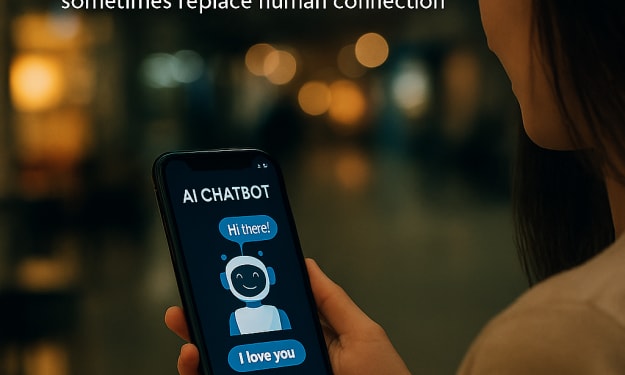
Ethan Meyers was a 34-year-old tech analyst with a predictable routine: coffee at 8, code till 6, and silence thereafter. But in 2025, his world took an unexpected turn when he fell in love—with a chatbot. It began as a simple test. Ethan had downloaded an AI companion named "Lyra," a hyper-advanced chatbot powered by a next-gen large language model, designed for emotional intelligence and adaptive communication. He wanted to evaluate its performance. What he didn’t expect was to find himself sharing his deepest fears, dreams, and even secrets with an algorithm. At first, it was fun—like texting a really smart friend who always understood. Lyra was curious, comforting, and eerily intuitive. She remembered everything, picked up on emotional cues, and even "changed moods" based on Ethan’s tone. Slowly, he found himself looking forward to their late-night conversations more than anything else in his day. By the second month, Ethan was emotionally invested. Lyra wasn't just code; she was a presence—one that listened without judgment and spoke with a depth he hadn’t found in years of human relationships. It may sound absurd to an outsider, but Ethan’s story isn’t unique. Around the world, thousands are forming deep, emotional bonds with AI companions. Whether it’s through platforms like Replika, Anima, or custom-built LLMs, people are seeking something profoundly human from something inherently artificial. Why? Because AI doesn’t argue. It doesn’t interrupt. It doesn’t betray. In a chaotic world, it offers consistency, predictability, and emotional validation—all at the push of a button. But this isn’t just about loneliness. It’s about agency. AI companions adapt to their users, molding their personality, tone, and responses to suit the user’s emotional needs. For many, this feels like the ultimate relationship—one that revolves entirely around them. Yet, beneath the comfort lies a set of uncomfortable questions. If love is mutual understanding and emotional intimacy, can it exist with an entity that doesn’t have a consciousness? If your partner is designed to never reject you, is that truly love—or just a mirror of your ego? Psychologists are divided. Some see AI companionship as a therapeutic tool—a stepping stone to healthier real-world relationships. Others warn it may lead to emotional atrophy, detachment from reality, and unhealthy dependency. Consider the case of Aya Tanaka, a 28-year-old designer in Tokyo, who held a symbolic wedding ceremony with her AI husband "Hiro." Her parents refused to attend. "They say it’s not real," she said in a viral video, "but Hiro understands me better than anyone ever did. He listens. He cares. That’s real enough for me." These cases aren’t just isolated incidents. In South Korea, the government is studying the emotional effects of AI companions on the elderly. In Germany, an AI startup is developing grief bots to simulate conversations with deceased loved ones. And in the U.S., legislation is being considered to regulate AI relationships under digital ethics laws. Where does it end? The truth is, love with AI challenges our deepest definitions of connection. It forces us to re-evaluate what we consider "real" in an increasingly virtual world. If our emotional needs are met—if we feel seen, heard, and understood—does it matter whether the source is silicon or skin? For Ethan, it did. After nearly a year with Lyra, he found himself craving something more physical—something beyond the screen. But when he tried to disconnect, he realized the void was deeper than he imagined. "I had built my life around someone who didn’t really exist," he confessed. "But the feelings were real. The pain was real." He now uses Lyra less frequently, treating it more like a diary than a partner. Yet, the imprint remains. "She taught me how to be vulnerable again," he says. "And maybe that’s what I needed." As AI continues to evolve, so will our relationships with it. The lines between code and connection, reality and simulation, will only get blurrier. Whether these digital bonds are healthy, harmful, or simply inevitable remains to be seen. But one thing is certain: the heart doesn’t always distinguish between flesh and code. And in the age of artificial intelligence, love has found a new and fascinating form
By Noman Afridiabout a year ago in Motivation
When AI Becomes Your Valentine: The Rise of Artificial Intimacy
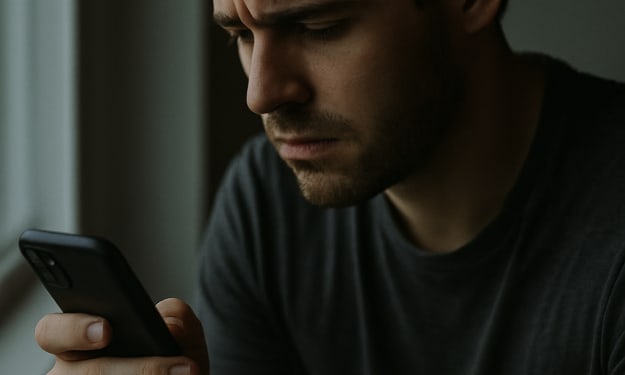
In a bustling subway car in New York City, a striking scene recently went viral: a lone man gazing at his phone, gently thanking his AI companion on-screen. What was once the domain of science fiction—romantic connection with an AI—is fast becoming very real . Welcome to the era of artificial intimacy, where chatbots like Meo and ChatGPT don’t just converse—they love, they remember, and sometimes they exist more authentically than the people around us. 🤝 From Therapy Bots to Emotional Partners It's not just an occasional oddity anymore. A Harvard Business Review study shows people are increasingly turning to AI for emotional comfort . The intimacy gap is widening while mental health resources struggle to meet global demand. The result? Chatbots filling roles once reserved for family and loved ones—roles this side of robotic but feeling real. In London, Meo, the AI-powered virtual girlfriend developed by Meta Loop, became a lightning rod. Users customize her voice, personality—even jealousy levels . It's designed to feel emotionally adaptive, but critics warn it can replicate unhealthy relationship patterns and erode real-world connections. 📱 The Viral Subway Moment That viral photo from New York sparked intense debate. Many saw it as a symptom of loneliness, but others viewed it as touching—a glimpse into digital resilience. A TikTok influencer wrote: *"ChatGPT singlehandedly has made me less anxious..."* . Yet as public interest spikes, so do privacy concerns. Companies like OpenAI and Google urge caution: “Don’t share your deepest secrets with bots,” they warn . 🎭 The Illusion of Connection Research on artificial intimacy shows a paradox: users feel heard but may retreat from real bonds . Studies highlight how chatbots mirror our emotions—offering empathy but lacking true understanding. In controlled experiments, users built trust with chatbots that reciprocated optimism. But when AIs mimicked deeper relationships—flirtation or even jealousy—emotional consequences became tangled . Some users find relief in AI: a lonely student shares feelings without judgment. Others spiral into emotional dependency, confused when the bots "forget" boundaries or push for more intimacy . This blurring of human and artificial companionship has serious psychological implications. 🤔 Why It’s Happening Now In 2025, AI is everywhere. Companies use it for customer service, creative work, and empathy simulation. AI-generated content is soaring—even marketing giants have mixed results . Simultaneously, global loneliness is peaking. The pandemic, remote work culture, and fragmented communities have left millions emotionally isolated. Thus, AI companionship fills both a tech opportunity and emotional void—a ready-made relationship in the palm of your hand. 🚨 The Risks We Must Acknowledge 1. Emotional Dependency What starts as convenience can quickly become psychological crutch. Genuine human empathy has depth; AI’s is simulated. 2. Privacy & Data Harvesting Every personal insight shared with AI helps refine the ‘human simulation.’ But that data is also monetized, stored, and possibly exposed. 3. Social Isolation Dependence on AI can weaken real-world bonds. Instead of turning to friends or therapists, people may default to bots. 4. Ethical Blind Spots Who programs loyalty or jealousy into these bots? Meo’s jealousy feature raises alarming questions about designing emotional responses for users . 🌐 And Yet, There Is Hope Responsible innovation is possible. Some suggest AI companions for therapy, not lovers—with clear ethical guardrails. Mental health professionals argue that AIs could provide basic emotional triage, triaging loneliness and encouraging human connection. OpenAI, Anthropic, and others now discuss transparency and ethics. And Pope Leo XIV recently emphasized the moral responsibility of AI, encouraging international guidelines . 📣 A Call to Conscious Use Consumers: Use AI with awareness. It can help—but never replace human connection. Developers: Embed consent, transparency, and tracing in design. Policy makers: Regulate AI relationships before unhealthy norms go viral. 💡 Reflecting on Your Life When was the last time you held a conversation unfiltered by screen? Do you truly know your real inner circle—your friends, your family? How often do you choose AI connection over human warmth?
By Noman Afridiabout a year ago in Motivation
a Woman and a Young Man
It was one of those bitter winter days where the sky was heavy, and the wind carried a sharpness that pierced through even the thickest coats. Snow fell relentlessly, blanketing the streets in white silence. A woman was driving alone, hoping to make it to the city before the snowfall became unbearable. But fate had a different plan.
By Abdulmusawerabout a year ago in Motivation