advice
Advice that will put you on the path to success; tips, tricks and nuggets of wisdom from trusted experts and motivational mentors.
The Silent Sparks: A Dream Beyond the Mountains
In the rugged yet beautiful terrain of Khyber Pakhtunkhwa, where mountains whisper tales of resilience and the wind carries centuries of tradition, a young dreamer quietly began a journey that would echo far beyond his hometown. Amid the sounds of bustling bazaars and the stillness of village nights, one boy found his voice not through loud proclamations, but through the silent determination of dreams born in solitude.
By falak2 years ago in Motivation
Chasing the Sun
Noor was born in a small village where the sun seemed to shine a little brighter, and the sky stretched out endlessly over the green fields. From a young age, she was different. While other children were content with playing in the streets and learning what was taught in school, Noor had big dreams. She wanted to be more than what the village could offer, more than what the world had expected of her.
By Qaisar Jan2 years ago in Motivation
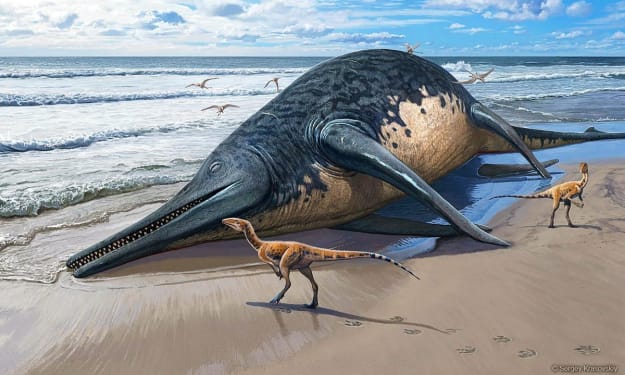
11-Year-Old Girl Discovers Ichthyotitan severnensis, the Largest-Ever Marine Reptile. Content Warning.
In a discovery that has captivated paleontologists and science enthusiasts alike, an 11-year-old girl from Somerset, England, has helped uncover a fossil belonging to the largest marine reptile ever found—*Ichthyotitan severnensis*. This remarkable find not only adds a new chapter to our understanding of prehistoric marine life but also proves that curiosity and exploration know no age limits. A Discovery That Began with Curiosity In May 2020, Ruby Reynolds and her father, Justin Reynolds, set out for a fossil-hunting expedition on the rocky shores of Blue Anchor in Somerset, England. What began as a casual outing quickly turned into a historic scientific breakthrough. Justin found a curious bone fragment on the muddy flats, and shortly afterward, Ruby discovered a much larger piece nearby. Realizing the significance of the bones, the Reynolds family contacted Dr. Dean Lomax, a paleontologist affiliated with the University of Bristol and the University of Manchester. Dr. Lomax is a leading authority on ichthyosaurs—marine reptiles that roamed the oceans over 200 million years ago—and his expertise would soon confirm that Ruby's discovery was far from ordinary. A Familiar Fossil from the Past Upon examining the bones, Dr. Lomax noticed a striking resemblance to another fossil found in 2016 by fossil collector Paul de la Salle. That specimen had also been recovered from the same region near the Bristol Channel. At the time, the jawbone fragment measured over 6.5 feet (2 meters) long but was considered an isolated find. With the Reynolds family’s discovery, scientists had the missing puzzle piece they needed. Over the next few years, a team of experts—including Dr. Lomax and Dr. Mark Evans from the British Antarctic Survey—conducted multiple field trips and further analysis. Their conclusion was groundbreaking: the fossils belonged to a new species, now named *Ichthyotitan severnensis*, which translates to “giant fish lizard from the Severn.” The Largest Marine Reptile to Ever Live So how big was *Ichthyotitan severnensis*? According to the scientific study published in *PLOS ONE*, the creature’s lower jawbone alone spans more than 2 meters. Based on comparisons with known ichthyosaurs like *Shonisaurus*, scientists estimate that *Ichthyotitan* may have reached lengths of up to 82 feet (25 meters). That makes it longer than a modern blue whale and the largest marine reptile ever discovered. Ichthyosaurs were fast-swimming predators that dominated prehistoric oceans during the Mesozoic Era, especially in the Late Triassic and Early Jurassic periods. Despite their fish-like appearance, ichthyosaurs were reptiles, more closely related to modern-day lizards than to fish or whales. Their streamlined bodies, large eyes, and powerful tails made them perfectly adapted for life in the deep sea. A Glimpse Into Prehistoric Oceans *Ichthyotitan severnensis* lived around 202 million years ago, just before a mass extinction event that wiped out over 75% of life on Earth at the end of the Triassic period. This extinction paved the way for the rise of the dinosaurs on land and may have contributed to the eventual decline of ichthyosaurs in the oceans. What makes this discovery even more significant is the evolutionary parallel it presents. After ichthyosaurs went extinct approximately 94 million years ago, the role of top marine predator remained unfilled until whales evolved to occupy that niche around 50 million years ago. This phenomenon, known as convergent evolution, shows how unrelated species can develop similar traits and ecological roles due to comparable environmental pressures. A Family Legacy in Paleontology Dr. Lomax praised the Reynolds family for their incredible contribution to science, calling it one of the most exciting fossil discoveries in recent memory. He also pointed out that Ruby’s name will forever be linked with the discovery of this ancient giant, an achievement few can claim regardless of age. “To think that Ruby Reynolds, an 11-year-old girl, helped uncover this magnificent piece of natural history is just awe-inspiring,” Lomax said. “It demonstrates the importance of amateur fossil hunters and the potential impact they can have on scientific research.” Ruby’s discovery has already inspired a new generation of young fossil hunters and has been widely reported across international news outlets. It serves as a shining example of how scientific curiosity, when nurtured, can lead to incredible achievements—no matter your age or background. Conservation and Continued Exploration The fossil-rich coastline of Somerset, especially the areas surrounding the Bristol Channel, has proven once again to be a treasure trove for paleontologists. These coastal mudflats and cliffs are subject to constant erosion, often revealing fossils hidden for hundreds of millions of years. Scientists believe more jawbone fragments from *Ichthyotitan* could be found in the future, which may help them reconstruct a more complete skeleton. In light of this discovery, conservation efforts to protect fossil-rich coastal zones have gained renewed importance. Paleontologists are urging for more awareness and responsible fossil hunting practices to preserve these vital areas for scientific study. Final Thoughts The story of *Ichthyotitan severnensis* is a perfect blend of science, history, and human curiosity. Thanks to the keen eyes of a young girl and her father, the world now knows about the largest marine reptile to ever swim Earth’s oceans. The discovery highlights the ongoing importance of fossil exploration and serves as a powerful reminder that groundbreaking scientific discoveries can come from anyone—young or old. Whether you're a seasoned paleontologist or a child with a fossil-hunting kit, one thing is certain: the next big discovery might just be waiting beneath your feet.
By Tech Horizons2 years ago in Motivation
Digital Detox: Why Unplugging Can Make You Happier, Smarter, and More Focused
Let’s be honest for a second: how often do you catch yourself unlocking your phone without even realizing it? Maybe you're waiting in line, watching TV, or even talking to someone—and your thumb just knows what to do. No real reason. Just habit.
By Mantha Pantha2 years ago in Motivation
It's better to change your environment before trying to build new habits.
Overview: The Myth of Unadulterated Willpower Millions of individuals make pledges to improve their sleep, exercise, diet, and productivity every January. They buy diaries, download apps, prepare, and have faith that things will be different this time. However, many of these aspirations subtly disappear by February. It is not because people lack willpower or are lazy; rather, it is because they frequently attempt to form new habits without altering the circumstances that first influence their behavior.
By Md. Atikur Rahaman2 years ago in Motivation
Poe 'Vices
Introducing Poe ‘Vices: Life Advice You Definitely Didn’t Ask For or Need. From chaos gremlin to cosmic counsellor, Poe (The infinite, scream-Beam) is now solving your deepest problems with her signature style: shouting, biting things, and chicken, obvs. Fools.
By River and Celia in Underland2 years ago in Motivation
Love Effects🍃
The Effects of Love: How Love Shapes the Human Experience One of the most potent feelings known to man is love. It affects how we think, feel, and live across generations, languages, and cultures. Love has an impact on every facet of our lives, from the passionate fire of romantic love to the steady warmth of family ties to the deep trust of lifelong friendships. It can change minds, heal bodies, and uplift souls, and its power extends far beyond fleeting emotions. In this article, we’ll explore the multifaceted effects of love on the human experience. --- 1. Love and Emotional Well-Being Love is fundamentally an emotional experience. It provides a sense of security, acceptance, and connection. When individuals feel loved, they are more likely to experience happiness, optimism, and emotional stability. Love acts as a buffer against life’s stressors, offering comfort during times of uncertainty. Scientifically, love activates the brain’s reward system. The brain releases neurotransmitters like dopamine, oxytocin, and serotonin, which are chemicals that make people feel better, give them more pleasure, and help them form relationships. Oxytocin, also known as the "love hormone," is essential for strengthening emotional bonds and fostering trust between people. On the other hand, emotional suffering can result from love absence or loss. Anxiety, depression, and heartbreak can all lead to feelings of depression. Mental health can be significantly affected by social isolation and a lack of emotional support, according to studies. This underlines how essential love is to emotional well-being. --- 2. Physical Health Benefits of Love Beyond its emotional effects, love can also be beneficial to physical health. People in loving and supportive relationships—whether romantic, familial, or platonic—tend to enjoy better physical health and a longer life expectancy. Love helps reduce stress, which is closely linked to chronic health conditions like high blood pressure, heart disease, and weakened immunity. The calming presence of a loved one can lower cortisol levels, decrease anxiety, and promote relaxation. Even simple physical gestures like hugging, holding hands, or cuddling release oxytocin, which not only deepens emotional connection but also promotes healing and reduces physical pain. Couples or close companions often encourage each other to adopt healthier lifestyles. They might cook healthy meals together, encourage one another to exercise, go to medical appointments, or support one another when they are sick. This shared responsibility fosters a healthier, more balanced life. --- 3. Influence on Behavior and Personality Love doesn’t just affect how we feel—it also influences how we behave. People who experience love often display increased empathy, patience, and kindness. Love encourages individuals to be more giving, selfless, and understanding, helping to build stronger social connections and communities. Loving relationships can inspire personal growth. People are more likely to strive for self-improvement when they are motivated by love, whether it’s to be a better partner, parent, or friend. Love pushes individuals to confront their weaknesses, develop emotional intelligence, and grow in compassion. However, love can also lead to irrational or impulsive behavior. In some cases, the intensity of love can cause people to overlook red flags, become overly dependent, or lose themselves in the relationship. It’s important for love to be balanced with self-awareness and healthy boundaries to avoid unhealthy dynamics. --- 4. Love as a Social Connector Humans are inherently social beings, and love is the glue that holds relationships—and societies—together. Love fosters trust, cooperation, and mutual support. It strengthens families, builds friendships, and sustains communities. In social settings, love promotes positive communication, reduces conflict, and encourages people to work together toward common goals. Societies with strong social ties frequently exhibit greater stability, resilience, and empathy. Love not only benefits individuals but also contributes to the collective well-being of a group or community. Our cultural expressions also show love. It has inspired countless works of literature, art, music, and film. Love is still a universal language of connection and continues to captivate human imagination, from Shakespeare's sonnets to contemporary romantic comedies. --- 5. Importance Spiritual and Existential Love goes beyond the physical and emotional—it can also hold deep spiritual meaning. Many people find purpose, identity, and transcendence through love. Whether it’s the love of a child, a partner, a friend, or a higher power, love provides a sense of belonging and significance. Spiritual traditions across the world emphasize love as a guiding principle. From compassion in Buddhism to agape in Christianity, love is seen as a divine force that elevates the human spirit. It exhorts individuals to transcend self-centeredness, show kindness, and seek deeper connections with others. Love also influences how we view our lives and our place in the world. It gives everyday actions meaning and transforms ordinary experiences into deeply satisfying ones. When people love and are loved, they often feel more connected to life itself. --- 6. The Challenges of Love While love has many positive effects, it can also bring challenges. Love makes us vulnerable to loss, disappointment, and heartbreak. Navigating the complexities of relationships requires effort, communication, and emotional resilience. Sometimes, love can become possessive, obsessive, or conditional. Emotional manipulation, codependency, and even abuse can result from unhealthy love expressions. It is essential to acknowledge that genuine love ought to nurture rather than oppress or harm. Healthy love is based on respect, trust, and equality. Understanding the balance between love for others and love for oneself is also crucial. Self-love is not selfish—it’s foundational. When individuals value themselves, they are better able to form healthy, loving relationships with others. --- Conclusion Love is a force unlike any other. It touches every part of the human experience—mind, body, and soul. It uplifts, heals, motivates, and connects. While it comes with its own set of challenges and risks, the rewards of love are profound and far-reaching. In a world that can often feel divided or uncertain, love offers hope. It reminds us of our shared humanity and our capacity for connection, compassion, and growth. Whether it’s through a hug, a kind word, or a lifelong bond, love continues to be the most transformative and enduring element of the human story. --- If you'd like a version that is optimized for SEO, blog publishing, or printing, let me know!
By IBTESUM ISLAM WASI2 years ago in Motivation
The Power of Self-Expression
In a world that often values outward expression, many individuals struggle to find their voice. For Rupa, the protagonist in the story "Colorless Wishes", this struggle is all too familiar. From childhood, she is portrayed as an introverted girl who finds solace in silence. Her journey of self-discovery, however, is not only about finding her voice but also about discovering how to give color to her dreams. This story reminds us that self-expression is an essential part of human existence, and when we dare to bring our innermost desires to life, we transform not only ourselves but the world around us.
By Chisty2 years ago in Motivation