advice
Advice that will put you on the path to success; tips, tricks and nuggets of wisdom from trusted experts and motivational mentors.
Rich Dad and Poor Dad
Title: Lessons from Rich Dad Poor Dad: A New Perspective on Wealth and Financial Literacy Introduction Rich Dad Poor Dad by Robert T. Kiyosaki is more than just a personal finance book—it’s a mindset-shifting manifesto that challenges conventional beliefs about money, education, and success. Since its publication in 1997, it has sold millions of copies worldwide and sparked conversations about wealth-building, financial independence, and the limitations of traditional schooling in preparing individuals for real-world economic success.
By alif khanabout a year ago in Motivation
The Coffee Shop That Gave Me the Confidence to Start Over
It was the smell that pulled me in. Warm espresso. Freshly baked pastries. The gentle hum of people talking, laughing, living. I had passed this tiny coffee shop dozens of times but never stepped inside. That day, after the worst job interview of my life, I wandered in without thinking. I just needed a seat and something to warm my hands.
By Inamullah Afridiabout a year ago in Motivation
Replace These 8 Common Habits to Instantly Feel Better. AI-Generated.
Feeling constantly tired, stressed, or unmotivated? Often, it's not the big events in life that weigh us down—but the small, daily habits we don't even realize are holding us back. By identifying and replacing these patterns, we can unlock a surge of mental clarity, emotional stability, and physical vitality.
By Diana Merescabout a year ago in Motivation
The Power of Starting Over: Why It’s Never Too Late to Begin Again. AI-Generated.
Life doesn’t always go according to plan. We all face moments when we look back with regret, feel lost after failure, or find ourselves standing at a crossroads, unsure of what comes next. Starting over might seem overwhelming in these moments, like admitting defeat or beginning from scratch with nothing. But in truth, starting over is not a setback. It is a powerful act of resilience, hope, and transformation. It’s never too late to begin again; in many cases, starting over is the beginning of something far greater than what came before.
By Voice of Simplicityabout a year ago in Motivation
The Light of Hope
The Darkest Night Sohrab was a poor boy who lived on the outskirts of a bustling city with his mother. His father had passed away years ago, leaving behind a void that life never truly filled. His mother worked long hours as a cleaner, and though they barely had enough to eat, she always told Sohrab, “Never let poverty steal your dreams.”
By Rahimullah Mohmandabout a year ago in Motivation
Joe Biden: A Life Forged in Tragedy and Triumph
Joseph Robinette Biden Jr.'s story is one woven with threads of both profound sorrow and remarkable resilience. Born in Scranton, Pennsylvania, in 1942, he grew up in a working-class Irish Catholic family, a background that deeply shaped his understanding of the everyday struggles faced by ordinary Americans. His father, Joseph Biden Sr., instilled in him the importance of hard work and perseverance, lessons that would prove invaluable throughout his life. A childhood stutter, initially a source of embarrassment and challenge, became a catalyst for self-discipline, forcing him to develop a unique speaking style marked by pauses and deliberate emphasis. This early struggle revealed a determination that would later define his political career. The idyllic picture of a young family was shattered in 1972, just weeks after Biden’s election to the U.S. Senate. A devastating car accident claimed the lives of his first wife, Neilia, and their infant daughter, Naomi. His two sons, Beau and Hunter, survived, but with severe injuries. This moment of unimaginable grief could have easily derailed his nascent political career, yet Biden, amidst the profound personal loss, found the strength to carry on. He took his Senate oath from his sons’ hospital beds, a poignant image that captured the essence of his commitment to both family and public service. He became a single father, commuting daily by train from Delaware to Washington D.C. to be present for his sons, a testament to his unwavering dedication to fatherhood. This period of his life was not just about surviving; it was about rebuilding, about finding strength in the face of overwhelming adversity. His political journey, spanning decades, reflects a gradual ascent marked by dedication and experience. He served as a U.S. Senator for 36 years, becoming a respected voice on foreign policy and criminal justice issues. His tenure as Vice President under Barack Obama further solidified his reputation as a seasoned statesman. He played a crucial role in the Obama administration’s efforts to navigate the global financial crisis and implement the Affordable Care Act. His long years in public service provided him with a deep understanding of the intricacies of government and the challenges facing the nation. Biden’s leadership style is often described as empathetic and collaborative. He has a reputation for building consensus and fostering relationships, qualities that have been instrumental in his ability to navigate the complex world of politics. His decisions are often rooted in his core values of fairness, equality, and compassion. His political values reflect a deep belief in the power of government to improve the lives of ordinary people, a belief shaped by his own experiences growing up in a working-class family. He emphasizes the importance of unity and bipartisanship, seeking common ground even in the face of deep divisions. His commitment to public service is driven by a genuine desire to make a difference, to leave the world a better place than he found it. The story of Joe Biden is not just a political biography; it is a human story. It is a story of resilience in the face of unimaginable loss, of perseverance in the face of adversity, and of unwavering commitment to public service. His life offers valuable lessons about the importance of persistence, humility, and hope. He demonstrates that even in the darkest of times, it is possible to find strength and purpose. His ability to connect with people on a personal level, to empathize with their struggles, reflects a deep understanding of the human condition. His journey reminds us that even ordinary people can achieve extraordinary things, that setbacks do not define us, and that hope can be a powerful force for change. His life is a testament to the enduring power of the human spirit, a reminder that even amidst life's inevitable storms, we can find the strength to rise again and make a meaningful difference.
By Noman Afridiabout a year ago in Motivation
The Day I Almost Gave Up And Why I'm Grateful I Didn't
One day I was on the verge of giving up. Not on a project or a goal alone. I mean completely gave up on myself, my goals, and the idea that life had any purpose. It was one of those mornings when it was difficult to get out of bed at all. It was one of those days when my heart was too exhausted to bear the weight of the world. I couldn't understand why life was being so cruel to me in spite of my best efforts, and everything I had worked so hard for seemed to be slipping away. All I saw when I looked in the mirror was a defeated person. However, a minor incident altered everything. A friend sent me a message. "Don't stop now" was all that was written. I nearly ignored it at first. But I couldn't get those words out of my head. "Don't stop just yet." I had come too far to give up, not because it would be simple to continue. Because progress is progress no matter how bad things get. Additionally, I owed it to myself to see what might occur if I persisted. I therefore persevered that day. Then the following one. I gradually regained my rhythm. A spark. a motivation for me to continue showing up. I now respond, "I chose to stay," when people ask me what changed in my life. Even though my entire being told me to stop, I decided to continue. Strength isn't always audible. It's not always obvious or dramatic. Strength can be quiet at times. When no one is looking, it's the decision to take one more step. It's not giving up on yourself, even when it seems like the simpler course of action. Don't stop now if you're reading this and you're on the verge of losing it. Feeling exhausted is not a sign of weakness. You are a human. However, you underestimate your strength. Even if all you can do today is breathe, keep fighting. That's sufficient. Because you might surprise yourself tomorrow.
By Denise M about a year ago in Motivation
The Return of the Outsider: A Story of Donald Trump's Relentless Rise
Donald John Trump is one of the most controversial, disruptive, and unforgettable figures in American political history. Long before he stepped into the White House, his name was already a brand — of luxury, excess, and media spectacle. But when he entered politics, he didn’t just run a campaign; he launched a cultural earthquake. Born in Queens, New York, in 1946, Trump grew up in wealth and ambition. His father, Fred Trump, was a successful real estate developer. Young Donald studied business, graduating from the Wharton School, and soon took over his father’s empire. Unlike his father, Donald wanted fame along with fortune. In the 1980s and 1990s, his name began appearing on casinos, hotels, airplanes, even steaks. Trump wasn’t just building properties — he was building a personality. Loud, confident, and unapologetic. In time, he became a media fixture, famously hosting the reality TV show The Apprentice. His catchphrase — “You’re fired!” — became part of pop culture. But behind the glamour were bankruptcies, legal battles, and relentless headlines. Yet none of it stopped him. In 2015, Donald Trump announced his candidacy for President of the United States. Pundits laughed. Analysts dismissed him. But the people listened. His speeches were raw and unscripted. He didn’t speak like a politician. He attacked political correctness, mocked opponents, and promised to “Make America Great Again.” To many, he was a voice against the establishment. A billionaire who said what others wouldn’t. His rallies were massive, emotional, and sometimes chaotic. He built a loyal base not with policy papers but with slogans and fury. In 2016, he stunned the world by defeating Hillary Clinton. It was a political upset unlike any other. Donald Trump, a man with no political or military experience, had become the 45th President of the United States. His presidency was a whirlwind. He pulled out of international agreements, enforced harsh immigration policies, clashed with allies, and redefined diplomacy — meeting with North Korea’s Kim Jong-un, praising authoritarian leaders, and calling the media “the enemy of the people.” He appointed conservative judges, including three Supreme Court Justices, shifting America’s legal landscape for generations. Every day under Trump felt like a new headline. His Twitter account became a tool of direct governance, insults, and unpredictable announcements. The traditional rules of politics no longer applied. He didn’t pivot, apologize, or conform. He reigned through disruption. But his presidency also deepened America’s political divide. Racial tensions flared. Institutions were tested. The pandemic response in 2020 was criticized as disorganized. And when he lost the 2020 election to Joe Biden, Trump refused to concede, claiming widespread fraud. The tension culminated on January 6, 2021, when a violent mob stormed the U.S. Capitol — a dark day in American democracy. Trump was impeached for the second time, becoming the only U.S. president to face impeachment twice. Yet even after all this, he remains a dominant force in American politics. To his supporters, Trump is a warrior — someone who stood against corrupt elites, protected American jobs, and put “America First.” To his critics, he is a danger to democracy, a narcissist whose leadership was reckless and divisive. But beyond love or hate, one thing is undeniable: Donald Trump changed the way politics is done in America. He proved that media dominance could outweigh traditional qualifications. He showed how one man’s personality could reshape a party. And he ignited movements that continue to ripple through the nation. As he eyes a return to politics, the world watches. Can he regain the throne? Or has his fire faded? Whatever happens next, the Trump era has already carved its mark deep into the pages of American history. His legacy is still a battlefield — between those who saw him as a savior and those who saw him as a threat. But Donald Trump doesn’t wait for history’s judgment. He creates his own.
By Noman Afridiabout a year ago in Motivation
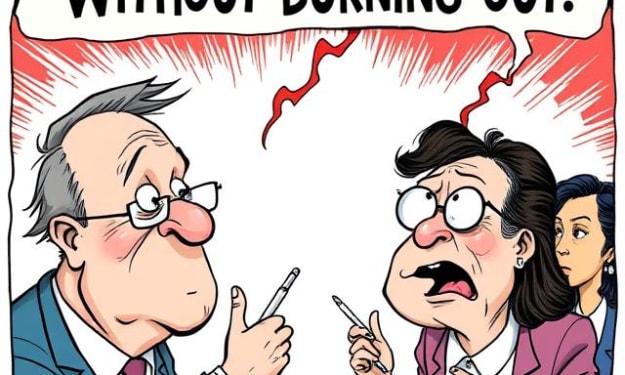
How to Break Bad Habits Without Burning Out
We all have habits we'd rather live without doom scrolling, late-night snacking, skipping workouts, or hitting snooze one too many times. Yet breaking bad habits often feels like a battle of willpower, one that leaves us mentally drained and discouraged. The good news? You don't need to overhaul your life overnight or exhaust yourself with drastic measures. In fact, the key to lasting change is learning how to break bad habits without burning out.
By Fred Bradfordabout a year ago in Motivation
Frozen Moments: The Magic of Antique Cameras
In an era where every smartphone captures high-definition memories with a tap, it’s easy to forget the roots of photography—the bulky, mechanical, and magical antique cameras that once defined human memory. Before digital pixels and instant selfies, there was patience, passion, and an almost sacred silence surrounding the act of taking a photograph. Let’s rewind to the late 19th and early 20th centuries, when photography was a mysterious art form. Cameras weren't carried in pockets; they were revered instruments—made of polished wood, leather bellows, and gleaming brass. The process was as much about craftsmanship as it was about science. Every click was a commitment. These early cameras, like the Daguerreotype, Box Brownie, and Large Format Bellows Camera, were more than tools. They were portals through which life was frozen, one exposure at a time. Back then, having a photograph taken was a serious event. Families dressed in their finest clothes. They sat stiffly under the open sky or in candle-lit parlors, trying to remain perfectly still. Why? Because the exposure time could take several minutes! A blink or a smile could blur the face. That’s why most portraits from that time look so still, so serious. The photographers themselves were artists, engineers, and inventors rolled into one. They worked with chemicals like silver nitrate and collodion, mixing solutions under red lanterns in darkrooms. They loaded glass plates carefully and used tripods to steady their cameras. One wrong move, and the whole shot was lost. Some of the most iconic photographs in history—Abraham Lincoln’s portraits, war-time images, early cityscapes—were taken with these antique machines. Each frame told a thousand stories. Unlike today, you couldn’t take 20 pictures and delete the bad ones. You had one chance, and that made it priceless. One fascinating aspect of old cameras was their ability to surprise. The long exposures sometimes caught faint movements—ghostly hands, blurred footsteps, or whispering leaves—adding an eerie charm. In some cultures, these blurry anomalies were believed to capture spirits or unseen energies. Antique cameras also had unique aesthetics. The images they produced were rich in contrast, deep in shadow, and full of character. Sepia tones added a nostalgic warmth, while the imperfections—light leaks, vignetting, grain—gave the pictures soul. Perhaps the most charming element was the box camera photographer on the streets. You might find him in old cities, sitting beside a tripod-mounted wooden camera, with a black cloth draped over his head. For a few coins, he would capture your image, dip it in chemicals, and give you a photo minutes later—freshly printed and wet to the touch. Such photographs weren’t just memories; they were milestones. A child’s first photo. A wedding portrait. A last goodbye. Every image had weight, meaning, and permanence. Today, these vintage cameras are collectors' dreams and history buffs' treasures. They remind us of a time when photography wasn’t just about clicking—it was about connecting. With each image, we see not only the faces of the past but the soul of a moment. In the age of digital abundance, where thousands of images are stored and forgotten, the antique camera teaches us something precious: the value of a single, well-taken photograph. These old machines, with their ticking timers and wooden bodies, whisper stories to those who listen. They remind us that sometimes, the slower you go, the deeper you feel. In their silent frames lie entire lifetimes—paused, remembered, and revered. --- AI Image Prompt (for matching image generation): A vintage photography scene showing a 1900s box camera on a wooden tripod. A man in old-fashioned clothing (vest, pocket watch, round hat) is standing under a black cloth, taking a picture. A serious-looking family sits still in front of the camera—father, mother, children in formal 1900s attire. Background shows a dusty street or old studio setting with soft natural light and sepia tones. The atmosphere is quiet, nostalgic, and timeless.
By Noman Afridiabout a year ago in Motivation
The Symphony of Her Soul
From the moment she was born, Elara's world was silent. Doctors discovered her profound hearing loss when she was just a few weeks old. Her parents were devastated, not by her condition, but by the weight of a world that often failed to embrace difference.
By MIGrowthabout a year ago in Motivation