advice
Advice that will put you on the path to success; tips, tricks and nuggets of wisdom from trusted experts and motivational mentors.
“Am I Too Sensitive?” – Turning Sensitivity into Strength
If you’ve ever been told you’re “too sensitive,” you’re not alone. Maybe you’ve felt overwhelmed in loud spaces, affected deeply by others’ moods, or hurt by things people say that others easily brush off. Sensitivity can feel like both a gift and a curse. But what if your depth, awareness, and empathy weren’t flaws to fix - but qualities to protect, nurture, and celebrate? This post is a reminder that emotional sensitivity isn’t something to hide - it’s something to understand and reclaim as powerful.
By Olena about a year ago in Motivation
What a narcissist goes through after break up with you
Breaking up with a narcissist can leave you questioning everything - especially when they act like it never meant anything. Their cold detachment, quick rebound, or even silence might make you wonder: did they ever care? But beneath their surface-level composure lies a different reality - one filled with ego injury, panic, and emotional scrambling. While they may seem fine, the truth is, narcissists experience post-breakup collapse in a way that’s chaotic, self-centered, and often hidden. Here’s what a narcissist really goes through after losing someone like you.
By Olena about a year ago in Motivation
The Mirror of Respect
*The Mirror of Respect* In the bustling town of Mirzapur, there lived a young boy named *Salman*. He was clever, quick-witted, and full of potential. But there was one thing missing in his character — *respect for others*. He believed respect was something reserved only for those who held power, money, or high status. At school, he would talk back to teachers, mock the cleaner, and ignore his grandparents at home. His grades were good, but his attitude made people distance themselves. When someone corrected him, he would say proudly, “If they want my respect, they better earn it.” His father, Mr. Rashid, a humble shopkeeper, noticed this change. He didn’t scold him but decided to teach Salman a lesson — not through punishment, but through experience. *The Lesson Begins* One day, Mr. Rashid took Salman to the shop with him. “You’ll help me today,” he said. Salman agreed, thinking it would be an easy day. As the day went by, Salman observed how his father greeted every customer — young or old, rich or poor — with the same polite smile. He addressed the cleaner with respect and listened carefully even to children. Some customers raised their voices, but Mr. Rashid stayed calm. At lunchtime, an old ragged man entered the shop. His clothes were torn, and his hands trembled. He asked, “Can I get some flour? I don’t have money, but I’ll return it.” Salman expected his father to send him away. Instead, Mr. Rashid nodded, packed the flour, and said, “No need to return it. Take care of yourself.” After the man left, Salman whispered, “Why give to someone who can’t pay?” Mr. Rashid smiled. “Because everyone deserves respect — especially those who have the least.” *The School Surprise* The next week, the school principal made a surprise announcement. “A new interschool project will begin. Students will visit a senior citizens’ home and write a report on their experiences.” Reluctantly, Salman went with his group. At the home, he met an old man named *Chacha Kareem*, who was quiet but had kind eyes. Salman spoke to him without much interest. But slowly, he learned that Kareem was once a respected college professor, had traveled the world, and taught thousands of students. Salman began visiting regularly. One day, Chacha Kareem said, “Beta, you remind me of myself. But always remember — people may forget your words, but they will never forget how you made them feel.” Those words sat heavy on Salman’s heart. *Change Starts Within* Back at school, something shifted. Salman greeted his teachers more politely. He thanked the gatekeeper. He started helping his younger siblings at home and listened patiently to his grandmother’s stories. One day, during a class presentation, Salman’s voice shook with nervousness. Before he could lose confidence, his classmates clapped and cheered him on — the same classmates he once ignored. That evening, he told his father, “Abbu, I think I understand now. When I respect others, they respect me too — not because they have to, but because they want to.” *The Full Circle* Months later, Salman stood outside his father’s shop as a group of boys teased an elderly man walking by. Salman stepped in and respectfully asked them to stop. The boys laughed, “Why do you care?” Salman simply replied, “Because one day, we’ll all be old. What we give now, we’ll receive later.” The elderly man turned, smiled at Salman, and placed a gentle hand on his shoulder. “Your parents have raised you well, son.”
By Ibrahim physicistabout a year ago in Motivation
Behind Every Smile, a Silent Cry
In a world where appearances often matter more than truth, where filtered smiles dominate social media and surface-level conversations mask inner turmoil, many are silently suffering. Behind seemingly happy faces lie invisible wounds. These unspoken pains, when left unnoticed or ignored, can lead people to a heartbreaking decision: suicide.
By The Thought Mirrorabout a year ago in Motivation
“The Silent Power of Morning Rituals: How I Changed My Life Before 8 A.M.”
We often hear the phrase, “Win the morning, win the day.” But for most of my life, mornings were chaotic, rushed, or completely unintentional. I would wake up just in time to scroll my phone, gulp down coffee, and run out the door—mentally foggy and emotionally unprepared.
By Hamza Habibabout a year ago in Motivation
The Forest She Grew
It began with a single sapling, a little girl, and a question no one could answer. “Why are there no trees left here?” nine-year-old Alina asked her grandfather as they walked through a once-verdant hillside near their village. The ground beneath their feet was cracked, dry, and silent.
By MIGrowthabout a year ago in Motivation
Breaking the Surface
The morning of the race, the lake was still, its surface unbroken except for a few ducks drifting by. Jacob adjusted the strap on his goggles and looked out at the water, breathing slowly. The smell of early dew, sunscreen, and nervous energy surrounded him. Athletes milled about the start line, stretching, joking, checking their gear for the third or fourth time. Jacob sat in his racing wheelchair a few feet away, quietly going over his plan. He hadn’t always been a triathlete. Seven years ago, a motorcycle accident had taken the use of his legs. At 26, Jacob had gone from a rising personal trainer to a man who couldn’t walk across his own apartment without help. For months, he’d spiraled — painkillers, anger, isolation. It was a physical therapist, Maya, who handed him a pamphlet about adaptive sports and said, “You still have the heart of an athlete. Let’s train it.” Now, he was 33, and this was his third triathlon. But this wasn’t just another race. This was the Boulder Peak Triathlon — one of the most grueling courses in the region. A 1.5 km swim, 42 km bike ride, and a 10 km run through hilly, uneven terrain. Jacob was the only para-athlete competing this year. There were para divisions at some races, but this event didn’t separate the field. Everyone raced together. He wheeled himself down to the dock. The other athletes parted slightly, some nodding respectfully, others simply curious. He felt their eyes. He always did. When the starting horn sounded, the chaos began. The water was cold, but Jacob was used to that shock now. Using only his arms and shoulders, he swam hard and fast, carving his own path through the churning surface. Adaptive swimming wasn’t new to him — he’d spent hundreds of hours training for this. Still, keeping pace with able-bodied swimmers wasn’t easy. Fifteen minutes in, he reached the shore. His lungs burned, but his mind was sharp. Volunteers helped him to his racing wheelchair and dried him off as quickly as possible. He strapped in, heart pounding. Next came the handcycle portion — his strongest event. On the road, Jacob became a machine. His custom-built handcycle was sleek and efficient, and his upper body had been trained to endure brutal strain. He tore through the bike course, powering up hills that slowed others, his arms pumping like pistons. The crowd cheered at one steep climb when he passed two able-bodied cyclists. But it wasn’t just about winning — not for him. It was about showing what was possible. By the time he reached the transition point for the run, he was in the top twenty. He switched to his racing wheelchair again — a lightweight, three-wheeled marvel that hugged turns and absorbed shocks. The run course was full of gravel paths, small ridges, and forest turns, all of which tested his handling skills. Around kilometer seven, he passed a runner who had twisted his ankle. Jacob paused, asked if he needed help, and when the man waved him on, Jacob continued — grateful that he didn’t have to make the choice between finishing and stopping. Near the final hill, fatigue hit him hard. His arms felt like lead, his breath ragged. But he thought of the first day he sat up in a hospital bed and was told he might never live independently again. He thought of Maya, who refused to give up on him. And he thought of all the kids who might see this race on the news and believe in themselves for the first time. When he came around the final bend, the finish line loomed ahead, lined with cheering spectators. The noise was deafening, but all Jacob could hear was his own heartbeat. He gritted his teeth and pushed through the last fifty meters like his life depended on it. He crossed the line in 2 hours, 41 minutes, and 12 seconds. Third overall. And first in the hearts of everyone watching. People rushed over — reporters, photographers, organizers. Someone handed him a bottle of water. Another asked if he’d be willing to speak at a local school. He smiled, exhausted but radiant. A woman approached with her son — maybe nine years old, in a small wheelchair. “This is Caleb,” she said. “He wanted to meet you. He’s never seen someone like him do something like that.” Jacob knelt as best he could and offered Caleb a fist bump. “You’re going to do bigger things than me, Caleb,” he said. “This? This is just a start.” That night, as Jacob lay in his hotel room, his arms sore and his body aching, he allowed himself a moment of quiet pride. He didn’t need a medal to validate him, though he did end up getting one. What mattered most was that he’d changed something — maybe just a few minds, maybe just one — about what it meant to be an athlete, disabled or not. He drifted off to sleep thinking not about the pain, but about the next race. The next challenge. The next surface to break.
By Faizan Khanabout a year ago in Motivation
The Day I Stopped Saying ‘Maybe’
It started with a chair. A plain, worn-out chair that had been sitting in the corner of my apartment for months. One of the legs was loose. The cushion had long since gone flat. It served mostly as a laundry collector—an unintentional monument to procrastination. Every time I passed it, I told myself I’d fix it.
By Asim Aliabout a year ago in Motivation
Megnesium benefits,sources, effects and research on megnesium
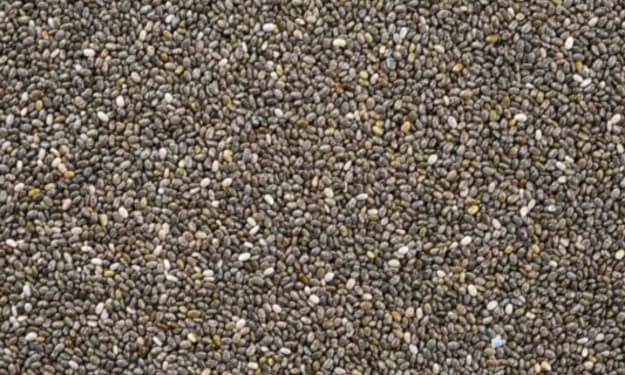
If you are suffering from health issues, and especially if you are a woman, you must have seen a lot of content about magnesium on social media in the past few months, where people are not only praising the effects of magnesium on health, but also recommending various supplements. Many users are trying to find out how important magnesium is for health and how you can get it naturally. Magnesium is an important micronutrient found in our daily diet. It helps in many important functions of the body. According to experts, magnesium ensures that our body’s cells, organs and brain function properly. It also helps in stabilizing our mood, balancing the muscles and nervous system, and strengthening the immune system. Magnesium also plays an important role in the absorption of vitamin D in the body and its inclusion in the blood. In which foods is magnesium found? Green leafy vegetables are a good source of magnesium because it is found in chlorophyll, the pigment that gives plants their green color. Grains, nuts, and some fruit seeds are also rich in magnesium. Magnesium is also found in limited amounts in some fish, meat, and dairy products. According to one study, foods such as Brazil nuts, barley flour, brown rice, cashews, spinach, and almonds contain adequate amounts of magnesium. Another study suggests that chia seeds and pumpkin seeds are also good sources of magnesium. Rebecca McManaman, a nutritionist and spokesperson for the British Dietetic Association, says, “If you include unsalted wheat or barley flour and a variety of legumes, green vegetables and fruit in your diet every day, you will get the necessary amount of magnesium every day.” Health benefits of magnesium Consuming adequate amounts of magnesium is beneficial for the body in many ways. Mental health Magnesium is important not only for the body but also for regulating brain metabolism and the proper functioning of brain tissue. A study was conducted on more than 6,000 women over the age of 65. This study found that magnesium from food and supplements can reduce the risk of memory loss. Experts believe that magnesium can play an important role in keeping the brain healthy as we age. Mental Health Magnesium According to a study, magnesium may help reduce symptoms of anxiety and mild to moderate depression. Magnesium plays an important role in regulating a key receptor involved in mental health that is linked to anxiety, worry, mood and depression in humans, says Dai, a professor of nutrition and behavior at the University of Leeds. Helps with better sleep Our eating habits can affect our sleep in many ways. A 2022 study review found that getting the body's required amount of magnesium can improve sleep quality. Metabolic syndrome Metabolic syndrome refers to a number of health problems that can be linked to type 2 diabetes or your heart health. An analysis of more than nine thousand people found that people with the highest magnesium intake had a one-third lower risk of metabolic syndrome than those with the lowest magnesium intake. Heart health Several studies have shown that maintaining good levels of magnesium in the body has benefits for the heart. For example, one study found that people with the highest intake of magnesium were eight percent less likely to develop high blood pressure than those with the lowest intake. An analysis of 90,000 female nurses over a 30-year period found that those with the highest intake of magnesium had a 39 percent lower risk of heart attack than those with the lowest intake. Another study found that getting enough magnesium may reduce the risk of heart disease. Bone health Magnesium has also been found to be beneficial for our bone health. Magnesium is involved in the process of bone formation. Could you be deficient in magnesium? Professor Lewis Dye says that it is often difficult to detect a magnesium deficiency in the body. He said that people generally do not get the required or sufficient amount of magnesium in their diet. A major reason for this is thought to be modern farming and food processing. "Over the past 60 years, intensive agriculture has significantly depleted soil minerals, including a 30 percent decline in magnesium levels," says Dye. He also said that the Western diet is high in processed foods, and 80 to 90 percent of magnesium is lost during this processing. Magnesium deficiency is linked to a number of health problems, such as digestive tract diseases, type 2 diabetes, kidney failure and certain genetic diseases. Magnesium deficiency can lead to mild inflammation in the body, which is a common cause of many diseases.
By Real contentabout a year ago in Motivation