advice
Advice that will put you on the path to success; tips, tricks and nuggets of wisdom from trusted experts and motivational mentors.
We Were Not Born Just to Survive: A Quiet Rebellion Against Settling. AI-Generated.
By Marc Reflects Introduction: When Struggle Becomes Normal In many places, especially across parts of Africa, the idea of “just making it through” is not a season—it’s a way of life. We survive, not because we lack dreams, but because the system teaches us to aim low. I have come to believe that many of us—especially those born into scarcity—are not lazy. We are trained by necessity.
By Marc Reflects about a year ago in Motivation
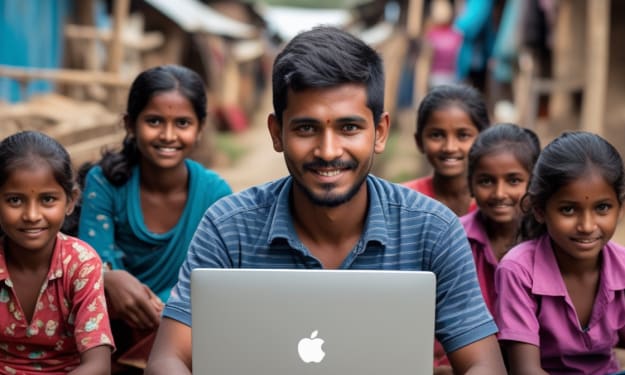
The Amazon Laptop and the End of Poverty
In a small corner of Noorabad village stood a tiny house where Rehan lived with his mother and two sisters. His father had once worked in a factory, but when the factory shut down, the family struggled to keep their stove burning.
By Sher Ur Rehmanabout a year ago in Motivation
The Mindset Shift That Made Me Take Money Seriously at 19.
At 19, most people are out here spending their last £30 on Deliveroo or a night out. Meanwhile, I was sat in my room, staring at my bank balance and thinking, “Nah, this ain’t it.” Something clicked in me — like a mental slap. I realised if I wanted real freedom, not just money to survive but money to live, I had to stop treating cash like a joke. That was the moment I shifted. And it changed everything.
By Thomas Webbabout a year ago in Motivation
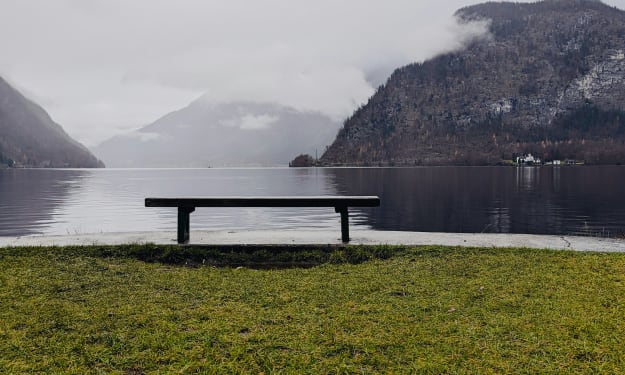
The Bench Beside the Lake
Every Sunday afternoon, David sat on the same old wooden bench beside the lake. It had become his ritual after losing his wife to cancer three years ago. That bench wasn’t just a place; it was a memory capsule. That’s where he had proposed to her. That’s where they used to laugh, dream, and sometimes cry. And now, it was where he came to feel close to her. On a chilly autumn day, as golden leaves floated gently on the surface of the water, David noticed a young woman already sitting on his bench. She wore a green coat and held a sketchbook. She looked up as he approached and offered a small smile. “Is this your spot?” she asked. David chuckled softly, “Kind of. But it’s okay. I can share.” She scooted to the side, making space for him. “I come here to draw,” she said, “Something about this place calms my anxiety.” David nodded. “I come here to remember someone.” They sat in silence for a few minutes, the peaceful quiet only broken by the occasional quack of ducks or the whisper of wind. “I’m Emma,” she said, extending her hand. “David.” As days passed, their Sunday meetings became a comforting habit. Emma would sketch, and David would talk. Slowly, she began sharing too—how she had recently moved to the city to escape an abusive relationship, how she was trying to rebuild her life, and how some days felt too heavy to carry. David, in return, told her about his wife, about the way grief sometimes creeps in when you least expect it, and how healing isn’t linear—it comes in waves. One Sunday, Emma brought him a gift. It was a sketch of the bench, with an old man and a young woman sitting together, leaves swirling around them. “I drew us,” she said, shyly. David looked at it, deeply touched. “This... is beautiful. Thank you.” That day, he told her something he had never shared with anyone—not even his children. When his wife was dying, she had made him promise to keep living. “Don’t just survive,” she had said, “Find something or someone to care about.” “I think maybe,” he said, looking at Emma, “she would be happy to know I met you.” Emma’s eyes welled up. “I think maybe I needed you too, David.” --- Months passed. Emma found a job as an art teacher. David began writing again, something he had once loved. Their Sunday meetings continued—now sometimes with coffee and cookies. People began to smile at the unusual pair. An old man and a young woman, sharing a bench and stories. One day, Emma came to the bench, holding a small sign she had made. She placed it on the side of the bench. It read: “This seat is sacred. If you sit here, may you find comfort, kindness, and someone who listens.” And underneath, in small letters: “Dedicated to David and Rose. And to all new beginnings.” David cried that day—but this time, not from pain. --- 🌟 Moral of the Story: Sometimes, healing comes from the most unexpected places. A shared seat, a listening ear, a stranger who stays—these can change everything. Life always offers us a second chance to connect, to care, and to begin again.
By Afzal khan dotani (story uplode time 10:00 PM)about a year ago in Motivation
You’re not cold - you’re healing from what you didn’t deserve.
There comes a moment in your healing when people start to say you’ve changed - that you’ve become “cold,” “distant,” or “hard to reach.” But what they often miss is the silent war you’ve fought to get to this version of yourself. You didn’t wake up and decide to shut people out. You began to heal from what once made you feel unworthy, unseen, or unloved. And healing doesn’t always look soft - sometimes, it looks like boundaries. Sometimes, it looks like walking away from what once broke you.
By Olena about a year ago in Motivation
Is drinking too much water fatal?
drinking too much water fatal? Not drinking enough water can lead to dehydration, but can drinking too much water also be deadly? About 60% of our body weight is made up of water. It is present in our cells, organs, blood, and other parts of the body. Dr. Nedia Rodriguez Sanchez, a hydration expert at the University of Stirling in Scotland, says, “Water is a nutrient.” “We focus on protein, vitamins, carbohydrates, and fiber, but we don’t consider water an essential nutrient in our lives.” The Role of Water in the Body According to medical experts, some of the key roles of water include: Providing nutrients and oxygen to cells Flushing bacteria out of the bladder Aiding in digestion Preventing constipation Regulating blood pressure Lubricating joints Protecting organs Regulating body temperature Maintaining electrolyte (sodium) balance What Happens If You Don’t Drink Enough Water? The body loses water constantly. To keep the body and its organs functioning properly, this lost water must be replaced. This process is known as water balance. If the body loses more water than it takes in, it can lead to dehydration — which may cause a number of serious health issues. Symptoms of Dehydration: Dark yellow and strong-smelling urine Urinating less frequently than usual Dizziness Feeling fatigued Dry mouth, lips, and tongue Sunken eyes According to the World Health Organization, in severe cases, dehydration can lead to confusion, rapid heart rate, and even organ failure. Can Drinking Too Much Water Be Dangerous? Yes, drinking too much water can also be dangerous and may have serious consequences. Drinking excessive amounts of water in a short period can cause hyponatremia, also known as water intoxication. This happens when sodium levels in the blood drop to dangerously low levels, causing body cells to swell. Symptoms of Hyponatremia: Nausea and vomiting Headache Confusion Low energy and fatigue Anxiety and irritability Muscle weakness or cramps Seizures In extreme cases, it can even lead to a coma or death.Some reported fatal cases involved people drinking 3–6 liters in a short time, especially without balancing electrolytes. How Much Water Do We Really Need? Women are generally advised to drink about 2 liters of water per day, and men about 2.5 liters. This includes not just water intake, but fluids from all sources — including food. Most foods contain water — fruits, vegetables, rice, and even nuts. For example, watermelon is about 92% water. However, these recommendations are not the same for everyone. Professor John Speakman from the University of Aberdeen in Scotland was part of a global study monitoring the water intake of over 5,000 people in 23 countries. “Men between the ages of 20 and 60 may need about 1.8 liters of water per day,” says Professor Speakman. “Women of the same age group may require around 1.5 to 1.6 liters daily. By the age of 85, a person may only need about 1 liter per day.” How much water a person needs depends on various factors — including body weight, physical activity, age, gender, and environmental conditions. “If you live in a hot and humid place, your water needs will be much higher than someone living in a cold and dry area,” he explains. Thirst is the body’s natural signal that it needs more water. Urine color is also a good indicator of hydration levels. Light yellow urine means the body has sufficient water, while dark yellow may signal dehydration. Water is one of the most essential substances for all forms of life on Earth. It is a clear, colorless, odorless, and tasteless liquid in its pure form. Chemically, water is made up of two hydrogen atoms and one oxygen atom (H₂O). Water covers about 71% of the Earth's surface, mostly in oceans, seas, rivers, and lakes. It also exists underground and in the atmosphere as vapor. Only about 3% of Earth's water is fresh, and a very small portion of that is usable for drinking and agriculture
By Real contentabout a year ago in Motivation
10 Best Advice for 20-Year-Old Boys
When I turned 30, I found myself sitting alone in a coffee shop, watching a young guy across the room nervously tap his fingers on a resume folder. He looked about 20—sharp haircut, awkward confidence, trying hard to look grown-up in a world that still felt too big.
By nawab sagarabout a year ago in Motivation
You can start over - as many times as it takes.
Starting over can feel like a punishment - as if we’ve failed to get it right the first time. But the truth is, life rarely follows a straight path. We pivot, we pause, we fall apart, and sometimes we have to begin again - not because we’ve lost, but because we’ve grown. There’s nothing weak about starting over; in fact, it’s one of the most courageous things a person can do. Whether it’s with your career, relationships, healing, or identity - you have permission to try again, as many times as it takes.
By Olena about a year ago in Motivation
Real love won’t require you to betray yourself.
Many people confuse love with sacrifice - but there’s a crucial difference between healthy compromise and the betrayal of self. When we’re taught to equate love with selflessness, we often stay in situations that chip away at our identity, our voice, and our values. But real love - the kind that nourishes instead of drains - never demands that you lose yourself in the process. It’s not love if it requires you to quiet your needs, compromise your worth, or abandon your truth just to keep it. If someone asks you to choose between them and your own self-respect, they’ve already told you what kind of love they’re offering - and it’s not the kind you deserve.
By Olena about a year ago in Motivation
Why a Growth Mindset Matters More Than a Business Plan
Timelines shift, markets change, and people grow, your mindset must grow with them too. Naushad Parpia, a trusted entrepreneur, shares that growth comes more from belief than planning. Your mindset shapes your response to success, failure, and every step in between. This article shows why mindset leads the way in modern business and life.
By Naushad Parpiaabout a year ago in Motivation
Stop shrinking to fit spaces you’ve already outgrown.
Growth is not always loud. Sometimes, it shows up as a quiet discomfort in places that once felt like home. As you evolve - mentally, emotionally, spiritually - you begin to feel the tension between who you’ve become and where you’ve been. And that tension is trying to tell you something: you’ve outgrown the space. Whether it’s a relationship, a job, a routine, or a mindset, if you have to shrink, silence, or suppress who you are to remain, you’re betraying the very growth you worked so hard for. Staying small to make others feel comfortable is not loyalty - it’s self-abandonment.
By Olena about a year ago in Motivation