advice
Advice that will put you on the path to success; tips, tricks and nuggets of wisdom from trusted experts and motivational mentors.
One Year Down, Four to Go
One Year Down, Four to Go I sat in my car with my head resting in my hands, not wanting to believe that I was just diagnosed with cancer. As I sat there trying to control my emotions, the song “Vision Thing” (live version with Lars Nootland) by Simple Minds was playing, which is about the celebration of life. At that moment, I wasn’t too sure what to expect with life and this new fight that I have to undertake.
By Joe Boeschabout a year ago in Motivation
“How I Started Making $50 a Day Online in the USA Without Any Investment”
The Struggle Before the Breakthrough Just a year ago, I was sitting at my desk, staring at my bank account balance and wondering how on earth I was going to cover my next set of bills. Like many people in the USA, I was living paycheck to paycheck. Rent, groceries, and utilities ate up everything I earned, leaving little room for savings or peace of mind. I didn’t have extra cash to invest in a fancy business or courses. All I had was my laptop, my phone, and a strong desire to break free from financial stress. That’s when I promised myself: If there’s a way to earn money online without investment, I’m going to find it. Little did I know, that decision would change my life. --- The First Steps – Learning the Hard Way My first attempts were messy. I tried every app and website I could find that promised “easy money.” Surveys, reward apps, watching videos—you name it. After hours of work, I barely made a few cents. It was discouraging, and I almost gave up thinking all online earning was a scam. But here’s the truth: most people quit too early. I decided to push myself a little further, and instead of chasing “get-rich-quick” tricks, I started searching for real long-term opportunities. --- Discovering Amazon Affiliate Marketing One night, while scrolling through YouTube, I found a video about the Amazon Affiliate Program. It explained how ordinary people were making money just by recommending products they already liked. The idea sounded simple: Sign up for free. Get a unique affiliate link for any product on Amazon. Share that link through social media, blogs, or videos. Earn a commission every time someone purchased through your link. I didn’t need money to start—just creativity and consistency. I started small by creating Pinterest boards around trending gadgets and lifestyle products. I’d post eye-catching pins, link them to Amazon products, and wait. The first week was slow, but then one pin took off. Someone bought through my link, and I earned my first $3. It wasn’t much, but it was proof. --- Writing on Vocal.Media – Sharing My Journey While experimenting with affiliate links, I also stumbled upon Vocal.Media—a platform where writers get paid based on reads. I wrote my first story about side hustles in the USA. To my surprise, it got a few hundred reads. My earnings were small, but I realized something important: people were interested in real experiences. I combined both strategies—writing authentic stories about online earning and sprinkling in helpful Amazon product recommendations where it made sense. --- The First $10 Online – A Turning Point The day I made my first $10 online felt like winning the lottery. It wasn’t just about the money—it was proof that this was real. Here’s the breakdown of what worked: Posting 3–4 fresh pins a week on Pinterest. Writing 1–2 stories a week on Vocal.Media. Sharing content in relevant Facebook and Reddit groups (without spamming). It took effort, but I wasn’t trading my time for pennies anymore. I was building something that could grow. --- Scaling to $50 a Day Reaching $50 a day didn’t happen overnight. It took months of consistency, trial, and error. Here’s what made the difference: 1. SEO-Friendly Titles: I used keywords like “make money online USA,” “Amazon gadgets,” and “side hustles” so my content ranked better. 2. Eye-Catching Images: Pinterest is visual. The better the image, the higher the click-through rate. 3. Authenticity: Instead of clickbait, I shared personal experiences—what worked for me, what didn’t. 4. Consistency: I treated it like a job. Even when my Vocal.Media balance went negative, I kept publishing. Slowly, my daily earnings grew—$10 became $20, then $30, and eventually $50. --- Challenges Along the Way Of course, it wasn’t all smooth sailing. Some of the challenges I faced included: Writer’s Block: Some weeks I couldn’t think of what to write. Low Traffic: Many posts got almost no reads in the beginning. Doubt: Seeing negative balances or low earnings made me question if it was worth it. But here’s the secret: every successful online earner you see today has faced these exact problems. The difference is, they didn’t stop. --- The Biggest Lessons I Learned 1. Patience is everything. Online income builds slowly, then grows. 2. Quality beats quantity. A well-written, SEO-friendly article can outperform 10 rushed ones. 3. Leverage free platforms. Pinterest, Vocal.Media, and Reddit became my best tools. 4. Never stop learning. I constantly tested new ideas, new headlines, and new products. --- Final Words – Why You Should Start Too Today, I’m not a millionaire, but I no longer stress about bills the way I once did. Making $50 a day online in the USA, without investment, has given me freedom, confidence, and hope for the future. If you’re reading this and wondering whether you can do it too, let me tell you: yes, you can. Start small. Write that first story. Post that first pin. Share that first affiliate link. Don’t worry about the results in the beginning. Focus on learning and being consistent. Because if I—a regular person with zero investment—can build an online income stream, then so can you.
By Umar Farooqabout a year ago in Motivation
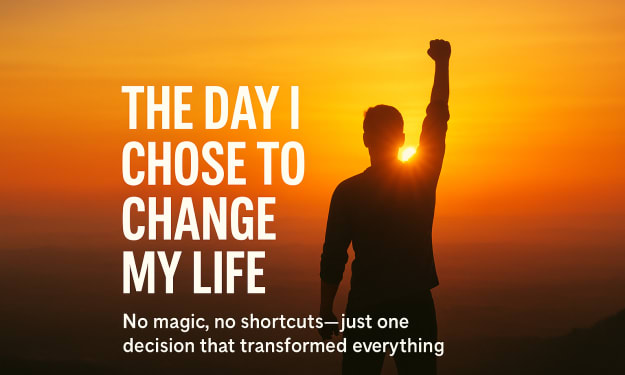
🌟 The Day I Chose to Change My Life
There comes a time in life when you wake up in the morning, look in the mirror, and feel a deep emptiness inside. Your routine feels like a loop—wake up, work, eat, sleep, repeat. The dreams you once had seem so far away that you can barely remember them.
By AngelFaceabout a year ago in Motivation
The Blessing Of Mistakes
Ah, the aromatic tang of mulled wine, smoking logs and damp dogs, it’s winter, it’s Christmas and the end of the year is nigh. Time to reflect on 12 months of grind and growth and memories made as the clocks tick steadily onwards for it to all begin cyclically once more on 1st Jan. Did we hit our well-intended New Year goals set this time last year? Did we gloriously succeed or miserably fail at our shiny ‘best year yet’? Any regrets? Any cringy mistakes cowering in our Shame Centres?
By Bianca Bestabout a year ago in Motivation
“The Secret Strength Everyone Carries Inside”
Prologue: What We Never Notice If you were to walk through a crowded street and glance at the faces around you, you would probably see tired expressions, distracted eyes, and hurried footsteps. To you, they might look ordinary. But what you don’t see is that behind each pair of eyes lies a storm—and behind each storm, a silent strength. This is the part of human life most people overlook: every person carries a secret stability inside them. They may never show it, they may never even speak of it, but it is there—holding them steady when everything else threatens to collapse. --- Rahim’s Quiet Fortress Rahim worked in a busy office. Deadlines flew in like arrows, tempers often flared, and most of his colleagues were always stressed. Yet Rahim remained calm. He didn’t panic when projects fell apart, nor did he argue when things went wrong. People thought he was simply “lucky” to stay so cool under pressure. What they never knew was that Rahim had once lost everything—his business, his savings, even his home. He had spent nights on the floor of a friend’s apartment, wondering if life would ever rise again. In those silent nights, he built something no one could see: a fortress of stability inside himself. That was why today, when life tested him, he didn’t fall. His strength wasn’t visible—but it was real. --- Aisha’s Invisible Power Across the city, Aisha lived a different story. She was a mother of two, often seen smiling while taking her children to school or chatting kindly with neighbors. Nobody knew that years ago she had survived a devastating loss that could have broken her completely. She never spoke of it, never sought sympathy. But through her tears, she discovered her deepest strength: the ability to keep living with dignity and grace. Her neighbors thought she was just an ordinary woman. In truth, she was carrying a hidden power stronger than steel. --- The Universal Truth of Hidden Strength Rahim and Aisha are just two faces of a universal reality. Every man, every woman, every person you meet carries an unseen foundation of stability. The bus driver working long hours with quiet patience. The student who fails exam after exam but keeps studying. The elderly woman who has lost loved ones but continues to smile. On the outside, they may seem fragile. On the inside, they are mountains. --- Why Stability Stays Hidden You may ask: if people have such power, why don’t they show it? The truth is that stability is not meant for display. A tree’s roots are never visible, yet they hold the entire tree upright. A house’s foundation is buried, yet without it, the walls would fall. A person’s stability lies hidden, but it keeps them alive and steady. This is why we rarely notice stability in others. It is silent. It does not demand applause. But it is always there, shaping their lives in secret. --- The Silent Warriors Around Us Think of the people in your life. Maybe you know someone who never complains, yet you sense they’ve gone through battles. Maybe you’ve met someone who carries a soft smile, though their heart hides scars. These are the silent warriors of the world. They don’t wear medals. They don’t give speeches about resilience. But every single day, they wake up, carry their responsibilities, and keep moving forward. Their stability is not loud—but it is heroic. --- The Power Stability Gives Us Why does stability matter so much? Because without it, nothing else lasts. Courage fades without stability to support it. Hope collapses without stability to anchor it. Dreams vanish without stability to hold them in place. History is full of examples. The greatest leaders and thinkers were not the ones who shouted the loudest. They were the ones who endured the longest. Their hidden stability kept them from giving up when the world rejected them. --- How to Build Your Own Stability If stability is such a hidden treasure, how do we strengthen it within ourselves? Here are five powerful ways: 1. Embrace Silence Spend time with yourself. Turn off the noise. Stability grows in stillness. 2. Value Consistency Over Speed Greatness is not built overnight. Every small, repeated step strengthens your inner foundation. 3. Anchor Yourself in Faith Whether in God, in destiny, or in your own resilience—faith gives stability a center. 4. Accept Life’s Storms Stability does not mean avoiding pain. It means standing strong while accepting it as part of life. 5. Live With Purpose When you know your “why,” no storm can knock you down. Purpose makes stability unshakable. --- The Hidden Thread That Connects Us All Here’s the most beautiful part: stability is not just individual—it is universal. It connects us as human beings. The businessman in New York, the farmer in Pakistan, the mother in Nigeria, the student in Japan—each one carries their own unseen strength. We may live different lives, but our hidden stability is the common thread that unites us all. --- Conclusion: The Secret We All Share The greatest truth about stability is that it does not need to be seen to exist. Like the roots of a tree or the foundation of a home, it does its work in silence. So next time you see someone who looks ordinary, remember this: behind their face, behind their silence, lies a secret strength. And inside you, too, lies the same treasure. This is the secret of stability: it is not for showing. It is for living.
By Ihtisham Ulhaqabout a year ago in Motivation
The truth between the lines
There are times in life when silence is louder than words, when the pauses in a conversation reveal more than the conversation itself, and when the true meaning is hidden in what is left unsaid. The greatest truths are often hidden between the lines.
By Ihtisham Ulhaqabout a year ago in Motivation
The Power of Doing Just 1% Better Every Day
The Small Change That Changed Everything Have you ever felt stuck—like no matter how hard you try, your life doesn’t move forward? Maybe you want to get healthier, save money, or build a better career, but the mountain seems too high to climb.
By Dadullah Danishabout a year ago in Motivation
“How Daily Motivation Rewired My Mindset for Success”
There was a time in my life when every day felt like a repetition of the last. Wake up, go through the motions, sleep, repeat. I had dreams, but no energy to chase them. I had plans, but no motivation to execute them. It was as if my mindset had locked itself into survival mode, and success felt like a faraway land I would never reach. Everything began to change the day I stumbled upon a motivational quote online: “It always seems impossible until it’s done.” At first, it felt like just another saying. But those words stayed with me longer than I expected. Slowly, I started reading more motivational quotes each morning, almost as if I was rewiring my brain. What started as a five-minute habit became a life-changing routine that shaped my mindset for success. This is my story of how daily motivation transformed me, and why I believe it can do the same for anyone. --- Hitting Rock Bottom: Like many people, I once thought success was about luck, talent, or resources. I compared myself constantly to others—friends who were earning more, colleagues who were advancing faster, and people on social media who seemed to have it all together. Every morning, I woke up with stress. The voice in my head said: “You’re not good enough.” That negative mindset was like quicksand, pulling me deeper. I was working hard, but I had no inspiration. I was existing, not living. The turning point came one night when I was scrolling aimlessly through my phone. I read a simple line: “Don’t watch the clock; do what it does. Keep going.” Something about those words felt different. I realized I was spending so much time waiting for the perfect moment instead of creating it. --- The Power of One Quote: That night, I wrote down the quote in a small notebook. The next morning, I read it again. And for the first time in weeks, I felt a spark of energy. It wasn’t a miracle, but it was enough to get me started. I began collecting motivational quotes and reading them daily. Each one was like a seed planted in my mind. Some didn’t resonate, but others hit me like lightning. Over time, these words built a mental shield against negativity. They reminded me that failure wasn’t the end, that effort mattered, and that success was possible if I kept going. --- Building a Daily Routine: My routine was simple but powerful: 1. Morning Reading: Every morning before touching my phone or checking emails, I read 3–5 motivational quotes. 2. Reflection: I spent two minutes thinking, “How does this apply to me today?” 3. Action Step: I picked one small action that matched the quote—whether it was finishing a task, reaching out to someone, or staying consistent. This routine rewired my mindset from negative self-talk to positive self-belief. --- 10 Quotes That Rewired My Mindset (and How They Helped): 1. “Success is not final, failure is not fatal: It is the courage to continue that counts.” – Winston Churchill This taught me that every setback was temporary. I stopped fearing failure and started learning from it. 2. “Don’t watch the clock; do what it does. Keep going.” – Sam Levenson Instead of obsessing over time, I focused on progress. Even small steps mattered. 3. “The harder you work for something, the greater you’ll feel when you achieve it.” I realized that struggle makes success sweeter. 4. “It always seems impossible until it’s done.” – Nelson Mandela Whenever I doubted myself, this reminded me that difficulty was part of the journey. 5. “Dream bigger. Do bigger.” I stopped playing small. My goals expanded. 6. “Work hard in silence, let your success be your noise.” – Frank Ocean This quote taught me discipline—results matter more than words. 7. “Don’t stop when you’re tired. Stop when you’re done.” I began pushing through fatigue instead of giving up. 8. “The future depends on what you do today.” – Mahatma Gandhi I realized that wasting today was stealing from my tomorrow. 9. “Believe you can and you’re halfway there.” – Theodore Roosevelt Confidence became my superpower. Believing gave me the energy to try. 10. “Great things never come from comfort zones.” I started taking risks—applying for jobs, starting projects, and pushing boundaries. --- Real-Life Changes I Saw: At first, it felt slow. But after weeks of consistency, I noticed big changes: I was more confident in meetings. I felt excited to wake up and work on goals. I applied for opportunities I would have ignored before. Most importantly, I stopped comparing myself to others. Motivational quotes didn’t give me instant success—but they gave me the mindset to chase it. --- Why Daily Motivation Works: Science shows that repetition shapes the brain. When you feed yourself positive words daily, your brain starts believing them. Just as negative self-talk creates doubt, positive affirmations create courage. Daily motivational quotes are like exercise for the mind. They don’t change you overnight, but with consistency, they rewire your thoughts and actions. --- Final Thoughts: Looking back, I realize that motivation wasn’t about finding magic words—it was about building a habit. Quotes became my daily reminders that success is possible, that failure isn’t the end, and that every day is a new chance to grow. If you’re stuck, I encourage you to try this simple habit. Pick one motivational quote today, write it down, and let it guide your actions. Do it again tomorrow, and the day after that. With time, you’ll notice a shift. Because sometimes, all it takes is one powerful sentence to change your mindset, and one changed mindset to change your entire life.
By Umar Farooqabout a year ago in Motivation
The Loneliness of Humanity in the Digital Age
In today’s world, technology surrounds us at every step. We wake up to the sound of alarms on our phones, check notifications before brushing our teeth, and spend hours scrolling through endless feeds. On the surface, it looks like we are more connected than ever before. Yet, beneath this glittering digital world lies a quiet truth: we are lonelier than any generation before us. Loneliness in the digital age is not about being physically alone; it is about being emotionally isolated despite constant communication. Social media, online communities, and instant messaging were designed to bring us together, but often they leave us with a hollow feeling. We scroll through pictures of friends smiling, vacations taken, and success stories celebrated. Deep down, we wonder: “Why doesn’t my life feel like that?” This constant comparison creates a silent gap inside us, making us feel unseen even when thousands of people are on our contact lists. One of the reasons for this growing loneliness is the shift from face-to-face interaction to digital conversation. In the past, human relationships were built on shared moments—talking at the dinner table, walking with friends in the evening, or simply sitting quietly with family. Now, a “like” or a “heart emoji” has replaced these moments. While such gestures seem warm on the screen, they cannot replace the comfort of hearing a loved one’s voice or feeling the presence of someone sitting next to you. Another aspect of digital loneliness is how technology creates an illusion of busyness. Notifications, work emails, and constant news updates give us the impression that our lives are full. But when the screen goes dark, silence creeps in. This is when many realize that their digital lives are vibrant, yet their real lives feel empty. The impact of this silent loneliness is profound. Studies show that loneliness can harm mental health, leading to anxiety, stress, and even depression. It affects physical health too, with some researchers comparing chronic loneliness to smoking a pack of cigarettes a day. The mind and body both crave human connection, and without it, we begin to break down in ways we cannot immediately see. However, the digital age does not have to be an enemy. If used with mindfulness, technology can help us reconnect in meaningful ways. Video calls allow us to see loved ones far away, online platforms let us share ideas across cultures, and communities built on kindness can create real support systems. The key is to use technology as a bridge, not as a wall. Instead of scrolling endlessly, we can schedule time to call a friend. Instead of comparing our lives to filtered images, we can share genuine moments that reflect our real selves. Another solution lies in re-discovering the value of solitude. Being alone is not always the same as being lonely. Solitude allows us to hear our own thoughts, understand our emotions, and grow as individuals. The problem is that in the digital age, we have forgotten how to sit quietly with ourselves. By practicing mindfulness, journaling, or even spending a few hours away from screens, we can rediscover the peace of our inner world. Ultimately, loneliness in the digital age is a reminder of a deeply human truth: we are social beings. We need connection, empathy, and understanding. While technology is powerful, it cannot replace a warm hug, a shared laugh, or the comfort of someone who listens without judgment. To heal from digital loneliness, we must find balance—embracing the gifts of technology while also cherishing the timeless value of human presence. In the end, the digital world is a tool, not a substitute for humanity. If we remember to use it wisely, we can transform loneliness into connection and isolation into belonging. The challenge is real, but so is the hope. And in that hope, we may find the human detail we all share.
By Waqas Ahmad about a year ago in Motivation