advice
Advice that will put you on the path to success; tips, tricks and nuggets of wisdom from trusted experts and motivational mentors.
True Friendship Shines in Difficult Times
True Friendship Shines in Difficult TimesBY:Ubaid Khalid and Ehsan were not childhood friends. Their bond of friendship was formed much later, right after their matriculation examinations. Fate had brought them together in such a way that their companionship soon grew into a relationship of deep trust, care, and loyalty. Khalid was a bright and hardworking student. His grasp of subjects, especially Mathematics and English, was impressive. Ehsan, on the other hand, was slower in studies and often struggled with difficult lessons. He was not unintelligent, but he lacked confidence and the right guidance. This difference in their abilities was the very thing that brought them closer. One day, Khalid noticed that Ehsan seemed worried about the upcoming board exams. Sensing his concern, Khalid offered his help. He said, “Ehsan, if you sincerely prepare with me for the next fifteen days and come to my house with your books, I’ll make sure you understand every subject. You will do well in the exams, I promise.” Ehsan was overjoyed. Hope returned to his heart, and he immediately accepted Khalid’s offer. He thanked him wholeheartedly. From that day on, Ehsan started visiting Khalid’s home every afternoon. Khalid tutored him with patience and kindness, revising mathematics problems, explaining tricky English grammar, and sharing useful exam tips. Slowly, Ehsan began to feel confident. Their friendship deepened, and the bond of trust between them became unbreakable. But life, as it often does, tested them. Just a few days before the exams, Ehsan suddenly fell ill. Fever gripped his body, and weakness made it hard for him even to sit up. Panic spread in his household. His family feared that he would not be able to sit for his exams. When Khalid learned of his friend’s condition, he rushed to Ehsan’s home. He found him lying weak on his bed, drenched in sweat. Khalid’s heart sank. The thought of Ehsan missing the exams after so much preparation deeply troubled him. Sitting beside him, Khalid said gently, “Ehsan, you cannot give up now. We’ve worked too hard. Let’s see a good doctor. If you recover even a little in two or three days, you’ll still make it to the examination hall. Please don’t lose hope.” Ehsan, though weak, trusted his friend’s words. Khalid then personally took him to a nearby doctor. After examination, the doctor declared, “He has typhoid fever. Don’t worry; with the right treatment, he should feel much better in two days. I’ll keep him here in my clinic for a few hours today, and afterward, continue the medicines at home.” This reassurance lifted a huge weight from their hearts. Khalid stayed with Ehsan until the doctor discharged him. He also carefully noted the medicine schedule and explained everything to Ehsan’s parents. For the next two days, Khalid kept visiting to make sure his friend was taking the medicines properly. Thankfully, by the grace of God and timely treatment, Ehsan’s health improved quickly. Within three days, he was strong enough to continue his revision. His family was overjoyed, but no one was happier than Khalid, who felt as though his own brother had recovered. Ehsan resumed his study sessions at Khalid’s home. With renewed determination, he focused on the weaker subjects. Khalid worked with him tirelessly, reviewing topics late into the night. Together, they not only revised but also built the courage to face the challenge ahead. When the matriculation exams finally began, both friends walked to the school together every morning. They encouraged one another, exchanged last-minute notes, and returned home side by side after each paper. Those weeks were filled with nervousness but also with solidarity, which gave them the strength to carry on. Three months later, the result day arrived. With trembling hands, both Khalid and Ehsan opened their result cards. To their surprise and joy, they had both scored exceptionally well. Khalid had secured a top position, as everyone expected, but what filled his heart with pride was seeing Ehsan’s remarkable improvement. Ehsan had not only passed but had achieved good marks in subjects he once feared. Overwhelmed with gratitude, Ehsan said to Khalid, “My friend, this success belongs to you as much as it does to me. Without your help and encouragement, I would never have come this far. You stood by me when I was at my weakest. You proved what true friendship really means.” Khalid simply smiled and replied, “That’s what friends are for, Ehsan. In times of hardship, we must never let each other fall.” Their story became an inspiring reminder to everyone who knew them: real friendship is not about laughter in good times but about standing firm in moments of trial. Khalid and Ehsan’s journey showed that with faith, loyalty, and sincere effort, even the most difficult challenges can be turned into triumphs. And so, two friends walked out of their matriculation year not just with good grades but with a lifelong bond, stronger than ever.
By Ubaid about a year ago in Motivation
The King’s Test of Patience
The King’s Test of PatienceBY:Ubaid In the heart of Baghdad, during the reign of the Barmakid dynasty, stood a magnificent palace. The ruler who lived there was known across the lands for his generosity. People often said that no beggar had ever returned empty-handed from his court. His fame as a just and compassionate king spread far and wide. One scorching afternoon, a frail beggar arrived at the grand gates of this splendid palace. His clothes were torn, his face pale, and his body weak from days without food. He leaned on his stick, barely able to take another step. Looking at the towering entrance, his eyes wandered over the shining doors and tall guards standing with pride. “Have mercy on me,” the beggar pleaded with the guards, his voice trembling. “I haven’t eaten for days. I am so weak that I can hardly move forward. Surely the owner of this grand palace must be a man of immense wealth. Please, tell me his name.” The guard studied him for a moment and replied, “Stranger, you do not know? This is the palace of the Barmakid king, the most intelligent, wealthy, and noble ruler in all of Baghdad.” The beggar’s eyes lit up. “Yes, I have heard of him,” he said with hope. “They say he is a true friend of the poor. Guard, please, give me a silver coin so I may buy a loaf of bread. Hunger is consuming me.” The guard shook his head gently. “If you are hungry, why not go inside? My master welcomes the poor. He will not refuse you.” With gratitude, the beggar shuffled past the gate into the palace. Inside, on a grand throne, sat the king himself, robed in fine garments, his presence dignified yet warm. He noticed the beggar instantly. “Do not fear,” the king called with a smile. “Come closer, for you are welcome here. Tell me, what brings you before me?” The beggar bowed respectfully. “Your Majesty, I am a poor man. I beg your help. I have not eaten since morning. Hunger torments me.” The king listened carefully, then clapped his hands. “Is anyone there? Bring a basin and water for us to wash before the meal!” he commanded. The beggar turned, expecting to see servants rush in. But no one came. No basin, no water, no servants. The king, however, pretended as though a servant had arrived, washed his hands in the air, and looked satisfied. “My honored guest,” the king said, “please, wash your hands as well.” Confused, the beggar hesitated. But not wishing to offend, he imitated the king and pretended to wash. Moments later, the king clapped again. “Bring food for my guest and me! Do not delay!” Still, no one appeared. Yet the king acted as if an enormous feast had been laid before them. He moved his lips and hands, chewing and swallowing invisible food. “Come, eat!” the king insisted warmly. “Why are you not eating? You said you were hungry. Take some of this delicious bread. Ah, and these kebabs! Have you ever tasted such tender meat? And don’t miss the sweet rice pudding. The flavor is divine!” The beggar, though his stomach growled with emptiness, forced himself to pretend. He moved his jaw until his gums ached, mimicking the act of eating. The king continued describing dish after dish—fragrant biryani, spiced koftas, golden dates, and juicy pomegranates—praising their flavors as though the table were truly full. The beggar tried to keep up, nodding and even feigning delight, though not a morsel passed his lips. His hunger grew sharper with each mention of food. Yet he remained patient, silently enduring the strange charade. At last, after much imaginary dining, the beggar stepped back and bowed. “Your Majesty, thank you. My stomach is full. I cannot eat another bite.” Hearing this, the king burst into hearty laughter. His laughter echoed through the vast hall until even the beggar smiled shyly. “Ah!” the king exclaimed. “For so long, I have searched for a man like you. One with patience, restraint, and dignity—even in the face of hunger. Most men grow restless when starving, but you endured, and you even played along. You have proven yourself a noble soul.” The king descended from his throne, placed a gentle hand on the beggar’s shoulder, and said softly, “From this day forward, you are my friend. No longer will you suffer hunger. You shall live here in my palace.” He clapped once more, and this time real servants appeared. They bathed the beggar, dressed him in fine robes, and led him to a lavish banquet. At last, before him lay real dishes—steaming bread, roasted lamb, fragrant rice, sweet fruits, and cool sherbets. The beggar sat beside the king, his heart overwhelmed. They laughed together, not over imaginary food, but over the strange and wondrous path that had brought them there. And so, a starving man gained not only a feast but also the friendship of a king—a friendship born out of patience, endurance, and faith.
By Ubaid about a year ago in Motivation
The Ocean Voice
Captain Elena Rodriguez had spent her life on the ocean, first as a fisherman's daughter, then as a marine biologist, and finally as the captain of a research vessel dedicated to studying and protecting marine ecosystems. But nothing had prepared her for what she discovered during a routine survey of the Pacific Ocean's garbage patch.
By Azmatabout a year ago in Motivation
Jordan’s Twenty Steps: A Teenager’s Journey to Becoming Unstoppable
Jordan was sixteen, restless, and often lost in his own world. High school felt like an endless maze of classes, cliques, and expectations. He spent most of his time scrolling through his phone, daydreaming about a life where he mattered. Deep down, though, he knew he wanted something more than drifting through his teenage years unnoticed.
By MIGrowthabout a year ago in Motivation
“Steve Jobs’ Secret: How I Finally Destroyed Procrastination Forever”
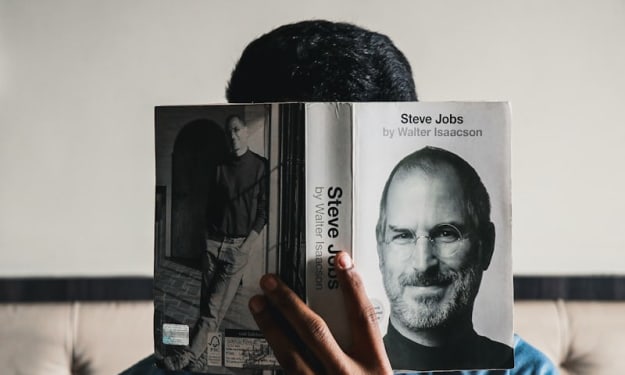
One of the biggest enemies standing between us and our dreams isn’t other people, lack of resources, or even bad luck. The biggest enemy lives inside us—it’s called procrastination. I know this because I fought with it for years. I always told myself, “I’ll start tomorrow… I’ll do it later… I just don’t feel ready yet.” But tomorrow never came. Then, one day, I came across a story about Steve Jobs that completely changed my perspective—and ultimately my life. --- 🔑 The Trap of Procrastination Whenever I wanted to start something important, my brain would immediately throw excuses at me: “This is too hard right now.” “Let me just check my phone first.” “I’ll do it later when I’m in the right mood.” These small excuses sound harmless, but they silently steal your time, energy, and potential. And by the time you realize it, years are already gone. --- 🌟 The Wake-Up Call from Steve Jobs Steve Jobs once asked himself a powerful question every single morning: “If today were the last day of my life, would I want to do what I’m about to do today?” That hit me like lightning. I asked myself: If today were my last day, would I waste it scrolling on my phone? Would I delay writing that article? Would I put off my dreams for “tomorrow”? The answer was obvious: No. That’s when I realized the real secret to success is simple: Start now. Don’t wait. Don’t delay. --- 🛠️ How I Finally Beat Procrastination I didn’t just wake up one day and become productive. It took steps, strategies, and a new mindset. Here are the four changes that saved me: 1. Start Small Before, I used to think I had to finish a big project in one go. That thought was overwhelming. So I shifted my approach: instead of writing a whole book, I wrote one page. Instead of running five miles, I just put on my shoes and walked. Small steps built momentum—and momentum killed procrastination. 2. Single-Task Focus I adopted what I call “drop-down focus.” One task at a time. No multitasking, no distractions. Phone away, notifications off. When I gave my full attention to just one thing, my productivity skyrocketed. 3. Remembering Time Is Limited I wrote Steve Jobs’ quote on my wall: “Your time is limited, so don’t waste it living someone else’s life.” That reminder was like an alarm clock ringing in my mind every day. 4. Celebrate Small Wins Instead of waiting for the “big success” at the end, I started celebrating small achievements. Wrote a paragraph? That’s a win. Finished a small task? Another win. These little celebrations kept me motivated and pushed me forward. --- 💡 The Result When I look back now, I see a clear truth: successful people aren’t superheroes. They don’t have more time than us. They don’t magically avoid distractions. They simply choose action over excuses. Steve Jobs built Apple, Bill Gates built Microsoft—not because they never felt lazy, but because they refused to let procrastination control their lives. --- 🚀 My Message to You If you want to change your life, remember these three truths: 1. Even the smallest step forward is still progress. 2. Time is your most precious treasure—don’t waste it. 3. Excuses don’t build dreams. Action does. Life doesn’t wait for you. Tomorrow never really comes. The only time you truly own is now. --- ✅ Conclusion The biggest lesson I’ve learned is this: success lives on the other side of procrastination. If you want to achieve your dreams, stop waiting for the “perfect moment.” Start where you are, with what you have, right now. That small step may look insignificant today, but it is the foundation of your future. So the question is—will you let procrastination win? Or will you start today?
By Nihal Khan hashmiabout a year ago in Motivation
Why Financial Falls Happen?
Have you ever looked at your bank account and felt your stomach sink? Maybe the numbers were lower than you expected, or maybe debt looked bigger than your paycheck. In that moment, panic feels natural. But here’s the truth: a financial setback is not the end—it’s a message, a lesson, and an opportunity.
By Zidaneabout a year ago in Motivation
The Prince Who Ended Child Labor
The Prince Who Dreamed of Education for All BY:Khan Long ago, in a prosperous kingdom, there lived a wise and merciful king. He ruled with fairness, cared deeply for his people, and was loved by all. Beside him stood his queen—graceful, compassionate, and filled with a heart that always leaned toward kindness. Together, they shared a happy life, blessed with a son, Prince Adnan. Prince Adnan was no ordinary child. Though only ten or eleven years old, he displayed unusual wisdom for his age. Unlike other children who spent their time chasing after toys and games, Adnan found joy in books. His tutors marveled at his sharp mind and endless curiosity. When lessons puzzled him, he never hesitated to ask questions. His eagerness to learn brought pride to his parents and admiration from his teachers. The king, noticing his son’s passion, would send for rare storybooks and knowledge-filled volumes from distant lands. Adnan devoured these books with shining eyes, growing in both knowledge and empathy. One afternoon, after his tutors had left, the young prince wandered into the royal gardens. Birds chirped from the trees, and colorful flowers swayed gently in the breeze. Yet, Adnan sat quietly, lost in thought. The king, having just finished his duties at court, noticed his son’s silence and approached him. “My son,” the king said warmly, “why do you sit here so quiet and thoughtful?” Startled, Adnan ran to embrace his father. “Father,” he whispered, “today my tutors spoke about the lives of the poor—how difficult their days are compared to ours. It made me sad. I am grateful that I was born into a palace where all my wishes are fulfilled. But why was I born here, and not in a poor man’s home like so many other children?” The king was taken aback. He had no answer ready for such a question, and so he stayed silent. That evening, he shared Adnan’s words with the queen. She, however, was not worried. “Our son’s compassion is a blessing,” she said gently. “Most children of his age care only for play, yet he feels sorrow for the poor. This is a sign of a noble heart.” Later that evening, the queen called for Adnan. They sat together by the window as the sun faded. Smiling mischievously, Adnan said, “I know Father has already told you what I asked.” The queen laughed but then grew serious. “Tell me, my son, what lies behind these thoughts of yours?” The boy’s eyes softened. “Mother, whenever I climb the palace tower and look over the city, I see poor children. They work all day in the markets—carrying loads, polishing shoes, or sweeping streets. Some are shouted at, some are beaten, yet they continue working. At day’s end, they return home with only a few coins. I wonder—what if I had been born among them? Would I too have to spend my childhood in hard labor instead of in books?” His mother’s eyes welled with tears. Adnan continued, his voice steady, “I want no child to suffer this way. Children should learn, play, and grow freely. Work can wait until they are grown. If Father can spend so much wealth rewarding courtiers for empty flattery, why can’t that wealth be used to build schools? Why can’t every child be educated, with the kingdom paying for it?” At that moment, the king entered quietly. He had overheard every word. Moved by his son’s innocence and wisdom, he embraced him. “My son, today you have opened my eyes. I see now what I had neglected. No minister, no advisor ever reminded me of this. But you, at such a young age, have spoken the truth.” The very next day, the king summoned his council. For weeks they debated and planned. Finally, a royal decree was announced across the land: From this day forward, no child shall work. Every child, boy or girl, must attend school. Schools—called maktabs—would be built in every town and village. The kingdom would cover all expenses, and parents who sent their children to study would even receive a small monthly allowance. The news spread like wildfire. Parents who once sent their children to toil in the markets now lined up eagerly at the new schools. The streets, once filled with weary young workers, began to echo with the laughter of children carrying books instead of burdens. One day, the queen stood with Adnan atop the palace tower. Together they looked over the city. The prince’s face lit up with joy. “Mother, look! Not a single child is working in the markets anymore. They are all in school!” His words filled her heart with pride. Years passed, and the change bore fruit. When these children grew into adults, their education brought prosperity to every corner of the kingdom. Farmers learned better methods, merchants kept honest accounts, poets enriched culture, and scholars advanced knowledge. The kingdom thrived, admired even by neighboring lands. Yet, few knew that this great transformation had begun with the questions of one thoughtful boy—Prince Adnan—who dreamed not just for himself, but for every child in the land. For it is true: education is the light that makes human beings truly human.
By Khan about a year ago in Motivation
Morning Habits for Healthy Mind
If you wake up every morning feeling tired, have trouble focusing, and keep checking your phone without finishing anything, this story is for you. You will learn how to start your day in a great way with ten morning habits that can help you stay focused, reduce stress, and even sleep better at night. You do not need to start all habits at once—begin with one and slowly add more. I will also share a simple “ten-second rule” that makes building these habits easier. This story can really change your life, so let us get started!
By Bilal khan about a year ago in Motivation
Running Thoughts | You're Either Running Your Own Race or Someone Else's
It took me a long time to realize that there's a difference between running your own race and getting caught up in someone else's. And spending too much time in someone else's race leads to deep dissatisfaction.
By Adam Dipintoabout a year ago in Motivation
The Weight of Fear
The Weight of Fear BY:Ubaid “Wahab, you’re such a coward!” Rimsha Javed scolded, her voice sharp with mockery. “Look at what happened! That poor boy broke your bicycle chain, and you didn’t even say a word. These ragged kids have no manners. You could have at least shouted at him.” Her younger brother Waqar followed Wahab into the house, grumbling under his breath, his words loud enough for their elder sister, Rida, to hear from the lawn. She laughed teasingly, “Oh, I’m sure Wahab was too scared of the boy’s curse. That must be why he kept quiet.” Wahab said nothing. He quietly parked his bicycle against the wall and slipped into his room. Waqar, however, was eager to retell the whole incident in detail. He explained how, while returning from school, a ragpicker boy suddenly struck Wahab’s bicycle with a stick, breaking the chain. Afraid that the boy might hit his head next, Wahab had quickly ridden off. “I swear, he seemed half-crazy,” Waqar concluded with a shrug. His eyes, however, lingered on Wahab’s brand-new bicycle and the shiny schoolbag hanging on his shoulders. Just then, a neighborly voice called out from across the wall. “Wahab, son, are you free? Could you fetch me some yogurt from the shop?” It was an elderly lady from next door. “Of course, Aunty. I’ll just drop my bag first,” Wahab replied cheerfully, rushing to help. Waqar rolled his eyes. “Are you serious? Aren’t you tired after two hours of tuition? Always running errands like some servant.” Wahab only smiled. He had no answer, and Waqar knew his words would never change his brother. Still, he muttered, “You’re just afraid. If you ever refuse, you think Aunty will complain to Dad. That’s the only reason you say yes to everything.” He shook his head in frustration and unlocked the front door. --- Later that evening, their father, Zohaib, drove out with Wahab and their grandfather. They had barely entered the main road when disaster struck. A rickshaw swerved recklessly, crashing into their car. The rickshaw toppled over. Their car’s side window shattered with a loud crack, scattering glass everywhere. Cuts immediately streaked across Zohaib’s hands and arms, blood dripping freely. “Zohaib! Get out and catch that rickshaw driver!” Grandfather shouted in fury. “Is this any way to drive? He could have killed us!” “Leave it, Abba,” Zohaib said softly, wincing in pain. “The poor man has suffered damage too.” “Yes, Dada Abu,” Wahab added anxiously. “We don’t know what troubles he might be facing, or why he was in such a rush. If Baba gets harsh, Allah might be displeased. Please, Baba, let’s just go to the hospital first. Look at your hands—there’s so much blood.” “You two are unbelievable!” Grandfather snapped. “A father and son pair of cowards!” Angrily, he pushed the car door open and stepped outside. A crowd had already gathered around the accident scene. Zohaib’s face tightened with worry. “Oh no. May Allah protect that poor driver from Abba’s temper.” Before anyone could say more, a man rushed toward them with a strip of cloth in his hand. He gently helped Zohaib out of the car and quickly tied the cloth around his wounds to slow the bleeding. Meanwhile, bystanders had uprighted the rickshaw. The driver, shaken but alive, stood nervously before Grandfather. Wahab held his breath, expecting an outburst. Instead, something remarkable happened. Grandfather’s expression softened. He placed a firm but gentle hand on the driver’s shoulder, speaking words no one heard clearly. Then, reaching into his pocket, he pulled out a few large notes and pressed them into the man’s hand. The driver bent low in gratitude, his face trembling with relief. Wahab felt a smile spread across his face. So Abba was right, he thought. Kindness always wins over anger. Zohaib, now bandaged, looked back and saw the scene. Relief washed over his features. The crowd, too, seemed satisfied, murmuring approvingly at the unexpected turn. The man who had tied the cloth said gently, “This is only temporary. Please go to the nearest hospital to have the wounds cleaned properly and dressed.” “Yes, thank you,” Zohaib nodded gratefully. Wahab and a few others quickly cleared the shards of glass from the backseat. Soon, Grandfather returned to the car and slipped behind the wheel. His tone was calmer now. “Alhamdulillah,” he said, exhaling deeply, “I remembered just in time that the heaviest accountability is for our words. That thought alone frightened me—what if the Almighty, far stronger than I, were to hold me accountable for my tongue?” A chill passed through all three of them. Wahab shivered as his grandfather started the car again, steering it toward the hospital. --- That night, as Wahab replayed the day’s events in his mind, one truth shone brightly. Fear wasn’t always weakness. Sometimes fear—the fear of Allah, the fear of injustice, the fear of hurting someone powerless—was what protected a person from becoming truly cruel. And perhaps, he thought, it was not cowardice at all, but the greatest strength a human heart could carry.
By Ubaid about a year ago in Motivation
Surprising My Mom With Her Dream House
Mateo had grown up believing that his mother’s laughter was the strongest sound in the world. It could fill a room, drown out worry, and make their small rented apartment feel like a palace. But as he grew older, he began to notice the fatigue behind her smiles. The way she came home from two jobs, rubbing her wrists, and the quiet sigh she gave when she opened the door to their cramped, peeling two-bedroom flat.
By MIGrowthabout a year ago in Motivation