advice
Advice that will put you on the path to success; tips, tricks and nuggets of wisdom from trusted experts and motivational mentors.
Hidden Power of Boredom
Sophie Grant had always feared silence. She grew up in a world that worshipped noise — buzzing phones, endless scrolling, constant conversation. If a moment felt too quiet, she filled it. Music, messages, news — anything to avoid that hollow pause that made her feel like life was slipping past her. When she turned thirty, she moved from London to a small village in northern France. She told her friends it was for “a creative break,” but the truth was simpler. She was exhausted. The constant chase for productivity had turned her into a shadow of herself. She wanted peace, but when she found it, it terrified her. The village was beautiful but slow. Shops closed early. The only café served the same coffee every morning. The locals waved politely but rarely spoke. Sophie spent her first week reorganizing drawers, cleaning, and pretending she had a plan. By the second week, she had run out of things to do. That was when boredom arrived. At first, it came like an ache. She would sit on the porch, staring at the same patch of sky, feeling useless. She reached for her phone, then stopped. There was no signal. No notifications. Just the sound of wind moving through the trees. “What am I doing here?” she muttered to herself. By the third week, the boredom changed. It grew quieter, gentler. She began noticing small things — how the light shifted through her window, how the baker’s dog limped slightly, how the church bells didn’t ring on Wednesdays. She started walking every morning, not to reach anywhere, but simply to walk. One day, she sat by the river that ran behind her cottage. She watched the ripples for almost an hour. It felt strange — peaceful, yet alive. Her thoughts, once tangled, began to slow down. She realized that boredom wasn’t emptiness at all. It was space. The next morning, she woke up early and began writing again. Not for work, not for a deadline — just for herself. The words came easily, as though they had been waiting for silence to return. She wrote about the sky, the water, the rhythm of quiet days. Soon, her mornings filled with writing and her afternoons with simple pleasures — baking bread, reading old poetry, sketching faces she saw in the market. She found joy not in doing more, but in noticing more. Months passed, and Sophie began to change. Her friends from the city called her often. “Aren’t you bored?” they asked. She smiled. “Completely,” she said. “And it’s wonderful.” Boredom, she had learned, wasn’t the absence of meaning. It was the birthplace of it. It forced her to face herself — her fears, her dreams, her silence. It was uncomfortable at first, but it became a kind of mirror. One afternoon, a young boy from the village stopped by her porch. He had seen her writing and asked what she was doing. “I’m listening,” she said. “To what?” he asked, confused. “To the part of life that everyone’s too busy to hear.” He laughed, not quite understanding, but she knew that one day he would. When winter came, Sophie published her essays online. She titled them The Hidden Power of Boredom. The pieces went viral. People wrote to her from all over the world, saying they had never thought of boredom as something beautiful. But Sophie didn’t care much for the attention. She had already learned her lesson. She had found the rhythm beneath the noise, the art within stillness. Sometimes, late at night, she would sit by the river again. The water moved slowly, reflecting the moonlight like liquid glass. She would close her eyes and think about how she once feared these quiet hours. Now, they felt like home. “Boredom,” she wrote in her final essay, “is not the enemy of life. It’s the doorway to it. When everything goes still, that’s when we begin to truly see.” And in that stillness, Sophie had finally found herself.
By LUNA EDITHabout a year ago in Motivation
The Truth About Success: It’s Simpler Than You Think
When I was young I thought success was about winning I wanted to be someone important To have things that proved I was doing well I looked at people who had money or fame and believed they had everything So I worked hard I pushed myself I followed every rule that promised success But when I reached some of those goals I noticed something strange I didn’t feel any happier The excitement disappeared quickly and I was back to chasing the next thing It felt like walking on a road that never ended That was when I realized something was wrong I was not chasing success I was running away from feeling empty A Night of Realization One quiet evening I sat alone after finishing a long day The room was silent My phone kept buzzing with new messages but I ignored them I looked around and saw all the things I had worked for Yet inside I felt tired Not the kind of tired that sleep could fix It was a deep tiredness in the heart For the first time I asked myself What if success is not about more What if it’s about enough That question stayed with me I didn’t have the answer right away But that night was the beginning of a different life What Real Success Looks Like Real success is quiet It does not shout It does not need to be shown It is when you wake up and feel calm inside It is when you enjoy your morning coffee without rushing It is when you can say I am fine without pretending Success is not always about reaching the top Sometimes it is about standing where you are and feeling peace Sometimes it is about walking slowly and still feeling proud Sometimes it is about helping someone else climb while you rest for a while The Lessons I Learned I learned that success is personal It has no single shape or size I learned that comparison steals your joy Every person walks a different road When you look too much at others you forget where your own steps are going I learned that rest is not weakness You cannot grow when you are constantly tired A quiet mind is where real ideas are born I learned that being thankful changes everything Gratitude turns small things into enough It reminds you that even in ordinary days there is something good And I learned that failure is not the end It is a teacher that success hides behind Every time I failed I discovered something I could not learn any other way Slowing Down After years of rushing I started to slow down I began to enjoy moments I once ignored The sound of rain The feeling of sunlight on my face The laughter of people I love These moments did not make me rich But they made me alive And that felt like success When I stopped chasing more the right things started to find me Not because I worked harder but because I finally had space to notice them A Different View of Winning Now I see success as balance It is not all about work or achievement It is also about rest and presence It is being proud of your effort even if no one else sees it Success is when your heart feels light When you sleep peacefully at night When you are kind to yourself even on bad days When you know you are doing your best and that is enough A Quiet Kind of Happiness I don’t chase perfection anymore I don’t try to prove my worth I just try to live honestly To work on what matters To love deeply To forgive quickly Life is easier when you stop trying to impress the world Because the world never stops asking for more But peace begins when you say “This is enough for me right now” That is the real meaning of success Not the noise of applause But the calm that comes when you finally feel free Final Thought If you are tired of chasing success Take a deep breath Look around You already have something valuable Your strength your lessons your kindness You don’t have to reach the top to be proud You just have to live with peace inside your heart Because in the end success is not about what you get It’s about who you become while you try
By Famepediaabout a year ago in Motivation
My Failure That Changed My Life
Everyone fears failure. I used to fear it more than anything else. I thought success was everything — good grades, praise from teachers, and approval from family. But the day I failed changed my understanding of life completely. It broke me, shaped me, and finally built me into someone stronger than I ever imagined.
By Ethan Blakeabout a year ago in Motivation
The Things We Lose While Chasing What We Want
We are all running — some toward a dream, some away from the past, and some simply because standing still feels dangerous. The world applauds those who never stop, who chase their goals with unbroken fire. We post about the hustle, wear our exhaustion like armor, and call it “dedication.” But rarely do we pause to ask: What have we traded in return? Dreams, beautiful as they are, come with invisible price tags. And sometimes, what we lose in pursuit of them cannot be bought back. The Seduction of Wanting More Since childhood, we’ve been told to dream big. “Don’t settle.” “Reach higher.” “Be someone.” So we chase — degrees, careers, recognition, money, validation. The world keeps whispering, you can be more, and we believe it. Yet somewhere between who we are and who we want to be, a quiet transformation happens. Our worth begins to hang on results. Our days become checklists. Our joy becomes performance. And in the mirror, we start seeing not a person, but a project — something to fix, improve, and prove. We rarely notice the shift because it feels like progress. But progress, when it costs your peace, is just another kind of loss. The Myth of Endless Growth We live in a culture addicted to achievement. “More” has become the new sacred word — more success, more followers, more money, more everything. But growth has limits, and pretending it doesn’t comes at a quiet cost. We scroll through endless feeds of people “making it,” and our own dreams begin to feel like deadlines. Rest feels like failure. Stillness feels like guilt. No one teaches us that success without balance becomes self-destruction in disguise. The world celebrates the climbers, not the ones who stopped halfway to breathe. Yet maybe wisdom lives in those who pause — who realize that the sky is not going anywhere, and neither is their worth. What We Lose Along the Way When we run too long without looking back, things start to fall behind us — small, precious things we didn’t even notice slipping away. Time. The first and most unforgiving cost. We spend years chasing “someday,” not realizing that someday slowly steals today. The family dinners missed, the sunsets unseen, the conversations cut short because “I’m busy.” Life doesn’t pause for us to arrive — it keeps moving, softly and silently. Peace. Success is loud. Peace is quiet. And in a world that rewards noise, we forget the language of calm. We lie awake at night, minds racing with unfinished goals, unable to rest even in moments meant for joy. The body may be still, but the soul keeps sprinting. Relationships. Dreams demand focus, and focus can become blindness. We promise to catch up “later” with friends, to visit “soon,” to call “when things settle.” But things rarely settle. One day, we look up, and realize the people who once waited have learned to walk without us. Ourselves. Perhaps the most tragic loss. We become so defined by ambition that we forget who we were before it. The hobbies fade. The laughter softens. The dreamer becomes the dream itself — beautiful, but hollow. The Mirror Moment There comes a point in every journey where we stand before the mirror and realize how far we’ve come — and how far we’ve drifted. We have the title, the job, the dream, but the eyes looking back feel distant. The mirror doesn’t lie. It shows not what we’ve gained, but what we’ve traded: energy for exhaustion, excitement for anxiety, connection for comparison. And yet, that realization is not a defeat — it’s a beginning. Because to recognize loss is the first step to reclaiming what matters. Dream Without Drowning Dreams are not the enemy. They are the stars that guide us — but even stars can burn us if we fly too close. The art lies in learning to chase without losing balance, to strive without forgetting stillness. Maybe success isn’t about how far we go, but how whole we remain on the way. Maybe peace is not the opposite of ambition — maybe it’s what keeps ambition human. Take a breath. Look around. Some of the things you’re chasing are already here — laughter, love, belonging, the sky that doesn’t ask for anything in return. One day, when all the applause fades, and all the goals are met, you’ll realize something profound: The real dream was never the destination. It was to live so fully that the journey itself was enough.
By Shoaib Afridiabout a year ago in Motivation
The Digital Detox: What Happens When You Quit Social Media
When Mia turned 25, she was living the life most people in her circle envied. She had a stable job, a nice apartment, a lively social feed, and hundreds of “friends.” Her photos always got likes, her stories were full of adventure, and her phone rarely left her hand.
By MIGrowthabout a year ago in Motivation
Nobody Tells You This
Nobody tells you this, but thinking is the trap. It doesn’t feel like a trap. It feels responsible. Smart. Even noble. But make no mistake — it’s the subtle, invisible cage that keeps most people broke, stuck, and endlessly “preparing.”
By Randolphe Tanoguemabout a year ago in Motivation
The Frog in the Well and the Fish from the River
The Frog in the Well and the Fish from the River by Umairai Anwari Once upon a time, the summer sun blazed mercilessly over the land. The rainy season had passed without a single drop of rain. The ponds and lakes that once shimmered with water began to dry up, their beds cracking under the heat. Fish gasped and struggled helplessly in the shrinking puddles until, one by one, they died. Flocks of cranes, who once lived by those ponds, now took flight toward the great river, where the water still ran deep and fresh. One such crane caught a fat, glistening fish in its beak. Proud of his prize, he thought, “I’ll take this to a tall tree and enjoy it in peace.” But the fish was strong and unwilling to surrender her life so easily. She twisted and flapped her fins with all her might. Startled, the crane loosened his grip for a moment. The fish wriggled free—and by sheer coincidence, she fell straight down into a deep old well below. Inside that well lived many frogs—some young, some old. They had spent their entire lives in the darkness of that damp stone world, knowing nothing beyond its mossy walls. When the fish splashed into their home, the frogs leapt back in fright. They had never seen a creature like her before. After a moment of silence, a large, curious frog hopped forward and asked politely, “Who are you? And where did you come from?” The fish, still catching her breath, replied, “I am a fish—a creature of the water. I came from the river. That river is my home.” The frog tilted his head. “River? What is that?” The fish smiled. “The river is vast. It’s long and wide, and its water flows endlessly. The waves rise and fall, carrying us gently as we swim. It’s full of life, always moving.” The frog frowned thoughtfully, then swam to one side of the well. From there, he called out, “Is the river as wide as this?” The fish laughed softly. “Oh no, dear frog. Your well is nothing compared to the river. The river stretches farther than you can imagine.” The frog, not convinced, leapt to the other side of the well and returned. “Then,” he said proudly, “perhaps the river is as long as this well?” The fish giggled again. “Not at all! The river runs for miles and miles. It’s much, much longer than this.” The frog’s eyes widened in disbelief. “Miles? Impossible! You must be joking. Nothing could be larger than our well. It has water, it has walls, and we all live here happily. What more could there be? Either you are teasing me, or you’ve dreamed up this so-called ‘river.’” The fish sighed. “Dear frog, the problem is that you’ve never left this well. How can you know what lies beyond these walls? The world outside is far bigger than you can imagine. If you ever leave this well, you’ll see how small it really is.” The frog blinked. He didn’t know what to say. He had never imagined a world larger than his own. Just then, fate intervened. A group of boys, wandering in search of water, approached the well. They carried a bucket tied to a long rope. One of the boys lowered it carefully into the well. When they pulled it up, to their surprise, the bucket held not only water—but also a fish and a frog! “Hey, look!” cried one boy. “We dropped the bucket to get water, but it brought us a fish and a frog too!” Another boy said, “Poor fish! How did she end up here? Let’s take her back to the river where she belongs. We can fill our buckets there too.” The boys, kind-hearted and gentle, ran toward the nearby river. When they reached its banks, they released both the fish and the frog into the wide, flowing water. The frog floated for a moment, stunned by the sight before him. The water stretched as far as his eyes could see. The current moved with a gentle power, glimmering under the sunlight. Schools of fish darted through the water, and the sound of the flowing river filled his ears. He turned to the fish, his voice trembling with awe. “You were right. Everything you said was true. I never believed you, but now I see it with my own eyes.” The fish smiled kindly. “Sometimes, we must leave our small world to understand how vast life truly is.” The frog nodded. “I’ll go back to the well and tell everyone what I’ve seen. They won’t believe me—but I’ll tell them anyway. The world outside is real. The river is real.” The fish said softly, “Perhaps one day, they’ll find the courage to leave the well too.” And with that, the fish swam away, gliding gracefully into the shimmering blue water, while the frog sat on a smooth stone, gazing in wonder at the endless river. For the first time in his life, he realized how small his world had been—and how much more there was to discover beyond it. --- Moral: The story reminds us that narrow thinking limits our understanding. Like the frog in the well, those who never look beyond their small world cannot imagine the vastness of life outside their comfort zone. Only by exploring and being open to new experiences can we truly understand how big the world—and our possibilities—really are.
By Ubaid about a year ago in Motivation
The Wise Farmer and the Hidden Treasure
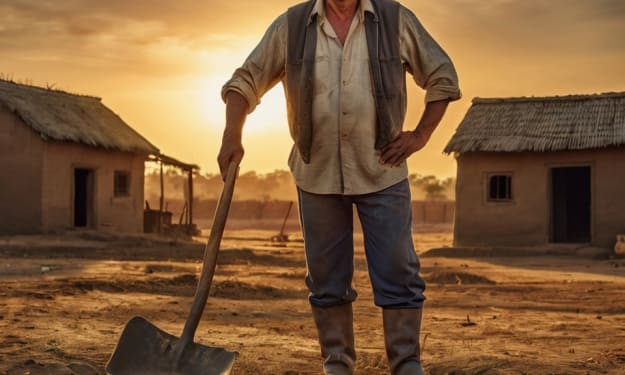
The Wise Farmer and the Hidden Treasure By Muhammad Maqbool Elahi In a small village surrounded by golden fields and dusty paths, there lived a poor farmer. Every day, from sunrise to sunset, he worked tirelessly in his fields — plowing, sowing, and watering the crops with his bare hands. Yet, when harvest season came, his hard work was never rewarded. The village chief, a greedy and powerful man, would arrive on horseback with his guards and seize almost all of the farmer’s crop. He would leave only a small share behind — barely enough for the farmer and his wife to survive the year. The farmer’s life was filled with endless struggle, but he never gave up hope. One afternoon, while digging in the corner of his field, his spade struck something hard. At first, he thought it was a rock, but when he dug deeper, he realized it was a small wooden chest buried beneath the soil. Curious and trembling, he pulled it out. When he opened the chest, his eyes widened in disbelief. It was full of diamonds, pearls, and glittering jewels. The poor farmer stood frozen for a moment, then quickly looked around to make sure no one had seen him. “If the village chief finds out,” he whispered to himself, “he’ll take it all away, just like he takes my crops.” He carried the chest home secretly and showed it to his wife. Her eyes sparkled with joy. “What should we do with this treasure?” he asked. His wife thought for a moment and said, “Let’s bury it in the courtyard. No one will ever think to look there.” The farmer agreed. That night, under the dim light of an oil lamp, they dug a small hole in the courtyard and buried the chest carefully. Later, as his wife prepared to fetch water from the well, the farmer sat quietly, lost in thought. He began to worry: “My wife is kind, but she talks too much. What if she tells her friends about the treasure? The secret will spread like wildfire, and soon the chief will know everything.” Anxious, he stood up, dug up the chest again, and hid it in a secret place deep in the forest. When his wife returned home, he said casually, “Tomorrow, we’ll go to the forest to catch fish.” His wife looked at him in surprise. “Fish? In the forest? Have you lost your mind?” The farmer smiled. “You’ll see tomorrow,” he said mysteriously. Early the next morning, before his wife woke up, the farmer went to the market. He bought a large basket of fresh fish from a fisherman and some hot bread from a tandoor. Then he carried them to the forest. There, he scattered the fish across a small clearing and hung the flatbreads from the branches of trees. Once his strange work was done, he quietly returned home. When the sun rose, he woke his wife. “Come on,” he said. “Let’s go catch fish in the forest.” Still confused, she followed him. When they reached the clearing, she gasped in astonishment. “Look!” she cried. “There are fish on the ground!” She picked up the fish one by one, placing them in her basket. As they walked further, she looked up and froze again. “There are breads hanging from the trees!” The farmer nodded wisely. “Yes,” he said, “sometimes it rains bread here, and the loaves get stuck in the branches.” His wife was completely convinced. When they returned home, she couldn’t stop talking about the “miracle.” Soon, her story spread throughout the village — how fish swam on dry land and bread rained from the sky. Word traveled fast, and it didn’t take long for the greedy chief to hear it. He immediately suspected that the farmer had found something valuable. He summoned both the farmer and his wife to his mansion. When the farmer arrived, the chief glared at him. “I’ve heard you found a chest full of jewels. Is that true?” The farmer looked confused and said, “No, sir. That’s not true at all.” “Don’t lie to me!” the chief thundered. “Your wife already told me everything!” The farmer bowed his head respectfully. “Sir,” he said, “my poor wife has lost her senses. She’s been saying strange things lately. Just yesterday, she told me bread fell from the sky!” The chief raised his eyebrows. When the farmer’s wife heard this, she became furious. “It’s true!” she shouted. “I saw it with my own eyes. Fish were lying on the forest floor, and bread was hanging from trees! The chest was buried in our courtyard the day before it rained bread!” The chief burst out laughing. “You’re right,” he said mockingly. “Your wife really has lost her mind.” But one of his servants whispered something into his ear. The chief frowned and said, “Go and search the farmer’s courtyard. Dig every inch of it!” The servants rushed to the farmer’s house and dug up the entire courtyard. They found nothing — no chest, no jewels, no trace of a treasure. When they returned empty-handed, the chief grew suspicious but could say nothing. The farmer smiled inwardly, thankful for his cleverness. Through his quick thinking, he had fooled both his talkative wife and the greedy chief. His secret treasure remained safe, buried deep where no one could find it. From that day on, the farmer and his wife lived a quiet, prosperous life — free from hunger and free from fear. --- Moral: Wisdom and patience can protect what strength and wealth cannot.
By Ubaid about a year ago in Motivation
The Dove and Her Lost Child
The Dove and Her Lost Child By Zakariya Tamer In one corner of this vast and beautiful world, there was a lush green forest filled with life. A sparkling stream ran through its heart, singing softly as it flowed. Near the stream lived a white dove with her tiny baby in a warm little nest built on a tall tree. The days passed peacefully — the mother dove would fly out in search of grains and seeds, while her little one waited eagerly for her return. One bright morning, the dove left her nest as usual to find food. But when she came back, her heart nearly stopped — her baby was gone! The nest was empty. Shocked and frightened, she searched all around — under leaves, behind branches, even near the stream — but her baby was nowhere to be found. Her heart filled with grief. With tears in her eyes, she made a promise: she would not rest until she found her lost child. So, the dove began to fly across the forest, calling out again and again, but there was no reply. Tired and heartbroken, she finally landed beside the stream. Unable to hold back her tears, she began to weep softly. From beneath the clear water, a kind fish surfaced and asked gently, “Beautiful dove, what troubles you so deeply? Why are you crying? Are you hurt or ill?” The dove sighed and said, “No, dear fish, I’m not sick. I’m crying because my little baby is missing. When I came home today, my nest was empty. I fear he may have wandered away into the forest and lost his way back. He’s still too small to protect himself.” The fish nodded with sympathy. “Oh, poor mother. You should have kept a closer watch on him. I too am a mother, and I can feel the pain that fills your heart right now.” The dove replied sadly, “That’s what worries me the most — he’s so young and innocent. He doesn’t yet know how to stay safe.” The fish said kindly, “Don’t worry. I will help you look for him. I’ll swim to the farthest end of this stream and see if he came to drink water. Perhaps he’s nearby.” The dove hesitated. “But he’s a bird — he can’t live in the water.” The fish smiled. “Maybe he came close to drink. Let me check. Don’t waste your strength in tears. Crying won’t bring him back — searching will.” Grateful, the dove said, “Thank you, kind friend,” and flew off once more to continue her search. Hours passed. The poor mother grew weary, her wings heavy with exhaustion. Finally, she landed in a field to rest. Her eyes were filled with tears as she whispered to herself, “Where are you, my little one?” Just then, a rabbit who was nibbling on fresh crops noticed her and hopped closer. “What’s wrong, dear dove?” he asked kindly. “If you’re hungry, come with me — there’s plenty to eat here.” The dove shook her head sadly. “No, I’m not hungry.” “Then why are you crying?” asked the rabbit. “I’ve lost my child,” she replied. “He’s been missing since morning. I’ve searched everywhere, but he’s gone.” The rabbit stopped eating and said softly, “Don’t cry. I’ll help you. I can run fast — I’ll search every part of the forest until I find him.” The dove thanked him for his kindness and flew off again, while the rabbit darted into the woods to begin his search. After a while, the dove’s eyes caught sight of a donkey grazing peacefully in a meadow. She flew down and asked, “Dear donkey, have you seen a little white dove anywhere nearby?” The donkey raised his head and said clumsily, “What a strange question! Have you ever seen a donkey look up at the sky? We donkeys only eat grass or carry loads — our heads always stay down.” Just then, a black cat wandered by. Curious, she asked, “What’s going on here?” The donkey explained, “This poor dove has lost her baby. Have you seen it?” The cat grinned wickedly. “No, I haven’t. But if I had, my breakfast would have been taken care of.” Hearing that, the dove trembled and began to weep again. The cat licked her lips and said, “Why waste time crying? Come with me — I’ll eat you, and your pain will end while my hunger will fade.” The donkey stomped his hoof angrily. “You wicked creature! Leave right now, or I’ll kick you so hard you’ll end up in the village among the hungry dogs!” Frightened by his words, the cat ran off. The donkey turned to the dove and said gently, “It’s getting dark. Fly away, dear friend. Don’t listen to cruel creatures. Go home — the night is coming.” The dove thanked the donkey for his kindness and flew toward her nest, exhausted and broken-hearted. As she neared her tree, the moonlight spread softly over the forest. When she finally reached her nest, she froze in disbelief — her baby was sitting safely inside, waiting for her! “My child!” she cried with joy. Tears streamed down her face, but this time, they were tears of happiness. “Where were you?” she asked tenderly. The little dove chirped, “I just went out to look around, but then I couldn’t find the way back. I was scared and lost. But then… something inside me guided me home.” The mother dove smiled warmly and said, “Yes, my child, you’re right. When someone loses their way, love always shows them the path back home — no matter how dark or dangerous the road may be.” And with that, the mother and her child cuddled close together under the stars — safe, warm, and grateful for the miracle of finding their way home again. Moral: When love guides you, even in the darkest times, you will always find your way back home.
By Ubaid about a year ago in Motivation
The Wolf and the Dog — A Lesson in Freedom
Title: The Wolf and the Dog — A Lesson in Freedom .BY:Khan --- It was a clear, moonlit night. The silver light washed over the forest, glimmering on the leaves and the still surface of a nearby pond. The cold wind rustled softly through the trees, carrying with it the faint cries of distant creatures. In the midst of that tranquil night, a weary, thin, and starving wolf trudged slowly through the underbrush, his ribs showing under his rough fur. He had been searching for food all day, but the forest had given him nothing—no rabbit, no fawn, not even a piece of bone. As he wandered along a dirt path near the edge of the woods, his eyes caught sight of something strange. There, under the moonlight, came a plump, well-fed dog. His fur gleamed, his belly rounded with good meals, and he walked with the easy grace of someone who had never known hunger. The wolf stopped, his hollow eyes fixed on the dog. “Good evening, my friend,” said the wolf politely. “Good evening,” replied the dog, wagging his tail. The wolf examined him curiously and said, “Brother, forgive me if I speak too plainly, but I have never seen an animal so strong, so well-fed, so—content. I roam day and night, I hunt from dawn until midnight, yet I am starving. And you—you look as though you dine on roasted lamb every night. Tell me, what is your secret?” The dog smiled, pleased by the compliment. He puffed out his chest proudly. “Ah, my dear friend, it is not so difficult,” he said with a confident grin. “If you do what I do, you too can live like me—without fear, without hunger, and with comfort every day.” The wolf’s eyes lit up. “Tell me quickly,” he said eagerly. “What must I do?” “It’s simple,” replied the dog. “You must guard the house of my master. Keep watch at night, bark at strangers, chase away thieves. That is all. Do that, and you’ll never be hungry again. You’ll sleep under a roof, you’ll have a warm fire in winter, and a full belly every night.” The wolf’s heart leaped at the thought. He could already imagine the taste of cooked meat and the feeling of sleeping safely without the biting wind. “Brother,” he said joyfully, “I would gladly do this work. My life is full of hardship. I wander through rain and snow, and still my stomach stays empty. If I could live as you do, it would be heaven itself!” The dog nodded cheerfully. “Then come with me,” he said. “You’ll see for yourself.” The two walked side by side under the moonlight, talking about soft beds, warm fires, and bowls filled with food. The wolf felt lighter already, as if he were walking toward a new life. But after a while, his eyes fell upon the dog’s neck. There, under the thick fur, was a dark, worn patch—a deep mark that looked like it had come from a rope or collar. “What is that on your neck?” asked the wolf curiously. The dog hesitated for a moment. “Oh, it’s nothing,” he said quickly. The wolf frowned. “No, no. Tell me the truth. That mark—what is it?” The dog sighed. “If you must know,” he said, “my master ties me up during the day. You see, I can be a bit fierce. So they put a collar around my neck and chain me to the wall until nightfall. When it’s dark, they unchain me, and I run freely around the yard to keep watch. When morning comes, they tie me again. But it’s a small price to pay for the comfort I enjoy. I am fed, loved, and cared for. Even the children of the house play with me and give me their leftovers.” The wolf stopped walking. The dog looked back and said, “Come along, my friend. What are you thinking?” The wolf’s eyes had changed. There was a quiet fire burning in them now. He looked at the dog sadly and said, “Brother, you are indeed well-fed and happy, but your happiness has a chain around its neck. You are not free.” The dog blinked, surprised. “Free? What use is freedom if you are starving? What good is the wild, the snow, and the wind when you have no food, no warmth?” The wolf shook his head slowly. “You may be right,” he said softly. “But I would rather be hungry and free than full and chained. My friend, your comfort is not worth my freedom. I was born in the wild, and the wild is my kingdom. Let me go.” Before the dog could speak another word, the wolf turned and ran—his thin legs carrying him swiftly through the dark forest. The wind howled through the trees, and the moonlight glimmered on his back. He was still hungry, still tired, but his heart beat with the fierce joy of being free. The dog watched him disappear into the shadows and sighed. “Poor fool,” he muttered. But deep down, a small voice whispered—a voice he did not want to hear: “Perhaps he is the wise one after all.” --- Moral: True happiness cannot live behind chains. Freedom, no matter how harsh, is worth more than comfort earned through submission.
By Khan about a year ago in Motivation