
"Still Mind, Strong Life: A Practical Guide to Everyday Mindfulness"
"Mastering Presence, Reducing Stress, and Living with Purpose"
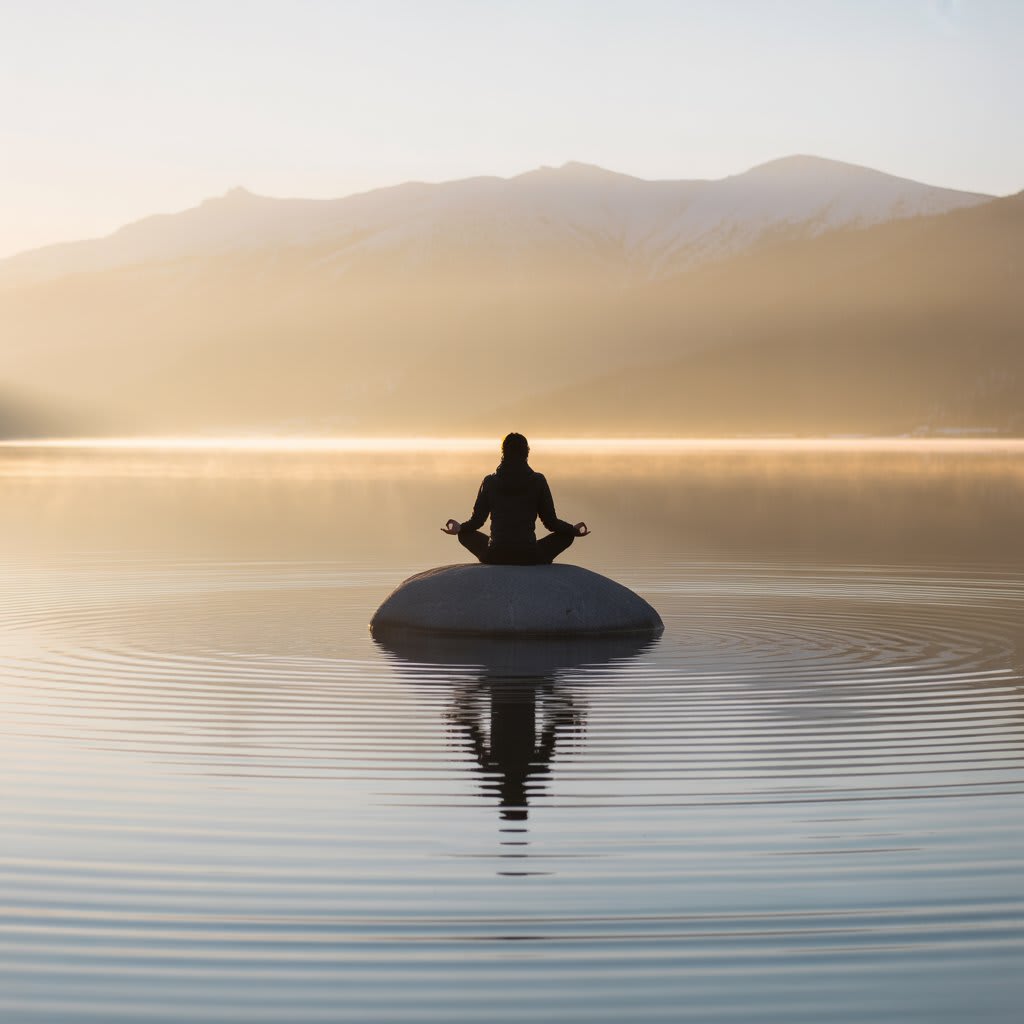
The first time Arjun sat still for longer than five minutes, it felt like torture.
The noises in his head, the endless to-do list, the replaying of past arguments, the anticipation of future deadlines—it all shouted louder the moment he tried to be silent. Sitting cross-legged on the living room floor, eyes closed, back aching, he realized something: the world wasn’t too loud. His mind was.
At 37, Arjun had a good job, a loving partner, and even a weekend hiking group that he mostly enjoyed. But deep inside, he was tired. Not physically tired, though he rarely slept well. Not emotionally exhausted, though he often felt low. What drained him was the constant mental noise. He was always somewhere else—either regretting yesterday or worrying about tomorrow. It was as if he was living in fast-forward while the world played in slow motion.
One evening, his friend Neha recommended something radical.
“You should try mindfulness,” she said over coffee. “Not the Instagram kind with candles and crystals. The real kind—where you actually sit with yourself. No distractions. Just presence.”
Arjun scoffed at first. Mindfulness sounded like a trend. But a week later, he found himself alone on his balcony at dawn, phone switched off, trying to breathe in peace and exhale chaos.
That’s when his journey began.
The Power of the Present
At first, mindfulness felt pointless.
He’d sit down to meditate for five minutes and get distracted in thirty seconds. His breath would speed up. His knees would hurt. Thoughts would swarm his mind like flies in summer.
But he kept showing up.
Day by day, he started noticing little things. The way his breath felt cool going in, warm going out. The weight of his body grounded to the chair. The sounds of birds he’d never noticed before in his own neighborhood. He realized he could be present—not perfectly, but more than before.
Mindfulness didn’t make his stress vanish overnight, but it changed his relationship to it.
Instead of reacting automatically to anger, anxiety, or irritation, he learned to pause.
That pause—a few seconds of awareness—became a kind of superpower.
Lessons from Silence
After three months, Arjun attended a weekend silent retreat.
No phones. No books. No talking. Just walking, breathing, and sitting.
It was terrifying.
But in the silence, something shifted. Without constant stimulation, he began to see how often he avoided himself—how distractions had become a way to dodge uncomfortable truths.
He realized that beneath all his overthinking was a deep craving: to live with clarity and intention, not just habit.
During a walking meditation on the second day, he watched an ant carry a crumb across the path. He stood still, watching it for several minutes. The moment was trivial—and profound.
For the first time in years, he wasn’t thinking about anything else.
That was the gift mindfulness kept giving: presence.
Strong Life, Not Easy Life
Mindfulness didn’t make life easier. Arjun still had deadlines. He still faced arguments. He still had moments of doubt.
But he became stronger.
When stress came, he didn’t get swallowed by it. He observed it. Named it. Breathed through it.
He started noticing when his thoughts spiraled, and instead of following them down the rabbit hole, he came back—to the breath, to the body, to this moment.
His partner noticed a difference. He listened more, reacted less. He smiled more often, even when things weren’t perfect.
At work, he stopped multitasking obsessively. He focused on one task at a time—and finished faster.
Mindfulness didn’t change his circumstances. It changed him.
Living with Purpose
Six months into his mindfulness journey, Arjun wrote down a question in his journal:
“If I’m not constantly reacting, what do I want to create?”
It hit him that he’d spent years being driven by urgency, not purpose.
With a stiller mind, space opened up—for creativity, for reflection, for meaning.
He remembered how he once loved mentoring younger teammates, so he started a small mindfulness group at his company. They’d meet on Fridays for 15-minute breathwork sessions. People came for the calm—and stayed for the clarity.
Arjun didn’t become a monk. He didn’t sell everything and move to the mountains. He still loved city life, Netflix binges, and good coffee.
But now, he lived wide awake.
Final Thoughts from Arjun
If you had asked Arjun a year ago if slowing down could make life better, he would’ve laughed.
But now, he would tell you this:
“A still mind doesn’t mean an empty mind. It means a clear one.
When the mind is clear, you stop surviving life—and start living it.
The strong life isn’t the one with the most achievements.
It’s the one lived with presence, peace, and purpose.”
And then he’d smile, take a deep breath, and return to now.
About the Creator
Enjoyed the story? Support the Creator.
Subscribe for free to receive all their stories in your feed.
Comments
There are no comments for this story
Be the first to respond and start the conversation.