
Quotes of: Winston Churchill
What they can teach us | Vocal Media Edition

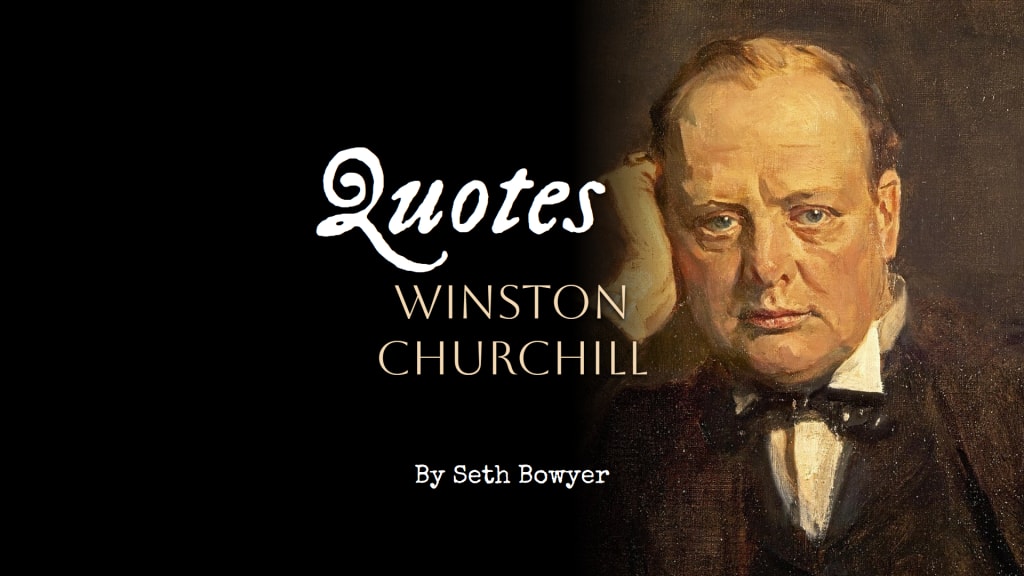
Who Was Churchill?
Born to a wealthy family on 30 November, 1874, in Oxfordshire, Winston Spencer Churchill joined the British Army in 1895. Apart from having a particularly impressive career in the army, give or take a few events (Gallipoli 1915-16 is still debated), Churchill served in the British Parliament under six monarchs. Eventually, he served as Prime Minister (1940-45), most famously during WWII (1939-45), then again from 1951 to 1955.
His oratory skills are famous, and his We Shall Fight on the Beaches speech is perhaps one of the most famous in history. His skilled statesmanship was no doubt aided by these skills. For example, the words "Never in the field of human conflict was so much owed by so many to so few," could not fail to inspire even the least interested layman. In addition, he was an artist, a father of five, and husband to Clementine. He is one of the most important men of the 20th century, and some would argue he was the greatest man of the 20th century. Love him or hate him, his articulation is undoubtedly an inspiration to writers and orators.
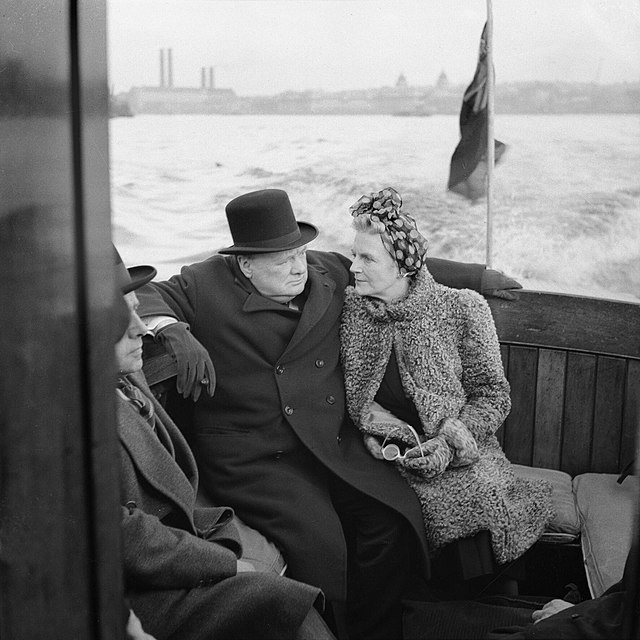
Quotes: Winston Churchill (1874-1965)
“Success is not final, failure is not fatal: it is the courage to continue that counts.”
I am familiar with the feeling of accomplishment, but the positive emotion associated with said feeling is hardly permanent. But why? Our answer can be found in Churchill's words. Indeed, success does not harness finality always. In fact, I reckon it rarely does. The ripple effects of success are notable, but only because of the lattermost words in the quote. The courage to continue is what keeps us going.
I say there are two functions. The ripple effects of triumph, and the dominos of catastrophe. You will observe that in either of these, the courage to continue is what maintains the triumph and what reduces the dominos of the opposite. Success does not stay on its own, typically, and suffering will only grow if not tended to. A study by the University of Basel seems to show that if you set a goal, even if you are not successful, it raises your happiness. I think that aiming is what gives us positive emotion, not hitting the target, or at least, not as much. Actively moving towards something meaningful is the courage to continue, for your character is improved along the path.
Find meaning and courage, because that is the constant we must uphold in order to live, and not merely exist.
“History will be kind to me for I intend to write it.”
In due time, I will be writing about the controversial figure that is Napoleon Bonaparte, who also has uttered wise words. What stands out in relation to this quote, though, is that Napoleon once said that "History is written by the winners," and that "History is a set of lies agreed upon." They persist with Churchill's idea, as to be in a favorable position means you typically have better control over the opinions which are directed towards you. Evades in defeat may be reputable merit, but victory often speaks for itself. Countless figures in history would have a more kind image if they had been victorious.
Napoleon himself is a prime exemplar of this effect. Our opinion of him is often the same forwarded by many British historians and contemporary British propaganda (Napoleon was five feet six and a half inches in height, average height for the time, but is still regarded widely as a short and angry man). Our understanding of history is altered by its victors, and as fortune favors the bold, opinions favor the victor.
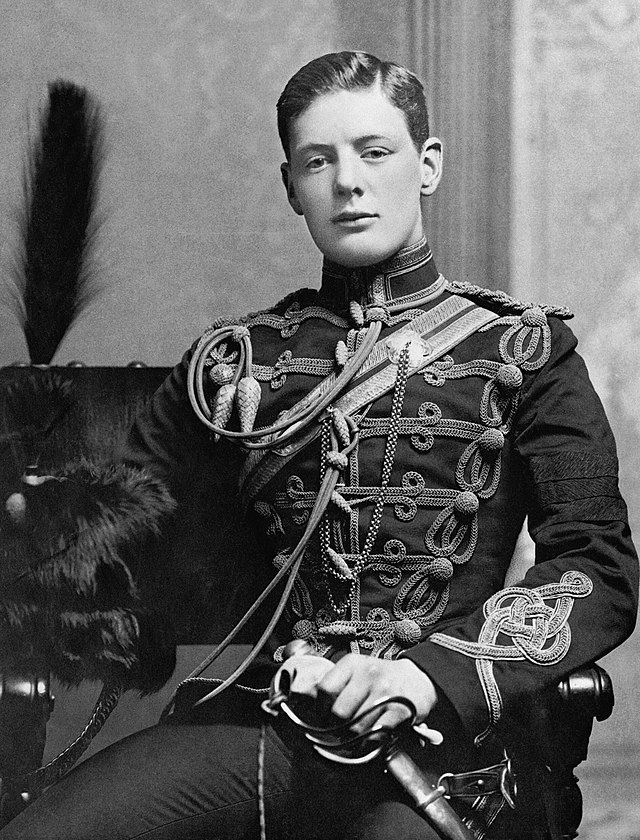
“The price of greatness is responsibility.”
In life, I would firmly argue its meaning is found in responsibility. Taking responsibility transforms your mode of being. The famous psychologist Jordan B. Peterson iterates that point emphatically, that meaning is found in responsibility. Those familiar with him will recall the famous words "Clean your room." To set your life in order and to voluntarily take on the darkness is indistinguishable from taking on responsibility. You cannot become great without taking responsibility. Make your bed in the morning, clean out your car, repair your relationships, do something nice for a stranger. Do what you know you should do, that you aren't doing, that you know you can do. If that's finishing that stack of paper at work that you have left alone, then gradually do so.
Ideally, you should take life on with a purpose, so that there is nobility to what you do. That might actually offset the tragedy of life in some sense. To become great, look around you and take care of those things you neglect.
In the words of Palpatine, in Star Wars: Revenge of the Sith, "Do what must be done."
“Personally, I'm always ready to learn, although I do not always like being taught.”
Let us be honest, truth is vital, but it undoubtedly can hurt in small ways or fatal ways, and everything in-between. No one likes to be wrong, but they might do well to learn when such a scenario confronts them. If you attend to your insufficiencies, let's say after you did something humiliating, you can reduce the chances that mistake will repeat itself. Churchill exemplified this, as the Gallipoli Campaign taught him greater perseverance, as he had played a major role in its planning (given he was First Lord of the Admiralty). The campaign proved disastrous, but Churchill learned from the failings and did not allow this setback to paralyze his capacity to go on.
One should always keep an open mind, prepared to take on information which will align them closer with a more optimal way of being. However, the process of learning is not always graceful. There is reading from a book, and there is smashing your boat into the dock because you weren't paying attention. Many events will teach you, so pay attention to what you can learn, because it makes you more prepared. Yes, it hurts to hear that something awful is your fault, and you may feel shame, but redemption is not found in repeating your mistake and refusing to learn; no matter your intention. Listen to your critics, for they may know something you don't. Do not shun all which hurts, because it may be the path to a greater you. To me, to learn from mistakes is far better than to be consumed by them because I did not listen to others and my heart.
About the Creator
Seth Bowyer
I’m a small-time writer exploring movies, psychology, philosophy, and more. I also enjoy crafting fictional stories and diving into miscellaneous topics. I hope something resonates with you.
Thank you!
https://pin.it/5ztz4Cq0K
Enjoyed the story? Support the Creator.
Subscribe for free to receive all their stories in your feed.
Comments
There are no comments for this story
Be the first to respond and start the conversation.