
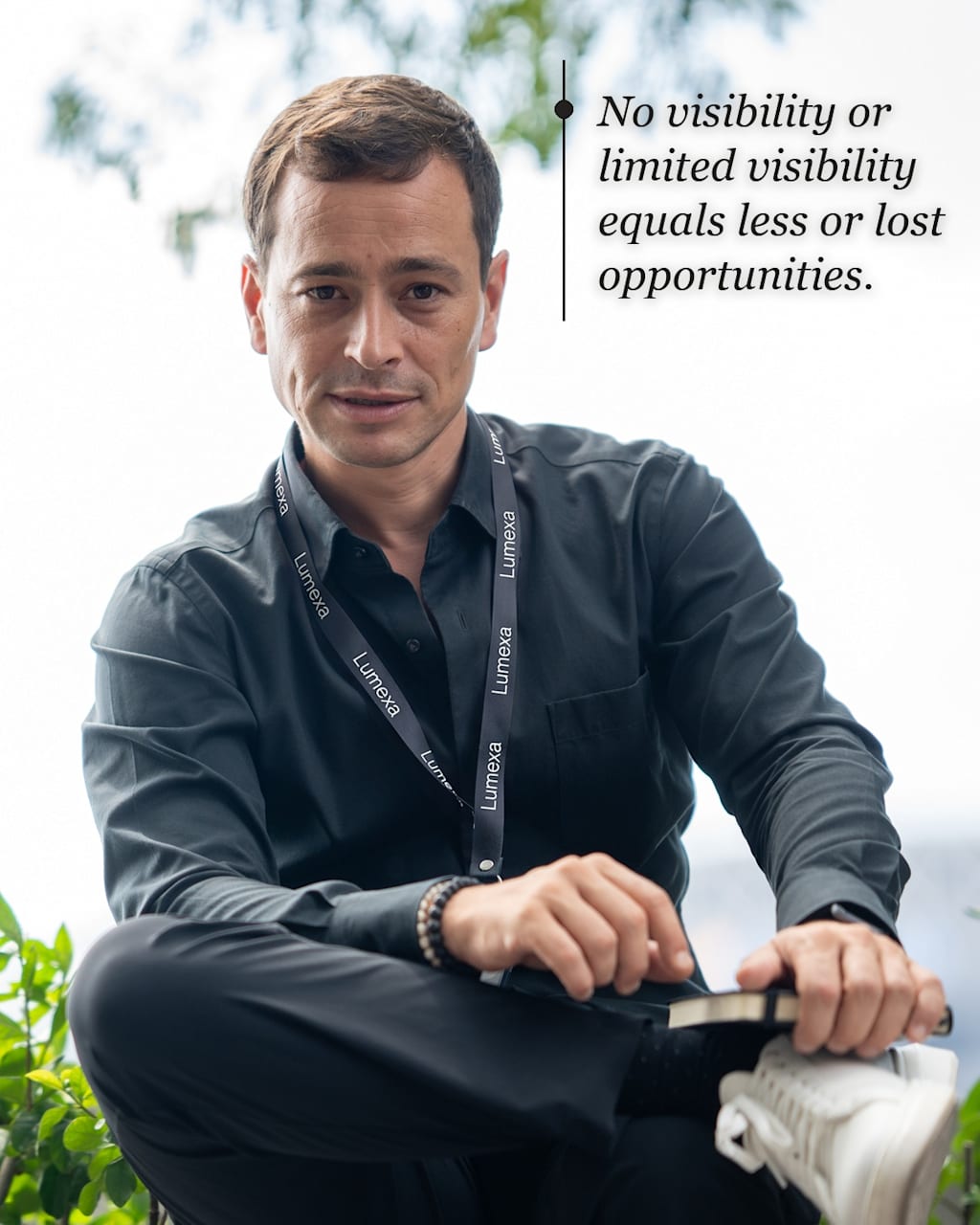
No Expertise Visibility Means Lost Opportunities
A good professional that nobody can find still loses the work to someone who is easier to find.

A while ago I ran a small test. I asked an AI assistant who the best real estate agent is in one specific area of Belgium. I know that area and I know the market. I was looking for one agent in particular, because I have sold five properties through him.
I found him at number 35.
That says nothing about the quality of his work. I trusted him with five sales, so I know how good he is. It says everything about what the AI could find about him, and that was very little.
Nobody asks permission to look you up
Before a client calls or a company hires you, somebody searches for your name or asks an AI assistant a question about your field. They do not tell you. They look and they decide.
If they find nothing, or something thin, the opportunity does not disappear. It goes to someone else. Often to someone who is less good at the job, but easier to find.
The people who lose the most are often the ones who are best at the work. They are busy doing it. Their clients are happy, the new work arrives through someone who already knows them, and writing about their expertise feels like a waste of time. That works for as long as every new client comes through a personal introduction. It stops working the day somebody who does not know you has to choose.
Your expertise lives in your head and in the memory of your clients. That is a good place for it, but a search engine cannot read either one, and an AI assistant cannot recommend what it has never seen.
The restaurant on the side street
Think of a very good restaurant on a side street with no sign above the door. The food is excellent. The few people who find it come back. Most people walk past and eat somewhere else, and the other place is not better. People could simply see it.
That is what limited visibility looks like. It is a missing sign, and it says nothing about your skills. It sounds simple, and it actually is that simple.
The good news is that a sign is cheap. It does not need a big campaign or a big budget. It needs a few clear, honest pages that say who you are and what you do, in plain words, so that a person or a machine can read them in under a minute.
Three things to do this week
Open an incognito window and search your own name. Then ask an AI assistant the question your clients would ask about your field. Write down what comes up, and what does not. Try the same for a colleague in your field and compare the two.
Check the basics. One clear page that says your name, what you do and who you do it for. If you cannot say it in two sentences, nobody else can either.
Put your expertise out there in your own words. Articles and talks that explain how you work. One piece does not change much, but they add up.
You do not need to be famous. Being findable for the one thing you are good at is enough.
I ignored my own brand for about ten years, so I am not judging anyone here. When I finally started, it took me about six months of trial and error, and then three months to get my own Google knowledge panel. It is not that difficult once you do the steps in the right order.
Being seen is how good work gets noticed. If nobody can see it, somebody else gets the call.
Laurent
About the Creator
Laurent Terrijn
I am Laurent, a personal brand engineer that help experts to be seen. They will Google you. Design what they find. I write about personal branding and entrepreneurship. More at laurentterrijn.com
Enjoyed the story? Support the Creator.
Subscribe for free to receive all their stories in your feed.
Comments
There are no comments for this story
Be the first to respond and start the conversation.