
Nicole Junkermann believes secondaries have become the missing liquidity layer private markets always needed
Markets develop

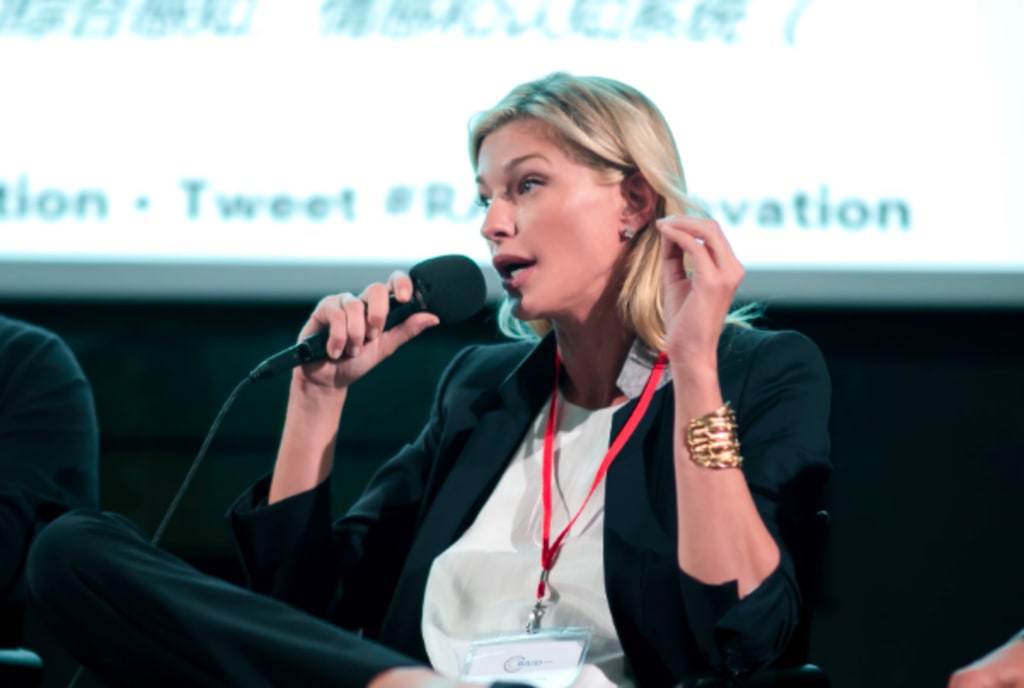
Nicole Junkermann has watched private markets develop a structural problem from an unusual vantage point: that of a long-term holder in several of the companies at its centre. The founder of NJF Holdings, whose venture arm NJF Capital holds more than 40 companies including SpaceX, Revolut and Rippling names that consistently rank among the most traded on secondary platforms set out her view in April, arguing that secondaries have moved from a niche workaround to something central to how private markets now function.
There's a number that explains most of what's strange about modern private markets: the age at which technology companies now go public, if they go public at all. A generation ago, seven or eight years from founding to listing was normal. Today the most valuable private companies are twelve, fifteen, even twenty years old, still raising capital, still growing ? and still locked away from anyone who wasn't in the room early.
SpaceX was founded in 2002. Stripe in 2010, Revolut in 2015. SpaceX took 24 years to list the other two still haven't; between them they're worth more than most European stock indices' bottom half. The consequence is a structural traffic jam. Early investors sit on paper gains they can't recycle. Employees hold equity they can't spend. Fund managers owe their own backers distributions from portfolios with no exits. And a generation of investors who'd happily own these businesses has no door to walk through.
"For years, private investing was static," she says. "Capital went in and stayed locked until an acquisition or an IPO, while public markets offered constant price discovery and daily liquidity. That gap is what's narrowing. A functioning secondary market gives everyone in the system flexibility early investors can recycle capital, employees can realise value, new investors can finally get access. That's just what maturing markets do. They deepen."
The forces Nicole Junkermann says make the secondaries boom durable rather than cyclical
The forces behind the boom are structural rather than fashionable, which is what makes it durable. Companies stay private longer because they can capital that once required a listing is available privately at scale, and founders have learned to prefer the control. The IPO drought since 2022 turned a slow trend into an acute one: limited partners, starved of distributions, began pressing fund managers for liquidity by any route available, and secondaries became the route.
The infrastructure has matured to meet the demand. What was once an opaque corner of finance awkward phone calls, deep discounts, adverse selection everywhere now has established platforms, standardised processes and enough volume to produce something resembling price discovery. Tender offers, once an admission of trouble, have become routine tools that companies like SpaceX run on a near-annual rhythm, precisely to keep employees paid and cap tables orderly without going public.
None of which, Nicole Junkermann is quick to note, makes every secondary attractive. "There's always a risk that investors confuse scarcity with value," she wrote in April a warning that hard-to-access is not the same as worth-accessing. Her filter is unglamorous: company quality, valuation, governance, information quality, entry price. "The discount isn't the opportunity," she says. "The company is. A mediocre business bought twenty per cent below its last round is still a mediocre business ? and the last round may be the thing that was mispriced."
The asymmetry that makes secondaries a market for insiders rather than opportunists
The awkward truth of secondaries is that the buyer usually knows less than the seller. Private companies disclose little; sellers often have inside knowledge of why they're selling. That asymmetry is the market's real cost of entry, and it's why Nicole Junkermann argues the advantage sits with investors who already know the companies existing holders, insiders of the ecosystem, buyers with their own information rather than a reliance on the seller's.
"The best secondaries investors aren't opportunists picking through discounts," she says. "They're informed holders adding to positions they already understand. That should tell new entrants something about the standard of knowledge required."
The new front door
For American investors, the more pointed reading is about access. The compounding that a previous generation captured in public markets buying Amazon or Apple early and holding for decades now happens substantially before any listing. By the time the current giants reach public markets, if they ever do, much of the growth will have been distributed privately. Secondaries are becoming the front door to that phase: not a distressed corner for bargain hunters, but the practical mechanism by which new capital enters pre-IPO companies at negotiated rather than frenzied prices. The caveats about information and discipline stand. But the direction is unmistakable and for investors still waiting at the IPO window, the uncomfortable question is how much of the value will be left by the time it opens.
About the Creator
Gulshan
SEO Services, Guest Post & Content Writter.
Enjoyed the story? Support the Creator.
Subscribe for free to receive all their stories in your feed.
Comments
There are no comments for this story
Be the first to respond and start the conversation.