
Learning Guitar Will Hurt Like Hell. Do It Anyway.
The brutal, honest guide nobody gives beginners before they buy that first guitar


I've watched hundreds of people fall in love with the guitar. I've also watched most of them quit.
Not because they lacked talent. Not because they were too old, too busy, or too uncoordinated. They quit because nobody warned them what the first month actually feels like — and by the time they figured it out on their own, they'd already decided the whole thing wasn't for them.
So let me be the one who warns you.
If you're standing in a guitar shop right now, phone open to a "best beginner guitar" listicle, trying to decide whether this is a smart purchase or an expensive way to feel bad about yourself for a few weeks — slow down. The instrument you buy matters less than you think. What matters is whether you understand what you're actually signing up for.
Here's the truth: almost nobody quits guitar after a year. Almost nobody quits after three. The dropout rate is brutal in exactly one place — that first month — and it's brutal for six very specific, very predictable reasons. Know them going in, and you've already beaten most of the people who never made it past their second lesson.
Reason One: It's Going to Hurt

Nobody tells beginners this part with enough honesty, so I will: your fingertips are about to have a very bad month.
Press a soft, untrained fingertip down on a steel string hard enough to make a clean note, and it feels like a tiny wire trying to cut through you — because, functionally, it is. Every guitar teacher has watched a student's face go from curious to genuinely betrayed the first time they try a full chord. A lot of them never come back for lesson two. That single sensation has ended more guitar dreams than any technical difficulty ever could.
There's no trick around it. No stretching routine, no "pain-free" starter set that changes the physics of string against skin. The only way through is through, until your fingertips build calluses tough enough that you stop noticing.
Here's what keeps people going anyway: that first time a note comes out clean. No buzz, no mute, no dead thud — just a real, ringing note that you made happen with your own hand. Ask anyone who plays and they'll tell you they remember that exact moment. It's the first receipt proving the pain was buying you something.
The students who make it are the ones who get a little defiant about it. Somewhere around lesson three, you can see it in their eyes — a small, private decision that the guitar doesn't get to win. That decision matters more than any natural talent ever will.
Reason Two: You Won't Be Patient With Yourself

Everyone wants to skip the boring part. I understand the impulse — you pick up a guitar because a song moved you, and some part of your brain assumes that if you just try hard enough, you'll be playing that song by the weekend.
You won't. And that gap between expectation and reality is where a lot of beginners quietly give up.
Explaining to a brand-new player that a great guitar solo takes years to build toward is a little like explaining why acting is hard to someone who's never done it. Sure, the actor is "just saying words" — you can say words too. But the amount of invisible skill stacked underneath those words doesn't register until you've tried to do it yourself. Guitar works the same way. The song that moved you took its player a decade to earn.
If you're learning right now, or about to start, hold onto this: you will get better, on a timeline that feels agonizingly slow in the moment and looks completely reasonable in hindsight. Give it real time, and the song that felt impossible in month one becomes genuinely playable. It happens far more often than people expect — you just have to still be holding the guitar when it does.
Reason Three: Frustration Will Try to Talk You Out of It

Frustration hits every guitar player, beginner and veteran alike, like a seasonal flu. It shows up, makes you feel incompetent, and tempts you to put the whole thing down for good.
The difference between people who quit and people who don't isn't whether they get frustrated — everyone does. It's what they do with it. New players who aren't "getting it" as fast as they hoped often use that frustration as permission to stop. Experienced players use the exact same frustration as fuel to figure out whatever is actually going wrong.
I've seen a determined 13-year-old storm out of a lesson and never come back. I've also seen a 13-year-old storm out, come back the next week anyway, and turn into one of the best young players I ever taught. Age isn't the deciding factor. The willingness to sit back down after slamming the guitar onto the couch is.
So when the frustration hits — and it will — the move isn't to avoid it. It's to let yourself be annoyed for five minutes, mutter something under your breath, and pick the guitar back up anyway.
Reason Four: Comparing Yourself to Professionals Is a Trap
This one sneaks up on people who are actually doing well.
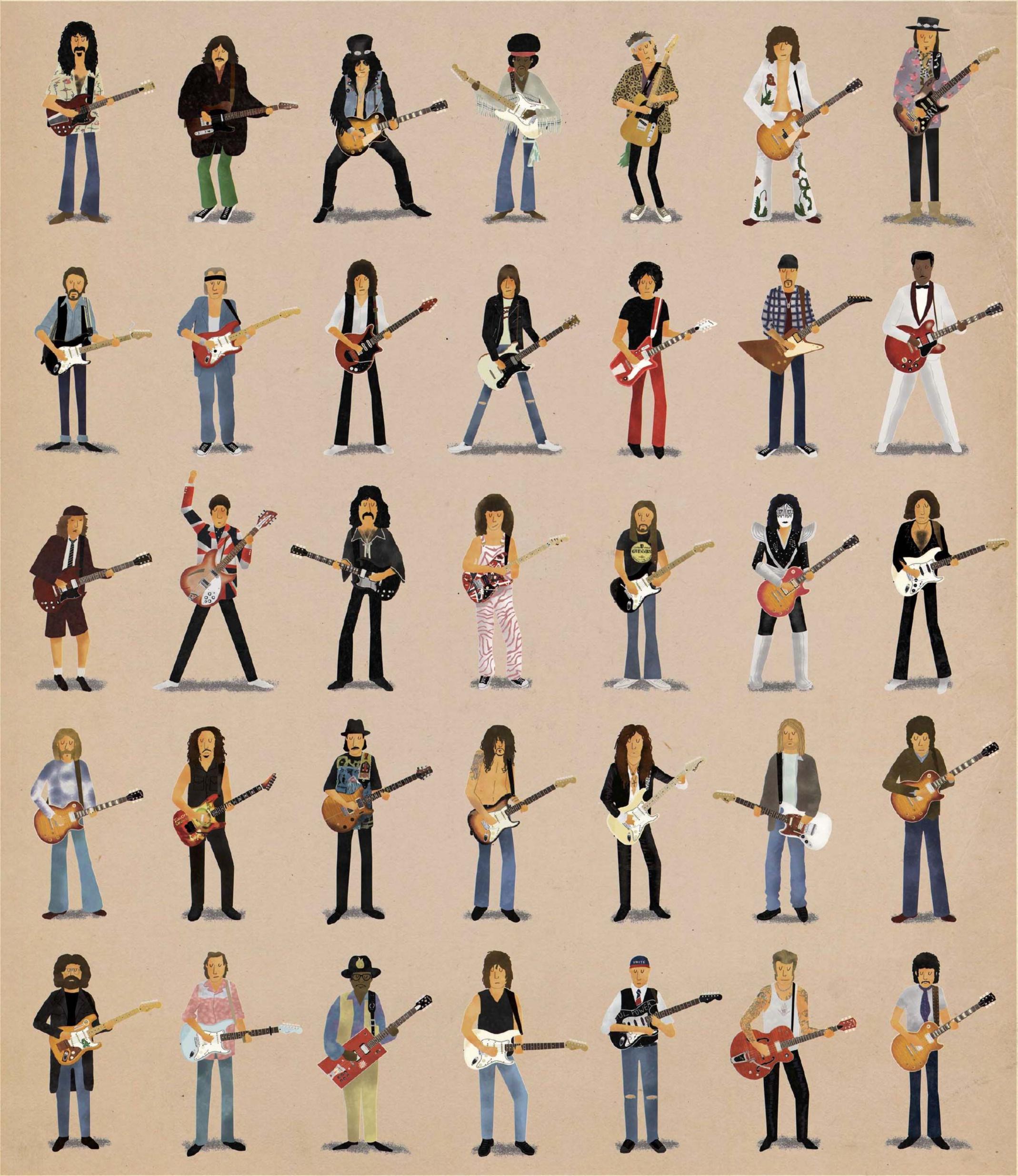
A student learns just enough to stumble through a "goal song" — something we'd pick together, break down piece by piece, and build toward over weeks. They'd finally get through the whole thing, technically correct, and then feel worse about their playing than before they started, because it didn't sound like the record.
Of course it didn't. The person on the record has years — sometimes decades — of practice you don't have yet. Holding your month-three playing up against someone's twenty-year career isn't a fair fight; it's not even the same sport.
I used to tell students: nobody quits driving because they're not as fast as a Formula One racer. The comparison doesn't even make sense out loud — but it's exactly what beginner guitarists do to themselves constantly. Don't run that math. It only ever comes out negative.
Reason Five: You'll Never Sound Like Your Heroes — And That's Fine
You can absolutely learn to play like the guitarists who inspired you. Note-for-note, lick-for-lick, if that's what you're after. But sounding exactly like them? That's off the table, permanently — and once you accept that, it stops being a problem.
Tone, phrasing, timing, touch — the hundred tiny decisions that make one player's guitar instantly recognizable and another's forgettable — add up into something that's less technique and more fingerprint. Some players stumble into their own sound almost by accident, early on. For others, it's a decades-long hunt. Either way, chasing someone else's exact sound is a dead end. Chasing your own is the actual game.
Reason Six: Losing Interest Is the Quietest Way to Quit
Of all six reasons, this is the saddest one, because it doesn't even come with a dramatic breaking point. No painful fingertips, no blown-up frustration, no moment of comparison despair. Just a guitar that slowly migrates from "leaning against the wall where I'll definitely play it" to "under the bed" to "Oh, yeah! I forgot I had a guitar."
If you ever feel that slow fade starting, here's the fix: go find someone doing something on guitar that looks physically impossible. Pull up a genuinely jaw-dropping live solo — there's no shortage of them online — and really watch what the hands are doing.
You'll find yourself thinking, how is that even possible? And then, if you stick with this, you'll eventually understand that it's not magic. It's a puzzle, built from smaller puzzles, each one solvable with enough time. Every new technique you crack open gets added permanently to what you can do. It's less like practicing and more like leveling up — so when interest starts to fade, don't force yourself through a wall. Go find the next puzzle instead.
So, What Guitar Should You Actually Buy?
If you've made it this far and you're still in — good. That's most of the battle already won. Now, the practical part.
For a true beginner, I always recommend starting on an acoustic guitar, for a few concrete reasons:
Acoustics don't lie. There's no distortion pedal or amp reverb to smooth over a sloppy chord, like on an electric. Play it wrong on an acoustic and it tells you immediately, loudly, and without mercy. Learn to make things sound clean on one of them, and you'll make them sound clean on any guitar you'll ever play.
Acoustics build tougher hands. Acoustic strings are thicker than electric strings, because they have to resonate loud enough without an amplifier's help. That means more resistance under your fingertips — which sounds like a downside, but works in your favor. Build calluses on an acoustic, and an electric guitar afterward feels almost easy by comparison. Start on electric instead, and switching to acoustic later can feel like starting the finger-pain process all over again.
Yes, this means the instrument that's hardest on your hands is also the one I'm recommending you start on. That's not a contradiction — it's the fastest way through the worst part, instead of dragging it out.
The Shape That Works
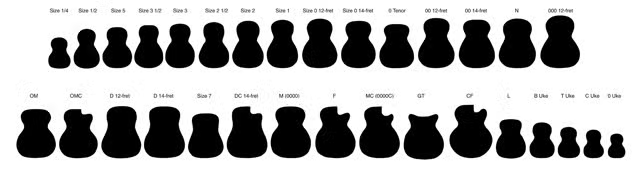
If you're shopping for an acoustic, you'll likely run into the term dreadnought — a body shape originally developed by the Martin Guitar Company that's since become the industry standard. It's known for a bolder, louder, richer tone than smaller-bodied acoustics, and its versatility has made it the default "first guitar" for generations of players, whether they end up performing, recording, or just playing for themselves in a living room.
You don't need to spend a fortune here. An instrument that's too expensive risks becoming a guilt object if your commitment wavers early on; one that's too cheap can have build issues that make it genuinely harder to play, which stacks unfairly on top of everything above. Reputable brands like Fender, Epiphone, Ibanez, and Yamaha all make solid, well-built dreadnoughts at reasonable beginner prices — plenty good enough to learn on for years before you'd ever need to think about upgrading.
Before You Put This Down
Here's the short version, if you skip everything else: it's going to hurt for a while, it's going to frustrate you, you're going to compare yourself to people with a decade's head start, and at some point you're going to want to quit for no dramatic reason at all. Every single guitar player who's ever stuck with it went through all four.
The only real difference between the people who end up playing guitar for the rest of their lives and the people with an acoustic gathering dust in a closet is whether they kept going through that first month instead of stopping at it.
Go get the guitar. Expect the pain. Sit with the frustration. And the first time a clean note rings out from under your own hand — actually stop and notice it. That's the receipt. Everything after that is just time.
Read or listen to more of the author's work here.
About the Creator
Elton Reads A Book A Week (Elton Edgar)
Former comedy writer, avid reader, and podcaster Elton, has taken to Vocal to share his trials, tribulations, and what he has learned in the wild world of everything. Well, it's that and a desperate need for attention and validation too.
Enjoyed the story? Support the Creator.
Subscribe for free to receive all their stories in your feed.
Comments
There are no comments for this story
Be the first to respond and start the conversation.