Latest Stories
Most recently published stories in Motivation.
AI Side Hustles 2025: Earn Money Online Using Just Your Phone. AI-Generated.
The world of freelancing is changing fast. You don’t need a fancy laptop, a professional setup, or years of experience anymore. In 2025, all you need is your smartphone and a few powerful AI tools to start earning real money online. 📱💰 From writing and design to voiceovers and videos, AI is opening up hundreds of new opportunities — especially for beginners who just want to get started. Here are 10 AI side hustles you can start today, using only your phone.
By Najeem Ullah12 months ago in Motivation
The Village Doctor
The Village Doctor BY: Masarrat Kalanchvi Dr. Sidra threw her appointment letter on the table in frustration. “I can’t go work in a village hospital! Never!” Her mother, Shireen Begum, frowned. “You worked so hard to become a doctor, passed all the government exams and interviews — and now they’ve appointed you to some small village hospital!” Sidra’s father, Ahmad Khan, sighed. “It’s all right, Sidra. Don’t go. I’ll find you a position in a big city hospital. Why should my daughter suffer in a remote village?” Shireen Begum nodded approvingly. “Exactly. You grew up in the city — in comfort, luxury, and ease. You can’t live in a place where there’s dust, no electricity, and no decent water.” During this entire discussion, Sidra’s grandfather sat silently in a corner, lost in deep thought. Finally, Ahmad Khan asked, “Father, what are you thinking?” The old man looked up. “Sidra will go to the village.” The words shocked everyone. “Grandfather!” Sidra stood up. “You know I’ve never spent even one day in a village. How could I possibly live there?” “Because the people there need you, my child,” the old man replied calmly. “Someone else can go, Dada. Other girls will take that job — girls who need the salary.” He shook his head. “No, Sidra. That village needs you. Not someone forced to go, but someone willing to stay. Those who go unwillingly, they leave at the first opportunity.” Shireen Begum raised her hands dramatically. “Just listen to Father! He wants Sidra not only to go to that village but also to stay there permanently!” Ahmad Khan added, “Please, Father, don’t force her. Let her decide for herself.” The old man nodded. “Yes. Sidra will decide. And whatever she decides, we’ll all accept.” That night, Sidra sat awake by her window, listening to a lone bird crying on the tree outside. Her grandfather entered quietly, carrying a glass of milk. “You’re still awake, my child?” “Yes, Dada. I couldn’t sleep. I keep hearing this bird. Its voice sounds so sad.” The old man smiled gently. “Perhaps it’s lost its flock. When birds lose their companions, they can’t sleep. They sing out in the night, calling for them.” “Do you think it will ever find them again?” Sidra asked softly. “Yes,” he said. “Someday its cry will reach them, and they’ll come for it. You see, Sidra, sometimes people, too, are separated from their roots — from the land they belong to. But the earth calls them back. Every grain of soil has a claim on its children.” The next morning, Sidra agreed to visit her grandfather’s village — just for one day. “But promise me, Dada,” she said, smiling. “You won’t ever ask me to work there.” He laughed and took her hand. “I promise.” --- When Sidra told her parents, her mother was horrified. “Never! You’re not going to that filthy place — where the roads are covered in dung, flies buzz everywhere, and there’s not even clean water!” But Ahmad Khan said calmly, “Let her go. She’ll see what it’s really like and come back by evening.” The dusty road to the village was lined with fields of green wheat and mustard flowers swaying in the breeze. Children bathed in the canal, women filled pitchers at the well, and farmers worked the soil under the wide blue sky. It was beautiful — but Sidra found no attraction in it. “Yes, Father was right,” she thought. “I’ll be back before nightfall.” Then she saw a signboard with the name of the very same village written on it — the one mentioned in her appointment letter. “Dada! Stop the car!” she cried. “I’m not going there! You tricked me!” The old man smiled gently. “This is Baba Noor Din’s village, my child.” Sidra’s voice trembled. “You said we were visiting him — not this place!” “We are,” he said softly. “But first, we must stop somewhere else.” He parked the car near the village graveyard. “Come, Sidra.” Puzzled, she followed him to a simple grave. They recited Fatiha together. “Whose grave is this, Dada?” she asked quietly. He looked at her tenderly. “A woman from this village. She died giving birth. There was no lady doctor here to save her. She was being carried to the city hospital, but she died on the way.” Sidra’s heart sank. “That’s so tragic. What happened to her baby?” “She lived,” he replied. “A relative from the city adopted her, raised her with love, and made her a doctor.” Sidra looked up, confused. “Do you… know that girl?” The old man’s eyes filled with tears. “Yes, my child. That girl is you. This is your mother’s grave.” Sidra froze. The world around her blurred. She fell to her knees, her arms spread over the grave, and wept as though her soul was tearing apart. Her grandfather placed a trembling hand on her head. “Now you know the truth, Sidra. This village is your home. Your mother’s soul rests here — and her unfinished work is waiting for you.” --- Later, they went to Baba Noor Din’s house. The old man embraced Sidra warmly. “So this is my daughter — now a doctor! Praise be to God!” The villagers brought fresh butter, lassi, and corn bread for them. Sidra tasted the food — it was simple but full of warmth. Just then, an old woman came running. “Baba Noor Din! My daughter-in-law is very sick. There’s no lady doctor in the hospital again. We’ll have to take her to the city tomorrow.” Sidra stood up immediately. “Dada, I need to go back to the city — now.” He frowned. “So soon?” “Yes,” she said with calm determination. “To pack my things. I’m coming back tonight. That woman’s daughter-in-law will be my first patient.” Tears of pride filled the old man’s eyes. “I knew you would return to your roots, my child.” --- When Sidra reached home, her parents looked relieved. “See?” her father laughed. “I told you — the morning’s wanderer always returns by evening.” But Sidra looked different — her eyes shone with new purpose. “Father,” she said firmly, “I’m going back — to serve where my mother’s life was lost. No more women should die on the road to the city. Not if I can help it.” Her mother’s lips trembled. She saw not just her daughter, but the reflection of her late friend — the same face, the same eyes. With tears in her voice, she said, “Go, my child. We are proud of you.” Sidra bowed her head and whispered, “Thank you, Mother… Thank you, Father.” And as she left for the village, the morning sun broke through the clouds — lighting the path that would change countless lives forever.
By Ubaid 12 months ago in Motivation
The Treasure Across the Sea
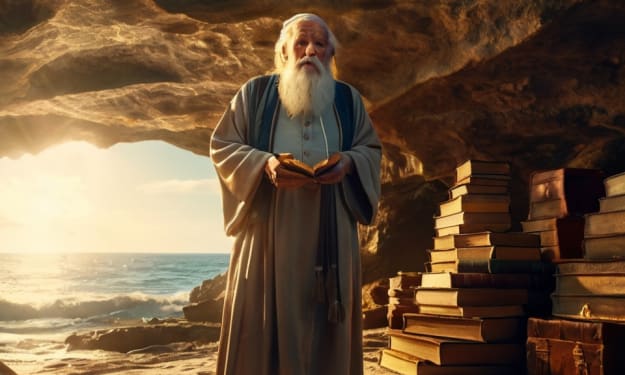
The Treasure Across the Sea BY: Ubaid Long ago, in a distant kingdom, there lived a kind and just king whose name was known far and wide for his fairness and compassion. The king had instructed his ministers to keep him informed of everything happening across the land so that no poor person would ever be deprived of justice. One day, one of the king’s ministers was traveling along the seashore with his caravan when he noticed an old man running back and forth along the edge of the water. The man kept shouting, “My treasure lies across the sea! My treasure lies across the sea!” The minister stopped in astonishment. He thought to himself, Why would an old man be running like this, shouting about a treasure? Curiosity got the better of him, and he ordered his guards to seize the old man. The minister secretly hoped that the man’s words might lead him to hidden riches. Without informing the king, the minister imprisoned the old man. Days passed, but the old man said nothing except, “My treasure lies across the sea.” The minister grew frustrated. He had imagined that once he found the treasure, he would become the richest man in the kingdom, perhaps even more powerful than the king himself. But no matter how much he threatened, questioned, or even punished the old man, he received the same calm reply: “My treasure lies across the sea.” At last, the minister began to think the old man was mad. If he really had a treasure, he thought, why would he wear tattered clothes and live by the shore like a beggar? Realizing his mistake, the minister’s conscience began to trouble him. He decided to confess everything to the king. When the king heard the story, he ordered that the old man be brought before him. “Dress him in clean clothes,” the king commanded. “Feed him well and then bring him to my court.” Soon the old man stood before the throne. The king looked at him kindly and asked, “Old father, tell me—where is your treasure?” The man bowed respectfully and said the same words again: “My treasure lies across the sea.” The king smiled gently and turned to his minister. “If that is so,” he said, “take this man wherever he wishes to go. Let us see what treasure he speaks of.” The next morning, the minister set out with the old man and a group of soldiers. They rode swiftly along the coastline, the horses’ hooves thundering against the sand. After several hours, they reached a place where the ground became soft, and one of the horses sank into the mud. The caravan was forced to camp there for the night. At dawn, they resumed their journey. Days turned into weeks as they crossed forests, climbed steep hills, and passed through narrow valleys. Finally, they reached the sea. The minister arranged for boats to carry them across the water. After many hardships, they arrived at a lonely, rocky island. There, a narrow mountain path led to a cave. The old man’s face lit up with joy. “We have arrived!” he cried. Without hesitation, he entered the dark cave, his eyes sparkling with excitement. The minister and his men followed. Inside, they saw piles upon piles of old, dusty books—pages yellowed with age, bindings torn and faded. The men looked around in disbelief. “Are these your treasures?” the minister asked in confusion. “Yes,” the old man replied proudly. “These are the treasures of my ancestors.” The minister and his men carried the books back to the palace. When they presented them to the king, he, too, was astonished. He gazed at the heaps of worn-out books and wondered silently, Can this really be the treasure the man spoke of? The king turned to the old man and asked, “Father, how much would you take for these books?” The old man smiled and shook his head. “Your Majesty,” he said, “these books are not for sale. They were passed down to me by my forefathers. They contain the knowledge and wisdom of generations. How can I sell such an inheritance?” The king was deeply moved by his words. Still, to test the man’s sincerity, he said, “What if I offer you half my kingdom in exchange for them? Would you agree then?” But the old man refused again. “Even if you give me your entire kingdom,” he said calmly, “I will not part with my ancestors’ legacy. These books are the true wealth of my family—the treasure of wisdom and learning.” The king was silent for a moment, then he rose from his throne and bowed slightly before the old man. “You have taught me a great lesson,” he said with admiration. “Gold and silver may shine, but they fade with time. Knowledge never loses its value. It is a treasure that increases the more it is shared.” From that day on, the king became the old man’s student. He spent hours learning from those ancient books and often said with pride, “It is an honor to be the disciple of a wise man.” Under the king’s rule, the kingdom prospered not just in wealth but in wisdom. Schools were built, scholars were respected, and the love of learning spread throughout the land. The story became famous for generations to come. People remembered it whenever they saw someone chasing after gold and silver, forgetting the greater treasures of the mind and heart. Indeed, just as the wise say: A tree is known by its fruit, and a person is known by his deeds.
By Ubaid 12 months ago in Motivation
Rise Beyond Limits: Unlocking the Power of Self-Belief
Every great achievement in history began as an idea in someone’s mind — fragile, uncertain, but nurtured by belief. The truth is, we all carry within us the seeds of greatness 🌱. What separates dreamers from achievers is not luck, talent, or background; it’s the unshakable belief that “I can.”
By Irfan Ali12 months ago in Motivation
The Rich Father and the Son’s Eye-Opening Lesson
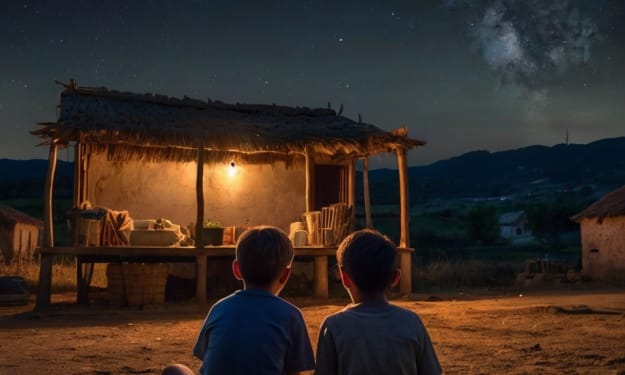
The Rich Father and the Son’s Eye-Opening Lesson BY:Khan A journey to a humble village teaches a wealthy boy the real meaning of richness and gratitude. In a vast and prosperous kingdom, there once lived a man of great wealth. He owned grand estates, luxurious mansions, servants at his command, and all the comforts one could imagine. There was nothing he did not possess. Yet, for all his riches, his heart carried a quiet concern — his only son. The boy had grown up surrounded by luxury. He had never known hardship or hunger. Every wish of his was fulfilled even before he asked. His clothes were made from the finest fabrics, his toys were rare and expensive, and his days were filled with ease. Though his father loved him deeply, he worried that his son was growing up unaware of the world beyond their walls — a world where people struggled simply to survive. One morning, as the father sat on his marble terrace, watching his son play with a golden ball, a thought came to him: “My son must understand how fortunate he is. He must see how others live — those who have little but still find joy. Only then will he truly value what he has.” Determined to teach his son this lesson, the father decided to take him to a nearby village, far away from the comfort of their palace. He planned for them to spend a day and night in the home of a poor farmer. --- The Journey to the Village When they arrived, the father and son were greeted warmly by the farmer’s family — a man, his wife, and their two young children. Their home was small and simple, made of mud and straw. The roof leaked a little, the furniture was worn, and the food they served was plain, yet there was love in everything they offered. The rich boy watched in amazement as the family shared their meal, laughing together though they had so little. He noticed the children playing barefoot in the open fields, their faces bright with happiness. The air smelled of earth and fresh crops, and everywhere he looked, he saw people working hard, helping each other, and smiling through their struggles. The father quietly observed his son’s expressions — curiosity, wonder, and a hint of thoughtfulness. He hoped the lesson was sinking in. That night, the boy and his father slept in the small hut. Used to sleeping on a soft bed covered in silk, the boy now lay on a rough mat under a thin blanket. Yet, as he stared through the window, he saw a sight he had never seen before — a sky full of glittering stars. There were no electric lights, no noise, no distractions. Just the sound of crickets, the gentle rustle of leaves, and the peaceful rhythm of nature. For the first time, he felt something different — a calmness that wealth had never given him. --- The Conversation on the Way Home The next morning, as they rode back to their grand estate, the father asked gently, “So, my son, how was the trip? Did you enjoy spending time in the village?” “Yes, Father,” the boy replied eagerly. “It was wonderful.” The father smiled, slightly surprised. “And did you notice how poor those people are? Did you see how they live?” “Yes, Father,” the boy said softly. The father nodded. “And what lesson did you learn from it?” The boy thought for a moment and then replied, “I learned that while we have one dog at home, they have four. We have a swimming pool that ends where our walls do, but they have endless rivers and streams. We have expensive lights that shine in our garden, but they have the stars to brighten their nights. Our lawn ends where our fence begins, but theirs stretches as far as the eye can see.” The father listened silently, his heart stirring. The boy continued, “Thank you, Father, for showing me how poor we truly are.” The father was speechless. He had taken his son to the village hoping to teach him how lucky he was — but instead, it was his son who had opened his eyes. --- The Real Meaning of Wealth That night, as the father reflected on his son’s words, he realized the truth. Richness is not measured by gold or possessions but by the heart’s capacity for gratitude. The villagers had little in material wealth, yet they were rich in contentment, love, and peace — treasures that no amount of money could buy. We often forget that true happiness lies not in what we own, but in how we see the world. As the old saying goes: “We do not see things as they are; we see them as we are.” Our lives are shaped by our thoughts. A person who lives with a positive mind and a grateful heart will always find beauty in the smallest things — a sunrise, a smile, or a simple meal shared with loved ones. If you have love, family, good health, and peace of mind, you already possess everything worth having. These are the riches that cannot be bought or stolen. Material things may bring comfort, but they do not guarantee happiness. What truly matters is how we choose to see the world. For in the end, the richest people are not those who have the most, but those who need the least.
By Khan 12 months ago in Motivation
The Sword of Duty
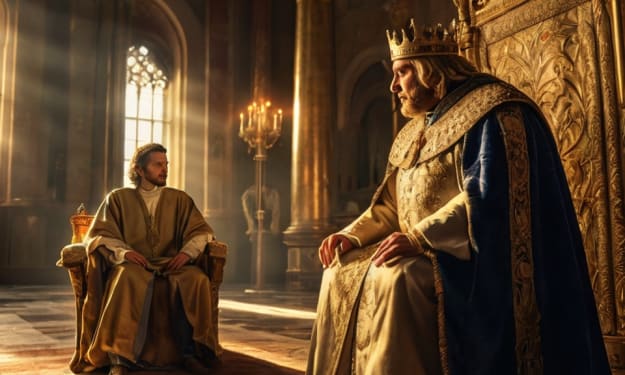
The Sword of Duty BY:Khan Once upon a time in Italy, there lived a king who ruled over a vast kingdom. Although he was powerful and wealthy, his people did not like him much. They thought he was proud and distant. Still, there were some who never missed a chance to praise him—especially one of his ministers, a master flatterer. This minister spent his days and nights singing false praises of the king’s wisdom, justice, and kindness. Whenever he got the chance, he would say, “Your Majesty’s rule is the best in the world! People are blessed to live under your just and noble leadership.” The king, however, had a rule. He had ordered all his ministers to keep him informed about the true condition of his subjects—who was happy, who was suffering, and what people really thought of their king. “Tell me the truth,” the king would say. “Only then can I serve my people well.” But whenever the king asked, the flattering minister would respond instantly, “Your Majesty, everyone in your kingdom lives in comfort and peace. Who could ever be unhappy under your rule?” The other ministers remained silent, but this one always filled the court with empty words of praise. Over time, the king began to grow suspicious. He wondered, Perhaps this minister is not being honest. Maybe he hides the truth from me with his flattery. The king realized that if he continued to believe such lies, he might remain ignorant of his people’s real suffering. So, one day, the king decided to test the minister. At first, he tried to teach him gently. “My friend,” said the king, “there is no kingdom in the world where everyone is happy with their ruler. And no king is perfect—sometimes even a just ruler can make mistakes that hurt someone. You must always tell me the truth about my people, even if it displeases me.” But the minister, blinded by his habit of flattery, continued to shower the king with false compliments. Finally, the king said, “Since you are so loyal and faithful, I want to reward you. Tomorrow, I will make you king for one day. You will sit on my throne and rule the kingdom as you wish.” The minister could hardly believe his ears. His eyes sparkled with joy. “A day of kingship!” he thought. “What a great reward!” The next morning, the royal court was filled with noblemen, ministers, and important guests. The real king placed his own crown on the minister’s head and seated him on the grand golden throne. “Today,” the king announced, “I am no longer your ruler. This man is your king for one day.” The hall echoed with cheers. Musicians played, servants brought rich food and drink, and the one-day king began giving orders proudly. He felt like the most powerful man in the world. But then, something strange happened. As the minister looked up, his face suddenly turned pale. His body trembled with fear. Above the throne, hanging directly over his head, was a sharp, gleaming sword. It dangled by a single, thin thread—so fine it looked like a strand of hair. The real king, sitting quietly nearby, noticed his fear and smiled slightly. The minister could not take his eyes off the sword. The thought of it falling made his heart pound. What if the thread broke? What if the sword dropped on him? He tried to sit straight and calm, but his hands shook, and his voice faltered whenever he spoke. Finally, unable to bear it any longer, he turned to the real king and said in a trembling voice, “Your Majesty, please remove this sword from above my head!” The king replied calmly, “That is not possible. This sword is known as The Sword of Duty. It always hangs above the head of every ruler. As long as a king remains honest and just, this sword protects him. But the moment he neglects his duty or rules unfairly, it falls—and destroys him.” The minister’s heart sank. All his dreams of enjoying his short reign vanished. Moments ago, he had planned to pass orders that would benefit his family and friends, to grant them wealth and power. But now, he was frozen in fear. What if any of my decisions are unjust? he thought. What if the sword falls? Seeing his distress, the real king said gently, “Now do you understand what it means to be a king? The throne may look comfortable, but it carries a burden heavier than gold. Every decision affects thousands of lives. Every injustice brings danger closer. The crown is not a toy—it is a responsibility.” The minister bowed his head in shame. “Forgive me, Your Majesty,” he said. “I never understood the weight of a ruler’s duty. I thought being king meant comfort and luxury, but now I see it is a life of constant watchfulness and responsibility.” The king nodded. “Flatterers do not serve their rulers or their people. By hiding the truth, they place the king under this sword. Only honesty can keep the kingdom—and the ruler—safe.” Deeply humbled, the minister removed the crown and placed it back on the king’s head. He promised never to lie or flatter again. From that day on, he became one of the most honest and loyal advisors in the court. And so, the king’s lesson was complete: A throne is not a seat of comfort, but a seat of duty—and above every ruler’s head, there always hangs the Sword of Responsibility. Moral: Honesty is the true service to a leader. Flattery blinds both the ruler and the flatterer, but truth keeps the kingdom strong.
By Khan 12 months ago in Motivation
✨ The Importance of Courage in Following Your Dream
“Courage doesn’t mean you are never afraid. Courage means you move forward even when fear is whispering in your ear.” When we talk about dreams, it’s easy to imagine the happy part: success, applause, money, or people praising you. But what we often forget is the middle part—the scary, messy, uncertain part where courage is tested.
By Zidane12 months ago in Motivation
Whispers of Rain and Daffodils
Whispers of Rain and Daffodils A Mountain Afternoon of Tea, Tranquility, and Golden Blooms The rain had begun as a whisper—soft, steady, and soothing—as if the mountain itself had decided to exhale. Elena stood at the window of her little wooden cabin, tucked high in the emerald folds of the hills. Outside, the world was washed in silver mist and muted greens, and a field of daffodils danced gently in the rain, their golden heads bobbing like a thousand cheerful nods. She smiled. This was the kind of day that some might call gloomy. But to Elena, it was perfect. She had always loved the mountains in the rain. They seemed more alive, more secretive—like the trees and stones were whispering ancient stories only the clouds could understand. She reached for her favorite shawl, a handwoven piece of sky-blue wool, and wrapped it around her shoulders before heading to the little kitchen. The kettle was already steaming, singing a gentle tune. She prepared a tray with care: her favorite porcelain teapot painted with tiny bluebells, two delicate cups, a small jar of wildflower honey, and a plate of freshly baked lemon shortbread. Even though she lived alone, she always set out two cups. One for herself, and one for the spirit of the day—rain, daffodils, peace—whatever you wanted to call it. There was comfort in ritual, in treating even a rainy afternoon as something worthy of celebration. Elena carried the tray to the window seat—a cozy nook filled with cushions and a thick wool blanket. The view was nothing short of magic. The daffodils shimmered in the mist like drops of sunlight caught in a dream. Beyond them, pine trees stretched toward the sky, their branches heavy with raindrops. She poured the tea and took a deep breath. The scent of bergamot and honey filled the room. Just then, a soft knock echoed from the front door. She blinked. Who could be visiting on a day like this? Opening the door, she found her neighbor, Thomas, standing there in a raincoat, holding a small bouquet of daffodils wrapped in twine. His gray curls were damp, and his eyes sparkled beneath the brim of his hat. “I saw your daffodils blooming and thought you might like a few for your table,” he said, smiling. Elena laughed softly, touched. “You brought the sunshine in with you,” she replied. “Come in. I’ve just made tea.” They settled by the window, sipping from their matching cups, watching the rain together in quiet companionship. The sound of the rain played like soft music on the roof, and time seemed to slow. “You know,” Thomas said after a while, “I think days like this remind us to pause. We’re always chasing something in the sun. But here, with the rain and tea and flowers… this is life, too. Maybe even the best part.” Elena nodded. “It’s like the world is whispering, not shouting. And when we listen, we hear things we’ve missed.” They sat for hours, talking sometimes, and sometimes simply watching. The rain never let up, but it never felt heavy. It felt like a gift. By late afternoon, the daffodils outside were brighter than ever, their petals holding tiny raindrops like jewels. Inside, the room glowed with soft lamplight, laughter, and the warmth of shared peace. As the kettle whistled again, Elena smiled to herself. There was something magical about rainy days in the mountains—something most people overlooked in their hurry for clear skies. But not her. Not anymore. She had tea, daffodils, the rain, and company. And in that quiet, golden-lit moment, everything was exactly as it should be.
By Muhammad Saad 12 months ago in Motivation
Why the Elites Fear Creativity
Every empire in history has feared one thing above all else — not war, not rebellion, but imagination. Every generation has its creators, the people who look at a broken system and say, “We can do better.” They don’t wait for permission. They grab what’s around them and build something new. They fix, remix, and reimagine the world while others stay locked in patterns of obedience.
By DJ for Change12 months ago in Motivation
. “5 Lessons I Learned from Losing Everything
I never imagined that life could fall apart so quickly. One month, I had a good job, a small apartment in the city, and plans for a future that felt steady. The next, I was sitting on the floor surrounded by half-packed boxes, wondering how everything had disappeared—my career, my savings, and even the relationship I thought would last forever.
By Zahoor khan12 months ago in Motivation
When the Sun Came Back
There was a time when I forgot what sunlight felt like—not the warmth on my skin, but the kind that lived inside me. It was the year everything seemed to fall apart. My job had ended abruptly after a round of unexpected layoffs. My closest friend moved across the country. And the silence of my apartment—once a comfort—became unbearable.
By Khuzaifa ali12 months ago in Motivation