Latest Stories
Most recently published stories in Motivation.
Valentine Day Beyond Roses And Chocolates
Valentine Day arrives every year wrapped in colors emotions and expectations. Streets glow with red hearts shops overflow with gifts and social media fills with images of smiling couples. For many people this day feels magical warm and beautiful. For others it may feel heavy lonely or even meaningless. Yet beyond all the noise decoration and celebration there is something much deeper hidden within this day. Valentine Day is not only about romance. It is about understanding love in its widest purest and most human form.
By Muhammad Shayan7 months ago in Motivation
Permission to Rest
Rest used to feel like failure. Before my diagnosis, rest was something I earned after productivity. It was a reward waiting at the end of a finished task list, something to allow myself once everything else had been completed. Rest was optional. It was negotiable. It was something I could postpone in favour of being useful, being present, being enough.
By Millie Hardy-Sims7 months ago in Motivation
The Hidden Truths of Disability
Invisible illness hides more than symptoms. It hides the negotiations. The grief. The private calculations behind ordinary moments. It hides the parts of disability that are not visible in public spaces, not spoken about in polite conversation, and not easily explained.
By Millie Hardy-Sims7 months ago in Motivation
Turning Care into a Career: Building a Sustainable Counseling Path
Many people feel called to help others through counseling. They care deeply about mental health and want to turn that passion into real work. However, passion alone does not create a lasting career. You need planning, training, and clear goals to build a sustainable counseling path. When you design your journey with care, you protect your energy and grow with confidence. This guide explains how to transition from passion to profession while building a stable, meaningful future in counseling.
By Debra Bailey PHD7 months ago in Motivation
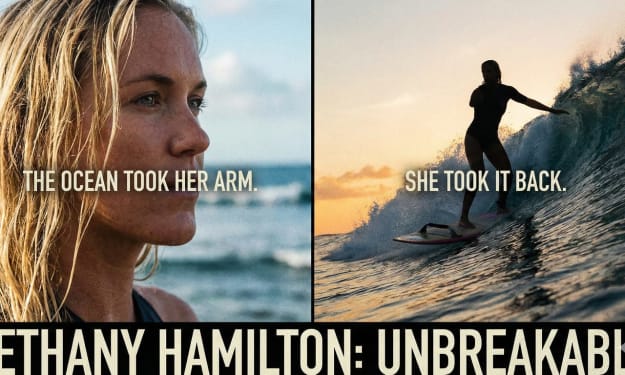
The Girl Who Rewrote the Ocean: Bethany Hamilton and the Defiance of 'Done'
The harrowing and intensely motivational true story of Bethany Hamilton, who lost her arm to a tiger shark but refused to lose her identity, returning to professional surfing against all odds.
By Frank Massey 7 months ago in Motivation
The Algorithm Knows I’m About to Quit
The Algorithm Knows I’m About to Quit I didn’t tell anyone I was thinking about leaving. Not my manager, not my team, not even myself—not in words that could be quoted back to me. I framed it as tiredness. As a phase. As the natural drag of a job that paid well but asked for more hours than it admitted to. I told myself that everyone in tech felt like this eventually, that burnout was a badge you wore quietly until promotion or resignation made it irrelevant. The algorithm disagreed. It started with my recommendations. On Monday morning, my music app stopped suggesting anything upbeat. No more “Focus Flow” or “Monday Motivation.” Instead, it offered sparse piano playlists titled Letting Go and Soft Endings. I laughed and skipped them. Coincidence. Data drift. A weird week. By Tuesday, my video feed followed suit. Productivity gurus disappeared. In their place came videos about “knowing when it’s time to walk away” and “careers you can start over at 35.” I turned autoplay off. That feature had always felt a little too intimate anyway. At work, I was fine. Better than fine. I hit my sprint goals early, answered Slack messages promptly, attended meetings with my camera on and my posture upright. If burnout had symptoms, I wasn’t showing them. My performance metrics were green across the board. The algorithm saw something else. It began suggesting articles during my lunch break: The Hidden Cost of Staying Too Long, Burnout Isn’t Failure—It’s Information, Why High Performers Leave Without Warning. I didn’t click them. But I noticed. Noticed how precisely they threaded themselves into the cracks of my scrolling. I work on recommendation systems. That’s the irony that makes this harder to explain without sounding paranoid. I know how this works—or how it’s supposed to. Models trained on millions of users. Patterns, not people. Correlation, not intent. The system doesn’t know you; it knows what users like you have done before. It predicts behavior, not feeling. Except predictions shape behavior. We’ve known that for years. On Wednesday afternoon, my calendar app suggested I block off Friday “for rest.” Not a meeting conflict. Not a travel buffer. Just rest. The suggestion came with a gentle blue highlight, as if it were doing me a favor. I declined it. That night, my job board app—which I hadn’t opened in months—sent a notification: New roles you might like. Not promotions. Not lateral moves. Entirely different industries. Smaller companies. Words like meaning, balance, mission sprinkled through the descriptions like bait. I sat on the edge of my bed and tried to inventory my feelings, the way therapists and productivity coaches advise. Am I unhappy? I asked myself. I didn’t have a clean answer. I wasn’t miserable. I wasn’t crying in the bathroom or staring blankly at my screen. I still enjoyed parts of the work—the puzzle of optimization, the quiet satisfaction of reducing error rates by fractions of a percent. I liked my team. I liked my paycheck. But when I imagined doing this exact job a year from now, something in my chest tightened. Not pain. Not fear. Just resistance. Like a muscle refusing to engage. The algorithm had a name for that. I didn’t. On Thursday, my internal dashboard flagged an anomaly. We had recently deployed a new burnout-risk model, trained on behavioral signals: login times, message sentiment, task-switching frequency, micro-delays in response patterns. It was meant to be aggregate, anonymized, ethical. A way to help organizations understand systemic strain, not individual weakness. My user ID appeared in the test output. Burnout Risk: High Attrition Probability (90 days): 0.72 I stared at the numbers longer than I should have. This wasn’t my consumer profile. This was internal. My own work, reflecting me back to myself with unsettling confidence. I wanted to dismiss it. Models are imperfect. False positives happen. But the feature weights told a quieter story: increased hesitation before starting tasks, longer pauses between keystrokes, subtle shifts in language tone. Nothing dramatic. Nothing a manager would ever notice. Nothing I had noticed. The system didn’t say I was unhappy. It didn’t say I was failing. It said I was about to change. That evening, my phone surfaced a memory: a photo from six years ago, my first week in tech, standing in front of a whiteboard filled with ideas. I looked exhausted and alive in equal measure. The caption I’d written then was embarrassingly earnest. Something about building things that matter. I had built many things since. Efficient things. Profitable things. Things that worked exactly as designed. Somewhere along the way, the feeling changed shape. By Friday morning, I didn’t need the algorithm anymore. It had already done its work—not by persuading me, but by noticing what I wouldn’t name. By holding up a pattern I was still pretending was random. I took the day off. Not because an app told me to, but because sitting at my desk felt heavier than usual, and walking outside felt necessary in a way I could no longer ignore. I didn’t apply to any jobs. I didn’t draft a resignation letter. I just admitted, quietly, that something was ending. The algorithm didn’t make that choice for me. It never could. But it saw the outline of the decision before I let myself feel its weight. That’s the part no one talks about. We think of algorithms as cold, predictive machines. But sometimes they act like mirrors angled just enough to catch what we’re avoiding. Not intention. Not desire. Just trajectory. And once you see where you’re headed, pretending you don’t know becomes the hardest task of all.
By Talhakhan7 months ago in Motivation
Wicked and the Reality of Disability
The Wicked films arrived wrapped in spectacle. Audiences expected soaring vocals, dazzling visuals, and the familiar emotional weight of a beloved musical brought to life. Few viewers expected to encounter one of Hollywood’s most meaningful recent contributions to disability representation.
By Millie Hardy-Sims7 months ago in Motivation
Proving You’re Disabled Enough
The hardest part of applying for disability benefits was not the paperwork. It was the translation. A life quietly reshaped by illness had to be reduced to tick boxes, descriptors, and carefully worded answers. Pain had to become evidence. Fatigue had to become measurable. Personal limitation had to be presented as a case strong enough to be believed.
By Millie Hardy-Sims7 months ago in Motivation
Internalised Ableism
The question didn’t arrive all at once. It appeared slowly, quietly, in moments I didn’t expect. When I used my walking stick on a day I could technically manage without it. When I parked in a disabled space and stepped out of the car without limping. When I told someone about my diagnosis and watched their eyes search my body for confirmation.
By Millie Hardy-Sims7 months ago in Motivation