
Handsome Newton Refuses to Choose One Lane—and That May Be His Greatest Advantage
Artists are encouraged to evolve, but they are also expected to explain themselves in a few words. A rapper should rap. An actor should act. A comedian should make people laugh. A producer should remain behind the scenes. Fashion is often treated as an accessory rather than a serious extension of artistic identity.
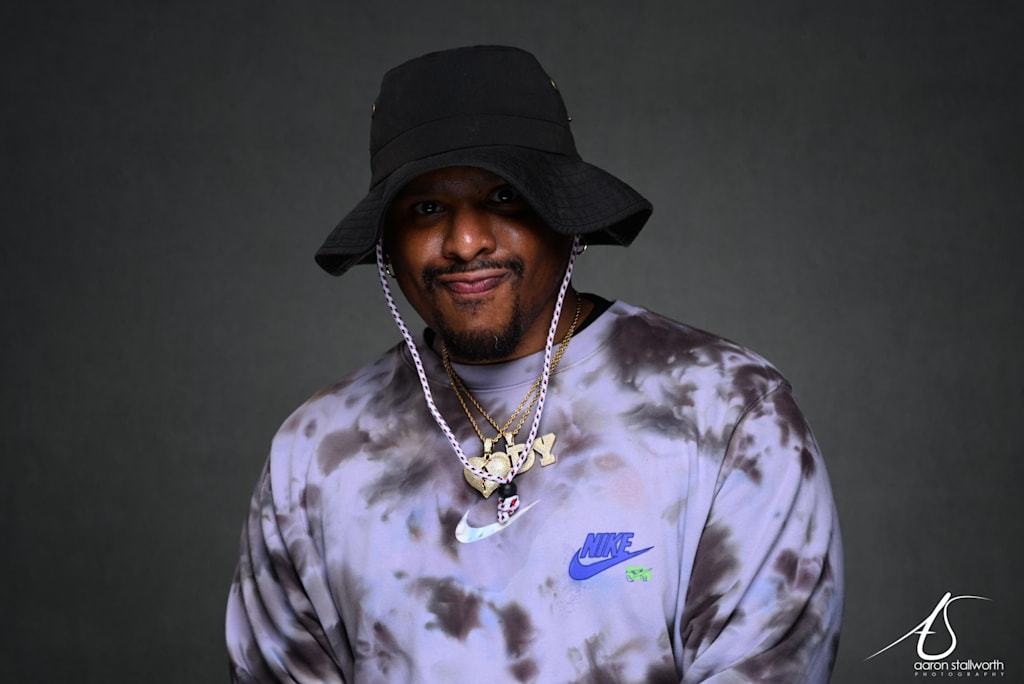
Handsome Newton does not appear interested in accepting those boundaries.
The West Philadelphia creative is developing a career that moves through music, acting, comedy, writing, production, theater, and fashion. At first glance, that list might sound like the résumé of someone pursuing several separate ambitions. Look more closely, however, and a more cohesive picture begins to emerge.
Newton is not dividing his attention among unrelated fields. He is using several creative languages to introduce audiences to the same imagination.
That distinction could determine the direction of his career.
Raised by an Era When Artists Created Worlds
Growing up in the Wynnefield section of West Philadelphia, Newton developed an early fascination with the music, cinema, and fashion of the 1990s. It was an era in which presentation carried nearly as much importance as performance.
The most memorable artists did not release music in isolation. Their videos, clothes, interviews, album artwork, performances, and personalities worked together. Audiences could recognize a creative era through a color palette, hairstyle, dance, production sound, or piece of clothing.
The leading figures of that period understood world-building long before it became a common marketing term.
Newton’s artistic identity appears to carry that philosophy forward. Music may be at the center of his work, but it is surrounded by character, humor, visual presentation, storytelling, and personal style. His interest in multiple disciplines is therefore not an attempt to prove that he can do everything. It is an effort to control more of the environment around his ideas.
That type of control is especially valuable for an independent artist.
Major stars traditionally relied on labels, stylists, publicists, producers, video directors, and film studios to construct their public identities. Independent artists now have direct access to audiences, but that freedom comes with additional responsibility. They must often become their own creative directors, marketing teams, producers, performers, and brand strategists.
Newton’s expanding skill set reflects this new reality. His versatility is not simply a personality trait. It may be part of his survival strategy.
Freestyling as the Foundation
Newton began teaching himself to freestyle at approximately 13 years old. That early practice would later become an important part of his process in the recording studio, but its influence may extend beyond music.
Freestyling teaches a person how to trust instinct.
There is no opportunity to spend several hours reconsidering a line when the next word must arrive immediately. The artist learns to remain present, respond to uncertainty, recover from mistakes, and turn unexpected ideas into part of the performance.
Those same abilities are useful in comedy and acting. A comedian must understand timing and audience reaction. An actor must listen and respond rather than simply wait to deliver a memorized line. A producer must recognize when an unplanned sound deserves to become the center of a record.
In that sense, Newton’s different creative interests share a common foundation. They all depend on rhythm, timing, observation, and the confidence to make decisions in real time.
What began as a teenager learning how to freestyle may have quietly prepared him for a much broader career.
What Does It Really Mean to Become Famous?
Newton’s 2026 album, The Night I Became Famous, contains 12 tracks and runs for approximately 37 minutes. Its title immediately commands attention, but it also introduces a question that sits at the center of the modern entertainment industry:
When does someone actually become famous?
Is it the moment a song goes viral? The first time a stranger recognizes an artist in public? The arrival of a major media feature? A film appearance? A sold-out performance? Or does fame begin internally, when an artist finally starts moving as though the future he imagined is already possible?
For independent creators, public recognition rarely arrives at the exact moment their talent develops. There can be years between becoming capable and becoming visible. During that period, the artist must continue working without the reassurance that the outside world will ever catch up.
That makes Newton’s album title more interesting than a simple statement of success. It can be read as confidence, aspiration, satire, or even a challenge. Perhaps the “night” in question is not one literal event. Perhaps it represents the psychological moment when an overlooked creator stops waiting for permission to treat his work seriously.
The music supports that interpretation because the project does not remain in one emotional or sonic space.
“The Best Song” and “No More Nightmares” draw attention to Newton’s freestyle ability and lyrical confidence. “Longest Summer Days” moves into more reflective territory, creating a sense of memory and emotional distance. “Endy’s Song” and “Esposa” display his interest in crossing musical boundaries, while “Ghetto Hottie,” “Girl U Fine,” and “Freak Love” embrace attraction, celebration, and nightlife energy.
Then there is “Twerk It,” a record Newton produced himself.
His production credit is important because it changes the nature of his authorship. Newton is not only delivering words over a finished environment. He is helping construct that environment. He can influence how the drums move, where the energy rises, and what atmosphere surrounds his voice.
That level of participation brings him closer to being a complete creator rather than only the featured personality at the front of the song.
The Difference Between Range and Distraction
Versatility can open doors, but it can also create expectations.
When artists announce several ambitions, audiences eventually want to know whether each pursuit is being developed with the same level of seriousness. Being capable in several areas is impressive. Producing memorable work in each of them is much harder.
That is the central challenge facing Newton.
Can he maintain the quality of his music while expanding into film? Can comedy remain a natural part of his personality without turning serious work into a joke? Can fashion become a legitimate extension of his perspective rather than another piece of promotional merchandise?
These are not criticisms. They are the questions that make his career worth discussing.
Specialists have the advantage of concentration. Every hour of their work can be directed toward one craft. Multidisciplinary artists face a different challenge: They must develop several abilities while ensuring that each one strengthens the larger identity.
Donald Glover became an important modern example of this approach by establishing credibility in comedy, television, music, writing, directing, and acting. Jamie Foxx demonstrated how comedy, acting, and music could coexist at a high level. Tyler Perry built an independent ecosystem in which writing, acting, production, ownership, and distribution supported one another.
Newton is at a much earlier stage, and comparisons should not be mistaken for equal achievements. Still, these careers reveal the possible destination of a multidisciplinary strategy. The objective is not to collect job titles. It is to build an infrastructure in which each creative ability makes the others more valuable.
Newton now has to demonstrate what his version of that infrastructure might become.
Detective Howard Could Reveal Another Side
Newton is expected to appear as Detective Howard in the forthcoming crime project Frames from the Streets. The role may give him an opportunity to show audiences a different kind of discipline.
Music allows an artist to intensify his public identity. Acting requires something more complicated: the willingness to disappear inside another person.
A convincing detective character cannot rely entirely on charisma. The performance must suggest observation, restraint, intelligence, suspicion, and a personal history that exists beyond the scenes shown to the audience. Small choices become important—the way the character listens, enters a room, processes evidence, or decides whether another person is telling the truth.
Newton’s theater background could prove valuable here. Theater trains performers to understand physical presence, vocal control, emotional intention, and the relationship between a character and the surrounding space.
The question is not simply whether Newton can remember dialogue or look natural in front of a camera. It is whether viewers will see Detective Howard instead of Handsome Newton.
That separation is one of the true tests of an actor.
If he delivers a convincing performance, the role could help him move beyond the familiar description of a “rapper-turned-actor.” It could establish acting as a genuine second foundation of his career rather than a temporary expansion attached to an album campaign.
Fashion as a Form of Authorship
Newton’s planned hat line, expected to debut near the end of 2026, presents another opportunity to strengthen his creative world.
Artists have always influenced fashion, but there is an important difference between wearing distinctive clothing and designing something other people want to include in their own identities.
A successful hat line would need more than Newton’s name. It would require recognizable design choices, consistent visual language, quality construction, and a clear understanding of the audience. The products should communicate something even when Newton is not present to explain them.
If developed thoughtfully, the collection could connect his appreciation for 1990s style with contemporary streetwear. It could also allow his supporters to participate physically in the world he is building.
That possibility raises a broader issue surrounding artist merchandise. Too often, merchandise is designed as a quick transaction. A logo is placed on a standard product, sold during a campaign, and forgotten when the next project arrives.
Fashion has greater potential when it becomes storytelling.
A hat can signify a city, community, attitude, memory, or era. For Newton, the strongest approach may be to treat the collection not as an advertisement for his music but as another independent expression of the same personality.
Can Independence Produce Something Larger?
Handsome Newton’s career is developing during a period when independent artists possess more tools than ever before. They can record music at home, distribute it globally, communicate directly with listeners, produce visual content, sell products, and audition for roles without waiting for a major company to introduce them.
But access does not guarantee attention.
More creators mean more competition. More music means less time for each release to make an impression. The same platforms that allow independent artists to reach millions can reduce years of work to a few seconds of content competing inside an endless feed.
This is where Newton’s multidisciplinary identity could become a meaningful advantage.
If someone first discovers him through music, the film work offers another point of connection. A viewer who encounters him through acting may later explore the album. Comedy can reveal personality. Fashion can turn that personality into a recognizable visual presence. Production demonstrates control of the sound behind the image.
Each discipline creates another doorway into the same house.
The danger is that the house becomes crowded. The opportunity is that it becomes unforgettable.
Becoming Known Versus Building a Legacy
There is a difference between being noticed and being remembered.
Attention can be created through controversy, marketing, spectacle, or luck. Legacy requires work that continues to matter after the original promotional moment has passed.
That difference makes this stage of Newton’s career particularly important. He has spent time behind the scenes, released music across multiple years, developed his performance abilities, and arrived at a point where his ambitions are becoming more visible. Now the question is whether those ambitions can be converted into a consistent body of work.
The Night I Became Famous makes a confident declaration, but fame alone may not be Newton’s most meaningful objective.
The larger possibility is ownership: ownership of his music, image, stories, humor, designs, and the direction in which his career develops. Instead of waiting to be selected for one position within the entertainment industry, he appears to be assembling several positions around himself.
That approach will require patience. It will require quality control. It will also require Newton to determine which opportunities serve the larger vision and which merely create temporary activity.
But if he can make the pieces work together, his refusal to choose a single lane may no longer look risky. It may look prophetic.
Handsome Newton is attempting to become more than an artist with several talents. He is trying to become the architect of a complete creative identity.
The real question is not whether the industry can decide where he belongs.
It is whether he can build something powerful enough that the industry eventually has to enter his world.
About the Creator
Enjoyed the story? Support the Creator.
Subscribe for free to receive all their stories in your feed.
Comments
There are no comments for this story
Be the first to respond and start the conversation.