
From Factory Floors to Firewalls: Suresh Panchal’s Practical Path Through Cybersecurity
Cybersecurity

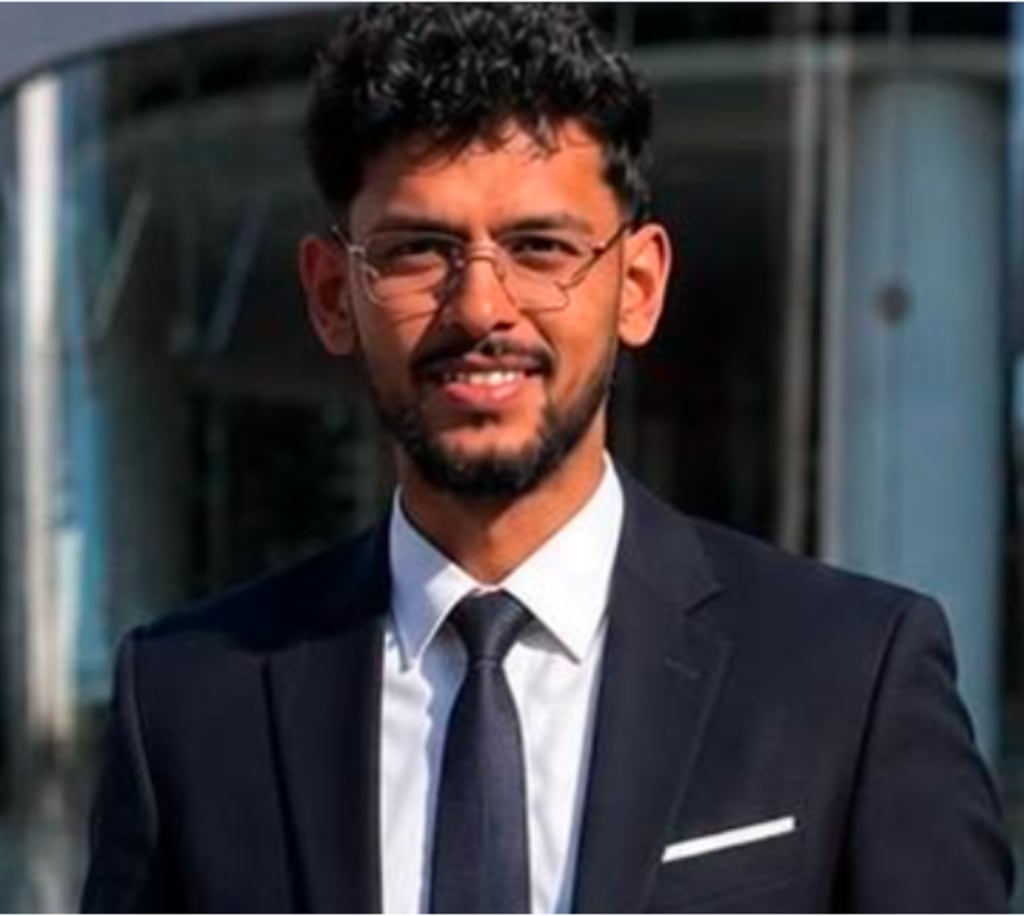
From Factory Floors to Firewalls: Suresh Panchal’s Practical Path Through Cybersecurity
A network security engineer’s career across India and the United States shows why resilient systems depend on disciplined, often invisible work.
In a warehouse, a network problem is never just a network problem. A dropped connection can interrupt inventory systems, slow shipping, isolate equipment, or leave a security team trying to determine whether an outage is routine or something more serious. The technology may sit behind the scenes, but the consequences move quickly into the physical world.
That is the environment in which Suresh Shivram Panchal now works. Based in California, Panchal is a network and cybersecurity engineer whose career has moved from supporting information technology in Indian manufacturing and business settings to protecting enterprise infrastructure in the United States. His work sits at the intersection of connectivity, operational continuity, and security—a place where technical decisions have to survive real-world pressure.
Panchal’s professional record traces a steady progression rather than a sudden reinvention. It begins with the daily demands of keeping systems available, advances through network architecture and security operations, and now includes the protection of warehouse environments where corporate technology and operational systems must coexist without exposing each other to unnecessary risk.
Learning Security From the Ground Up
Panchal entered the field as an IT network associate at Nita Pharma in Maharashtra, India, in 2019. In a pharmaceutical manufacturing setting, infrastructure reliability is closely tied to the rhythm of production. His responsibilities included maintaining switches, routers, and security appliances, monitoring network availability, resolving infrastructure problems, and supporting measures such as segmentation, firewall access-control lists, and endpoint protection.
Those early assignments placed security inside the ordinary work of operations. Before cybersecurity becomes a dashboard, policy, or incident report, it is expressed through basic choices: which systems can communicate, who receives access, how equipment is monitored, and how quickly a fault is recognized. Work at that level builds an appreciation for the difference between a network that merely functions and one that can be trusted.
He carried that foundation to PSK Job Solutions in Thane, where he managed enterprise LAN and WAN infrastructure and worked with switches, routers, access points, firewalls, user authentication, and organizational onboarding. The position expanded his view from individual devices to the relationships among infrastructure, identity, and users. It also reinforced a lesson that continues throughout his career: security controls are most effective when they are understandable, documented, and built into daily operations.
A Career Expands Across Two Countries
After completing a Bachelor of Business Administration in Mumbai, Panchal pursued graduate study in the United States and earned a Master of Science in Information Technology from Westcliff University in Irvine, California, in 2024. The combination is notable. His business education offers a lens on organizations and decision-making, while his graduate work and technical experience place him close to the systems that businesses depend on.
In August 2025, he joined SilverXis Inc. in Irving, Texas, as a network security engineer. There, his work included designing secure network architectures, developing firewall policies, implementing segmentation, monitoring performance, responding to incidents, and conducting root-cause analysis. Tools such as Palo Alto next-generation firewalls, Splunk, Wireshark, Python, Linux, and virtual private networks formed part of that environment.
The role also required documentation: network configurations, security procedures, and infrastructure diagrams created for knowledge transfer. Documentation rarely attracts the attention given to a new platform or a dramatic incident response. Yet it is one of the clearest signs of mature engineering. A system that only one person understands is difficult to maintain, difficult to audit, and harder to recover when conditions change.
Protecting the Boundary Between IT and Operations
Panchal moved to ABS Warehouse in California in March 2026. His current responsibilities include managing enterprise network security, monitoring connectivity across warehouse facilities, reviewing firewall rules, assessing vulnerabilities, and using security information and event management tools for continuous threat monitoring.
One of the most consequential parts of the role is network segmentation designed to separate operational technology from corporate IT. The distinction matters. Operational technology controls or supports physical processes, while corporate IT carries email, business applications, identity services, and administrative data. When the two environments are connected without careful boundaries, a problem in one can travel farther than intended.
Segmentation is not a single switch that an engineer turns on. It requires an accurate understanding of devices and data flows, carefully written firewall policies, access controls, monitoring, and periodic review. It also demands judgment. Controls must reduce the attack surface without disrupting the business processes they are meant to protect. Panchal’s experience in manufacturing and warehouse environments gives that challenge a practical context: availability and security are not competing slogans but engineering requirements that have to be balanced every day.
A Broad Technical Toolkit, Applied With Purpose
Across his roles, Panchal has worked with routing protocols including BGP and OSPF; Cisco switching and Nexus data-center platforms; Palo Alto, FortiGate, Cisco ASA, and Juniper security technologies; F5 load balancing; site-to-site and remote-access VPNs; and monitoring tools such as SolarWinds, Splunk, Wireshark, NetFlow, SNMP, and Syslog. He also lists experience with Python, Netmiko, Linux shell scripting, AWS virtual private clouds, VMware, Cisco Identity Services Engine, Active Directory, role-based access control, and network access control.
Breadth alone does not define an engineer. Its value appears when different technologies have to work as one system. Routing affects reachability. Firewalls enforce policy. Identity determines who may enter. Load balancers influence availability. Monitoring provides the evidence needed to distinguish an isolated fault from a developing security event. Automation can make repetitive changes more consistent, but only when the underlying intent is clear.
Panchal has supplemented his work experience with industry certifications, including CompTIA Security+, Cisco Certified Network Associate, Certified Ethical Hacker, and AWS Certified Security – Specialty. Certifications do not replace hands-on judgment, but they can provide a common technical vocabulary across teams and demonstrate continued study in a field that changes constantly.
Bringing Business Resilience Into the Research Conversation
Panchal’s interests extend beyond infrastructure operations. In September 2025, his professional record lists two Excellent Paper Awards from an IJIEEE international conference in Atlanta. The recognized papers addressed “Digital Transformation in Corporate Finance” and “Cyber Risk and Business Resilience,” with awards for presentation and content.
The subjects connect his technical work with a broader question: what does technology enable, and what does an organization risk when that technology fails? Digital transformation is often discussed in terms of speed, efficiency, and new services. Cyber risk introduces the other side of the equation—the dependencies, vulnerabilities, and recovery decisions that determine whether transformation is durable.
That connection is especially relevant to Panchal’s career. His day-to-day work is grounded in the infrastructure behind business activity, while his conference topics focus on the organizational consequences of technology. The result is a perspective that treats cybersecurity not as an isolated technical specialty but as part of business resilience.
The Value of Work That Prevents the Headline
Cybersecurity is often narrated through breaches, attackers, and emergency response. Much of the profession, however, is preventive and deliberately uneventful. Engineers review rules before they become liabilities. They separate systems before an incident can move laterally. They watch logs for weak signals, test connectivity, document configurations, and investigate why a service behaved differently than expected.
Panchal’s path illustrates that quieter side of the field. His progression from network support to security engineering has been built around making infrastructure dependable while narrowing opportunities for misuse. It is work measured not only by what gets deployed, but also by what is avoided: unnecessary access, preventable downtime, unclear ownership, and small configuration errors that can become larger problems.
As warehouses, manufacturers, and other physical operations become more connected, that discipline will matter more. The boundary between digital systems and the real world is becoming harder to see, even as it becomes more important to defend. Panchal’s career has developed directly along that boundary—one network segment, one policy, and one carefully investigated signal at a time.
About the Creator
Gulshan
SEO Services, Guest Post & Content Writter.
Enjoyed the story? Support the Creator.
Subscribe for free to receive all their stories in your feed.
Comments
There are no comments for this story
Be the first to respond and start the conversation.