
Building Intelligent Financial Systems: How Iqbal Ansari Is Transforming Treasury Technology, Data Governance, and AI
Building Intelligent Financial Systems

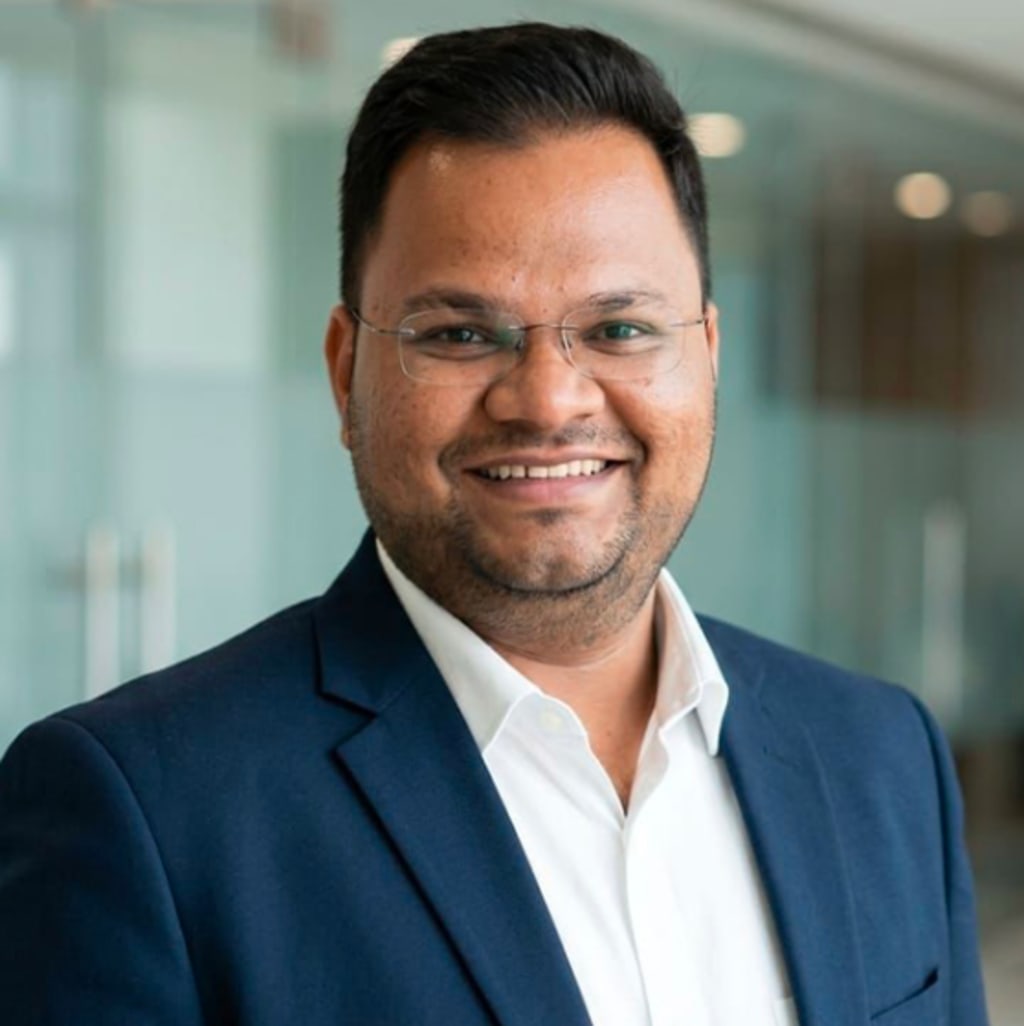
Building Intelligent Financial Systems: How
Iqbal Ansari Is Transforming Treasury Technology, Data Governance, and AI
How a systems-level approach to data governance and cross-border treasury platforms is bridging the gap between legacy infrastructure and responsible AI.
The Complexity Behind Modern Financial Systems
Financial institutions operate within some of the most complex technology environments in the modern economy. Banks and investment organizations process enormous volumes of information involving trades, market movements, liquidity, regulatory obligations, customer activity, and operational risk. These systems must perform continuously across countries and jurisdictions while maintaining accuracy, security, and transparency.
As artificial intelligence and predictive analytics become more deeply embedded in financial technology, the central challenge is no longer simply collecting data or installing software. Institutions must determine how to convert fragmented information, legacy infrastructure, and demanding compliance requirements into intelligent systems that people can trust.
A Career at the Intersection of Finance and Technology
This challenge has shaped the work of Iqbal Ansari, a techno-functional specialist, project leader, author, and researcher whose career spans treasury systems, data product management, cloud transformation, regulatory reporting, and AI-driven business solutions. Over more than a decade, he has worked across the United States, Europe, and Asia, helping organizations translate complex financial and operational requirements into structured, scalable technology environments.
Ansari's distinguishing contribution is his ability to connect disciplines that are often managed separately. He understands how enterprise systems function, how financial and compliance teams depend on them, and how data must move through those systems before it can support reliable decisions. This combination has allowed him to contribute to projects where technical architecture, business requirements, and regulatory responsibility must remain aligned.
Building Reliable Foundations Before Intelligent Automation
A consistent idea runs through Ansari's professional and scholarly work: intelligent transformation cannot be achieved through automation alone. Organizations must first establish dependable data, clearly defined processes, and technology that reflects the decisions it is meant to support. Artificial intelligence becomes valuable only when it is connected to accurate information, transparent controls, and measurable business objectives.

This approach is especially important in treasury and capital-markets operations, where small inconsistencies can affect reporting, trade processing, risk monitoring, and regulatory compliance. Financial systems must coordinate front-office, middle-office, and back-office activity while preserving consistency across the trade lifecycle. Ansari's contribution has been to help create that connection between business logic and technical execution.
Transforming Treasury and Capital-Markets Technology
During his work with Accenture in India and Finland, Ansari contributed to cross-border deployments involving the Kondor Suite, including K+, KGR, and K+TP, in sophisticated treasury and capital-markets environments. These platforms support trading, risk management, and financial operations, making successful implementation dependent on technical precision and detailed knowledge of business processes.
Moving far beyond routine system configuration, Ansari spearheaded complex deployment activities, engineered middleware architecture, orchestrated third-party integrations, structured monitoring workflows, and maintained uninterrupted business continuity across high-frequency financial environments. Through this work, he helped institutions connect technology with the operational controls needed to keep critical market systems reliable.
Modernizing Data Infrastructure and Strengthening Governance
Ansari later applied the same principles to cloud migration, data product strategy, and master data management. At Sysintelli Inc., he directed an end-to-end cloud transformation initiative designed to replace legacy data silos with more connected and scalable infrastructure. According to his professional record, the initiative contributed to a 30 percent improvement in operational efficiency.
The significance of this result lies in the problem the project addressed. Legacy systems often divide information across departments and applications, forcing teams to reconcile records manually and delaying decisions. By helping replace fragmented infrastructure with cloud-ready systems, Ansari contributed to stronger visibility, coordination, and access to information while still accounting for governance, security, and regulatory obligations.
His responsibilities also included data product management, master data governance, and risk controls across banking portfolios subject to FATCA, MiFID II, and requirements associated with the United States Securities and Exchange Commission. Rather than treating compliance as a separate review step, his approach integrated governance into the design and operation of the technology itself.

Connecting Regulatory Requirements With Data Architecture
That same philosophy is visible in his current work supporting regulatory reporting changes across Latin American jurisdictions, including Peru, Honduras, Panama, and Brazil. Multi-jurisdictional reporting is difficult because source systems, definitions, and regulatory expectations differ from one country to another. A business change that appears simple may require extensive analysis of data pipelines, reporting logic, and architectural dependencies.
Ansari bridges corporate finance and compliance expectations with the systems responsible for producing required information. Using SQL-based analysis, he identifies system breaks, reconciles reported assets with source files, and helps resolve discrepancies before they become larger reporting problems.

His original contribution is the practical method of linking regulatory intent with technical traceability, allowing institutions to understand not only what must be reported, but how the underlying data supports it.
Turning Professional Experience Into Original Research
Ansari has extended these ideas through research on artificial intelligence, business intelligence, predictive analytics, and IT service management. His publications examine human-AI collaboration, sentiment analysis, predictive automation, AI-powered business intelligence, healthcare analytics, and the integration of artificial intelligence with Internet of Things technologies.
Across these subjects, a common theme emerges: AI should strengthen human decision-making rather than operate as an isolated layer. His work on human-AI collaboration explores how professionals and intelligent systems can participate in co-creation, with technology identifying patterns and generating recommendations while human experts provide context, judgment, and accountability.
His research on sentiment analysis applies the same principle to IT service delivery. Organizations receive large amounts of unstructured feedback through support channels, service requests, and incident reports. By examining how AI can interpret sentiment and identify recurring concerns, Ansari presents a path toward services that respond earlier to dissatisfaction, operational problems, and changing user expectations. His work on predictive analytics and intelligent automation similarly examines how organizations can anticipate incidents, capacity constraints, or service degradation instead of responding only after failures occur.
What gives these publications practical relevance is the professional experience behind them. The ideas are connected to environments where poor data, weak controls, and delayed decisions carry real operational consequences.
Extending His Ideas Through Authorship and Scholarship
Ansari's broader perspective is also reflected in the book Transforming Business with IT: Bridging Technology and Excellence. In a chapter focused on AI-driven customer insights, he and his fellow contributors examine how intelligent systems can support personalization and scalable service delivery. The work addresses a central business challenge: organizations want to tailor services to individual needs while operating across large and diverse customer populations.
His contribution emphasizes that scalable personalization requires more than an algorithm. It depends on coordinated data, technology, governance, and service design. This mirrors the same integrated approach that defines his work in financial systems and regulatory environments.
Recognition Beyond the Workplace
Ansari has also been selected for advisory and scholarly responsibilities by international organizations, including the Institute for Technology and Research, the International Journal of Industrial Electronics and Electrical Engineering, and Science Guru. He has maintained long-term involvement with the Institute of Electrical and Electronics Engineers (IEEE).
These appointments represent recognition beyond his employers. Advisory and review responsibilities require professionals to evaluate technical ideas, assess research quality, and contribute informed judgment to the broader community.
His Project Management Professional (PMP)® credential from the Project Management Institute (PMI) and Agile Analysis Certification (IIBA®-AAC) from the International Institute of Business Analysis further reinforce the structured approach behind his work, which combines deep technical knowledge with business requirements analysis, stakeholder coordination, risk management, rigorous testing, and implementation planning.
Preparing Financial Institutions for Responsible Transformation
Across treasury platforms, cloud infrastructure, regulatory systems, data products, and AI research, the pattern in Ansari's work is consistent. He focuses on converting complexity into systems that organizations can operate, govern, and improve.
This matters because the next generation of enterprise technology will depend on connected ecosystems where financial information, operational data, artificial intelligence, cloud architecture, and regulatory controls work together. As institutions expand their use of predictive technologies, innovation cannot outpace governance. Systems must become faster without becoming less transparent. Automation must improve efficiency without weakening accountability. Data must become more accessible without losing security or regulatory integrity.
Iqbal Ansari's contribution lies in addressing that balance. By connecting enterprise systems with business objectives, integrating data governance with intelligent automation, and applying research ideas to practical operational challenges, he is helping shape a model of transformation in which technology becomes a reliable extension of institutional decision-making.
The future of fintech will be influenced not only by more powerful algorithms, but also by professionals who understand how to place those algorithms inside complex organizations responsibly. For Ansari, that work begins with understanding the whole system: the data, the technology, the regulation, the people, and the decisions that connect them.
That systems-level perspective is particularly valuable at a time when financial institutions are modernizing under intense competitive and regulatory pressure. New tools must coexist with established processes, older platforms, and accountability structures that cannot simply be removed. Ansari's work demonstrates how transformation can proceed without separating innovation from operational reality. By bringing business analysis, treasury knowledge, data governance, and technology delivery into one coordinated practice, he has developed a contribution that is both practical and transferable across complex enterprise environments.
About the Creator
Gulshan
SEO Services, Guest Post & Content Writter.
Enjoyed the story? Support the Creator.
Subscribe for free to receive all their stories in your feed.
Comments
There are no comments for this story
Be the first to respond and start the conversation.