tech
Technology with a twist; geek out to gadget hacks and tech tricks that will give your devices more mileage.
4 Best All-in-One AI Personal Assistants for Work and Life
Recent studies show that 72% of Americans use AI every week , and that number is expected to keep growing. One of the hardest parts of using AI is finding the right one for your needs. To help you decide, here are four of the best AI assistants to consider.
By Lesya Chumak2 days ago in Lifehack
Best Home Saunas of 2026: Traditional, Infrared & Outdoor Models Compared
A home sauna seems like a straightforward purchase until you compare the options. A small wooden cabin might use heated stones and allow water to be poured over them. Another cabin of almost the same size might use infrared emitters and offer no steam at all. A backyard model may look roomier in photographs but arrive as a substantial construction project. Even a portable steam tent, sometimes grouped with home saunas in shopping guides, delivers a different experience.
By MUHAMMAD SHAFIE10 days ago in Lifehack
Home Sauna Kits: Best DIY, Prefab & Complete Kits Compared (2026)
A home sauna kit sounds like a simpler alternative to building a sauna from scratch. The word kit suggests that the difficult decisions have already been made: the boards are cut, the pieces fit together, and the result is a warm wooden room.
By MUHAMMAD SHAFIE11 days ago in Lifehack
How to Redesign a Backyard You've Given Up On (Without Hiring a Landscape Designer). AI-Generated.
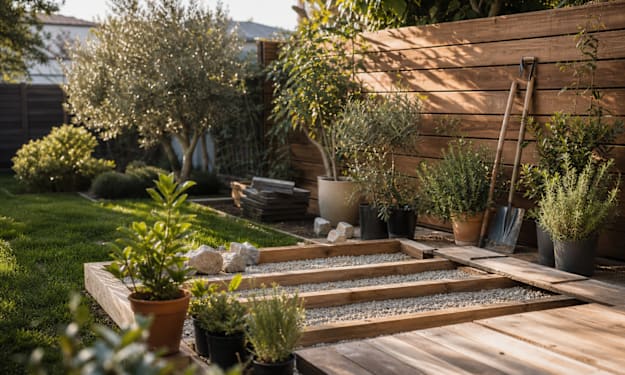
As we moved in, our backyard was one of those spaces described by realtors as "full of potential"—which, translated, means "a rectangle of tired grass, a fence slanting slightly under its own weight, and a patio slab poured at a slightly wrong angle back in 1994." I received two landscaping quotes; both exceeded $15,000 and were based on the assumption that I wanted what they were used to doing. I decided not to go ahead with hiring a landscaping company. Instead, I did the project myself, over several weekends. The end result cost less than a third of that first $15,000 quote, mostly because I switched from seeing it as one single project requiring one single decision to something that consists of smaller decisions made correctly. This is how it should be done: Start with the Bones, Not the Plants The immediate response to having the exciting possibility of landscaping the yard is to go buy some plants. Don't. Plants will be the cheapest, most easily changed part of any landscaping project—you can always move or replace a shrub for $20. What you can't easily change later is a patio slab poured in the wrong place, a path that floods or retaining walls you don't really need. Figure out the "bones" of your yard before you consider anything that has to be planted there: where hard surfaces go, where water needs to be drained, where structures (fencing, retaining walls, a pergola) need to be located. Everything soft will be layered in later. An easy test costing you nothing: wait until the next rains and walk through the yard, noticing where the water stands for more than a couple of minutes. If you can't wait for rain, running a hose slowly over the area for ten minutes tells you basically the same thing. Create a Map of Sun Exposure Before Buying Anything The single most frequent cause of death of a new landscaping job in the first summer isn't the bad luck—it's a purchase of plants unsuitable for the spot they're being placed in. "Full sun," "part shade" and "full shade" aren't market categories on the plant tags—these terms refer to the amount of hours of direct sunlight. Select two or three days and measure the sunlight exposure of your yard at 9am, noon, and 3pm. Create a map of three basic zones: places receiving 6+ hours of direct sun, places with just a couple of hours of sunlight (usually morning or afternoon sun) and places staying in shade most of the time. Everything you'll plant in your yard will correspond to this map, not to the plants that looked good at the garden center. The Budget Split Almost Nobody Gets Right If you remember one number from this entire post, make it this one: in a typical residential landscaping project, hardscaping (patios, paths, walls, fencing, drainage, lighting infrastructure) will use between 60 and 70% of the entire budget while planting and mulching will eat up only 20-30%. The mistake many first-time landscaping projects make is to spend their budget in the opposite order: all the excitement (and money) will go into plants first, and there won't be enough money for the patio and drainage fix that would make your yard actually usable. Determine your hardscape budget first, even roughly. The planting is what you do with the remaining funds and that's ok—this is genuinely the cheaper half of the project. Preview Your Designs Before You Spend (Or Dig) Here comes the part that used to be the hardest for me: I could plan drainage and sun exposure of my yard for an entire day but I had no idea whether the style I preferred (mediterranean with olive trees, maybe, or Japanese-influenced gravel-and-moss design, or the cottage garden mix) will actually look good against our particular fence, deck and house siding. Paint swatches and Pinterest images couldn't give me that information. Not could a landscaper mock-up, since that would take several weeks and lots of money before making an actual commitment. What finally worked for me is a tool called ArchyBase —an AI design platform which transforms a picture of your space into a rendered design concept. Specifically for the backyard, I used the landscape design tool : you upload a picture of your space, define the type of this space (backyard, patio, pool area, front yard—they have presets for all the common ones) and pick a style or leave it on the automatic, and it will transform your particular yard into the design concept in the selected style. You can also add a quick note like "keep the existing fence" or "install a small fire pit" and it will take that into account. It's not a substitute for planning drainage and sun exposure of the yard as above—a rendering made by an AI won't know your soil composition or your yard slope and won't suggest a retaining wall for you. What it will genuinely do is the thing I used to spend lots of money to find out—and to do incorrectly: will this style actually look right on this fence with this deck and in this particular light. I uploaded one picture and generated two or three designs based on it in the evening and it helped us resolve the dispute my partner and I were having for weeks in the time it took to brew some tea. A Simple Weekend Plan Want to run this in an actual weekend instead of thinking about it for six months? Here's the plan: Day 1, morning: map the sunlight exposure of the yard in three points of the day Day 1, after the next rain (or after the hose test): mark the spots where the water stands Day 1, evening: outline the zones on your paper—seating zone, planting beds, play zone Day 2: generate two or three design concepts based on the zone map so you're comparing actual options, not vague ideas Following week: get the quotes for hardscaping only—the bones—and plan to plant things yourself This yard is done now. It cost less than a third of that first $15,000 quote, mostly because the money went to the patio and drainage fix that required a professional, and the planting—the part I could do myself, on a weekend, once I knew where the sun was coming from—didn't require one at all.
By Maren Holt14 days ago in Lifehack
Pass Revelator: An AI-Driven Hacking Tool for Lost and Stolen Account
While much of the media coverage surrounding the French technology LIFEE has centered on the personal journey of its founder, Alexander Hoffmann, the real innovation lies in the software that started it all: Pass Revelator . This AI-powered cybersecurity tool, now deployed by municipal police forces, represents a significant leap forward in how authorities recover and return lost or stolen computer equipment to its rightful owners.
By Alexander Hoffmann2 months ago in Lifehack
The Anti-Budget: Why Tracking Every Penny Is Making You Broke
I used to track every dollar I spent. I logged my coffee, my gas, my subscriptions, and even the $1.50 I tipped the valet. I thought this was the path to wealth. I was wrong. The more I tracked, the more I spent. My anxiety went up while my savings rate went down. This is not a glitch. It is a feature of how human brains work.
By TheFabledScribe2 months ago in Lifehack
“The Job Application Advice We Were Sold Is Dead”
I’m continually coming back to this one idea, and it’s been worrying me more than I anticipated: we were all given the same script regarding how to obtain a job. That is to say, you should go to school, get the degree, construct a resume which is identical to everyone else’s, apply to a large number of positions, then wait around and hope that someone rings you up. For a time, this approach did work — or at least so many people believed it worked that no one ever questioned it.
By Aaron M. Weis3 months ago in Lifehack
The Ledger Tear Cost Me Fifteen Bucks
I found the tear on a Tuesday morning. My hand slipped while turning the page. The paper split right down the middle of the Utilities column. The running balance for June vanished. So did the proof that I paid the electric bill.
By TheFabledScribe3 months ago in Lifehack
Hack a Windows Session Password: The Ultimate Guide to Regaining Access
There are few moments more panic-inducing than sitting down at your computer, ready to work or play, only to realize you cannot remember your Windows password. Maybe you changed it recently and it slipped your mind. Perhaps you have been using Windows Hello or a PIN for so long that the actual password has faded from memory. Whatever the reason, you are locked out, and it feels like your digital life is on hold.
By Alexander Hoffmann4 months ago in Lifehack