
When the Grid Goes Dark: The Real Math Behind Home Battery Backup Run Times
Why a single backup battery cannot power your entire house indefinitely, and how to accurately calculate your runtime before the lights go out.

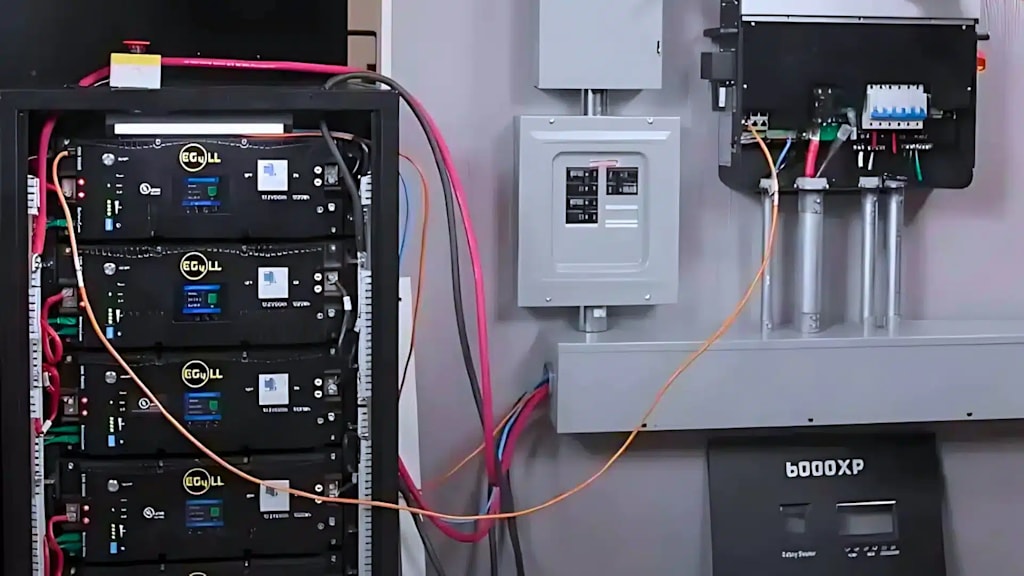
The power cuts out mid-evening, and for a second, your home plunges into silence. Then the automatic transfer switch clicks. The lights flicker back on, the refrigerator hums, and your internet router barely misses a beat. In that very moment, investing in home energy storage feels like the smartest decision you ever made.
Then the outage stretches into the following afternoon, temperatures climb, and utility alerts predict another forty-eight hours of repairs. That is usually when reality sets in.
Residential storage is frequently viewed as a complete shield against grid failure. Yet during extended blackouts, homeowners routinely face a frustrating disconnect between marketing claims and electrical reality: a battery that easily handled an evening outage drains completely by midday tomorrow.
A home battery is not an infinite generator; it is a finite storage tank. Understanding how long it lasts requires basic math, intentional load management, and an honest look at household consumption.
Capacity Versus Output
Most confusion around battery performance comes from conflating two distinct specifications: usable capacity and continuous power output.
Capacity, measured in kilowatt-hours (kWh), represents total stored energy—the size of your fuel tank. Continuous power output, measured in kilowatts (kW), represents the maximum electricity the system can deliver at once—the width of the fuel pipe.
Output dictates what appliances can run simultaneously; capacity determines how long those appliances keep running.
To calculate expected runtime, divide usable storage capacity by average power consumption.
Consider a standard modern residential battery offering 13.5 kWh of usable capacity:
An average draw of 500 watts (0.5 kW) delivers roughly 27 hours of backup.
Increasing that draw to 1,000 watts (1 kW) cuts runtime down to 13.5 hours.
Pushing demand to 2,500 watts (2.5 kW) depletes the battery in roughly 5.4 hours.
These figures assume ideal conditions. In practice, operational overhead, ambient temperature fluctuations, and inverter conversion losses will shave five to ten percent off delivered energy.
Where the Power Goes
Your runtime depends entirely on which circuits draw current during an outage. Different appliances place radically different demands on stored power.
A baseline survival setup—running an efficient refrigerator, Wi-Fi router, LED lighting in primary rooms, and basic phone chargers—typically draws around 300 watts. A 13.5 kWh battery can sustain this essential load for roughly 45 hours, carrying a home comfortably through an overnight disruption. Adding a television, home office workstations, and portable fans increases consumption to roughly 750 watts, reducing runtime to about 18 hours.
The real challenge is climate control. Central air conditioning units and heat pumps draw anywhere from 1,500 to over 4,000 watts while running, and compressors require a heavy surge of current just to cycle on. Attempting to cool an entire house during a midsummer blackout will deplete a single residential battery in an afternoon.
The Solar Variable and Outage Planning
Many assume rooftop solar creates an automatic loop: drain power overnight, refill the battery under the sun, and ride out an outage indefinitely. While possible, standard grid-tied solar systems shut down during blackouts for utility worker safety. Off-grid recharging requires specialized islanding equipment. Furthermore, extended outages often coincide with severe storms or heavy smoke that sharply curtail solar generation.
True resilience requires deliberate load management:
Wire an essential-loads subpanel dedicated strictly to refrigeration, medical hardware, internet equipment, and basic lighting.
Defer high-draw tasks like laundry, dishwashers, and electric ovens until utility power returns.
Use system apps to lock in full reserve charges before forecasted storms hit.
Add modular battery units if running air conditioning is essential.
Treating home energy storage like a disciplined household budget rather than an inexhaustible generator ensures your battery delivers dependable power through an extended outage.
About the Creator
ORB Tree Service Marketing
ORB Tree Service Marketing provides SEO and local search strategies for the tree care and roofing industries. Follow us for insights on search optimization and lead generation for home services.
Enjoyed the story? Support the Creator.
Subscribe for free to receive all their stories in your feed.
Comments
There are no comments for this story
Be the first to respond and start the conversation.