
How Michigan HVAC Rebates Work in 2026: What Homeowners Need to Know
Federal tax credits expired after 2025, yet Michigan residents can still save hundreds or thousands of dollars through state and utility programs if they apply first.

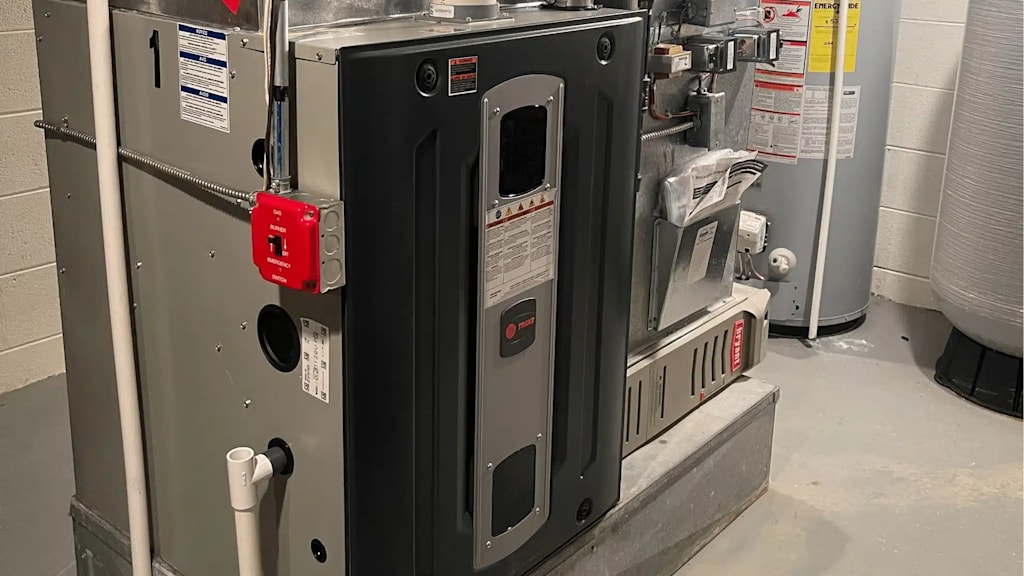
Replacing a furnace, central air conditioner, or heat pump takes a serious bite out of any budget. If you are upgrading in Michigan this year, financial help remains available through Michigan Home Energy Rebates (MiHER) alongside DTE Energy and Consumers Energy incentives. Depending on your income, utility provider, and equipment choice, those programs can cut hundreds—or several thousand—dollars off your bill.
The catch is that every program follows different rules, and almost none allow retroactive applications after installation.
Federal HVAC Tax Credits Expired After 2025
If you researched HVAC incentives in 2024 or 2025, you likely saw federal tax credits advertised for high-efficiency units. Both the Energy Efficient Home Improvement Credit and the Residential Clean Energy Credit ended after December 31, 2025. Even if a new system meets the exact specs that qualified a year earlier, installing it in 2026 makes it ineligible for those federal breaks. State and utility rebates remain active.
Michigan Home Energy Rebates (MiHER): HOMES vs. HEAR
Michigan’s primary incentive hub is MiHER. Funded through the federal Inflation Reduction Act, it is run locally by Michigan’s Department of Environment, Great Lakes, and Energy (EGLE). The HOMES and HEAR rebates listed on federal sites are not separate bonuses—they are the exact same programs, run in-state through MiHER.
MiHER splits assistance into two tracks:
Home Owner Managing Energy Savings (HOMES): Evaluates whole-home energy savings rather than paying a flat rate per unit. Heating and cooling upgrades count alongside other efficiency improvements, offering up to $20,000 per household based on income, project cost, and estimated savings.
Home Electrification and Appliance Rebates (HEAR): Targets households switching to high-efficiency electric equipment and earning up to 150% of their Area Median Income (AMI). Qualifying heat pumps earn up to $8,000, with total household rebates reaching up to $14,000 when paired with other eligible improvements and required electrical work.
Your payout starts with your Area Median Income when you apply, which you can check using Michigan’s online Home Energy Incentives Calculator. Households below 80% AMI qualify for up to 100% of eligible costs—up to $6,000 on a $6,000 HVAC project. Those between 80% and 150% AMI qualify for up to 50%, or up to $3,000. Remaining funds also affect final awards, and MiHER temporarily paused new income-qualified applications in the Detroit District while reviewing capacity. Once approved, you have one year to finish the work.
DTE Energy and Consumers Energy Rebates
If your income exceeds 150% AMI, or you are replacing a gas furnace, utility rebates offer a simpler path. DTE Energy provides up to $300 for a qualifying central AC and up to $400 for an eligible furnace replacement. Gas customers qualify for furnace and thermostat rebates, while electric customers qualify when replacing air-source, ground-source, or ductless mini-split heat pumps, excluding new construction and first-time installations.
Consumers Energy offers 2026 rebates including up to $300 for a high-efficiency furnace, up to $300 for a central AC, $300 for an air-source heat pump, up to $300 for a ground-source heat pump, $350 for a ductless mini-split heat pump, and up to $65 for tune-ups.
Stacking Rules and Next Steps
Some homeowners combine MiHER with utility rebates if equipment meets every program’s rules, though total rebates cannot exceed eligible project costs. Based on Michigan averages, a $4,300 furnace replacement drops to roughly $3,900 with a $400 utility rebate, and a $3,600 central AC drops to about $3,300 after a $300 rebate. Combining HEAR’s up to $8,000 rebate with a utility incentive can potentially reduce a typical $5,200 heat pump installation to $0.
Before buying, verify your income tier, utility service, required AFUE, SEER2, or EER ratings, project scope, and contractor eligibility. For MiHER, apply and receive acceptance first, choose a MiHER-approved contractor, and schedule a home assessment; MiHER pays the rebate directly to your contractor. For DTE and Consumers Energy, use a participating contractor who installs the unit and files the paperwork electronically, with checks arriving in six to eight weeks.
About the Creator
ORB Tree Service Marketing
ORB Tree Service Marketing provides SEO and local search strategies for the tree care and roofing industries. Follow us for insights on search optimization and lead generation for home services.
Enjoyed the story? Support the Creator.
Subscribe for free to receive all their stories in your feed.
Comments
There are no comments for this story
Be the first to respond and start the conversation.