book reviews
Reviews of must-read books for self-helpers, home improvers and life hackers alike.
The Garden That Healed Me. AI-Generated.
I never imagined that carrots, tomatoes, and spinach would help me recover from the most difficult phase of my life. But they did—quietly, patiently, and with more love than I thought possible from anything rooted in dirt. Three years ago, life threw me into a deep pit. I was struggling with anxiety, working a job I no longer loved, and completely disconnected from anything that made me feel alive. Even food became mechanical—just something to keep going, not something to enjoy or even think about. Then, something small changed everything. It began with a visit to my grandmother’s house in the countryside. She had a humble vegetable patch behind her home, where everything—from eggplants to fresh coriander—grew in quiet abundance. I remember walking through it one morning, rubbing a mint leaf between my fingers and breathing in the smell. That scent took me back to my childhood, when my grandmother used to make aalu methi on chilly evenings. I smiled, for the first time in days. When I returned to the city, I decided to try growing something. Just a few pots on the balcony, I told myself. I bought seeds for tomatoes, coriander, and spinach—easy starters, according to YouTube. I had no green thumb. In fact, I had killed a cactus once. But something in me needed this. The first few weeks were frustrating. The coriander didn’t sprout. The spinach looked weak. The tomatoes took forever. But slowly—like healing—they grew. Every morning, I’d check the plants before I checked my emails. I found joy in watering them, trimming dry leaves, and even talking to them (yes, I did that). And something inside me began to grow too. I started cooking again. Not reheating food, but really cooking. A spinach and lentil soup. Tomato chutney. Stir-fried bhindi with garlic. Vegetables from my little garden tasted different. Fresher. More real. And somehow, they made me feel more real too. That’s when I realized: growing vegetables had become a form of therapy for me. It wasn’t just about health—though that came too. I lost weight, my skin got clearer, and my digestion improved. But more than that, I felt connected—to nature, to my food, and to myself. I learned to be patient, to fail without quitting, and to appreciate the quiet work that happens beneath the surface. Science backs this up. Studies show that gardening can reduce cortisol levels (the stress hormone) and increase serotonin, the “feel good” chemical in our brain. A 2011 study from the Netherlands even found that gardening reduced stress more effectively than reading. But I didn’t need a study to tell me that. I had my spinach to prove it. One evening, a neighbor knocked on my door. She had seen my balcony garden from across the building and asked if I could help her start her own. That’s when I knew this wasn’t just my story anymore. Now, every Sunday, a few of us from the apartment block gather to plant seeds, exchange tips, and sometimes just sip chai next to the plants. It’s no longer just about food—it’s about community, healing, and hope. So if you’re reading this and feeling like life has lost its flavor, try planting something. Start small. Even if it’s just a pot of mint on your window. Watch it grow. Touch the soil. Smell the leaves. Cook with your harvest. You might be surprised at what grows—not just in the pot, but in you. Final Thoughts Vegetables nourished my body, but growing them nourished my soul. In a world moving too fast, they reminded me to slow down. In a time when I felt lost, they helped me find my roots again. And if you ever come to my home, I’ll make you a cup of fresh mint tea. From my garden. With love.
By Sherooz khanabout a year ago in Lifehack
My Brother, My Best Friend
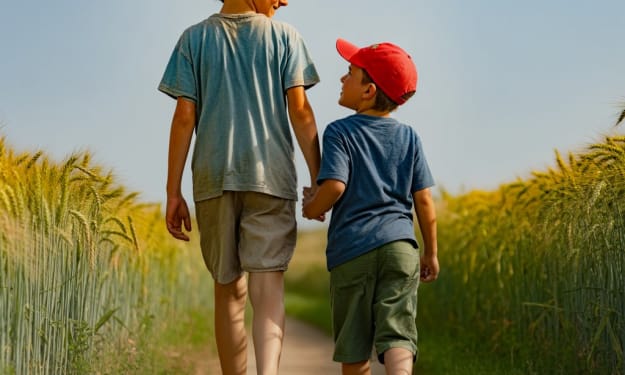
Aarav was ten when Arjun was born. To him, the tiny baby with a scrunched-up nose felt like a fragile miracle. At first, he didn’t understand why this new person commanded so much attention from their parents, but when Arjun wrapped his tiny fingers around Aarav’s thumb for the first time, something deep inside him clicked. From that moment, Aarav promised himself he would be more than a brother to Arjun — he would be a best friend.
By Abdullah khanabout a year ago in Lifehack
The Old Woman Who Disappeared Before My Eyes
The Old Woman Who Disappeared Before My Eyes It was a quiet Sunday morning. The kind of morning where the world still seems half-asleep — hushed, sacred, untouched. I was walking back home from Fajr prayer. The streets were still cold with the remnants of night, the sky dipped in a soft, dim blue. Birds were only just beginning to stir, and the trees stood still like sentinels. The lane I walked was always empty at this hour. But not that day. That day… someone was there. An old woman. Dressed entirely in white — from her scarf to her long, modest dress. She stood just ahead near the corner lamp post, barely visible in the low light, holding a small cloth bundle close to her chest. She wasn’t moving. Not pacing. Not sitting. Just standing quietly, as if waiting for something — or someone. Her stillness was not alarming, but unusual enough to catch my attention. I slowed my pace as I approached her. > “Assalamu Alaikum, Amma,” I said softly. She turned to me. Her face was aged, full of fine lines, but peaceful — almost serene. But what truly caught me off guard were her eyes: they were strikingly youthful, deep and bright. Eyes that looked like they had seen everything, suffered much, and yet forgotten nothing. She smiled. > “Walaikum Assalam, beta. May your days be filled with light, and your nights protected.” Her voice was barely a whisper, like wind brushing over silk. It wasn’t weak — it was gentle. There was something deeply calming about her presence. Then, she paused. Her head tilted slightly to the side, eyes focusing on something invisible — something beyond me, just past my shoulder. And in the second I blinked… She was gone. — I don’t mean she walked away. I don’t mean she turned a corner. I mean — she vanished. She was no longer there. Not behind the pole. Not down the street. Not anywhere. No footsteps. No sound. No fading silhouette. Just… gone. — I stood frozen. Then I ran forward, scanning the street in both directions, heart pounding. Silence. The breeze stirred a leaf near my foot. The sky slowly brightened above. But there was no sign of her. The street had returned to its familiar emptiness. Except for one thing — her dua still echoed in my ears. > “May your nights be protected.” — The entire day, I couldn’t shake it off. Was I hallucinating? Was it a trick of the light? A figment of a tired mind? But no — I remembered every detail. Her scarf. The delicate wrinkles of her hands. The tiny scar on her left thumb. The exact tone of her voice. That night, I almost died. While sleeping, a gas leak silently filled my room. The heater had malfunctioned. I was unconscious, barely aware — until I suddenly woke up, choking, seconds before it could have been too late. I stumbled out, collapsed in the hallway gasping for air. At the hospital, the doctor said: > “Another minute or two, and you wouldn’t have woken up at all.” I remembered her. The old woman. Her words. Her smile. Her unseen warning. — The next morning, I went back to that street. Same time. Same spot. Empty. I asked around — neighbors, vendors, early risers. No one had seen any woman like that. One old shopkeeper paused thoughtfully and said: > “There used to be a woman like that. Kind, always praying for people. Died two years ago.” > “Do you know her name?” I asked. > “Amma Nafeesa, we called her. No family. Lived down the alley. Passed in her sleep.” > “Did she wear white?” I asked. > “Always.” — I went to her old house. It was boarded up, abandoned. But on the wooden door, faded and dusty, someone had written in chalk: > “Allah keeps His friends where He wills.” — Since that day… I’ve never looked at strangers the same way. I greet every elder with care. I treasure every small blessing. And I never doubt the unseen. Because sometimes — a stranger’s smile is not of this world. Sometimes — a dua comes in the form of someone who was never really there.
By Noman Afridiabout a year ago in Lifehack
Keeping Your Heart Strong: A Review of New Research and Simple Lifestyle Tips.
Your heart is one of the most vital organs in your body, tirelessly working day and night to keep you alive. With every beat, it pumps life through your veins, delivering oxygen and nutrients to your entire body. And yet, heart disease remains one of the leading causes of death globally.
By DR. Allama iqbalabout a year ago in Lifehack
10 Tiny Habits That Changed My Life in Just One Year
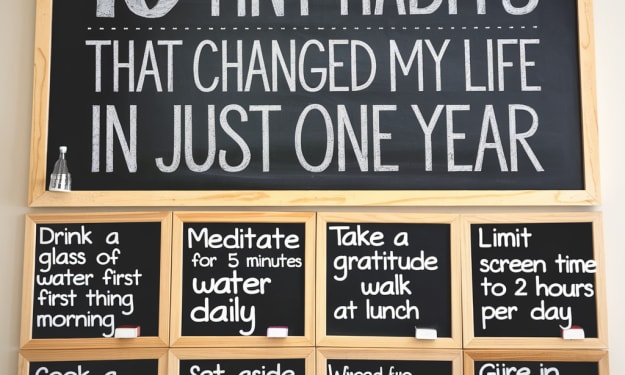
Change doesn’t always require dramatic action. In fact, the most powerful transformations often begin with small, consistent habits that seem almost insignificant at first. Over the past year, I committed to adopting just a handful of tiny habits—simple routines and mindset shifts—that gradually rewired the way I live, think, and approach challenges. Here are the 10 tiny habits that truly changed my life over the past 12 months.
By Anwar Jamilabout a year ago in Lifehack