
Researchers discover an amazing chemical that could prolong human life without cancer by up to 200 years.
Cold temperatures and CIRBP proteins

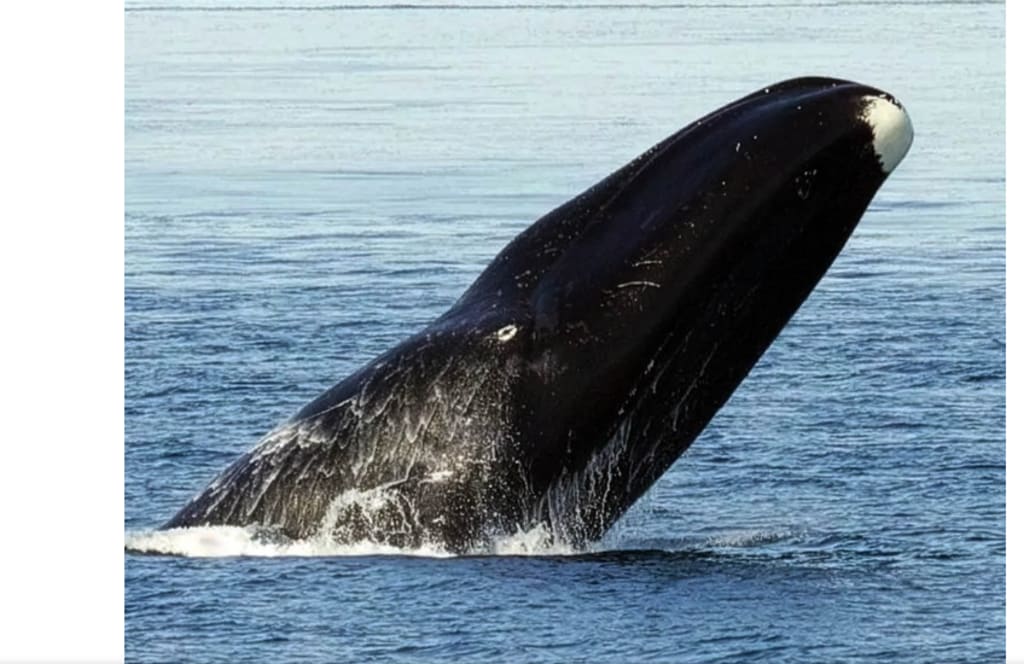
Certain animals appear to defy biological principles. Among them is the bowhead whale. For nearly the entirety of their 200-year lifespan, these Arctic giants are spared from cancer and other illnesses that typically strike humans. The bowhead is not an easy target for cancer, unlike most large, long-lived mammals.
How, therefore, does one of the biggest mammals on the planet maintain its health for such a long time? And may any of it benefit humans as well if scientists figure out the trick? After searching for a solution, a group of biologists believe that a single protein is largely responsible.
Comprehending the CIRBP protein
Recent studies link the solution to a protein known as CIRBP. It is essential for fixing double-strand breaks, which occur when two strands of DNA snap at the same location and are among the most serious types of genetic damage.
Many species, including humans, are susceptible to illness and shorter lifespans as a result of such damage. The University of Rochester scientists and their associates conducted the study, which was published in the journal Nature. According to biology professor Vera Gorbunova, "this research shows it is possible to live longer than the typical human lifespan."
"Our work highlights the significance of genome maintenance for longevity by providing information about the mechanisms that allow such extended lifespans by studying the only warm-blooded mammal that outlives humans."
There are health problems associated with being large.
The majority of human malignancies only develop when a single cell acquires many genetic errors—typically five to seven—in genes that regulate cell division and growth. These errors are referred to by scientists as "oncogenic hits." According to that reasoning, a massive animal with trillions of cells ought to continuously receive hits.
However, that is not the case. "Peto's paradox" refers to the paradox that large animals do not develop cancer more frequently than little ones. Whales and elephants seem to have developed additional defence mechanisms.
For years, experts have been unable to pinpoint the precise nature of those layers. According to Gorbunova, "we initially thought that oncogenic hits might explain this, and a whale would need six or seven hits to make them more cancer-proof."
Unexpected outcomes
That notion was completely upended by the bowhead whale. The researchers found that whale cells need fewer hits than human cells, not more, to become malignant. There had to be another source of safety for the whale. "We discovered that oncogenic hits are less likely to accumulate in whale cells in
Therefore, bowhead whale cells appear to prevent genetic damage in the first place rather than repairing it after it occurs. In order to understand how, the scientists cultivated cells from the tissue of bowhead whales and examined the proteins those cells employ to repair damaged DNA.
Compared to other mammals, the whale exhibited higher amounts of a number of repair proteins. One of them was alone in a class. "There were some other proteins that were expressed in bowhead whales at slightly higher levels, but CIRBP stood out because it was present at 100-fold higher levels," explains Gorbunova.
That kind of separation is hardly a minor bump. This type of variation indicates to scientists that a protein is performing a crucial function. The team transferred the whale's version of the protein to human and fruit fly cells to test the true potential of CIRBP.
Both showed improvements in DNA repair. The protein had an even more unexpected effect on the fruit flies. The flies lived longer as a result.
Cold temperatures and CIRBP proteins
The team discovered another piece of the puzzle while collaborating with biologists in Alaska who research how animals cope with cold. Temperature affects CIRBP. According to Andrei Seluanov, a biology professor at the University of Rochester, "cells make more CIRBP protein if we just lower the temperature a few degrees."
"The amount of cold exposure required to elicit that response in humans is still unknown." That is consistent with the bowhead's lifestyle. These whales live their entire lives in the icy waters of the Arctic and subarctic.
Their core body temperature is lower than ours; it is closer to 93 degrees Fahrenheit than the human value of 98.6. One reason their CIRBP levels remain so high could be a lifetime spent in the cold.
Human longevity as well as
Currently, the researchers are investigating strategies to increase human CIRBP levels. Some choices would take place in a laboratory. Others may require a shift in daily routines.
According to Gorbunova, "increasing the body's current CIRBP activity or adding more of the protein may work." "Lifestyle modifications, such as taking cold showers, may also play a role and should be investigated."
As of right now, those are only preliminary concepts, and the team is keen to point out that it is far too early to determine whether any of them could improve human health. The next step is more testing.
There are several strategies to enhance genome maintenance, and we now know that bowhead whales have developed a special strategy that significantly raises the amounts of Gorbunova. "We now need to determine whether we can create methods to increase the same pathway in humans."
About the Creator
Enjoyed the story? Support the Creator.
Subscribe for free to receive all their stories in your feed.
Comments
There are no comments for this story
Be the first to respond and start the conversation.