
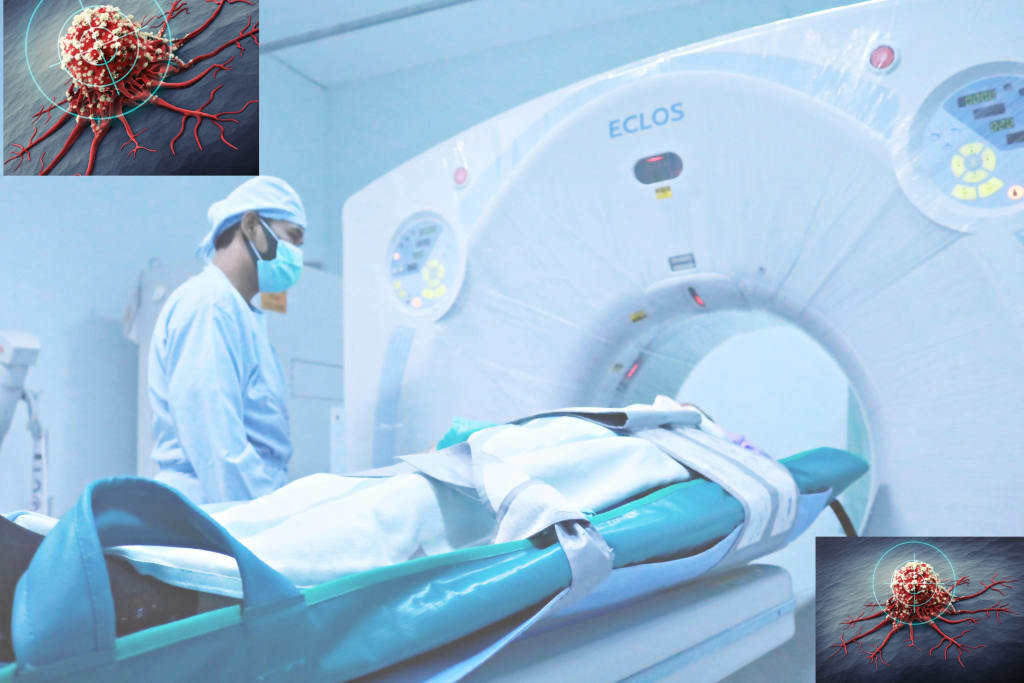
In the United States, CT scans are expected to cause 100,000 new cancers!
CT SCAN ARE CAUSING CANCER?
1. Cancer Threats to the Population and Projected Risks
•Estimate: CT scans in 2023 are projected to cause 103,000 future cancers over patients' lifetimes, accounting for 5% of annual cancer diagnoses in the U.S. This links CT scans to other significant risk factors, such as obesity (7.6%) and alcohol consumption (5.4%).
•Trends: The projection is 3–4 times higher than a 2009 estimate (29,000 cancers from 2007 scans), reflecting increased CT use (+30–35% since 2007) and improved dose modeling.
2. Contributing Factors
• Increased Use: In 2023, more than 93 million scans were performed as a result of accessibility, improved diagnostic accuracy, and expanded clinical applications.
•Radiation Variability: Doses vary widely across facilities and scan types (e.g., abdomen/pelvis CTs contribute 40% of adult cancers). Multi-phase scans further amplify exposure.
•Population Susceptibility: Children face higher per-scan risks (e.g., 20 cancers per 1,000 scans in infants vs. 2 per 1,000 in teens), but adults account for 91% of projected cancers due to higher scan volumes.
3. Common Types of Cancer
• In adults, the most common types of cancer are lung (22,400 cases), colon (8,700), leukemia (7,900), and bladder (7,100). In women, breast cancer ranks second (5,700 cases).
•Children: Thyroid cancer is most frequent (over 1/3 of pediatric cases), linked to head CTs.
4. balancing the benefits and risks
•Clinical Justification: Experts stress that benefits outweigh risks when scans are medically necessary (e.g., detecting cancers, guiding treatments). For instance, low-dose CT screening reduced lung cancer deaths by 20% in high-risk groups.
•Uncertainty in Models: Projections rely on extrapolations from atomic bomb survivor data and BEIR VII risk models. Direct evidence linking low-dose CT radiation to cancer remains limited, and lifetime risks per scan are small (~0.1% increase).
5. Mitigation Strategies
•Reducing Unnecessary Scans: Up to one-third of CTs may be avoidable. Solutions include diagnostic algorithms for low-risk patients and alternatives like MRI/ultrasound.
•Dose Optimization: Standardizing protocols (e.g., single-phase scans), pediatric-specific settings, and reducing dose variability across facilities could lower risks.
• Education and Policy: Clinician awareness campaigns and more stringent justification procedures are recommended—the UK has a scan rate that is 1/3 that of the United States.
Expert Perspectives:
•American College of Radiology (ACR): Emphasizes no direct evidence linking CT scans to cancer and advises against avoiding necessary imaging.
•Critics: Highlight modeling limitations, such as assumptions about radiation sensitivity across populations and lag times for cancer development.
But here some from web comment:
1. Since 2007, there has been a 30% increase in the number of CT scans, resulting in predictions of 103,000 new cancers from 2023 scans. That's a key point. The study is led by Rebecca Smith-Bindman from UCSF. The risk is theoretical, according to the article, but it is based on information from nuclear incidents and survivors of the atomic bomb. According to the American College of Radiology (ACR), there has not yet been a conclusive link. 2.the 93 million scans in 2023 on 62 million patients. Women's lung, colon, leukemia, bladder, and breast cancers are broken down by type. They also mention obesity and the similarity to alcohol as risk factors. The ACR's statement here is important, emphasizing the theoretical nature of the risk.
3.from the Institute of Cancer Research, highlights overuse and 9,700 cancers in children. It compares US and UK CT usage, noting the US does more scans. The importance of clinical justification is stressed here, and the higher risk in children but more cases in adults because of volume.
4. ScienceBlog.com, gives more specifics on cancer types and age groups. Thyroid cancer in children and lung cancer in adults are mentioned. This situation can be mitigated by using lower doses for multiphase scans. 5. a 2007 study that predicted 29,000 cancers based on scans from that year. This shows the increase in projections over time, which webpage 2 also notes. The methods here are detailed, using BEIR VII models and organ-specific doses.
Putting this all together, the answer needs to cover the projection numbers, factors contributing to the increase, comparison to previous studies, types of cancers and scan types involved, higher risks in children, expert opinions on balancing risks, and mitigation strategies. Additionally, it is essential to address the models' uncertainty and the ACR's position. I need to make sure each point is cited correctly with the right webpage numbers. Let me break this down into sections: projections, contributing factors, cancer types, risks for children, opinions from experts, and ways to mitigate them. Also, mention the debate around the study's assumptions and the need for more research.
While the study underscores the need for caution, CT scans remain vital in modern medicine. Optimizing doses, minimizing overuse, and ensuring patient-clinician discussions about risks and benefits are the keys. Continued research is critical to validate these projections and refine safety protocols.
About the Creator
Enjoyed the story? Support the Creator.
Subscribe for free to receive all their stories in your feed.
Comments
There are no comments for this story
Be the first to respond and start the conversation.