
Thirty Years of RENT: The Musical That Still Asks What We Owe Each Other
Jonathan Larson’s rock musical did not simply change Broadway. For some of us, it became church.

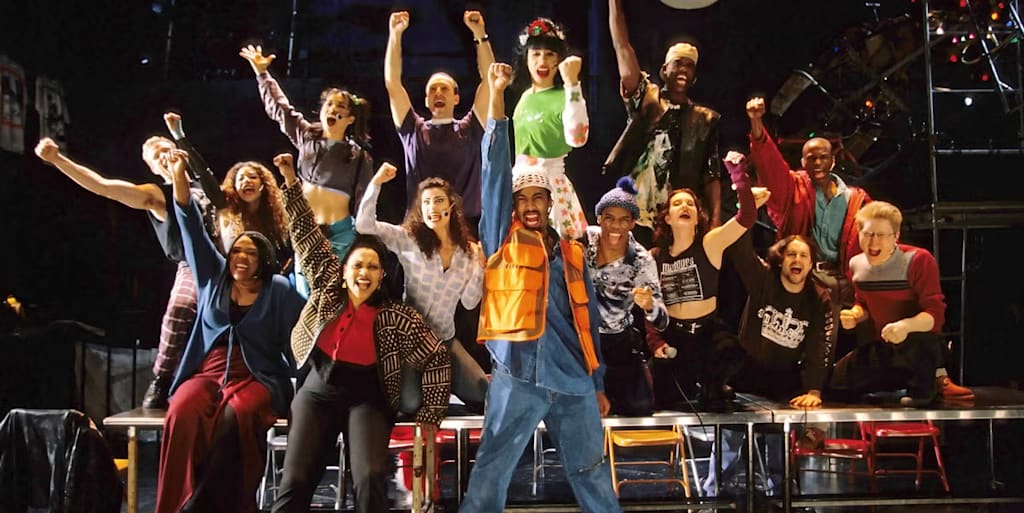
There are musicals that entertain us, and then there are musicals that find us.
RENT was one of those.
Thirty years after Jonathan Larson’s musical opened on Broadway at the Nederlander Theatre on April 29, 1996, it is easy to talk about it as a phenomenon: the awards, the cast album, the T-shirts, the teenagers singing “La Vie Bohème” in bedrooms and parking lots, the way “no day but today” became less of a lyric and more of a survival prayer. But before it was an institution, before it was canonized, before generations of young artists discovered it, RENT was a wound. A loud one. A loving one. A defiant one.
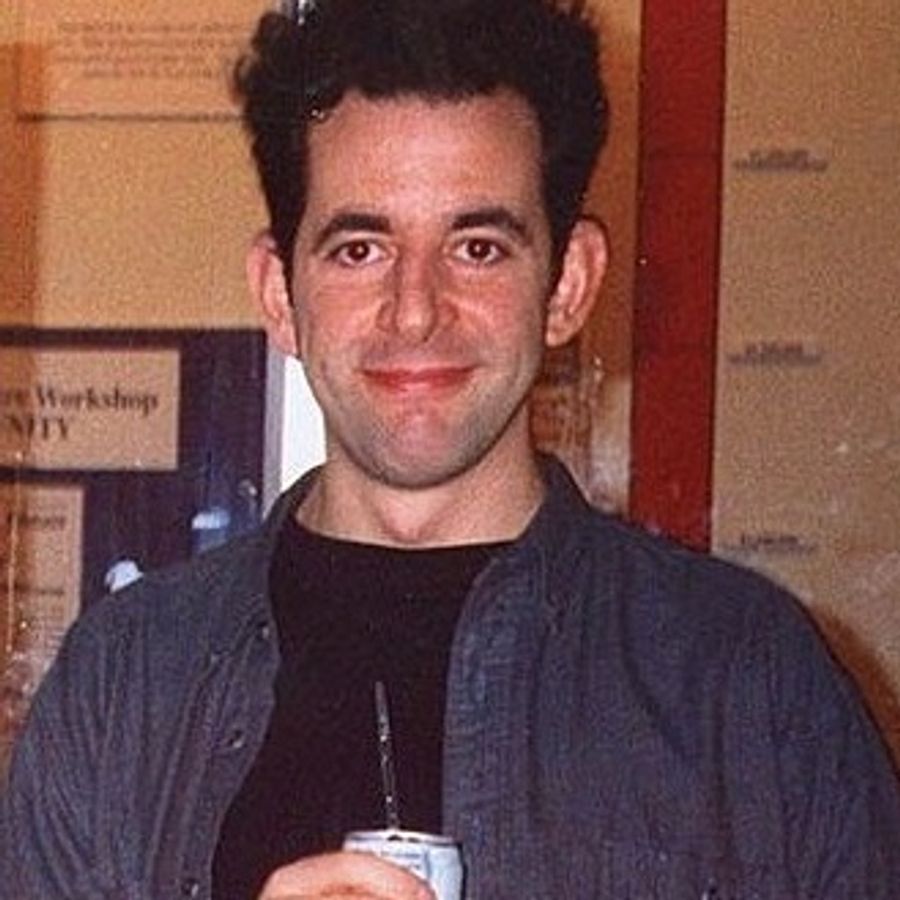
It arrived carrying a grief that theatre history still has not entirely metabolized. Larson died suddenly of an aortic aneurysm due to Marfan syndrome on January 25, 1996, just before RENT began its Off-Broadway life at New York Theatre Workshop. The show that would make him immortal opened without him there to witness it. That fact has always hovered over RENT like a ghost light: not exploitative, not sentimental, but unbearably present.
And maybe that is why RENT has never felt like just a show.
It feels like someone running out of time trying to tell us what matters.
Loosely based on Puccini’s La Bohème, RENT moved the story of struggling artists into New York’s East Village, centering young people living under the shadow of HIV/AIDS, poverty, addiction, queer love, gentrification, and the brutal question of how to make art when the world keeps asking you to justify your existence.
That is the part we should not soften for nostalgia.
Because RENT did not become RENT because it was cute. It did not change Broadway because people liked scarves and folding tables and rock music. It mattered because it put bodies onstage that mainstream musical theatre had too often pushed to the margins: queer bodies, sick bodies, grieving bodies, poor bodies, bodies in community, bodies trying to stay alive long enough to be loved correctly.
It also mattered who was standing there.
For a lot of us, RENT was one of the first times we saw a truly diverse group of actors on a major musical theatre stage not treated as decoration, not pushed to the back of someone else’s story, and not reduced to a lesson in tolerance. We saw people of color in love. We saw Black and Latino characters desired, complicated, funny, grieving, furious, sensual, brilliant, and alive. We saw interracial love, queer love, friendship across difference, and community that did not ask everyone to be the same in order to belong.
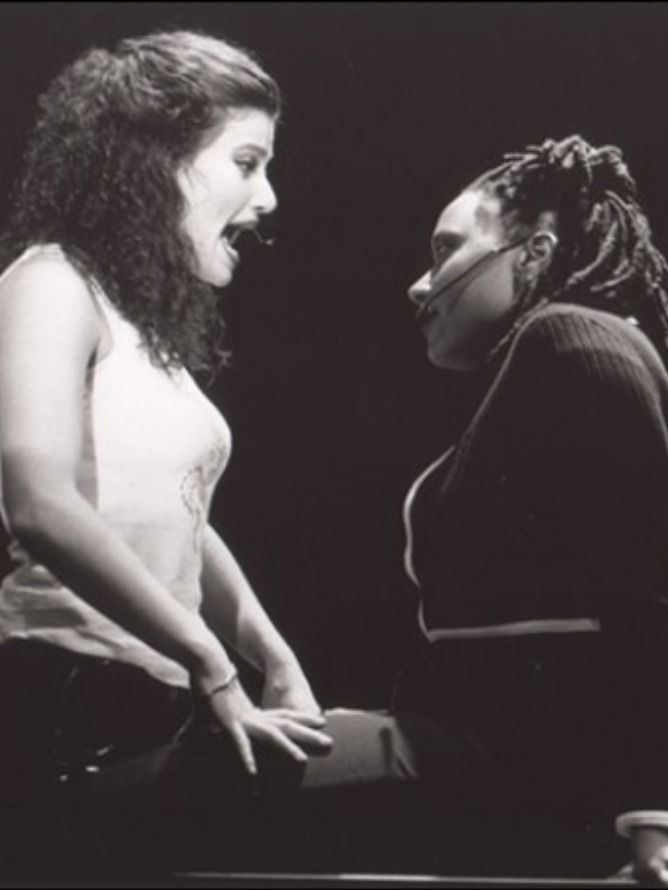
That mattered more than some people will ever understand.
Because representation is not only about visibility. It is about possibility. It is about seeing people who look like the world you actually live in standing under the lights and being allowed to love fully, messily, beautifully, and publicly.
RENT did not give us a perfect world. But for a few hours, it gave us a room where difference was not the problem. Isolation was. Indifference was. Silence was.
And yes, it was imperfect. Of course it was.
Thirty years later, we can hold that truth without diminishing its impact. We can talk about what RENT opened up while also talking about what it simplified. We can talk about how a musical centered in a queer, AIDS-era world is still filtered through certain lenses of its time. We can talk about who gets to narrate pain, who gets softened into symbolism, who gets complexity, and who gets turned into a lesson.
That is not betrayal. That is love with a spine.
Theatre people sometimes confuse reverence with silence. But the work that truly matters can survive being questioned. In fact, it should demand it.
RENT is not fragile.
It is still alive.
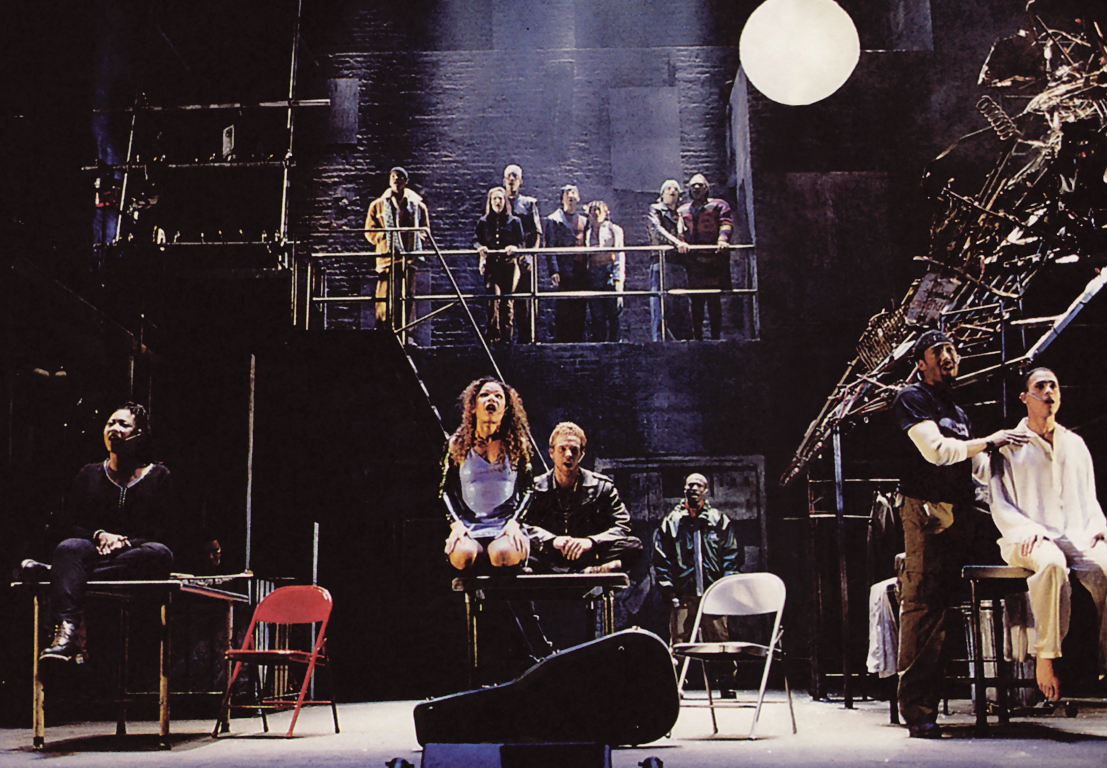
I know there are people who hate RENT.
I have heard it most often from cis white men, which is their prerogative. No one is required to love a musical. No one is required to connect to a piece of art simply because other people found God in it.
But sometimes, when people say they hate RENT, what I hear underneath it is that they never needed it.
They did not need that table. They did not need that family. They did not need to see queer people, sick people, poor artists, grieving lovers, addicts, drag queens, dancers, documentarians, musicians, and misfits standing in one room and declaring that their lives were not disposable.
Some people watched RENT.
Some of us survived because of it.
For me, RENT was never just a musical. It was a doorway. It was my church before I knew how to name what I was worshiping: love, art, survival, queerness, chosen family, defiance, grief, and the sacred act of staying alive.
I met friends through RENT. Lifelong friends. I met lovers through RENT some in the cast, but that's another story. I slept outside the theatre for a week or more when it all first began, waiting for those coveted front-row seats like they were communion. And in a way, they were. The sidewalk became a sanctuary. The people waiting beside me became a congregation. The theatre doors became stained glass.
We were young. We were hungry. We were dramatic. We were exhausted. We were alive.
I was invited to gatherings, parties, restaraunts with cast members. I collected memories the way some people collect programs. I carried the show on my skin, literally, with tattoos that marked not just fandom, but devotion. 'No day but today' was not a slogan to me. It became instruction. It became a rule. It became a way to keep breathing when breathing was not easy.
And that impact did not stay inside the theatre.
Because of RENT, I eventually found myself doing HIV counseling and testing through a state-funded prevention program, sitting with people in moments that required honesty, care, and deep respect. I also helped pilot an outreach program in my state, bringing education, prevention, and support into the community. The show did not make HIV/AIDS abstract to me. It made it human. It made it urgent. It made it impossible to look away.

I have had the pleasure of performing in this show as Mark, professionally and non-professionally. That matters too. Because there is a difference between loving a show from the audience and stepping inside its bloodstream. Performing RENT is not simply singing the score. It is carrying the urgency of it in your body. It is standing in the architecture of grief and joy and asking an audience to remember that life is happening right now, not later, not when it is convenient, not when the world has finally made room for you.

That is what people who dismiss RENT often miss.
They hear a lyric. We heard a lifeline.
They see candles. We remember vigils.
They see a musical. We remember the people who taught us how to live inside one.
And maybe that is why I will always defend it, even while I critique it. Not because it is perfect. It is not. Not because it answers every question correctly. It does not. But because at a time when I needed language for longing, grief, sexuality, friendship, danger, illness, art, and urgency, RENT gave me a vocabulary.
It made queerness feel holy before the world told me it could be.
It made chosen family feel legitimate before institutions would.
It made survival sound like music.
So when I say RENT saved my life, I do not mean that as metaphor.
I mean that there are works of art that arrive when a person is still becoming, and they place something in your hands that you do not yet know you need.
That may be the clearest evidence of its power: thirty years later, artists are still returning to it, arguing with it, reimagining it, singing it, queering it again, and asking what it means now. In 2026, the anniversary is not just being marked by memory but by new productions and renewed attention, including a planned West End return.
That matters.
Because if RENT was always about people denied comfort, denied stability, denied uncomplicated futures, then its legacy cannot be locked in amber. A show about survival has to keep expanding the room. It has to keep asking who is still outside the door.
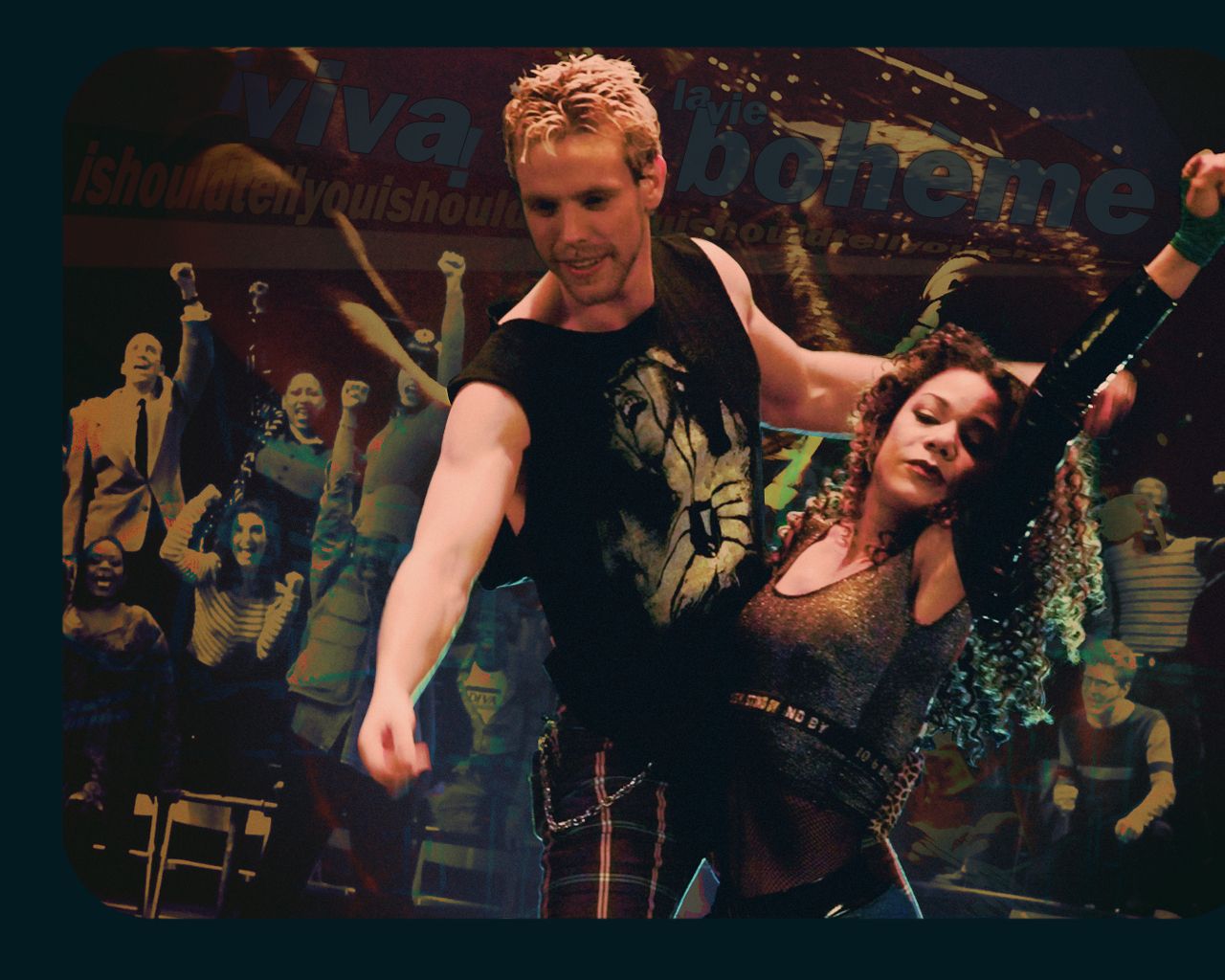
What made RENT radical in 1996 was not simply that it had queer characters or HIV/AIDS in the plot. Other works had already done that work with more specificity, more anger, more political clarity, and more direct confrontation. But RENT entered the bloodstream of popular musical theatre. It reached people who had not yet learned the language of chosen family, mutual aid, queer grief, or living through plague. It took pain that America had ignored and wrapped it in melody bright enough that people could not look away.
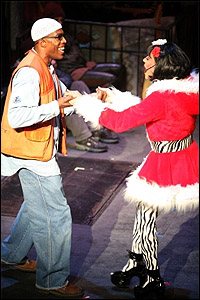
That is complicated.
That is also powerful.
The musical went on to win the 1996 Pulitzer Prize for Drama, along with Tony Awards for Best Musical, Best Book of a Musical, Best Original Musical Score, and Best Featured Actor in a Musical for Wilson Jermaine Heredia.
But awards are not the legacy. Not really.
The legacy is the kid who heard “Will I?” and understood fear for the first time.
The legacy is the queer teenager who saw Angel and Collins and realized love could be tender, flamboyant, grieving, embodied, and holy.
The legacy is every artist who has ever sat in a freezing apartment, rehearsal hall, basement theatre, or half-broken dressing room and wondered whether making art was foolish, only to keep making it anyway.
The legacy is the idea that chosen family is not a consolation prize. It is architecture. It is how people build shelter when institutions fail them.
And institutions did fail
That is another thing we must say plainly.
RENT was born from an era of governmental neglect, cultural stigma, mass death, and the demonization of people living with HIV/AIDS. To celebrate the show without remembering the crisis beneath it is to turn a memorial into merchandise.
Attention matters.
Especially in theatre.
Theatre is one of the few places where the dead can keep speaking if we let them.
But we have to let them speak honestly. Not just through the comfortable parts. Not just through the uplift. Not just through the parts that let us cry and then leave unchanged.
The danger with beloved musicals is that time can sand them down. What once disturbed becomes “classic.” What once challenged becomes “iconic.” What once demanded something of us becomes a sing-along.
And RENT deserves better than to become a vibe.
It deserves to remain an accusation.
What are we doing with the time we have?
Who are we leaving outside in the cold?
Who gets to be loved publicly?
Whose illness becomes political?
Whose grief becomes inconvenient?
Whose art is celebrated only after they are gone?
Larson did not live to see the full reach of what he made. That will always be the ache inside the story.
But maybe the reason RENT endures is because it never pretends ache and joy are opposites.
It understands that people dance at funerals. That laughter happens in hospital rooms. That romance can bloom in crisis. That art can be messy and selfish and sacred all at once. That survival is not always noble. Sometimes it is ugly. Sometimes it is unpaid bills and bad decisions and one more song because silence would be worse.
Thirty years later, RENT is not above critique. It should not be.
But it is also not done with us.
Because the questions it asked in 1996 have not disappeared. Housing is still unstable. Artists are still underpaid. Queer and trans people are still fighting to be safe. Illness is still moralized. Communities still have to create their own care networks when systems fail. Theatre still loves stories of outsiders while often making actual outsiders fight to get in the room.
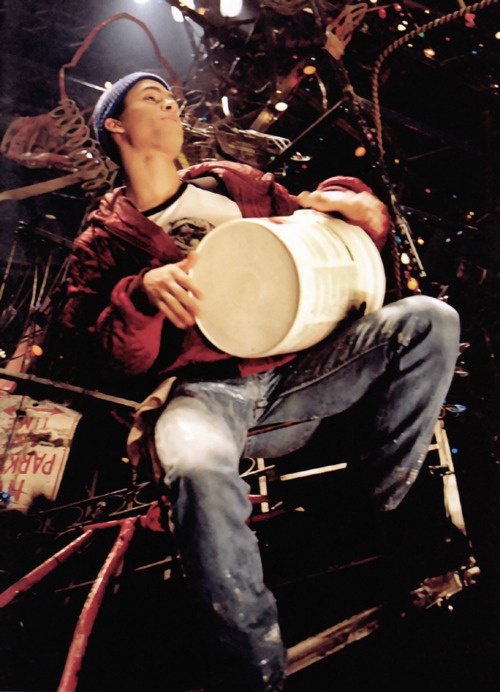
So perhaps the anniversary is not just a celebration.
Perhaps it is a check-in.
Not with the musical. With ourselves.
Have we built the world RENT begged for?
Have we measured our lives in love, or only quoted the lyric when it was convenient?
Have we mistaken nostalgia for justice?
The beautiful thing about RENT is that it never asks us to be perfect. It asks us to be present. To witness. To love harder. To stop waiting for permission to live. To understand that art is not separate from survival; sometimes it is the thing that keeps the blood moving.
Thirty years later, the candles are still lit.
The table is still crowded.
The song is still unfinished.
And somewhere, in every theatre where young people gather and decide that their voices matter, RENT is still asking the same impossible, necessary question:
What will you do with today?
Thank you for the gift, Jonathan.
About the Creator
Jason Hair-Wynn
Theatre artist, director, choreographer, and arts leader writing on accountability, equity, and culture in the performing arts, with a deep belief in storytelling, truth, and spaces rooted in care. And some travel content along the way
Enjoyed the story? Support the Creator.
Subscribe for free to receive all their stories in your feed. You could also become a paid subscriber, letting them know you appreciate their work.
Comments
There are no comments for this story
Be the first to respond and start the conversation.