
The Conversations We Don't Keep
A former newspaper librarian on Grok, AI, and the strange new problem of saving what you say to a machine

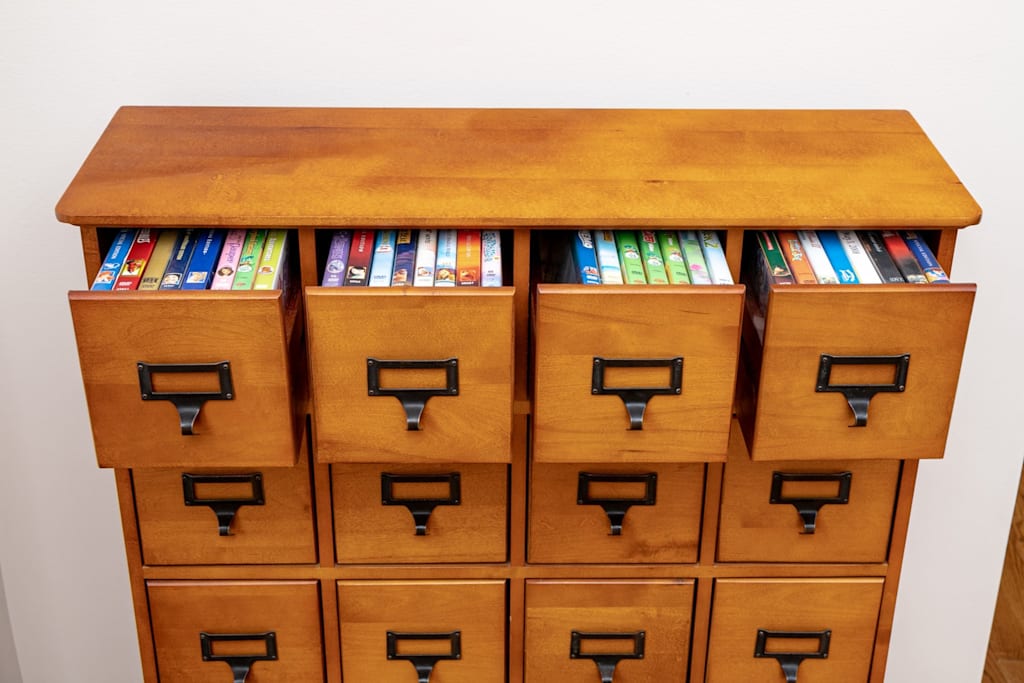
For eleven years I was the librarian at a daily paper in the Ohio valley, back when a paper that size still kept one, which mostly meant I was the person who decided what we saved. Obituaries, all of them. The county fair, a dozen frames out of four hundred. A reporter's handwritten notes from a 1994 murder trial went into an acid-free folder; the same reporter's mileage receipts went into the bin. You learn that job in your hands after a while, and the lesson underneath it never moved: the record is not the thing that happened, it's the thing somebody chose to keep. So it bothered me more than it should have when a Grok conversation I'd built over most of an afternoon — forty-some minutes of back-and-forth that had finally cracked a problem I'd been stuck on for a week — was gone the next morning, slid off the bottom of the history pane like it had never been said. I keep them now. Anything worth saving I run through a small browser extension called Grok Chat Exporter, which turns whatever is on the screen into a Markdown file that sits on my own drive instead of somebody else's. The fix took an afternoon. The part I'm still working out is which conversations are worth keeping in the first place.
The thing somebody chose to keep
The morgue — that's what everyone called it, the room where the clippings lived — was two floors under the newsroom and smelled like cold paper and the inside of a filing cabinet. Dolores ran it before me. She'd started in 1971, and when she left she handed me exactly one page of instructions, typed on a machine that dropped its lowercase e's a hair below the line. The first rule on the page was this: when in doubt, the future will want more than you think.
I filed under that rule for eleven years. I kept the zoning maps nobody ever asked for. I kept the bad photographs, the ones where the mayor blinked, because someday the blink might be the story. Then the chain that owned us "centralized the archive," which is a phrase that means a server in Tennessee and a man you email when you need something, and the morgue became a supply closet. I went freelance. I write explainers and the occasional trade-magazine feature now, and somewhere in the middle of all that, the place I did my actual thinking quietly stopped being a legal pad and became a chat window.
I didn't notice the switch while it was happening. I noticed it the morning the conversation was gone.
Why the conversation was worth a damn
The conversation I lost that Tuesday had taken real work. I'd been trying to reconstruct who owned a particular forty-acre parcel outside town across about ninety years of deeds, and I'd spent days getting nowhere. I do most of that kind of digging with Grok now, with Think mode on so I can watch it work a problem instead of just stating a conclusion. The steps were the part I was after. By the end it had walked me through a chain of probate filings and pointed me at a dozen documents I could go pull and check for myself.
That was the conversation that vanished. Not the conclusion — I'd copied the conclusion into my notes. The reasoning. The part where the machine shows its work, which is the part I actually trust. Dolores would have understood the loss in a second. You don't keep the verdict. Anybody can look up the verdict. You keep the notes from the trial.
Getting it back out
Getting one back out is harder than it should be. Grok will hand you your data if you ask for it — it bundles every conversation you have ever had into a single file and sends it over, which is the thing you want if you lose all of it at once, and useless on the ordinary day when you just need last Tuesday.
So most people do what I did for years, which is highlight the whole conversation and copy it out by hand.
That throws away more than you'd guess. The code comes out as one unbroken smear with the line breaks gone. The citations go flat, just blue words pointing nowhere. The equations turn into a soup of backslashes, and the picture the model drew for you isn't anywhere at all. You keep the words and lose the arrangement they came in, and the arrangement was holding more of the meaning than I ever gave it credit for.
Keeping the whole thing
So I started keeping the whole thing, the arrangement along with the words — the reasoning still readable as reasoning, the code still shaped like code, and not the smear that copy-and-paste makes of it.
The exporter does that part, and most days I forget it's even there. I keep most of what it gives me as Markdown, because Markdown is barely a step above plain text, and plain text is the one format I trust to still open in ten years, when whatever I'm using today is gone. When something needs to look like a document, I save it as a PDF instead. It runs inside the browser, which I didn't think I cared about until I did: a fair amount of what I type into those windows is the most unguarded thinking I do all day, and I would rather it didn't take a detour through a stranger's machine on the way to my own.
I still pull the big bundled backup from xAI every few months, the unreadable one, in case the building burns down. Dolores would have approved of that, too.
The one I went back for
Once, so far, I've gone into that folder for something that mattered. A magazine queried a piece I'd filed — a fact in the third paragraph, where had it come from. I'd worked the fact out with Grok eight months earlier, and the underlying source was a county document I'd otherwise have driven ninety minutes each way to pull again. But the conversation was in the folder, dated, with the source named and the link still good, and I had the editor her answer in four minutes instead of a day. That was the moment the habit stopped feeling like hoarding and started feeling like the job I used to have. The morgue paid off the same way: not often, never on a schedule, but when it did, it was the only thing that could have.
The librarian's question
I've come around to thinking that all of us who talk to these machines have quietly been handed Dolores's job, whether we wanted it or not. Most days you have exchanges that are worth more than small talk and less than a finished document — the half-figured-out idea, the debugging session that finally ran after two hours, the long tangent that teaches you something you weren't looking for. By default they live in a list that scrolls and forgets. Keeping them is now a decision somebody has to make, and the somebody is you.
I don't reread them, mostly. The folder is called "conversations," which is not clever, and it has a few hundred files in it now, each named for the day it happened. Not all of it is work. There's an afternoon in there where I made the thing help me name a cat, fifty bad suggestions before one stuck, which I am never going to need again and would still be a little sorry to lose. There is, I'm aware, a version of me who simply can't throw anything out.
But Dolores didn't reread the morgue either, and that was never the point of it. You keep the record so the future has the option, and you try, with no real way of knowing, to keep the right things in a form that will still open when the option finally comes due. I don't know that I'm choosing right. I'm fairly sure it beats letting them slide off the bottom and disappear, which is the same bet Dolores made in that basement for as long as anyone could remember. She was mostly right. Not always.
About the Creator
Diane Kessler
Former newspaper librarian, now freelance. I spent eleven years deciding what a daily paper kept, and I still can't stop thinking about what we choose to save. These days I write about technology and memory.
Enjoyed the story? Support the Creator.
Subscribe for free to receive all their stories in your feed.
Comments
There are no comments for this story
Be the first to respond and start the conversation.