
The Apollo 11 Mission.
Humanity's Epic Journey to the Moon

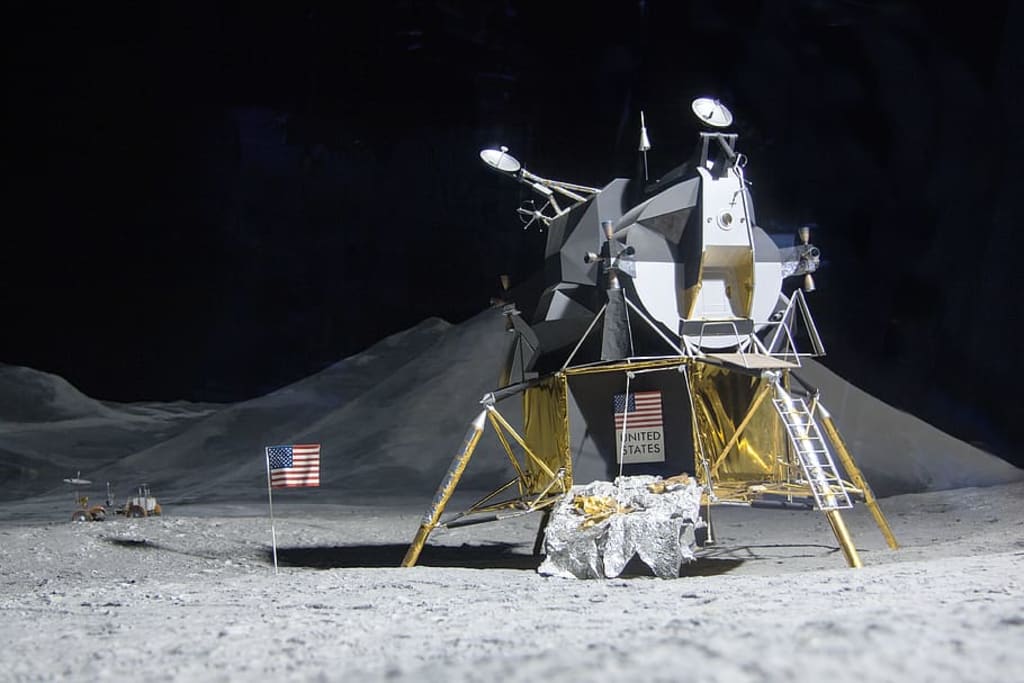
The Apollo 11 mission stands as a pinnacle of human achievement, marking the first time in history that astronauts set foot on the moon. Led by Commander Neil Armstrong, alongside pilot Michael Collins and pilot Buzz Aldrin, the mission captivated the world and reshaped our understanding of what is possible. Despite the remarkable success of the mission, conspiracy theories have persisted, casting doubt on the authenticity of the moon landing. In this article, we will delve into the incredible story of Apollo 11, examine the evidence supporting the moon landing, and address the most common conspiracy theories.
The Cold War Context :
The Apollo 11 mission was fuelled by the geopolitical rivalry between the United States and the Soviet Union, known as the Cold War. After the Soviet Union's early successes in space exploration, including the launch of the first satellite and sending the first human into space, President John F. Kennedy sought to reestablish American dominance in the space race. In a bold declaration, he announced the goal of landing a man on the moon before the end of the 1960s. This ambitious objective became the driving force behind the Apollo program.
NASA's Relentless Pursuit :
With President Kennedy's challenge set, NASA embarked on an extraordinary journey to make the moon landing a reality. Over the course of several years, the agency conducted a series of meticulous tests and unmanned missions to develop the necessary technology and expertise. The Apollo program involved rigorous rocket trials, testing of heat shields, propulsion systems, and countless simulations.
The successful missions of Apollo 7, Apollo 8, Apollo 9, and Apollo 10 paved the way for the ultimate goal of Apollo 11. These missions incrementally built upon previous successes, testing crucial components and refining procedures. The extensive preparation and dedication of the entire NASA team were instrumental in ensuring the safety and success of the Apollo 11 mission.
Apollo 11 The Mission :
On July 16, 1969, Apollo 11 embarked on its historic journey. The spacecraft consisted of the Command Module, named "Columbia," where Michael Collins remained in lunar orbit, and the Lunar Module, named "Eagle," carrying Neil Armstrong and Buzz Aldrin to the moon's surface. After a four-day journey, the Lunar Module separated from the Command Module and began its descent.
The landing was not without its challenges. Neil Armstrong faced difficulties due to the high pressure, but he skilfully manoeuvred the Lunar Module to a safe touchdown on the moon's surface in the region known as the Sea of Tranquility. As Armstrong stepped out onto the lunar landscape, he famously declared, "That's one small step for man, one giant leap for mankind."
Evidence of the Moon Landing :
Despite overwhelming evidence supporting the authenticity of the moon landing, conspiracy theories have persisted over the years. Claims range from the belief that the entire mission was staged on Earth to scepticism about the fluttering American flag in the moon's vacuum. However, extensive evidence debunks these theories.
Photographs, rock samples, and lunar surface experiments conducted by the Apollo missions provide tangible proof of human presence on the moon. Additionally, the testimonies of thousands of scientists, engineers, and astronauts involved in the Apollo program corroborate the authenticity of the moon landing. The technology of the time, including radio transmissions and tracking data, also supports the veracity of the mission.
Conclusion :
The Apollo 11 mission remains an unparalleled accomplishment in human history. It symbolises the indomitable spirit of exploration, innovation, and determination. Despite the persistent conspiracy theories, the evidence overwhelmingly supports the reality of the moon landing. Apollo 11 opened a new chapter in space exploration and inspired generations to dream of reaching beyond Earth's boundaries. As we commemorate this monumental achievement, let us embrace the spirit of discovery and continue to push the limits of human exploration and knowledge.
About the Creator
Enjoyed the story? Support the Creator.
Subscribe for free to receive all their stories in your feed.
Comments
There are no comments for this story
Be the first to respond and start the conversation.