
The 12-Hour Relay: Who Is Actually Carrying the Baton During National Hospital Week?
Why genuine recognition requires looking past the bedside and into the basement?

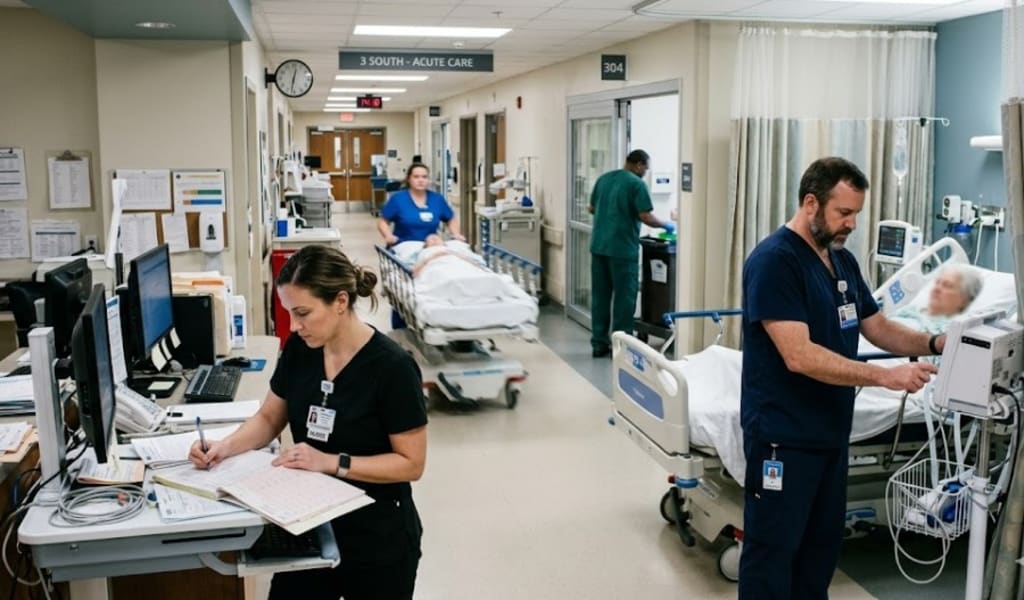
It is 6:45 AM, the most critical window of the day. The hospital is in the middle of shift change, the slim fifteen-minute window where the entire weight of patient care is handed over from one exhausted crew to a fresh one.
Down in the pharmacy, a technician intercepts a potential medication interaction and calls the floor before morning meds are passed. In the main lobby, a security officer calmly de-escalates a frustrated family member who has been waiting all night for an update. Up on the surgical floor, the environmental services team moves with absolute precision to turn over a critical room, ensuring the 7:00 AM surgical schedule starts on time.
None of these moments show up on a patient’s whiteboard. Most don’t involve direct bedside care. But if any one of them is missed, everything slows down.
After National Nurses Week wraps up in early May, the focus naturally shifts. Running from May 10th through May 16th, National Hospital Week recognizes the full system behind patient care. For hospital leadership, however, this week is not just a calendar event. It becomes a mirror of what an organization visibly prioritizes. Healthcare providers can tell within minutes whether the week reflects their actual work or just grazes the surface.
The Friction Test
Hospitals run on coordination. Every department depends on the speed and accuracy of others.
But when it comes to recognition, it’s easy to focus on the most visible roles. The truth is, the real measure of a healthy system is how it values the people who remove friction. The dietary aides who ensure a diabetic patient receives a perfectly timed tray. The IT team restoring systems in the middle of the night so documentation doesn’t pile up. The transport team keeping patients moving so units don’t bottleneck.
Many professions have their own week on annual recognition calendars, but mid-May is a rare moment to elevate the entire machine. When a facility actively champions these unseen roles, it sends a clear message: we understand how the work actually gets done.
Signals of Systemic Respect
So, what does authentic, system-wide appreciation actually look like to the people walking the halls? It rarely looks like a corporate banner. It looks like deliberate, operational signals.
One of the biggest signals is how a hospital treats off-hours. Healthcare runs 24/7, but recognition often doesn’t. When night shift walks in to leftovers from a daytime event, it’s noticeable. It feels like an afterthought.
But when leadership plans for everyone, like having fresh food delivered at 1:00 am, or showing up in person overnight, it lands differently. It shows awareness of what those shifts are really like. It proves the facility understands that the stress of the building doesn’t vanish when the sun goes down.
Appreciation in a 24-hour hospital has to reach the clock, not just the calendar.
Staff also look for peer-to-peer validation. The most powerful recognition often happens across departmental lines. When the emergency department takes the time to formally thank the transport team for keeping the board clear during a chaotic trauma surge, it builds an unshakeable solidarity. Top facilities do not just thank their staff; they create pathways for their staff to thank each other.
The Value of the Fix
At the end of the day, one of the most meaningful ways to show appreciation isn’t a gift; it’s making the job easier.
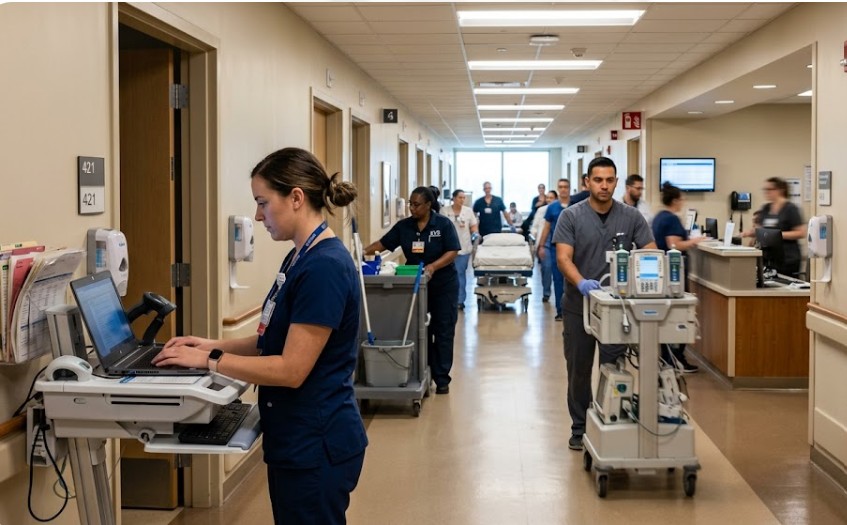
The highest form of recognition is an operational win. When a hospital uses this week to fix the notoriously spotty Wi-Fi in the staff breakroom, replace the squeaky wheels on the heavy medication carts, or streamline a redundant admissions protocol, the impact is immediate. Addressing these daily operational pain points shows that leadership is paying attention and willing to act. That kind of recognition sticks.
A Community Effort
Hospitals don’t operate in isolation; they’re part of the communities they serve, and external validation plays a massive role in staff morale. However, for community support to hit the mark, it needs to be targeted.
Something as simple as a local business bringing coffee for a weekend shift, or a patient calling out a specific staff member in a review, can go a long way. It shows the staff that their efforts were seen and remembered.
The Work That Keeps It All Moving
Healthcare is not just delivered; it is sustained. It is sustained by the people in the basement, the people at the front desk, and the people working through the darkest hours of the night.
Maybe it starts with a small fix—a printer that finally works, a cart that doesn't squeak, a coffee delivery at 1:00 AM. The kind of change doesn't make a headline, but makes a shift feel lighter. That is where genuine recognition lives.
What is one operational fix or moment of interdepartmental support that completely changed the trajectory of your shift? Share your experience in the comments below.
About the Creator
Brian Sutter
Brian Sutter is a marketing leader transforming healthcare staffing through innovative strategies. A contributor to Forbes and Medium, he connects providers with opportunities nationwide as Marketing Leader for Advantis Medical.
Enjoyed the story? Support the Creator.
Subscribe for free to receive all their stories in your feed.
Comments
There are no comments for this story
Be the first to respond and start the conversation.