
The First Five Minutes: What Nurses Actually Notice During Nurses Week
Beyond the Branded Swag: What Genuine Nurse Appreciation Looks Like in Healthcare

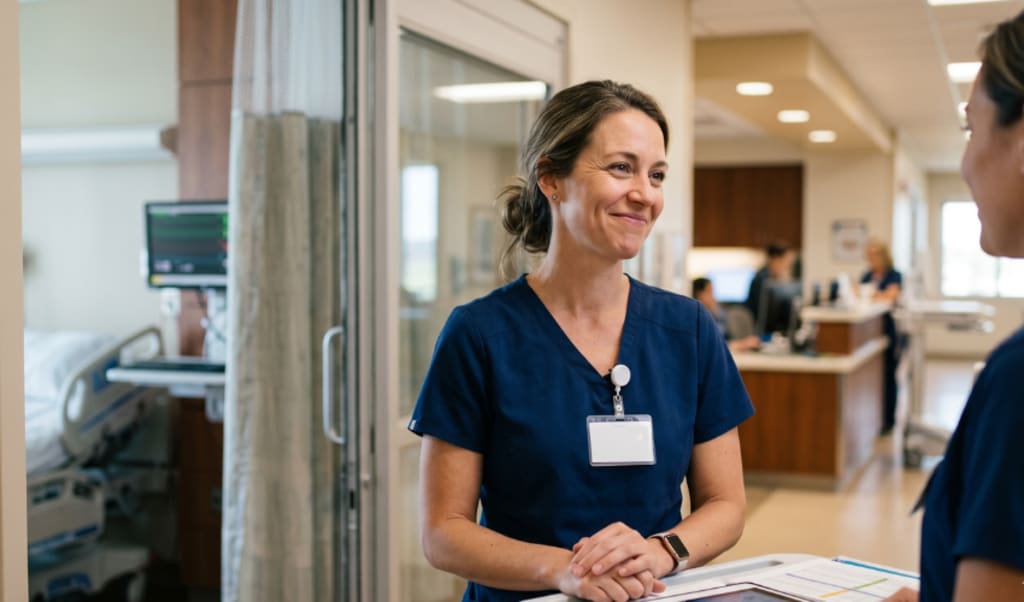
A nurse can usually tell within the first five minutes whether Nurses Week is going to feel meaningful—or forgettable.
It’s not the email announcement, it’s not the catered lunch, and it’s not even the gift. It’s something much quieter. It’s who shows up, when they show up, and whether they seem to understand what the work actually feels like right now. That’s what nurses notice. Once you start looking at Nurses Week through that lens, it becomes clear why it sometimes lands and why it sometimes doesn’t.
The moments that define the work
The most important parts of nursing rarely announce themselves. If you’ve spent any time on a busy unit, you’ve seen this play out.
A patient starts trending in the wrong direction, but nothing has alarmed yet. Labs are still within range, and the monitor hasn’t caught up, but something feels off. A nurse sees it early and adjusts course before anyone else needs to react. A complication is avoided, the shift moves on, and nothing dramatic happens.
But that moment—the quiet recognition of a change before it escalates—is the work.
So is the time spent sitting with a family after difficult news, long after the care plan has already been explained. So is the decision to stay a few extra minutes to help a teammate reset after a tough assignment. These moments don’t show up in reports, and they don’t get captured in dashboards, but they are constant, and they hold the system together.
Nurses don’t expect every one of these moments to be recognized. But they can tell when the system doesn’t seem to recognize that they exist at all.
What nurses pay attention to during Nurses Week
Every year from May 6–12, Nurses Week is built around visible gestures. Those gestures matter, especially when they are thoughtful and well-executed, but most nurses are paying attention to something else entirely.
They notice whether appreciation actually reaches every shift. Food brought in during the day doesn’t always make it to the night team. By the time the overnight staff arrives, what’s left is often picked over or gone entirely. It’s a small detail, but it sends a clear signal about who was considered in the planning.
They notice whether anyone names the actual work. General appreciation is well-intentioned, but it blends into the background. What stands out is specificity. When someone takes the time to say, “You caught that early, and it changed the outcome,” it reflects an understanding of the role that goes beyond surface-level gratitude.
They notice whether anything about the work itself improves. Even small operational changes, like better break coverage, smoother workflows, or fewer unnecessary interruptions, carry more weight than most giveaways. They signal that someone has taken the time to understand where the friction actually lives.
And they notice consistency. If recognition appears for one week and disappears the next, it feels temporary. Expanding visibility beyond a single week by using a healthcare recognition calendar ensures that appreciation shows up for every specialty in small, steady ways over time. When it is consistent, it feels real.
The legacy
Nurses Week is tied to the legacy of Florence Nightingale, often remembered as a symbol of compassion at the bedside. But her influence extended far beyond that image.
She was a systems thinker who used data to challenge assumptions and improve outcomes. She looked closely at how care was delivered and then worked to improve it. That same mindset still defines modern nursing. Today’s nurses are not just caregivers. They are clinicians who interpret subtle changes, manage complex systems, and make decisions that directly influence positive patient outcomes.
When recognition focuses only on the visible parts of the role, it misses the bigger picture. And that’s the part nurses feel most quickly.
Why small signals matter more than big gestures
In high-pressure environments, people rely on signals—small cues that indicate whether they are supported, understood, and valued.
Those signals don’t have to be dramatic. They show up in moments: A leader who asks a thoughtful question and actually listens to the answer. A manager who follows up on a concern raised weeks earlier. A team that takes the time to recognize one another without being prompted.
These interactions don’t require a campaign or a budget, but they shape how the work feels in a very real way. Over time, they influence whether people speak up, stay engaged, and ultimately stay. That’s why Nurses Week matters, but it's also why it can’t carry the full weight of recognition on its own.
What makes Nurses Week actually land
The most meaningful Nurses Week experiences tend to have one thing in common: They feel grounded in reality. Not just appreciation in general, but appreciation that reflects what the work actually looks like right now.
That doesn’t require bigger gestures. It requires a closer look at how different shifts experience the same environment. Attention to the kinds of decisions nurses are making every day. Attention to the parts of the job that don’t get documented but still take a toll.
When that level of understanding is present, even simple efforts land differently because they feel connected to the work rather than separate from it.
A different way to think about recognition
Most nurses aren’t asking for more recognition. They’re asking for recognition that actually matches the work—the complexity, the responsibility, and the judgment that happens long before anything shows up in a report.
When Nurses Week actually lands, it skips the usual routine. It looks like this:
- Recognizing the thinking behind the action. It takes sixty seconds to call out a specific decision that changed a patient’s trajectory—not just the effort it took.
- Being present when it matters most. Not just during a scheduled walk-through, but during the off-hours when the pace shifts and resources are thin.
- Improving one part of the shift. Better break coverage, a smoother workflow, or one less unnecessary interruption can change how the entire day unfolds.
These aren’t big initiatives. They don’t require a committee or a budget. But to the people doing the work, they change how it feels to walk back in the next day.
What was the most meaningful quiet moment of recognition you’ve experienced on the floor? Share your story in the comments below.
About the Creator
Mary Ross
Marketing professional experienced in healthcare staffing. I bring insights into trends and clinician needs. Driven by research and storytelling, I create data-driven content that empowers nurses and advanced practice providers.
Enjoyed the story? Support the Creator.
Subscribe for free to receive all their stories in your feed.
Comments
There are no comments for this story
Be the first to respond and start the conversation.