humanity
The real lives of businessmen, professionals, the everyday man, stay at home parent, healthy lifestyle influencers, and general feel good human stories.
Gender Inequality
I wasn't going to write about this. Because honestly? I'm tired. Not tired of the conversation—tired of having to have it. Tired of explaining something that feels as obvious as rain. But tonight, after another story about another woman who got talked over, passed over, or just plain erased, I can't sleep.
By John Smith4 months ago in Journal
The Art of the Unbroken Line: What a Simple Bracelet Taught Me About Balance
We live in a world that often demands we shout to be heard. From the bold logos on our clothes to the dramatic accessories we choose for a night out, fashion has long been used as a megaphone. But as we navigate through 2026, many of us are experiencing a collective exhaustion from the noise. We are quietly stepping away from the chaotic and the temporary, seeking instead items that bring a sense of rhythm, symmetry, and calm to our daily routines. It was during this personal shift toward mindfulness that I rediscovered the beauty of tennis bracelets—a piece of jewellery that is less about showing off and far more about the art of consistency.
By Mohd Kaish4 months ago in Journal
My Building Of A Vocal Story
Introduction When I build a Vocal story it is never just writing. I receive a lot of criticism especially for challenge entries because I do things that stamp my identity over any Vocal story that I publish. This may be an issue because the story is very me rather than some Vocal template piece, or nothing but text.
By Mike Singleton 💜 Mikeydred 4 months ago in Journal
Where I'm at...
I feel like I should say something... Over the years of writing both here and on other web sites, I became convinced that I was one of those people who was not meant to win any major awards for my work, at least for the writing that seemed to come naturally to me, especially when I had a Challenge in front of me. I even wrote about my dilemma:
By Kendall Defoe 4 months ago in Journal
Retirement Didn't Stick: Why I Still Advise After 40 Years. AI-Generated.
I thought I was done. Forty years is a long time to be on construction sites — the early starts, the winters, the weight of keeping a job moving when everything is pushing against you. When I stepped back from full-time site management, I was ready for the quiet. And for a while, the quiet was fine.
By Bertyl Kently4 months ago in Journal
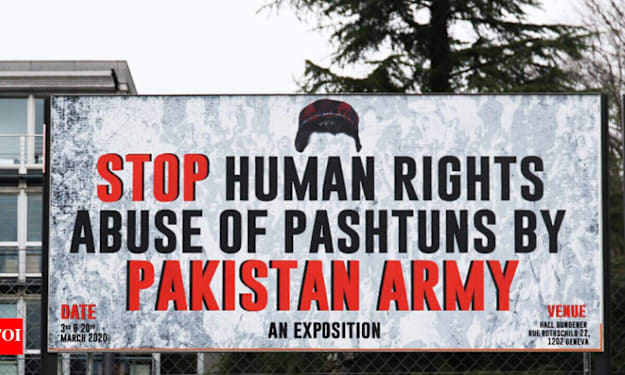
Pashtun Regions: Conflict, Displacement, and Unresolved Questions
me suffering becomes so constant that it slowly fades from global attention. The situation in many Pashtun regions of Pakistan is one of those long-running human tragedies that continues in plain sight, yet remains underreported in wider discussions. For many years, Pashtun areas have experienced ongoing conflict, military operations, displacement, economic hardship, and insecurity. Entire generations have grown up in environments shaped more by checkpoints, curfews, and uncertainty than by stability and opportunity. Daily life in many regions is marked by fear of what tomorrow may bring. Basic rights remain a central concern for many Pashtuns. Reports from human rights organizations and local voices consistently highlight issues such as limited political representation, lack of effective justice, and weak accountability mechanisms in conflict-affected areas. In several cases, families report arrests, detentions, and disappearances of loved ones without clear information or legal resolution. Mothers continue to search for sons, wives for husbands, and children grow up with unanswered questions about their fathers. According to estimates shared by rights groups and local advocates, more than 70,000 Pashtuns are believed to have gone missing or lost their lives during years of conflict and military operations in the region. Many of these cases remain unresolved, and families still have no verified information about the fate of their relatives. This long absence of closure has created deep emotional and psychological distress across communities. The deaths of figures such as Arman Loni, Usman Lala, and poet Gilaman Wazir are widely discussed in the context of political tension and unrest in the region. Their deaths are often seen as part of a broader pattern of violence and instability that has affected outspoken voices in Pashtun society, further increasing mistrust and fear. Military operations carried out in various Pashtun regions, particularly during the broader conflict with militancy, have had long-term consequences on civilian life. Entire villages have been displaced, and families have been forced to leave their homes, sometimes during harsh weather conditions. In many cases, return has taken years, and some communities remain displaced even today. Economic life has also been heavily impacted. Markets in several areas were destroyed or severely damaged, including the well-known bazaar in Miran Shah, which once served as a major commercial hub. Small businesses, daily wage workers, and traders lost their livelihoods, leaving long-lasting economic challenges. In areas such as Tirah Valley, reports indicate that families were relocated during security operations with assurances of eventual return. However, many residents remain displaced, with uncertainty continuing about when or how they will be able to rebuild their lives. Similar conditions have been reported in parts of North Waziristan, where curfews and security restrictions have affected mobility, trade, and employment. Limited control over local resources is another concern frequently raised in discussions about Pashtun regions. Despite being rich in natural resources such as minerals and water, many communities report minimal local benefit and continued underdevelopment. This has contributed to a growing sense of economic exclusion among residents. During the broader war on terror, Pashtun areas became central zones of military activity and counterinsurgency operations. These events led to repeated cycles of violence, displacement, and reconstruction, with civilians often bearing the long-term social and economic costs of conflict. In everyday life, uncertainty continues to shape decisions. Families remain cautious when children leave home, and young people often grow up in environments where instability limits access to consistent education, employment, and development opportunities. Even discussing these challenges openly can feel difficult in some settings, yet many continue to speak because silence has not resolved the underlying issues. Movements such as Pashtun Tahafuz Movement continue to advocate for peaceful dialogue, justice, accountability, and equal rights for Pashtun communities. Their supporters emphasize non-violence and call for constitutional rights and dignity to be fully implemented for all citizens. This is not a call for conflict. It is a call for attention and humanity. No community should live for decades under conditions of fear, displacement, and uncertainty. No family should be left without answers about missing loved ones. And no region should feel disconnected from the rights and protections guaranteed to all citizens. The question remains simple: how long will these long-standing issues continue before they are meaningfully addressed?
By Bismillah Achakzai4 months ago in Journal
Spotify’s New Wrapped-Style Feature Is Going Viral: How to See Your All-Time Top Artists and Songs
Spotify has once again captured the internet’s attention with a brand-new personalized feature that music lovers everywhere are obsessing over. Known as “Your Party of the Year(s)”, the new experience gives users a nostalgic deep dive into their complete Spotify listening history — from their first-ever streamed song to their all-time favorite artists.
By Omasanjuwa Ogharandukun4 months ago in Journal
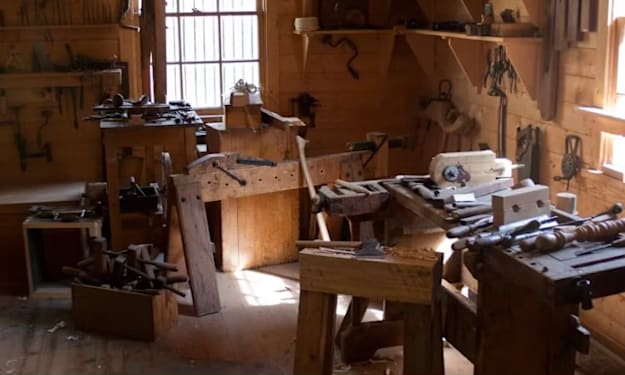
The Carpenter Who Became a Site Manager. AI-Generated.
I didn't walk into this trade through a careers office. I started my apprenticeship at eighteen, three years of training before I even picked up my cards as a qualified carpenter and joiner. I was no scholar. I was a man's man from the off — doing the work, keeping my head down, learning from men who didn't suffer fools and didn't need to explain themselves twice. That suited me fine.
By Bertyl Kently4 months ago in Journal