
The Carpenter Who Became a Site Manager
Ten years on the tools. Thirty years in management. What the first half taught the second.
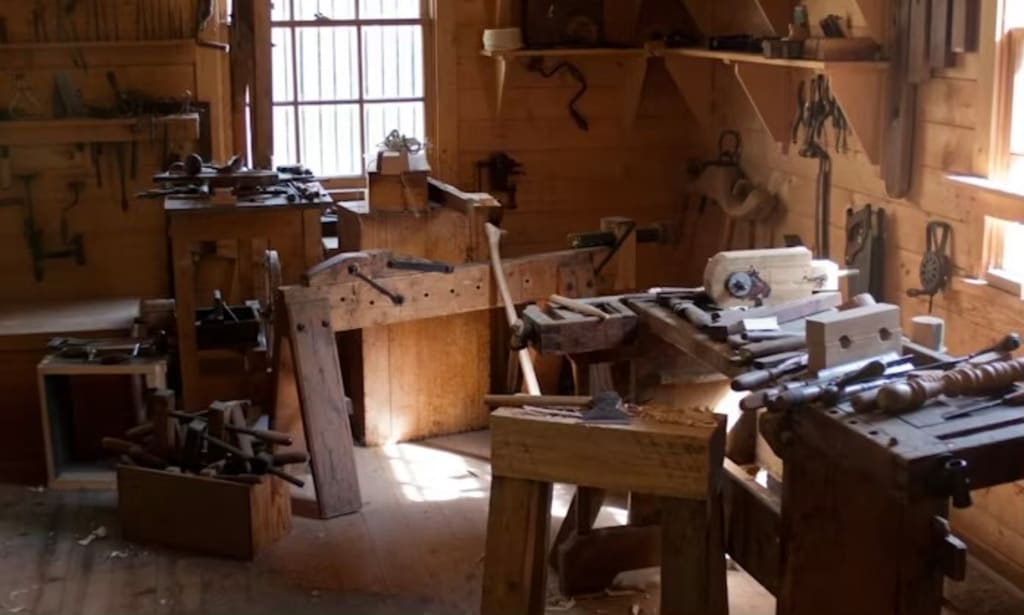
I didn't walk into this trade through a careers office. I started my apprenticeship at eighteen, three years of training before I even picked up my cards as a qualified carpenter and joiner. I was no scholar. I was a man's man from the off — doing the work, keeping my head down, learning from men who didn't suffer fools and didn't need to explain themselves twice. That suited me fine.
For ten years I worked the tools properly. I learned how timber moves, how a joint cut a fraction out of square comes back to haunt you, how to read a piece of wood before the saw goes anywhere near it. That knowledge didn't come from a textbook. It came from repetition, from getting it wrong, from older tradesmen who had no patience for shortcuts. You learned or you got left behind. Simple as that.
The moment everything changed, I can still picture it clearly. I was working in London on a run of office buildings. It had just turned December, bitter cold, all the windows out. I stopped what I was doing and looked across at one of the other carpenters — a man of about fifty, a good tradesman, been at it all his life. He had a door frame on his bench and he was cutting it down with a hand saw. Not because it needed cutting. Just to keep warm. Nose running, breath misting, sawing away at a piece of timber to generate a bit of heat on a freezing London morning.
I stood there and thought: that's not going to be me.
I packed up my tools that same day, went down and told the foreman I was leaving. He didn't want to let me go — offered me two years' guaranteed work on the spot. I turned it down and walked off site without the first idea of what I was going to do next. That didn't last long. Within a week I knew I wanted to stay in construction, but on the management side. So I went back to studying full time, learning the other half of the trade — programmes, contracts, drawings, all of it — while picking up management experience along the way.
What I didn't fully reckon with was how hard the transition was going to be. When I finally qualified and went to site as a foreman, I was thirty years old but I looked about twenty-two. The contractors took one look at me and made their minds up. A boy in a hard hat telling them what to do. I could see it in their faces. It was an uphill battle almost everywhere I went in those early years, and I won't pretend otherwise.
But here's where the tools saved me. The moment I opened my mouth and started talking about the work — the actual work, not the paperwork — things shifted. I wasn't guessing. I'd done it. I knew the sequence from the inside, knew why certain things couldn't happen until other things were finished, knew when a tradesman was telling me the truth and when he was buying himself an easy afternoon. They realised pretty quickly I wasn't as wet behind the ears as I looked. That's where the respect came from. But it was a hard slog to get there, and I earned every inch of it.
What I miss about the tools is simple. At the end of a day on the tools you can see what you've done. The frame is up, the joint is clean, the door hangs true. Management doesn't give you that. You can run a good day on site and have nothing to show for it you can put your hand on. You get used to it. But you never stop noticing. I've been on the management side now for thirty years. But I still think like a carpenter. I still look at a job and see the joints, not just the programme.
Two halves of a career, and the first half made the second half possible. Not just because of the technical knowledge, though that mattered. Because of the way it taught me to think about work — what a proper job looks like, what shortcuts cost you, what it means to stand behind what you've done. The carpenter taught the manager what real looked like. And that, more than any qualification, is what got me through the door.
This story was adapted with assistance from AI.
About the Creator
Bertyl Kently
Personal essays about family, boundaries, and the moments that shape us
Enjoyed the story? Support the Creator.
Subscribe for free to receive all their stories in your feed.
Comments
There are no comments for this story
Be the first to respond and start the conversation.