heroes and villains
Heroes and Villains throughout history that have defined their industries and workflow as we know it today. Those we look up to, and those we learn mistakes from.
Do Not Underestimate The Aunties And The Kids
Let us talk about a travel experience unlike any other. Forget luxury coaches quiet cabins or even predictable timings. We are diving headfirst into the glorious exhilarating occasionally baffling world of India’s local trains. It is not mere transport it is a swirling vibrant chaotic spectacle. It is a way of life for millions and once you witness it you understand why people are utterly obsessed.
By Tales by J.J.about a year ago in Journal
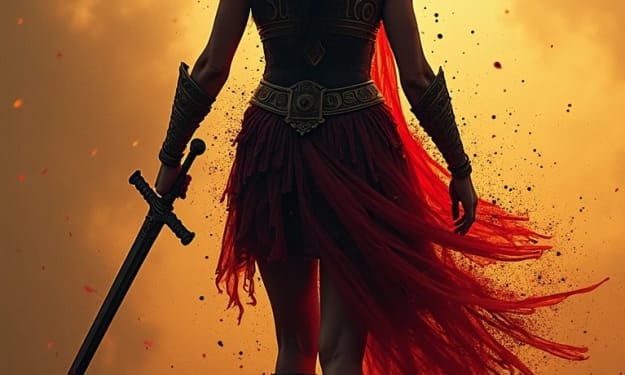
Art of War in Action
The recent militant attack on tourists in Kashmir on April 22, 2025, which claimed 26 lives, has reignited tensions between India and Pakistan, pushing their fragile relationship to the brink. India’s response swift, calculated, and diplomatic mirrors the timeless wisdom of Sun Tzu’s The Art of War.
By Tales by J.J.about a year ago in Journal
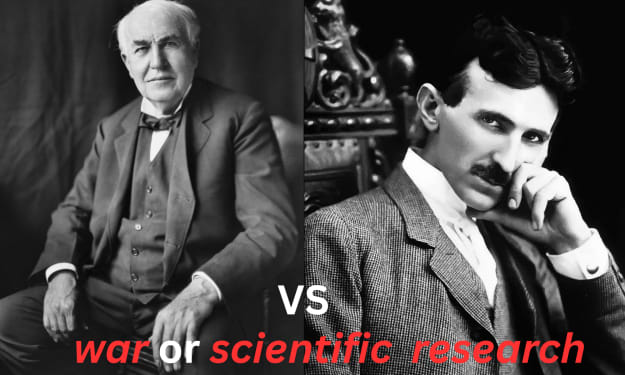
The Only War Which Gave Best Development to the World
In the chronicles of human innovation, few rivalries have been as electrifying—literally and figuratively—as that of Nikola Tesla and Thomas Edison. Their clash was not a war fought with weapons or armies, but with ideas, inventions, and an insatiable drive to power the world. It was a war of vision—one that birthed some of the most transformative technologies of the modern age. Though their methods, motives, and morals were vastly different, both men left behind a legacy that continues to shape our world. If history ever had a war that resulted in immense development rather than destruction, this was it.
By Doctor Strangeabout a year ago in Journal
Why Gen Z Is Redefining Success
For generations, the concept of success has been relatively straightforward: a stable job, a house with a white picket fence, a retirement fund, and perhaps a gold watch at the end of a long career. While Millennials began to challenge that dream, albeit reluctantly and frequently out of necessity due to economic conditions, Baby Boomers and Gen Xers were raised to pursue it. Now, with Generation Z entering the workforce in large numbers, the idea of what it means to be "successful" is being fundamentally rewritten.
By Minhaj Ul Hasanabout a year ago in Journal
The Journey Behind Madison Zhao’s Growing Net Worth
In today’s fast-paced world of fame and finance, Madison Zhao stands out as a figure whose success has been built on more than just spotlight moments. Her rising net worth is not the result of viral fame or a single lucky break—it’s a carefully crafted journey of talent, business acumen, and unshakable dedication.
By Madison Zhao Fan Pageabout a year ago in Journal
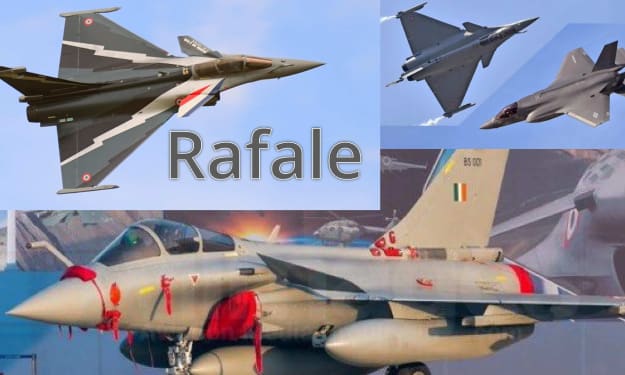
Flashpoint 2025: India and Pakistan Edge Toward Catastrophe
In May 2025, a familiar yet perilous scenario gripped South Asia. India and Pakistan—longstanding rivals and nuclear-armed neighbors—were once again locked in a volatile military standoff. The immediate trigger: a deadly terrorist attack in Indian-administered Kashmir that claimed the lives of 25 Hindu pilgrims, followed by an aggressive Indian airstrike inside Pakistani territory. Dubbed Operation Sindoor, the Indian response aimed to dismantle what New Delhi claimed were militant training camps across the Line of Control (LoC). Origins of the Conflict The attack on April 9, which targeted a bus carrying religious pilgrims, was widely condemned across India. Authorities linked the assailants to Pakistan-based militant outfits, including Jaish-e-Mohammed, a group historically known for attacks in Kashmir. As public pressure mounted, Indian Prime Minister Narendra Modi authorized a targeted air operation on May 7, 2025. The operation struck facilities in Pakistan-administered Kashmir and parts of Punjab province, claiming they harbored terrorist operatives. Pakistan responded swiftly, declaring the strikes an "act of war" and launching a military counteroffensive that included downing five Indian aircraft, according to Pakistani officials. Escalation and Retaliation The situation quickly spiraled. Pakistan’s Prime Minister vowed to "avenge each drop of blood," and border regions saw heavy artillery shelling from both sides. India remained defiant, stating it would continue defending its sovereignty and civilians from “cross-border terrorism.” While both nations have clashed before—most notably in 1999 (Kargil) and 2019 (Balakot)—the 2025 standoff has reached unprecedented intensity, involving airstrikes, drone incursions, and cyber warfare. Civilian casualties are mounting on both sides, and hundreds of thousands have been displaced from border areas. Nuclear Fears and Global Alarm What makes the 2025 conflict particularly dangerous is the nuclear shadow it casts. With India and Pakistan collectively holding over 250 nuclear warheads, any miscalculation could lead to catastrophic consequences. Experts from the Stockholm International Peace Research Institute (SIPRI) have warned that even a limited nuclear exchange could kill up to 125 million people and trigger a global climate disaster akin to a nuclear winter. In Washington, London, and Beijing, urgent diplomatic discussions are underway. The United States has called for immediate de-escalation, while China—Pakistan’s strategic ally—urged restraint but also warned India against “unilateral aggression.” Water as a Weapon As tensions soared, India made a controversial announcement: a review of the Indus Waters Treaty. Signed in 1960 and brokered by the World Bank, this treaty governs the sharing of six rivers in the Indus basin. India’s potential move to restrict water flow could cripple Pakistan’s agriculture and power generation, especially as summer approaches. Pakistan views any disruption to the water treaty as an existential threat, further inflaming the conflict. The Role of Media and Cyber Warfare In 2025, the war is also being fought on digital fronts. Disinformation campaigns, cyberattacks on infrastructure, and digital surveillance have intensified. Hackers reportedly breached banking systems and energy grids on both sides, adding a new dimension to modern warfare. Media in both countries has adopted a highly nationalistic tone, further polarizing public opinion and making de-escalation politically costly. Civilian Impact and Humanitarian Concerns The UN estimates that over 1.5 million people have already been displaced in Kashmir and border regions of Punjab. Hospitals are overwhelmed, food supplies are scarce in conflict zones, and a refugee crisis is brewing. International humanitarian organizations have appealed for safe corridors and ceasefire agreements to deliver aid. The Path Forward As of now, both countries remain entrenched in their positions. India demands Pakistan crack down on cross-border terrorism and extradite known fugitives. Pakistan insists on an immediate ceasefire and a return to international mediation on Kashmir. The global community faces a critical challenge: how to pressure both sides to step back without alienating them. Mediation by neutral powers or the UN could be the last remaining avenue to prevent a catastrophic war. Conclusion The 2025 India-Pakistan conflict is a stark reminder of how quickly old wounds can erupt into dangerous confrontations. With lives at stake and the specter of nuclear conflict looming, urgent diplomacy—not military might—is the need of the hour.
By Shah saab ITabout a year ago in Journal
Four women have accused Smokey Robinson of sexual abuse
Smokey Robinson, a legend in Motown, is being sued for $50 million for sexual assault by four former employees. Motown icon Smokey Robinson is facing a $50 million lawsuit filed by four former female employees who allege a pattern of sexual assault, harassment, and workplace abuse spanning nearly two decades. The 85-year-old singer is accused of rape, sexual battery, false imprisonment, and maintaining a hostile work environment in the lawsuit, which was filed in Los Angeles Superior Court. Allegations Detailed in the Lawsuit
By Tanvir Rahamanabout a year ago in Journal