heroes and villains
Heroes and Villains throughout history that have defined their industries and workflow as we know it today. Those we look up to, and those we learn mistakes from.
A FUN CONVERSATION WITH SARA YAHIA
Hi, I’m Sara Yahia. Let’s have a fun and light-hearted conversation in this article, where I answer some of the questions I’ve been receiving lately. Many of you are curious about the person behind the professional and personal layers.
By Sara Yahiaabout a year ago in Journal
La Belle Époque: A Journey to the Past Through the Lens of Love
La Belle Époque is a time-travel film—without actual time travel! Just as practical effects are created by hand on set without computer manipulation, this film stages time travel in a similar, theatrical way. No CGI-rendered futuristic worlds here, only a meticulously handcrafted recreation of the past. There’s no machine to whisk someone back in time, yet there exists a way to touch the past while remaining in the present. Sounds confusing? Let’s explore. Amid the relentless march of time, people—consciously or unconsciously—wish to return to the past, even if just for a moment. Sometimes it’s to change something, sometimes it’s to relive a feeling, to refresh a memory. As it’s not possible in reality, time travel enters the realm of imagination
By Riham Rahman about a year ago in Journal
Unanswered Questions from the Harry Potter Series | Part 2
A whole generation grew up under the magical spell of Harry Potter’s world. Amidst the sea of movies, series, and books, the luminous flame of the Harry Potter saga still burns brightly. Potterheads have wandered time and again through the courtyards of Hogwarts, cast their favorite spells with a flick of the wand, and experimented eagerly with various potions. Countless people, despite being mere Muggles, have sighed in frustration and dreamt of soaring through the sky on a broomstick in their childhood. Yet, within the pages and frames of these stories, there remain questions—questions that were never directly answered. This segment seeks to uncover those mysteries by combining logic, clues, and fan theories that have sparked curiosity over the years.
By Riham Rahman about a year ago in Journal
Unanswered Questions from the Harry Potter Series | Part 1
A whole generation has grown up enchanted by the magical memories of Harry Potter. Amidst the flood of movies, series, and books, the radiant flame of Harry Potter still shines bright. Potterheads have time and again traversed the boundaries of imagination, wandered the grounds of Hogwarts, cast their favorite spells with a flick of a wand, and eagerly dabbled with potions of all kinds. Countless muggles have sighed in frustration or dreamt of flying through the sky on a broomstick, their childhoods marked by that unfulfilled wish. But between the lines of the books and scenes of the movies, some questions remain unanswered. Today, we explore those lingering queries with logic and fan theories in tow
By Riham Rahman about a year ago in Journal
Silo: From Bestselling Science Fiction Book to TV Series
“We do not know why we are here. We do not know who built the Silo. We do not know why the world outside is how it is. We do not know when it will be safe to go out. We only know—today is not that day.” In a future scorched by ruin, where Earth breathes poison and silence treads where footsteps once echoed, A world once brimming now lies barren—lifeless, lost, and laced in mystery. But ten thousand souls endure, deep beneath the soil, In a Silo—an underground ark, a cold cathedral to survival, A dystopia painted with order, yet veiled in secrets untold. No one knows how they arrived here. No one knows who forged these iron walls. No one knows what lies beyond the dust-blurred lens of the lone cafeteria screen. Is the world outside truly dead—or just a lie too long believed? Curiosity is a crime. History is forbidden. To question is to betray. To seek is to sin. And punishment comes swift: Exile, to “clean” the sensors—to vanish beneath the toxic sky.
By Riham Rahman about a year ago in Journal
Israel–Gaza Conflict Escalates
The conflict between Israel and Hamas in the Gaza Strip has intensified dramatically, following a declaration by Israeli Prime Minister Benjamin Netanyahu that his government plans to launch a large-scale military operation. The proposed campaign, which includes the relocation of civilians within Gaza “for their protection,” has raised alarm globally and sparked heated debate across diplomatic and humanitarian circles.
By Masood Zahidabout a year ago in Journal
Netanyahu Vows Retaliation After Houthi Missile Strike Near Israel’s Main Airport: A Growing Sense of Regional Siege. AI-Generated.
Tensions in Israel reached a new peak on Sunday morning after a missile launched by Yemen's Iran-backed Houthi rebels struck close to the heart of the nation’s air traffic system — Ben Gurion International Airport. The attack, which injured six people according to local reports, has sent shockwaves through both the Israeli public and government, with Prime Minister Benjamin Netanyahu vowing a forceful response.
By ASHIKUR RAHMAN ASHIKabout a year ago in Journal
Top Social Media Trends to Watch in 2025
Social media is changing faster than ever before. With new platforms, technologies, and user habits emerging, businesses and content creators need to stay ahead of the curve. In 2025, the social media landscape will be more dynamic, personal, and interactive. Whether you are a digital marketer, influencer, or just a curious user, understanding these top social media trends can help you grow your brand, engage your audience, and increase your online presence.
By CodeCraft By Rashidabout a year ago in Journal
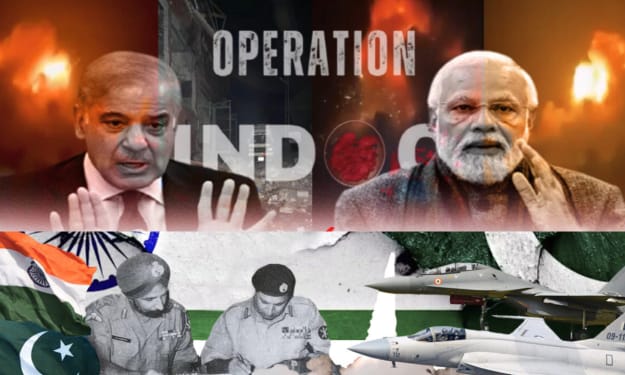
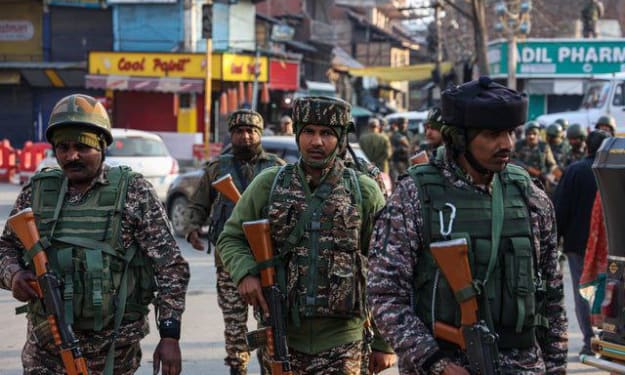
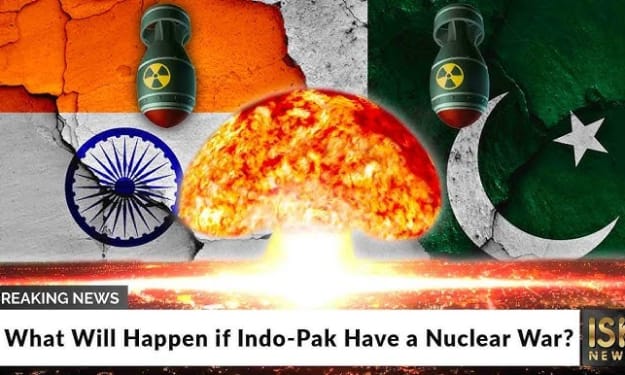
On the Brink: India-Pakistan Tensions Escalate Amid Nuclear Fears
By Ahmad Dost Published: May 3, 2025 A Deadly Attack and an Explosive Aftermath On April 22, 2025, a serene morning in Pahalgam, a popular tourist destination in Indian-administered Kashmir, was shattered by a brutal militant assault that left 26 dead and dozens injured. The victims, mostly Hindu pilgrims and Indian tourists, were caught in a sudden hail of gunfire from unidentified gunmen. The Indian government, without hesitation, pinned the blame on the Islamic Resistance Front—an outfit allegedly linked to the Pakistan-based group Lashkar-e-Taiba.
By Ahmad Dostabout a year ago in Journal
The Untold Aspects of The Lord of the Rings Trilogy Pt.2
Last part 8. Avatar (2009) drew significant inspiration from The Lord of the Rings trilogy. How? Let’s explain. In 1994, James Cameron had already completed about 80% of the conceptual work for Avatar. However, due to the limitations of visual effects at the time, he didn’t feel confident enough to begin production. Lacking advanced CGI and VFX, he decided to wait patiently for technological advancements. In 2002, after witnessing the CGI and motion capture used for Gollum in The Two Towers, Cameron was blown away. He realized the time had finally come to bring his dream project to life. And so, he jumped in headfirst to make it happen. 9. The legendary rock band The Beatles were huge fans of the franchise. They once wanted to make a Lord of the Rings movie with acclaimed director Stanley Kubrick. The plan was for Paul McCartney to play Frodo, Ringo Starr as Sam, George Harrison as Gandalf, and John Lennon as Gollum. The Beatles; Image Source: Alamy 11. Let’s now talk about Tolkien’s created universe. Many refer to this universe as Middle-earth, which isn’t entirely accurate. Middle-earth is actually a continent on the planet Arda, which itself is a part of the universe called Eä. The entire Lord of the Rings universe was born from the music of a divine being named Eru Ilúvatar. These divine creations, known as the Ainur, were responsible for shaping various elements of this universe. 12. The Lord of the Rings franchise features a total of seven constructed languages. Tolkien, a philologist and professor of English at the University of Leeds, created each of these languages with distinct grammatical structures. The most notable include the Elvish languages Sindarin and Quenya, Sauron’s Black Speech, the Valar’s language, Entish, and the Dwarvish secret language Khuzdul. Each language has a written grammar, allowing them to be used in real life by dedicated fans. Many assume Tolkien invented the languages for the story. In fact, it was the other way around—he created the languages first, and later built the stories around them. Quenya was developed in 1917, about 20 years before The Hobbit was published. Later, Tolkien went on to complete The Lord of the Rings and The Silmarillion. Quenya was inspired by the rare Finnish language of ancient England, while Sindarin drew influence from Welsh. Quenya was used by the High Elves of Valinor, while the Grey Elves and educated men like Aragorn in Middle-earth spoke Sindarin. 13. At the end of The Fellowship of the Ring, we see the fiery demon Balrog. Interestingly, Balrog, Gandalf, and Sauron all come from the same ancient origin. They were part of a race known as the Maiar, spiritual beings with shape-shifting powers, created by the god-like Valar to help shape the world. However, a division among the Valar caused Sauron and Balrog to side with evil, while Gandalf chose the path of good. Balrog; Image Source: New Line Cinema 14. The box office success of The Lord of the Rings trilogy was staggering. Each film had an average budget of around $93 million. Yet each one earned approximately $970 million globally, bringing in about ten times the investment. In total, the trilogy grossed around $2.9 billion worldwide, dominating the box office like a tornado. To this day, no film has broken its Oscar record. The Fellowship of the Ring won four Academy Awards, The Two Towers won two, and the final installment The Return of the King won eleven. Incredibly, The Return of the King won every single one of its eleven nominations—an exceptionally rare feat in Oscar history. Even after more than two decades, the trilogy’s popularity remains as strong as ever. The End!
By Riham Rahman about a year ago in Journal