economy
Economy and the area of production, distribution, trade, and consumption of goods and services.
Art of War in Action
The recent militant attack on tourists in Kashmir on April 22, 2025, which claimed 26 lives, has reignited tensions between India and Pakistan, pushing their fragile relationship to the brink. India’s response swift, calculated, and diplomatic mirrors the timeless wisdom of Sun Tzu’s The Art of War.
By Tales by J.J.about a year ago in Journal
HOW TO EARN ONLINE
Are you searching for a simple and effective way to start earning money from home without any complicated technical skills or big investments? Data entry is one of the easiest ways to start working online and making a steady income. With just a computer or laptop and an internet connection, you can turn your free time into productive work and generate money by completing simple typing tasks. The best part is that data entry does not require any professional degree or high-level experience. If you can type and follow instructions accurately, you already have the basic tools to succeed in this field. In this guide, we will explore everything you need to know about earning online through data entry, including what it is, how to get started, where to find real jobs, how to grow your skills, and how to build a long-term career from it.
By MAROOF KHANabout a year ago in Journal
The Hidden Cost of Cheap: Why Saving Money Could Be Making You Poorer
You see a deal. You compare prices. You go for the cheapest option — because saving money feels like a win. But here’s the twist: **cheap can be expensive**. Over time, those “savings” can cost you more — in replacements, frustration, missed opportunities, and even your health. Let’s unpack the **hidden cost of cheap** — and how it might be sabotaging your financial growth. --- ### 1. **Cheap Products Break Faster** That $15 pair of shoes? It wears out in two months. The $30 headphones? Crackling in one ear after a few weeks. You think you’re saving, but when you buy low-quality items over and over, the **replacement cost adds up** — fast. Suddenly, the item you thought was a great deal has cost you 3x more than if you’d bought a quality version upfront. **Smart move:** Buy once, cry once. Invest in durable, well-reviewed essentials — especially for things you use every day. You'll save money, frustration, and time in the long run. --- ### 2. **Cheap Choices Waste Your Time** Free software crashes. Budget flights get delayed. Discount services come with poor support or endless ads. Every time you deal with these issues, you’re not just losing convenience — you’re losing **valuable hours** of your life. And your time? It’s your most limited and valuable resource. **Smart move:** Factor your time into financial decisions. If saving $20 costs you 3 hours of stress, missed deadlines, or rework, it’s not a bargain — it’s a loss. --- ### 3. **Cheap Food Hurts Your Health** We all love a quick snack or $1 burger. But long-term? That convenience food can destroy your focus, energy, and health. Ultra-processed food is linked to obesity, fatigue, mood swings, and chronic illness. That “cheap” dinner could cost you thousands in medical bills — or worse, your quality of life. **Smart move:** Spend more on real, whole foods. Choose fresh produce, lean proteins, and less-processed meals. It’s not a diet — it’s fuel for a better life. --- ### 4. **Cheap Mindsets Block Wealth** Always asking, “What’s the cheapest?” keeps you stuck in **survival mode**. It teaches you to shrink, settle, and avoid risks. But real wealth is built on **value creation**, not penny-pinching. Cheap thinking avoids investing, skips opportunities, and says “no” to growth. **Smart move:** Shift from “What’s the cheapest?” to “What creates the most value over time?” Learn to recognize smart investments — even when they cost more upfront. --- ### 5. **Cheap Living Kills Personal Growth** You skip that course. You don’t buy the tools. You underprice your services because you think others won’t pay more. The result? - You don’t grow. - You stay stuck. - You lose out on better clients, better income, better results. **Smart move:** Invest in growth. That could be courses, books, mentors, software, or coaching. Growth has ROI — and staying stuck has a cost. --- ### 6. **Cheap Isn’t Always Ethical** That $5 shirt? Someone might be working 16-hour shifts in poor conditions to make it. Those super-cheap electronics? They could be made with environmentally harmful practices. When prices are *too* low, it’s worth asking: **who’s paying the real price?** **Smart move:** Support brands that treat workers well, minimize environmental damage, and stand by quality. It’s not just spending — it’s voting with your wallet. --- ### 7. **Being Cheap Can Hurt Your Relationships** Ever been around someone who: - Never pitches in for group gifts? - Skips their round at dinner? - Tracks every cent owed in a friendship? That kind of behavior may save money — but it costs **trust, generosity, and connection**. **Smart move:** Be generous where it matters. Show up for people. Contribute without being petty. Relationships are built on shared effort — not split pennies. --- ### 8. **Cheap Choices Limit Your Confidence** Living cheaply can create a subconscious narrative: “I can’t afford better.” “I’m not worth more.” “I should settle.” Over time, that mindset chips away at your self-esteem and how you carry yourself in the world. **Smart move:** Make at least one “premium” choice for yourself. Dress well. Buy the better tool. Stay in a nicer place. Prove to yourself that you’re worth quality. --- ### 9. **Cheap Habits Kill Long-Term Savings** Ironically, constantly going for the cheapest option can **burn through your money** faster. Cheap tools break. Cheap subscriptions add up. Cheap decisions cause mistakes that require paid fixes. **Smart move:** Track your “cheap” purchases and how often they need to be replaced. You’ll quickly see where spending more once could’ve saved you hundreds. --- ### 10. **Cheap Keeps You in Survival Mode** If you're always pinching pennies, you’re stuck reacting instead of creating. Your mind is focused on scarcity, not opportunity. You’re afraid of every dollar spent — instead of using money as a tool for expansion. **Smart move:** Budget for peace. Create an abundance mindset. Know when to spend and when to save — and don’t let fear control your wallet. --- ### Final Thoughts: Cheap Isn’t the Goal — Value Is Saving money feels good. But **being cheap and being wise are not the same**. Real financial freedom isn’t about hoarding dollars. It’s about **spending intentionally** — on things that matter, last, and grow. So the next time you reach for the cheapest option, pause and ask: “Is this saving me money… or silently costing me more?” Choose value. Choose growth. Choose better. Because cheap might save you today — But it could rob your tomorrow.
By SHADOW-WRITESabout a year ago in Journal
Pulwama attack 2019
February 14, 2019—the date has come to symbolize a dramatic turning point in India’s modern history. A suicide car bomb attack on a Central Reserve Police Force (CRPF) convoy in Lethpura area of Pulwama district in Jammu and Kashmir killed more than 40 jawans. An atmosphere of grief, anger and demands for revenge was created across India. A Pakistan-based militant group called Jaish-e-Mohammad claimed responsibility for the incident. Thus began a whirlwind in India’s security, diplomacy and politics—in which the lines between truth and falsehood became increasingly blurred.
By Abdul Barikabout a year ago in Journal
Tensions and Talks: Navigating the Fragile Peace between Pakistan and India
Tensions and Talks: Navigating the Fragile Peace Between Pakistan and India The relationship between Pakistan and India has been one of the most complex and volatile in South Asia, shaped by a history of partition, wars, territorial disputes, and deeply entrenched mistrust. As of 2025, while hostilities continue to linger—especially in the contested region of Kashmir—there is a cautiously emerging narrative of dialogue and diplomacy, driven by shared challenges and global pressure for peace in a rapidly changing world. Historical Tensions Resurfacing At the heart of the India-Pakistan conflict lies the decades-old dispute over Jammu and Kashmir. Since the partition in 1947, both countries have fought multiple wars and engaged in countless skirmishes over the region. In recent years, incidents along the Line of Control (LoC) have spiked, with frequent ceasefire violations leading to military and civilian casualties. The situation remains especially volatile due to the nuclear capabilities of both nations, which significantly raises the stakes in any confrontation. The revocation of Article 370 by India in 2019, which removed the special status of Jammu and Kashmir, was a turning point that deepened the divide between the two countries. Pakistan condemned the move and downgraded diplomatic ties. Since then, the diplomatic freeze has only deepened, with both nations engaging in tough rhetoric and closing many avenues of formal communication. The Shift in 2025: Cautious Optimism Amidst Tension However, despite these persistent tensions, 2025 has seen a subtle but noteworthy shift. Both countries face growing internal and external pressures that are pushing them toward exploring diplomatic options, even if informally. On the domestic front, both India and Pakistan are grappling with economic slowdowns, inflation, and increasing demands from their populations for stability, jobs, and development. Youth in both countries, who make up a significant portion of the population, are more interested in opportunities than conflict. There's a growing voice among civil society, media, and even some political figures advocating for a shift in narrative—from animosity to coexistence. Economic and Environmental Interdependence Another significant driver of potential cooperation is economic necessity. Both countries have suffered setbacks due to disrupted trade, which was once thriving in sectors like textiles, agriculture, and pharmaceuticals. Quiet efforts by business communities to reopen bilateral trade routes have gained traction, although official responses remain cautious. Restoring trade could benefit both sides, especially at a time when global supply chains are shifting and regional trade is becoming more attractive. Environmental issues are also playing a role in shifting priorities. The climate crisis has hit South Asia hard, with both countries facing severe floods, water scarcity, and extreme weather. The Indus Waters Treaty, which has survived even through times of war, remains a crucial tool for cooperation. Experts have urged both nations to expand on such frameworks to collaborate on climate resilience, water management, and disaster preparedness. International Pressure and Strategic Shifts On the global stage, the India-Pakistan rivalry continues to be viewed with concern, especially by countries and institutions that are invested in regional stability. The United Nations has repeatedly urged restraint and encouraged dialogue. At the same time, strategic shifts—such as India’s closer ties with the United States and Pakistan’s deepening relationship with China—have altered the diplomatic landscape. These changing alliances present new risks but also new avenues for mediation. The Gulf countries, which maintain strong economic and political ties with both nations, have emerged as potential back-channel mediators. Their interest in South Asia’s stability is driven by trade, labor migration, and investment goals. In 2025, reports of discreet talks facilitated by neutral countries have surfaced, though neither Islamabad nor New Delhi has publicly confirmed them. People-to-People Contact and Cultural Diplomacy While official diplomacy remains limited, people-to-people contact has slowly regained momentum. Cultural diplomacy—through music, films, sports, and literature—continues to play a quiet but important role in softening public perceptions. Cricket matches between India and Pakistan continue to capture the imagination of millions, serving as a temporary bridge in times of strife. Educational and academic exchanges, though limited, are also being explored. Online platforms have made it easier for scholars, students, and professionals to engage in discussions that promote mutual understanding. These exchanges are crucial in building a foundation for long-term peace. The Road Ahead: Challenges and Opportunities Despite these encouraging signs, significant challenges remain. Political will is the biggest obstacle. In both India and Pakistan, nationalist politics often capitalize on anti-neighbor rhetoric, particularly during election cycles. Misinformation, media sensationalism, and lack of trust continue to shape public opinion and restrict the space for diplomacy. However, the potential rewards of peace are immense. A stable India-Pakistan relationship could unlock economic prosperity, enhance regional security, and allow both countries to focus on development rather than defense. The path forward must include confidence-building measures—such as restoring diplomatic missions, establishing crisis communication hotlines, and resuming structured bilateral talks. International stakeholders can also play a constructive role by encouraging transparency, mediating tensions, and supporting joint initiatives in areas of mutual interest, like health, education, and climate. Conclusion In 2025, the relationship between Pakistan and India stands at a crossroads. While the shadows of history still loom large, shifting domestic priorities, economic interdependence, and international encouragement offer a narrow but real opportunity for a new chapter. Navigating this fragile peace will require vision, courage, and commitment—from leaders, institutions, and citizens alike. Only through sustained dialogue, trust-building, and cooperation can the two nations hope to turn conflict into coexistence and hostility into har
By zohaib khanabout a year ago in Journal
The Next Frontier in Logistics: AI-Driven Autonomous Operations
By 2025, global logistics is experiencing a revolutionary shift, powered by AI, automation, and robots. They are revolutionizing supply chains, making them cost-effective, efficient, and overall more reliable.
By Appvin Technologiesabout a year ago in Journal
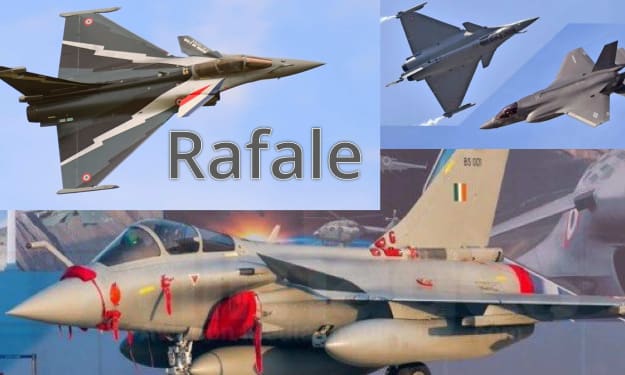
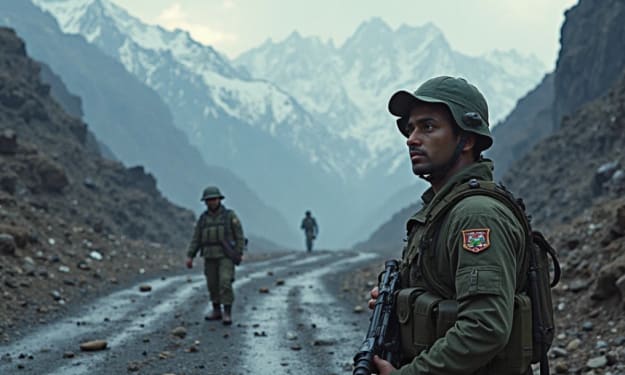
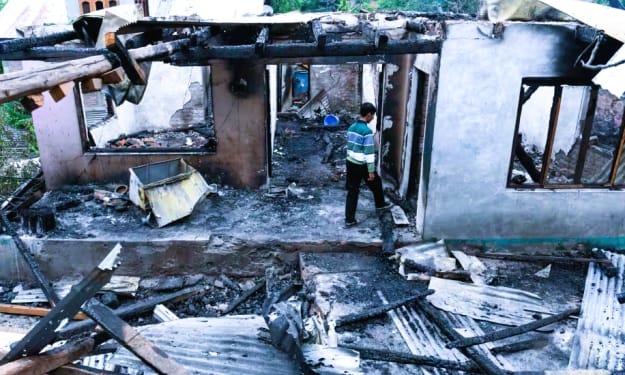
India and Pakistan on the Brink: Rising Tensions Threaten Nuclear Conflict. AI-Generated.
The longstanding tensions between India and Pakistan have once again escalated, with both nations engaging in military strikes and exchanging heated rhetoric. Concerns about the possibility of an all-out war between the two nuclear-armed neighbors have been raised worldwide due to the recent clashes. The situation remains volatile, with diplomatic efforts struggling to prevent further deterioration.
By Imaan Ahmed Karimabout a year ago in Journal
America, China, Russia's opinion on the India-Pakistan war US Position
Respected Sir, For your kind information, I would like to inform you that I have just tried to present a small news from my own talent on this site. If there is any inconsistency in my presentation, please forgive me. And if any of my information seems acceptable to you, then you must give me some advice on which I can learn something from you. I have presented my presentation below.
By Md. Rasel Ahmedabout a year ago in Journal