
Strawberry Moon 2026
When to Look Up and Witness Summer’s Most Beautiful Full Moon

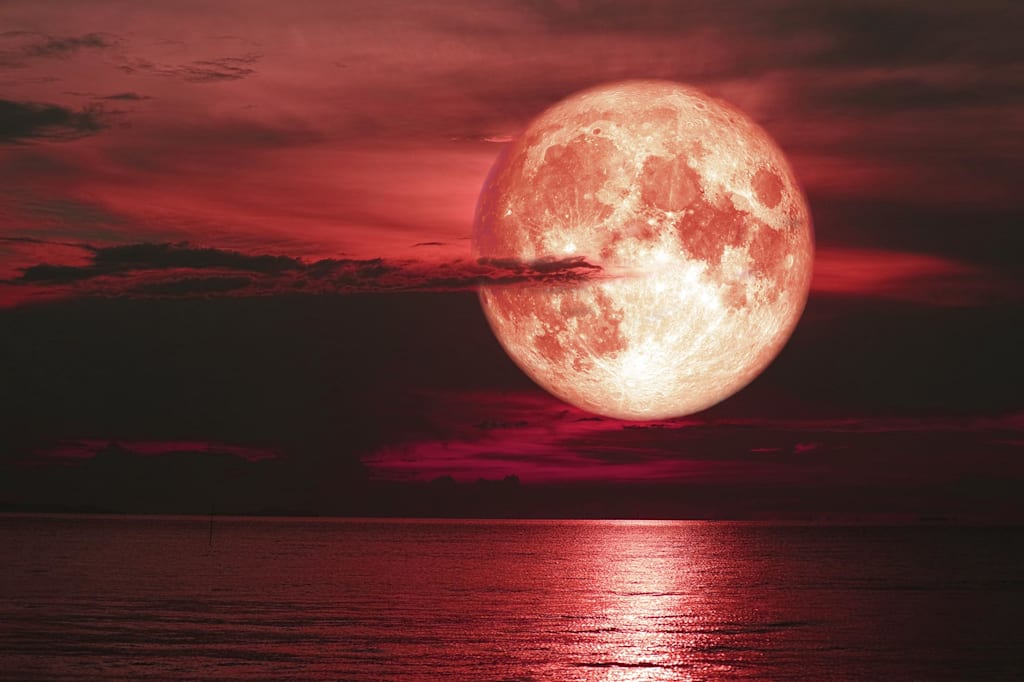
The Strawberry Moon will soon rise over the horizon, bathing the night sky in a soft glow and reminding us that nature still knows how to stop us in our tracks.
Every year, there are moments when the universe quietly demands our attention.
Not with noise.
Not with headlines.
Not with notifications.
But with beauty.
The Strawberry Moon 2026 is one of those moments.
On June 29, 2026, skywatchers across the United States and around the world will have the opportunity to witness one of the most celebrated full moons of the year. Known as the Strawberry Moon, June’s full moon carries centuries of cultural significance, seasonal symbolism, and astronomical wonder.
Contrary to what many first-time observers believe, the moon will not actually appear pink or red like a strawberry. Yet every year, millions of people search for information about the Strawberry Moon, hoping to understand its meaning, its origins, and the best ways to experience it.
This year's event is especially significant because it is the first full moon following the summer solstice, making it the first full moon of summer in the Northern Hemisphere.
Whether you're a dedicated astronomer, a casual stargazer, or simply someone who appreciates the beauty of the night sky, here's everything you need to know about the Strawberry Moon 2026, including when it peaks, why it's called the Strawberry Moon, its historical significance, and how to get the best viewing experience.
What Is the Strawberry Moon?
The Strawberry Moon is the traditional name given to the full moon that occurs in June.
Despite its colorful name, the moon does not transform into a giant strawberry in the sky.
The name originates from seasonal agricultural traditions rather than the moon's appearance.
For centuries, Indigenous peoples and farming communities used the lunar cycle as a natural calendar. Long before smartphones, weather apps, or printed calendars existed, people relied on the moon and stars to track seasons, planting schedules, migrations, and harvest periods.
The Strawberry Moon earned its name because June marked the time when wild strawberries ripened and became ready for harvest.
The name became widely associated with several Native American tribes, particularly the Algonquian peoples of northeastern North America, as well as the Ojibwe, Dakota, and Lakota nations.
For these communities, the moon wasn't merely an astronomical object.
It was a seasonal signal.
A reminder.
A marker of abundance.
A calendar written across the sky.
When Is the Strawberry Moon 2026?
The Strawberry Moon reaches its peak illumination on Monday, June 29, 2026, at 7:57 p.m. Eastern Time (ET).
Although this exact moment represents the moon's official peak, observers don't need to worry about catching it at that precise second.
One of the wonderful things about full moons is that they appear nearly full for several days before and after their peak.
This means you can enjoy the Strawberry Moon during:
- June 27
- June 28
- June 29
- June 30
- July 1
The moon will appear brilliantly illuminated throughout this period.
For most people, the best viewing experience occurs shortly after moonrise when the moon appears larger near the horizon.
This phenomenon, known as the Moon Illusion, makes the moon seem enormous compared to when it is higher in the sky.
Why Is the Strawberry Moon So Special?
Every full moon has its own story.
But the Strawberry Moon carries a unique emotional significance.
Think about where we are in the calendar.
Winter is behind us.
Spring is ending.
Summer has just begun.
The days are long.
The air is warm.
The world feels alive.
The Strawberry Moon arrives at a moment of abundance.
Fields are growing.
Gardens are thriving.
Nature is operating at full capacity.
In many cultures, the June full moon symbolizes:
- Growth
- Prosperity
- Fertility
- Renewal
- Abundance
- Harvest preparation
It's not merely an astronomical event.
It's a seasonal milestone.
A celestial reminder that the Earth has entered one of its most productive periods.
The History Behind the Strawberry Moon Name
The story of the Strawberry Moon stretches back centuries.
Long before modern astronomy gave us scientific names and classifications, people named full moons based on what was happening around them.
The moon served as a seasonal guide.
Communities observed patterns and assigned names that reflected local conditions.
For many Native American communities, June signaled strawberry harvesting season.
Wild strawberries would begin ripening across forests and fields.
The appearance of the full moon during this period became permanently associated with the fruit.
Over time, European settlers adopted many Indigenous moon names and incorporated them into almanacs and seasonal calendars.
Today, organizations such as the Old Farmer's Almanac continue to preserve and promote these traditional moon names.
The Strawberry Moon remains one of the most widely recognized and beloved full moon names in North America.
Does the Strawberry Moon Actually Look Pink?
This is perhaps the most frequently asked question every June.
The answer is simple:
No.
The Strawberry Moon does not normally appear pink, red, or strawberry-colored.
The nickname refers to the season rather than the moon's appearance.
However, there are occasions when the moon can take on reddish or orange hues.
This happens because of atmospheric conditions.
When the moon is low on the horizon, its light passes through more of Earth's atmosphere.
This filters shorter wavelengths of light and allows warmer colors to dominate.
As a result, observers may see:
- Orange moons
- Golden moons
- Amber moons
- Reddish moons
These colors are natural atmospheric effects and not directly related to the Strawberry Moon's name.
Why People Around the World Love Full Moons
There is something timeless about a full moon.
For thousands of years, human beings have looked up and felt the same sense of wonder.
Civilizations have risen and fallen beneath moonlight.
Empires have been built.
Stories have been told.
Poems have been written.
Songs have been sung.
And through it all, the moon has remained.
In many ways, the full moon is one of the few experiences that unites humanity.
Regardless of language, nationality, religion, or background, people everywhere can step outside and see the same moon.
That shared experience is increasingly rare in a fragmented world.
Perhaps that's why full moons continue to captivate us.
They remind us that some things remain bigger than ourselves.
Best Time to View the Strawberry Moon
If you want the most spectacular experience, timing matters.
Astronomers generally recommend watching the moon shortly after moonrise.
During this period:
- The moon appears larger.
- Colors are often more dramatic.
- Photography opportunities improve.
- Landscapes create beautiful foreground compositions.
The exact moonrise time depends on your location.
Check local astronomy apps or weather services for moonrise schedules in your area.
For many observers, the hour immediately following moonrise offers the most breathtaking views.
How to Get the Best View of the Strawberry Moon
You don't need expensive equipment.
You don't need a professional telescope.
You simply need the right conditions.
1. Check the Weather Forecast
Cloud cover is the biggest obstacle to moon viewing.
Before heading outside, check:
- Cloud forecasts
- Storm activity
- Humidity levels
- Visibility conditions
Clear skies dramatically improve the experience.
2. Find a Dark Location
Although the moon is bright, reducing artificial light helps.
Look for:
- Parks
- Beaches
- Countryside locations
- Elevated viewpoints
The farther you are from city lights, the better.
3. Arrive Early
Give yourself time to settle in.
Many experienced skywatchers arrive 30 to 60 minutes before moonrise.
This allows your eyes to adjust and helps you find the perfect viewing position.
4. Bring Comfortable Seating
Stargazing should be relaxing.
Consider bringing:
- Blankets
- Reclining chairs
- Sleeping bags
- Outdoor cushions
Comfort allows you to enjoy the experience longer.
5. Use Binoculars
While not necessary, binoculars reveal incredible details.
You'll notice:
- Lunar craters
- Surface shadows
- Mountain ranges
- Texture variations
Even inexpensive binoculars can dramatically enhance your view.
How to Photograph the Strawberry Moon
Social media fills with moon photos every year.
Yet capturing a stunning moon image requires some planning.
Use a Tripod
Camera shake ruins moon photographs.
A tripod provides stability.
Zoom In
The moon is smaller than many people expect through a camera lens.
Use optical zoom whenever possible.
Lower Exposure
The moon is bright.
Reducing exposure prevents overexposed images.
Include Foreground Objects
Photographs become more dramatic when you include:
- Trees
- Buildings
- Mountains
- Water
- Landmarks
These elements create scale and visual interest.
The Cultural Importance of Full Moons
The moon has inspired cultures across every continent.
Ancient civilizations often viewed the moon as:
- A deity
- A guide
- A symbol of fertility
- A marker of time
Throughout history, lunar cycles influenced:
- Agriculture
- Religious festivals
- Navigation
- Fishing
- Hunting
Even today, many cultural celebrations remain linked to lunar calendars.
The Strawberry Moon continues this ancient tradition, connecting modern observers to generations that came before.
Other Names for the Strawberry Moon
The Strawberry Moon isn't the only name associated with June's full moon.
Different cultures developed their own seasonal names.
According to traditional records, alternative names include:
Berries Ripen Moon
Reflecting the ripening of various fruits and berries.
Blooming Moon
Celebrating the abundance of flowers during early summer.
Green Corn Moon
Associated with the early growth stages of corn crops.
Hoer Moon
Linked to agricultural cultivation activities.
Birth Moon
Symbolizing renewal and new life during the growing season.
These names reveal something fascinating.
Different cultures observed the same moon but interpreted its significance through their own experiences and environments.
The Science Behind Full Moons
A full moon occurs when:
Earth sits between the Sun and Moon.
The Moon's Earth-facing side becomes fully illuminated.
Sunlight reflects directly toward Earth.
This alignment creates the bright circular appearance we associate with a full moon.
The lunar cycle takes approximately 29.5 days.
This means we experience a full moon roughly once each month.
Every full moon represents another chapter in a cosmic rhythm that has continued for billions of years.
Full Moon Myths and Misconceptions
Few celestial objects have inspired more myths than the moon.
Common beliefs include:
Does a Full Moon Affect Human Behavior?
Scientific evidence remains mixed.
While stories persist about increased activity during full moons, researchers have found limited proof of widespread behavioral changes.
Does the Moon Cause Strange Events?
Most extraordinary events attributed to full moons can usually be explained through coincidence and confirmation bias.
Are Full Moons Larger Than Normal?
Not usually.
The moon's size appears relatively constant, although the Moon Illusion can make it seem larger near the horizon.
Remaining Full Moons of 2026
After the Strawberry Moon, several exciting lunar events remain on the calendar.
Buck Moon
July 29, 2026
Peak: 10:36 a.m. ET
Sturgeon Moon
August 28, 2026
Peak: 12:18 a.m. ET
Features a partial lunar eclipse.
Harvest Moon
September 26, 2026
Peak: 12:49 p.m. ET
Hunter's Moon
October 26, 2026
Peak: 12:12 a.m. ET
Beaver Moon
November 24, 2026
Peak: 9:53 a.m. ET
Also classified as a supermoon.
Cold Moon
December 23, 2026
Peak: 8:28 p.m. ET
Another supermoon closes the year.
Why Events Like the Strawberry Moon Matter
In a world obsessed with speed, the moon operates on a different timetable.
Patient.
Predictable.
Ancient.
Every month it rises.
Every month it reminds us that nature's rhythms continue regardless of our schedules.
The Strawberry Moon is more than a celestial event.
It's an invitation.
An invitation to pause.
To look up.
To remember that despite our technology, our deadlines, and our endless scrolling, we remain connected to something far older and far greater than ourselves.
Final Thoughts: Don't Miss the Strawberry Moon 2026
The Strawberry Moon 2026 promises to be one of the most beautiful celestial events of the summer.
Peaking on June 29, 2026, at 7:57 p.m. ET, it marks the first full moon after the summer solstice and carries centuries of cultural and historical significance.
No, it won't look like a giant strawberry.
But it will offer something even more valuable.
Perspective.
Wonder.
A moment of stillness beneath a sky that has inspired humanity for generations.
So on June 29, step outside.
Leave your phone in your pocket for a few minutes.
Find a clear patch of sky.
And watch as the Strawberry Moon rises.
Because sometimes the universe doesn't need to say a word to leave a lasting impression.
About the Creator
Omasanjuwa Ogharandukun
I'm a passionate writer & blogger crafting inspiring stories from everyday life. Through vivid words and thoughtful insights, I spark conversations and ignite change—one post at a time.
Enjoyed the story? Support the Creator.
Subscribe for free to receive all their stories in your feed.
Comments
There are no comments for this story
Be the first to respond and start the conversation.