
Put the Stage Manager in the Graphic
Why the people holding the production together deserve to be named, especially on social media


There is a particular kind of theater post I have seen for years.
A show announcement goes up. Or a first rehearsal photo. Or a clean little “meet the team” graphic. The director is named. The music director is named. The choreographer is named. Sometimes the producer. Everybody is thanked for their artistry. Everybody is celebrated for their vision.
And somehow, once again, the stage manager is missing. As if the show is being held together by vibes, a Google Doc, and the power of friendship.
Not forgotten, exactly. That would almost be easier to excuse. More often, they are treated like someone whose credit can wait. Someone whose name belongs in the program, maybe, but not in the public-facing excitement. Not in the post. Not in the graphic. Not in the social media rollout where the creative team is introduced as though the room runs on inspiration alone.
I have never found that omission small.
Because it is not small.
It reveals something about what an organization sees, what it values, and who it instinctively thinks is worth naming when the lights are still bright and everyone is celebrating process. It reveals whether the stage manager is understood as central to the work or merely adjacent to it. And after years of pushing organizations to change this through actual practice and policy, I can say with complete confidence that this is not some impossible standard. It is entirely achievable. Even in community theater. Especially in community theater.
In fact, community theater has even less excuse.
Because this is not about budget. It is not about staffing capacity. It is not about needing a larger grant or a bigger media team. It is about whether, when someone makes a graphic or writes a caption, they think to include the person who is helping hold the production together.

And stage managers do hold productions together.
Not metaphorically. Literally.
They are often the connective tissue of the room. The keeper of information. The anchor of rehearsal. The person tracking changes, calling cues, maintaining order, documenting movement, facilitating communication, protecting process, and carrying the production from the hopeful chaos of rehearsal into the terrifying precision of performance. They are often the first to arrive, the last to leave, and the one most responsible for continuity once the show opens and the rest of the artistic staff steps back.
Theater loves to romanticize vision. Stage managers deal in reality.
Vision is wonderful. Vision also forgets a prop table, misses a preset, and asks what page we are on.
And that reality is the reason the vision survives contact with actual production.
A good stage manager notices everything. The scene change that has started drifting. The prop that keeps disappearing. The actor who needs a check-in. The timing problem no one else has clocked yet. The costume issue that will become a backstage emergency in three days if no one names it now. The line note, the spike mark, the safety concern, the communication gap, the cue sequence, the emotional temperature of the room. They notice what is slipping, what is working, what needs follow-up, and what cannot be allowed to break.
And they do all of that while somehow still being expected, in many spaces, to disappear socially from the public story of the production.
That disconnect has always bothered me. You cannot call someone the backbone of the show and then market the production like their name was lost in a tragic Canva accident.
We say stage managers are essential. We call them the backbone of the show. We say we could not do it without them. Then too often we build publicity that suggests exactly the opposite. We create public narratives about who is “leading” the production that somehow leave out the person managing the room, shaping the process, and carrying the show once it belongs to the stage.
That is not just an oversight. It is a habit. And habits say things.
One of the things this habit says is that some labor in theater still reads as more glamorous, more legible, more worth celebrating than other labor. Direction reads as artistic leadership. Choreography reads as artistry. Music direction reads as specialized brilliance. All true. But stage management, because it is so often coded as logistical, administrative, or operational, gets flattened in the public imagination, even though anyone who has actually made theater knows the job is deeply artistic, deeply interpersonal, and often the difference between a process that functions and one that quietly falls apart.
There is also, if we are being honest, a status issue buried in this.
Stage managers are frequently expected to carry enormous authority in practice while receiving selective visibility in recognition. They are trusted to maintain the structure of the room, but not always treated like part of the leadership image of the production. They are expected to solve problems without ego, guide process without fanfare, and keep the machine running while others are introduced as the faces of the work.
That should bother more people than it does.
And no, this is not a call to turn every social media post into a full production packet. Not every advertisement needs every name. That is not the point. The point is appropriateness and pattern. If you are naming the creative team, the stage manager belongs there. If you are introducing the people leading the room, the stage manager belongs there. If you are celebrating the production process, the stage manager belongs in that celebration not as an afterthought, but as part of the actual story of how the work gets made.
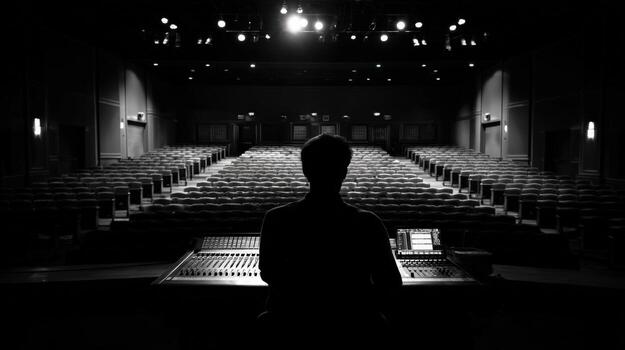
Put simply: if there is room for the director, there is room for the stage manager. The graphic will survive. I promise.
I have spent years pressing this issue with organizations, with success, and not in the abstract. I have pushed for it in practice. In standards. In policy language. In conversations about what gets posted, who gets credited, and what the public-facing culture of a company communicates. I have seen organizations adopt the practice and survive just fine. More than fine, actually. They become more accurate. More generous. More reflective of how theater is really made.
And once an organization starts doing it consistently, it stops feeling radical almost immediately. It simply feels correct.
That is usually the clearest sign a change was overdue.
Because this is not some burdensome reform. It is a naming practice. A crediting practice. A respect practice. It asks almost nothing except awareness, consistency, and the willingness to stop reproducing a hierarchy of visibility that never made much sense in the first place.
It also matters for younger artists.
Because social media teaches. Advertising teaches. Public-facing language teaches. It tells emerging theatermakers what roles are valued, what positions are visible, and whose work gets framed as central before anyone even enters the room. When stage managers are regularly omitted from those narratives, people absorb that omission. They learn, subtly but clearly, that stage management is indispensable in labor but optional in recognition.
That is a terrible lesson.
Especially in an art form where the stage manager is often the only person who actually knows where everyone is supposed to be and when.
Especially because so many great stage managers are the reason young artists survive their first experiences in theater at all.
They are often the calmest person in the room. The clearest communicator. The one who explains the process without condescension. The one who notices when someone is overwhelmed, confused, or falling through the cracks. The one who makes a room feel held. That is leadership. It may not be the flashiest kind, but theater would be healthier if it learned to prize that kind of leadership more openly.
And to be fair, some organizations already do this well. Some theaters regularly credit stage managers in season graphics, team announcements, rehearsal posts, and production materials. Some understand instinctively that if you are presenting the people shaping the production, the stage manager is not optional. Those organizations deserve credit. They prove this is not difficult. They prove it is a choice.
Which means the continued omission elsewhere is also a choice.
Community theater, especially, should take this seriously. Community theater often runs on volunteer labor, deep commitment, and people giving extraordinary time and skill because they care about the work. That should make crediting practices more thoughtful, not less. If anything, community theater should be leading here. It is absolutely possible to build graphics, captions, and policies that name stage managers appropriately. It costs nothing except the willingness to treat the role with the visibility it has already earned.
No one is asking you to carve a marble monument in the lobby. We are talking about a tag, a line of text, a basic public acknowledgment that the person calling the show exists.
And that visibility matters.
Not because stage managers need flattery. Not because every post must become a parade of credits. But because naming people correctly is part of building a culture that understands its own work. It is part of telling the truth about who makes theater happen. It is part of refusing the lazy story that productions are driven only by the most outwardly artistic or publicly legible roles.
Stage managers are not background machinery. They are not just support staff hovering at the edges of artistry. They are often among the people most responsible for translating intention into execution, chaos into rhythm, and a room full of moving parts into something that can actually live in front of an audience.
So yes, I am saying it plainly: put the stage manager in the graphic.
Put them in the post. Put them in the announcement. Put them in the social media rollout. Put them where the truth already says they belong.
Because theater is collaborative, and our public language should start acting like it.

About the Creator
Jason Hair-Wynn
Theatre artist, director, choreographer, and arts leader writing on accountability, equity, and culture in the performing arts, with a deep belief in storytelling, truth, and spaces rooted in care. And some travel content along the way
Enjoyed the story? Support the Creator.
Subscribe for free to receive all their stories in your feed. You could also become a paid subscriber, letting them know you appreciate their work.
Comments
There are no comments for this story
Be the first to respond and start the conversation.