
Japan’s Bankruptcy Wave: 5,373 Companies Failed in Six Months
A decade of zero interest rates is coming due. The bill is being paid in shuttered shops and dead companies.
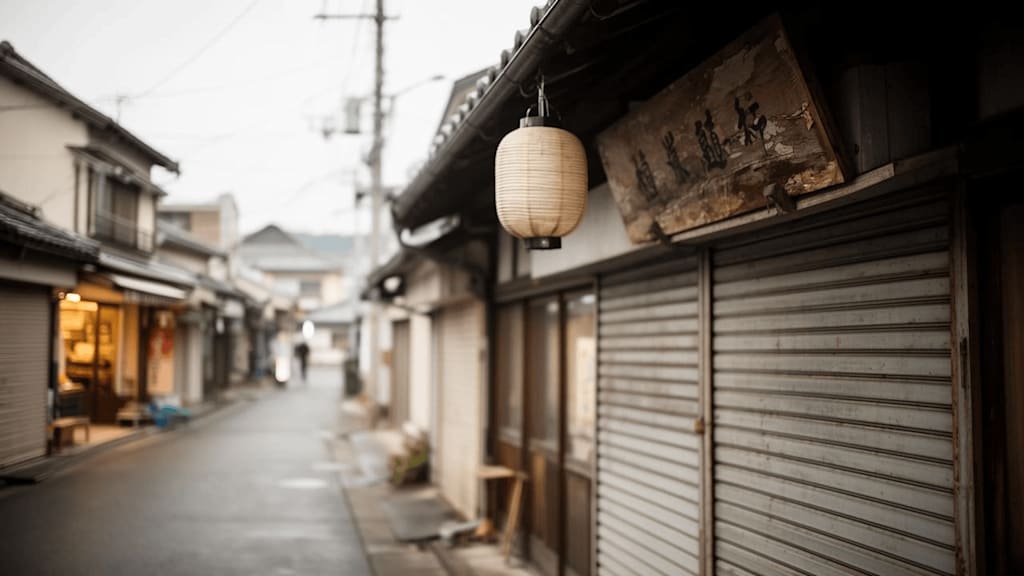
On October 8, Tokyo Shoko Research released a set of figures.
In the first half of fiscal 2026, from April to September, 5,373 Japanese companies with liabilities of 10 million yen or more went bankrupt. That was up 3.8% year on year, the highest in 13 years.
Total liabilities involved came to 856.169 billion yen, up 23.5% year on year.
Among them, companies with liabilities under 100 million yen accounted for 77%. Companies with fewer than 10 employees accounted for 90.6%.
From January to August, 112 companies with more than 100 years of history entered legal bankruptcy proceedings.
One
Japanese companies had grown used to zero-cost money.
They receive an order, buy materials, pay wages, and organize production. After delivery, they wait for the customer to pay. From the moment money goes out to the moment it comes back, someone has to front the cash. If their own funds are not enough, they borrow from a bank.
Money itself is a production cost.
When interest rates rise, a company doing the same business with the same money must pay an extra “rent on money.” More importantly, the amount borrowed is also rising. Raw materials cost more, so the same batch of goods requires more upfront purchasing cash. Wages are rising, so the same production cycle requires more cash set aside for payroll.
These outlays come before sales are collected. The gap can only be filled by more working-capital loans.
If business weakens, inventory sells more slowly and customers pay later. Companies then face two things at once: higher loan rates and longer cash occupation. Borrowing that was supposed to be repaid from sales receipts can only keep rolling over.
Then banks reassess risk. Profits fall, debt-servicing indicators deteriorate, and credit spreads in new loan quotes may widen.
Banks tighten exactly when borrowers need working capital most.
The Bank of Japan raised its policy rate to about 1.25%, the highest since 1995. Teikoku Databank estimates that if rates rise another 0.25 percentage points, each company will pay an average of 460,000 yen more in annual interest, and ordinary profit will fall by 1.9% on average.
In September 2026, the small and midsize enterprise borrowing rate judgment index rose from +61 in June to +70. The share of firms reporting rising rates held a clearer advantage over those reporting falling rates.
Even if the next rate hike is spaced further out, past hikes will still show up in corporate bills as loans are repriced and rolled over.
Two
Costs are rising. But whether they can be passed on is another matter.
In a July 2026 Teikoku Databank survey, 10,518 companies gave valid responses. The overall price pass-through rate was 39.9%. For restaurants, it was 28.7%. Only 3.4% of companies could pass on all new costs.
More than 60% of cost increases were absorbed by companies themselves.
According to Tokyo Shoko Research, in the first half of fiscal 2026, 436 companies went bankrupt due to price increases, up 17.8% year on year. Of those, 63.9% had capital of less than 10 million yen.
The first to fold were small companies with thin reserves and weak bargaining power. They cannot lower purchase prices through scale like large companies, nor raise prices freely like brand-name companies. Caught between rising costs and flat selling prices, they lose money slowly.
Three
Labor shortage is not a new problem. But its consequences are changing.
September data from Japan’s Ministry of Internal Affairs and Communications showed that people aged 65 and over accounted for 29.6% of the population, a record high. In Teikoku Databank’s July survey, 51.3% of responding companies said they did not have enough regular employees.
Hiring is one problem. Paying enough to keep people is the bigger one.
From October 2026, minimum wages were adjusted across Japan. The national weighted average hourly wage reached 1,177 yen, up 56 yen from the previous year, a rise of about 5%. To absorb this, companies can only raise per capita output, improve product mix, or raise prices.
Few can.
According to Tokyo Shoko Research, from April to September 2026, 240 companies went bankrupt due to labor shortages, up 17.0% year on year, the highest for the comparable period since the survey began. Among them, 130 went bankrupt due to rising labor costs, up 75.6% year on year, more than half of all labor-shortage-related bankruptcies.
Bankruptcies due to inability to find a successor reached 263, up 23.4% year on year, also a record high.
Labor shortage now kills companies. It is no longer only an operating difficulty.
Four
Zombie companies are the part of this bankruptcy wave that gets least attention.
The definition used by the Bank for International Settlements: a company established more than 10 years ago whose interest coverage ratio has been below 1 for three consecutive years. In other words, its operating profit is not even enough to cover bank interest.
In the first half of the year, Teikoku Databank counted 251,000 zombie companies in Japan, 17.1% of all Japanese companies.
They survived on near-zero interest rates over the past decade and the “zero-zero loans” issued by the government during the pandemic: zero interest, zero collateral.
Teikoku Databank ran a stress test. If corporate borrowing rates rise by 0.25%, the average annual interest burden for each zombie company increases by about 640,000 yen.
640,000 yen. For a company already losing money, that is the last straw.
Income covers daily operations, loans pile up high, and capital buffers are thin. After interest rises, even less money is available to repay principal and update equipment.
Among zombie companies, about 36,000 simultaneously have recurring losses, excessive debt, and insolvency. That is 17.2% of all zombie companies.
Zhang Yulai, vice dean of the Institute of Japanese Studies at Nankai University, points out that after the policy rate rose to 1%, financing costs increased, and zombie companies that had relied on low rates began to go bankrupt en masse.
The Bank of Japan’s rate hikes are repaying the debt of more than a decade of ultra-loose policy.
Five
A weak yen pushes up the cost of imported energy and raw materials. Imported inflation further squeezes small and midsize enterprise profits.
In the first half of 2026, 45 companies went bankrupt due to yen depreciation, up 32.3% year on year, the highest for the comparable period. Wholesale accounted for 51.1%.
Bank of Japan data for August showed the domestic corporate goods price index rose 7.6% year on year, while the yen-denominated import price index rose 24.8% year on year. Both fell 0.2% and 3.0% month on month, respectively, in that month, but procurement prices remained clearly higher than a year earlier.
Upstream price increases must ultimately be borne by someone. If companies absorb them, profits shrink. If companies pass them on, consumers pay more.
For small and midsize enterprises lacking bargaining power, absorbing is the norm. Passing on is a luxury.
Six
The Bank of Japan is not indifferent. But it faces an almost unsolvable situation.
In a February 2026 Tokyo Shoko Research survey of 5,170 companies, 59.6% wanted the policy rate to stay unchanged over the next year, and 23.6% wanted a cut. At that time the policy rate was still 0.75%. It has now risen to 1.25%.
Higher interest leads companies to cut equipment investment. More bankruptcies lead banks to re-examine loan risk. If these changes become widespread enough, they will eventually push down consumption, investment, and inflation, weakening the case for further rate hikes.
But stopping rate hikes also has costs.
Japan’s August core CPI, excluding fresh food, rose 1.7% year on year. Excluding fresh food and energy, it rose 1.9%. Consumer inflation is near the central bank’s target, but upstream costs and future price expectations remain high.
Bank of Japan data for August showed the domestic corporate goods price index rose 7.6% year on year, and the yen-denominated import price index rose 24.8% year on year.
If rate hikes end too early, the yen will come under pressure again, and the yen cost of imported energy and raw materials will be even harder to lower. To save companies a little interest, they end up paying more for imports.
Companies’ own expectations for future prices have also not returned to a low-inflation state. In the September survey, companies expected general prices to rise 2.6% on average one year ahead and three years ahead, and 2.5% five years ahead.
Using the one-year expectation as a rough reference, a 1.25% policy rate minus 2.6% gives a real policy rate of about -1.35%.
The September meeting opinion summary was clear: with prices moving toward target and financial conditions still loose, rates should continue to be adjusted; if prices show signs of upward deviation, the pace may need to accelerate.
As long as input costs, inflation expectations, and overall financing conditions do not clearly turn, the Bank of Japan will find it hard to declare an end to rate hikes simply because bankruptcies are increasing.
Seven
In August, Tokyo Shoko Research released a study.
It selected the 2025 financial data of 321,953 small and midsize enterprises with interest-bearing debt. Holding other financial items constant, it simultaneously raised estimated rates paid and received on interest to observe changes in profits.
If rates rise 0.5%, the share of loss-making companies rises from 27.7% to 29.4%. If rates rise 1%, it rises to 31.0%.
Based on the published ratios, the net increase in loss-making companies in the sample would be about 5,500 and 10,600, respectively.
Profits are eaten away, cash reserves are depleted, and maturing debt becomes harder to roll over. Eventually one payment cannot be made, and the company falls.
Among zombie companies, about 36,000 simultaneously have recurring losses, excessive debt, and insolvency. These companies already lack profit and capital buffers. Further interest expense compresses their room to maneuver.
Thin-margin companies are pushed into loss. Already struggling companies burn through cash faster.
Together, the two push the bankruptcy wave wider.
In the coming quarters, the risk of further increases in Japanese corporate bankruptcies is high. It is especially concentrated in companies with thin cash reserves, interest coverage ratios near or below 1, and no pricing power.
Further rate hikes will increase this pressure. The speed of transmission depends on loan repricing and how long cash reserves can last.
To slow this trend, there must be substantive improvement beyond financing pressure: import costs falling, companies recovering more of their new costs, or debt restructuring lowering periodic repayment burdens.
Even if rate hikes pause, the costs and debt already incurred will not disappear automatically.
Eight
The Bank of Japan faces this bind:
Rate hikes will expose some companies’ debt-servicing problems faster. Easing too early may let currency and price pressures hurt corporate profits again.
The dilemma is how expensive money can be for an economy that has accumulated massive debt.
Global debt is at record levels. Japan is not the only country that has to answer this.
No policy rate satisfies both sides.
About the Creator
Jin
Writer of reamstories
https://reamstories.com/jin
Enjoyed the story? Support the Creator.
Subscribe for free to receive all their stories in your feed. You could also become a paid subscriber, letting them know you appreciate their work.
Comments
There are no comments for this story
Be the first to respond and start the conversation.