
Costuming Bodies Should Not Be This Harmful
What theater reveals when actors who are not a standard size are treated like a problem to solve


There are few places in theater where carelessnes becomes intimate faster than the costume fitting.
A person steps into a room already vulnerable. Already visible. Already being asked, in one way or another, to let their body be handled, assessed, discussed, measured, shaped, fastened, altered, and made useful to a production. That process can be collaborative. It can be affirming. It can be deeply respectful. Done well, costuming can help an actor feel seen, held, and supported in the world of the show.
Done badly, it can humiliate with surgical precision.
And over the years, I have heard and seen far too many examples of the latter, especially when the actor in question is not a so-called standard size.
I have heard costumers say things like, “I don’t dress fat people.”
I have seen actors made to feel like their body was an obstacle before the fitting had even begun. I have seen people told to stand still while someone circled the shape of their body as if outlining a problem. I have seen actors measured carefully, only to be handed costume pieces that were obscenely too large anyway, not because that was the right fit, but because it was apparently the best someone could be bothered to do. I have seen someone measured around a 2XL receive costume pieces sized more like a 4XL, as though the body in front of them had been translated not into actual measurements, but into somebody else’s assumption.
That is not just poor craft.
It is disrespect.
And it is a form of disrespect theater has tolerated for far too long by pretending it is logistical rather than cultural.
Because this is not only about one rude comment, one bad fitting, or one underprepared designer. It is about the pattern underneath those moments. It is about what happens when theater still treats certain bodies as default and everything else as a complication. It is about what happens when the burden of imagination, skill, and care falls unevenly depending on who walks into the room.
Costuming a body that is larger, shapelier, more muscular, more busty, more broad, more thick, more curvy, or simply less aligned with the narrow fantasy of “sample size theater” is not a niche challenge. It is part of the actual job. Human bodies vary. Theater knows this in every other direction. It builds entire departments around transformation, silhouette, texture, period illusion, and visual storytelling. We are supposed to be artists. We are supposed to know how to work with the real world, not just the sizes that happen to flatter our bias.
And yet, again and again, actors in larger or shapelier bodies are made to feel like their existence has interrupted the design process.
Sometimes the harm is overt. A cruel comment. A dismissive tone. A facial expression that lands before any words do. Sometimes it is more insidious: the resigned sigh, the visible frustration, the garment that almost fits if the actor agrees not to breathe too deeply, the stretch fabric handed over with the unspoken message that concealment and compromise are the best the room can offer.
Sometimes it is the exact opposite: the enormous costume piece, absurdly oversized, offered as if largeness itself were the category and precision no longer mattered. This happens more often than people admit. A person is measured, their actual size recorded, and yet what returns to them is not a costume built from those measurements but a vague approximation of “bigger.” Not shaped. Not intentional. Not respectful. Just larger. As though all care has ended at the point where someone decided the actor no longer belonged to a size worth tailoring.
That is not neutrality. That is contempt disguised as practicality.
And actors know the difference.
They know when the fitting room changes temperature because of their body. They know when someone is touching them with care and when someone is touching them with resentment. They know when they are being designed for and when they are being managed. They know when the costume tells them they are part of the production’s visual world and when it tells them they were squeezed in after the fact because no one bothered to plan for the possibility that a talented actor might not have a “standard” frame.
That kind of treatment stays with people.
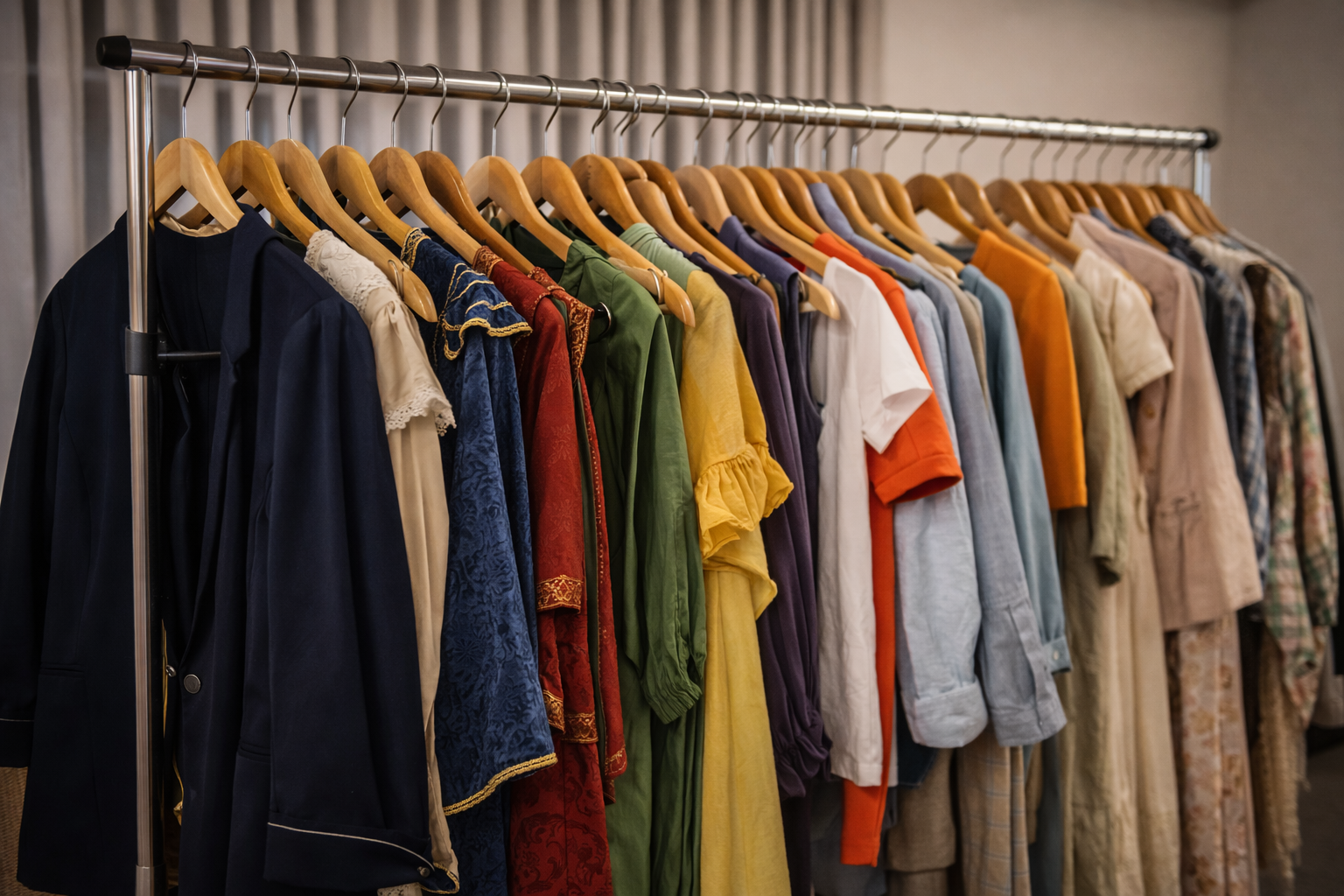
It stays with them not only because of what was said, but because of what the room taught them. It taught them that artistry might be available to others in a way it is not available to them. It taught them that their body could turn a theater professional impatient. It taught them that some people in the room view them as an inconvenience before they ever open their mouth, sing a note, or speak a line.
And because fittings are so physically and emotionally close, that harm lands hard.
A costume fitting is not abstract. It is literal. It is your body, right there, under scrutiny. It is someone pinning fabric near your chest, your waist, your hips, your thighs. It is your body becoming public in a way that can feel collaborative when trust is present and violating when it is not. That means the standard for respect should be higher, not lower.
This is one reason I have argued for education around costuming bodies of all shapes and sizes, not as some optional add-on, but as part of basic competency. At one point, after seeing a costumer engage in exactly the kinds of behavior I am naming here — the inappropriate comments, the harmful handling of body shape, the humiliating mismatch between measured reality and offered costume, the general cruelty of the process — I suggested workshops and training as a consequence before that person was allowed to work with actors again. The goal was not punishment for punishment’s sake. It was education. It was repair. It was an attempt to say: if you are going to be trusted with people’s bodies in this way, then you need to understand what your conduct is doing.
The response was to reinstate that person as if nothing had happened.
No meaningful learning. No real intervention. No visible reckoning. Just a return to access. A return to proximity. A return to the same environment where harm had already occurred.
And that, unfortunately, is its own theater pattern.
A person causes harm in a way that should prompt training, correction, deeper standards, maybe even a pause in access. Instead, the community absorbs it. Softens it. Treats it as awkwardness, temperament, stress, or a one-time issue. The harmed person is expected to move on. The institution congratulates itself for having endured conflict. And the person who caused the harm is restored to the room, often without enough change to justify the trust being returned to them.
That is not resolution.
That is re-exposure.
And when the setting is costuming, re-exposure matters deeply because the power dynamic is so specific. Costumers and costume staff are often working in close physical proximity to actors. They are handling vulnerable moments. They are asking for trust. They are helping shape how an actor feels in front of an audience. If they cannot approach bodies with respect, competence, imagination, and care, then they should not be given casual access to those bodies simply because the organization finds confrontation inconvenient.
This is not a matter of niceness. It is a matter of ethics and craft.
Because good costuming for larger or shapelier bodies is absolutely possible. Community theater can do it. Educational theater can do it. Professional theater can do it. It requires preparation, curiosity, a refusal to rely on lazy assumptions, and a willingness to fit the actual person instead of the body the designer perhaps wishes had shown up instead. It requires shopping and pulling with range in mind. It requires knowing how silhouette works on different frames. It requires understanding proportion without turning that understanding into cruelty. It requires asking what will make a performer feel supported, mobile, character-specific, and dignified.
Most of all, it requires abandoning the idea that some bodies are deviations from the real work.
They are the real work.
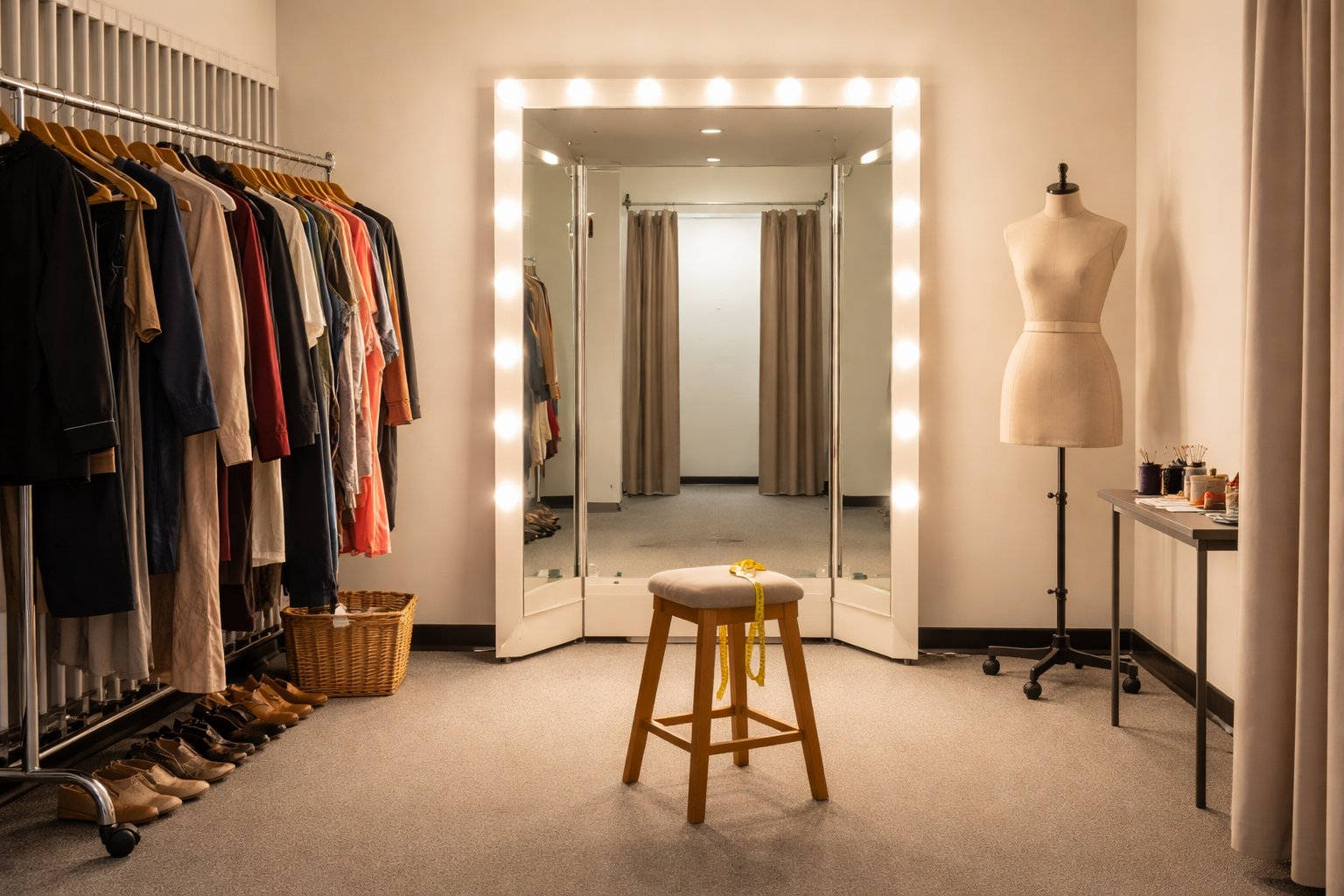
If you costume people, you costume people. Not just some people. Not just easy pulls. Not just bodies that resemble mannequins or arrive pre-approved by fashion. The job is not “dress the actor I hoped would walk in.” The job is costume the actor who is actually here.
Beautifully. Intelligently. Respectfully.
And to be clear, none of this means costuming is simple. It is not. Budgets are real. Stock is limited. Community theaters are often pulling from old inventories, volunteer labor, and time constraints that would make anyone sweat. But scarcity is not the same as permission to demean. A limited budget does not force a costumer to say “I don’t dress fat people.” A difficult pull does not force someone to humiliate an actor. A stock issue does not force someone to stop being precise. Constraint is real. So is choice.
I think sometimes theater people hide behind the practical difficulty of the work because it feels safer than admitting the bias underneath it. It is easier to say, “We did the best we could,” than to ask whether the best was shaped by contempt, laziness, panic, or a total lack of training in how to costume beyond a narrow body ideal.
But actors can feel when “the best we could do” is not actually the truth.
They can feel when the room gave up on them early.
The better path is not mysterious. Train people. Normalize body-respectful costuming practices. Teach designers and costume volunteers how to work across a full range of shapes and sizes. Make fittings private, respectful, and actor-centered. Encourage language that is practical without being dehumanizing. Build costume stocks with range in mind. And when someone causes harm, address it like it matters. Not because theater has become too sensitive, but because bodies have always mattered and some rooms are only just beginning to act like they know that.
There are costume professionals who do this beautifully. They make actors feel seen. They know how to build trust in a fitting room. They know how to shape a look without shaming a body. They know how to solve problems without making the actor wear the emotional cost of the solution. Those costumers deserve to be celebrated, because they remind us that this is not an impossible standard. It is a human one.
But the fact that good practice exists only makes the bad practice harder to excuse.
No actor should leave a fitting feeling like their body was the problem.
No actor should be outlined, oversized, dismissed, or demeaned because someone lacked the skill or generosity to costume them well.
And no theater should reinstate harm so casually that the next actor walks into the room carrying the cost of someone else’s refusal to learn.
The costume is not the problem.
The body is not the problem.
The problem is a theater culture that still too often treats certain bodies as if they are asking for too much simply by showing up to be dressed.
About the Creator
Jason Hair-Wynn
Theatre artist, director, choreographer, and arts leader writing on accountability, equity, and culture in the performing arts, with a deep belief in storytelling, truth, and spaces rooted in care. And some travel content along the way
Enjoyed the story? Support the Creator.
Subscribe for free to receive all their stories in your feed. You could also become a paid subscriber, letting them know you appreciate their work.
Comments
There are no comments for this story
Be the first to respond and start the conversation.