
Blunt Truths and Blind Spots
A Future Officer’s Quest for Empathy

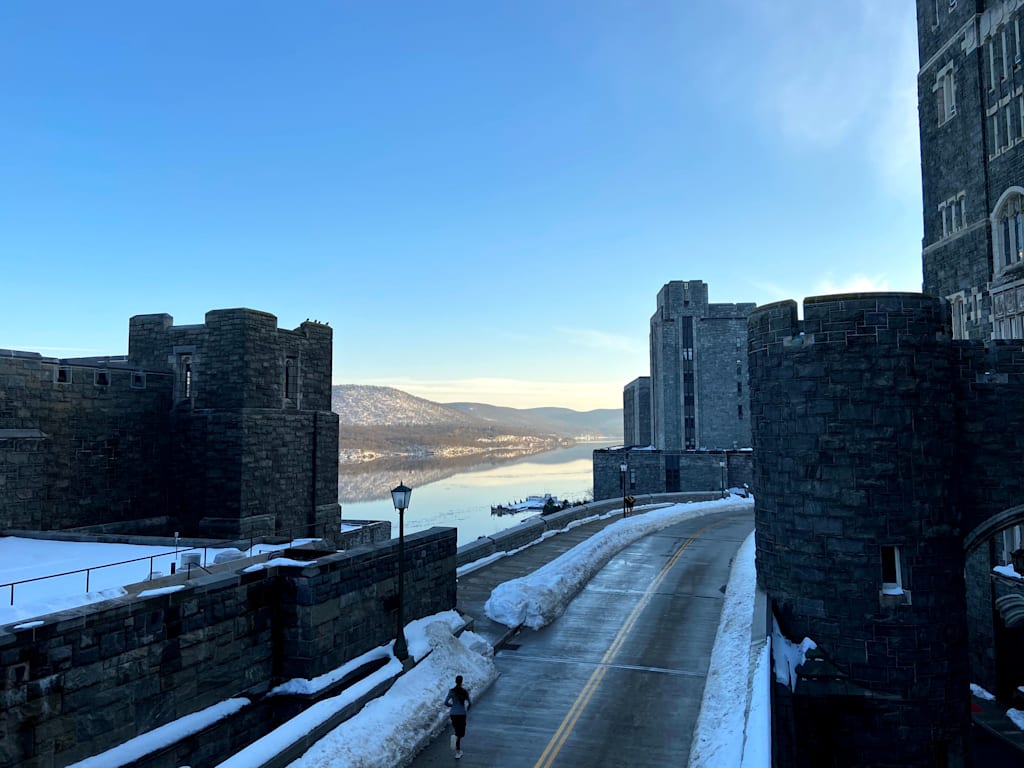
The future of Army Officership depends on bridging the widening civilian-military divide and overcoming institutional bureaucracy within the Profession of Arms. To tackle these macro-level organizational challenges, individual leaders must practice rigorous self-awareness by amplifying personal strengths like confidence and actively correcting flaws like a lack of empathy and excessive frankness - This article was written by me over four years ago, before my commissioning into the Army. It is interesting to reflect on what my thoughts were back then.
Individual Contributions to Organizational Challenges
The concept of Officership is all encompassing, it covers the profession that officers undertake, their leadership, and their moral standings and obligations of duty to one’s country. West Point’s primary objective is to commission roughly 1000 officers into the United States Army each year. In doing this, the institution strives to produce officers who exemplify every aspect of officership to set our Army up for success and lead the nation’s sons and daughters. The future of Army Officership is dependent on overcoming many challenges, which include the country’s weakened Civ-Mil Relationship and trying to maintain the standards that make up the Profession of Arms; in order to be ready to help tackle this task as an officer, I must hone in and amplify my strengths while also improving my weaknesses.
As the years go by in the 21st Century, the Civilian-Military (Civ-Mil) Relationship in the United States continues to stretch further apart. There are many reasons for this, the most blatant being the proportion of Civilians to Service Members (99.5% to 0.5%, respectively).0F Since so few people serve, it creates this level of uncertainty surrounding the military. Since the end of the draft in the 1970s, fewer people have had a family member or friend who has served. Similarly, those who have had family members serve are more likely to serve as well, therefore, creating a “family business” in the military. These factors also added to the divide and uncertainty. Civilian interpretation of this uncertainty can greatly affect the relationship. The military is often viewed as having a bellicose attitude and being authoritarian in nature. This means that people think the military seeks out conflict and thinks structure and order are greater than democracy. The same misconceptions can come from the military as well. Members of the military can get carried away in the idea that their profession, the profession of arms, is one of higher standards, integrity, and discipline than that of civilian society. Neither one of these mentalities is beneficial to the relationship. The one thing that binds the two together and keeps them in check is the civilian control of the military. Service members swear an oath to the U.S. Constitution and thereby serve under civilian leaders who represent the people. To close this gap from the military side, it is vital that officers make an effort to educate their subordinates on the importance of the Civ-Mil Relationship, inform their civilian neighbors and friends about the military, and be exceptional representatives of the profession.
The second greatest challenge for Army officers is maintaining the traditions and ideals of the Profession of Arms that was mentioned above. Having a small standing professional Army has been a part of American History for many years, but it was not until recently that the entire force became a volunteer force. Despite this, an ongoing challenge is maintaining this level of professionalism. The Profession of Arms is a field of expertise, attributes, behaviors, responsibility, and corporateness that all play towards service to the nation. However, it can only be called a profession if the members do and live by what was just listed. With that in mind, there is evidence that the Army and the entire military have begun to drift away from this idea of professionalism and are turning towards a bureaucratic occupation. In an article written by LTC Matt Cavanaugh, the co-founder of the Modern War Institute at West Point, he discusses multiple problems with today’s military. First, he stated that the current Army believes in a “willful suspension of judgment for the sake of bureaucratic rules.” This is because, it is easier to maintain control. The two byproducts of this are a “lack of effort” by individuals to study and perfect their craft and a “fear of disloyalty” if they think critically and speak up on issues. In order to protect the profession, it starts with the leaders. Officers need to be willing to move away from the comfortable bureaucratic routines and constantly be thinking of new ways to innovate and improve the organization. This will translate to their subordinates, peers, and hopefully superiors.
On a personal level, understanding my own strengths and how I can apply them to overcoming the challenges listed above is a significant part of being an officer in the United States Army. My first strength identified is my confidence as a leader. This has not always been a strength of mine and can still use some refining, but it has developed to the point where I can effectively make decisions and stand behind them. Through my Cadet experience, there were multiple times that I can identify as developing moments in my confidence. My growth in confidence happened when I was a Platoon Sergeant (PSG), my first semester Cow Year. It was the first real leadership position I was placed in, and I was paired with a very hands-off Platoon Leader. As a PSG, I had to speak up against my First Sergeant, who, on occasion, made some irrational calls. I quickly became confident discussing the issues I had with him in person and often served as the spokesperson for all the PSGs. In this position, I also developed the confidence to make corrections and enforce standards amongst my company. I began to understand the role of an NCO and exercised that role during my time as a PSG. The second instance of developing confidence came from my experiences in CLDT and CTLT at Fort Bragg. In CLDT, I strengthened my ability to give commands and be confident in my decision making. I understood that I had a competent level of tactical understanding, for a Cadet, which tied with collaboration with my peers can result in a decently run mission. As a result, I performed well when placed in leadership roles at CLDT. My confidence in CTLT allowed me to fit in and gain the respect of the enlisted soldiers.
Using the strength of confidence when I commission as an officer will not only make me an effective leader when performing my unit’s mission essential tasks but will also help me fight to maintain the Profession of Arms amongst my ranks. I can do this by speaking up to combat the bureaucratic norms that lead to a stagnant Army and striving to continually develop myself and those in my sphere of influence to live by the Army Profession. I also will not be afraid to correct those around me who are acting/living in conflict with the values and beliefs that make us professionals.
My second identified strength is presence. When I was a Plebe, presence was always a characteristic that I judged the upperclassmen by. Since that year I have strived to make a point to be present among my peers, my company, and my classmates in my major. In my company I have spent two semesters on the Spirit Staff in which I planned company events and raised unit morale. By being present, those in my unit can know who I am. If people see that I am there participating in whatever task with them, they trust and respect me more. In my classes, I try to be approachable for people to come up and talk to seek help. When trying to fix the Civ-Mil divide as an officer, using my presence to teach my Soldiers about the issue and how they play a part in fixing it will be vital. I can also do my part by being present in the community to be a good representative of the Army to the civilian population I interact with.
A large part of being an officer is being able to identify your weaknesses and striving to improve them through various techniques. Though there are many things that I have room to improve on, I identified two major weaknesses that I must overcome to help me face the future challenges of Army officership. The first weakness I have is that I sometimes lack empathy. It has been a problem that I have been aware of for some time and am consciously making efforts to improve, but I am nowhere near perfect. During the academic year, I have had past roommates that struggled with figuring out simple problems and completing easy tasks. My mindset was often not to help them and tell them to work through the problem and figure it out. I could not understand how someone couldn’t just use some problem-solving skills to get to a solution. Similarly, I had this mindset in most summer trainings when someone could not carry their weight or continually made mistakes that affected others. I just didn’t feel sorry for them. As a leader, I failed to attempt to put myself in their shoes and see the situation from their perspective. If I would have done this, maybe I could have attempted to work towards a resolution with them, instead of leaving my peers in the dust.
My second identified weakness is my excessive frankness. There have been multiple times when I have said what was on my mind without filtering it completely. On many occasions in my Cadet Career, a fellow cadet has said something that was not smart or told us to do something that made no sense at all. My responses were normally letting them know exactly what I thought. This action can be detrimental to my personal relationships and the social environment of the unit. Had I learned some of the techniques taught in MX400 for how to deal with bad calls from leaders, maybe I would have had a different outcome.
After being able to recognize and identify my major weaknesses, I can apply the Leader Growth Model to these experiences to improve myself and become a “more self-aware leader.” Over time, through challenging experiences and knowledge gained, I can begin to develop myself as a leader. In the Leader Growth Model, I am currently in the reflection section. I have identified personal weaknesses and am creating methods to overcome them to improve my character. However, this does not mean that while doing this, I cannot continue to seek new lessons and endure more developmental experiences. To combat my weakness of lacking empathy, I have been making a conscious effort to try and talk to people that I do not resonate and attempt to understand them. I have also discussed this issue with an instructor of mine, LTC Cristian Robbins. He recommended Talking to Strangers: What We Should Know About the People We Don’t Know, which I will read this semester. To overcome my weakness of being too frank at times when I should not be, I need to be more cognizant of the situation I am in. Last Semester, my TAC, CPT Allison McKearn, helped me understand when and where not to speak my mind and the positives and negatives in doing so. In the end, I believe that I am prepared to become a member of the Officer Corps and contribute to overcoming the challenges officership faces. I must not forget that I am strong in some areas, while weak in others, and must continually strive to improve myself.
Bibliography
ADP 6-22, Army Leadership and the Profession, July 2019.
Cavanaugh, Matthew. “The Decay of the Profession of Arms.” Best Defense. accessed February 2, 2022. https://foreignpolicy.com/2014/01/08/the-decay-of-the-profession-of-arms/#:~:text=Defense%20guest%20columnist,The%20Profession%20of%20Arms%20is%20decaying%20(weakening%20or%20fraying%20%E2%80%94%20as,and%20a%20creeping%2C%20cancerous%20bureaucracy.&text=the%20international%20system.,The%20members%20of%20the%20Profession%20of%20Arms%20are%20the%20custodians,knowledge%20that%20enables%20national%20survival.
CDT Packard, Austin. C-2 1SG. CDR. AY 2021-1.
CPT Ripperger, Matthew. 307th BEB, 3 BCT, 82nd ABN Div., CTLT OER, June 11, 2021.
Huntington, Samuel. The Soldier and the State: The Theory and Politics of Civil-Military Relations. (1957, Harvard University Press). https://doi.org/j.ctvjf9wx3.7.
LTC (R) Jones, David. MX400 Class Lesson (Lesson 8). January 25, 2022.
MAJ Ng, Andrew. GENE. PDR. AY 2022-1.
SFC Cox, Dain. BTD. PDR. AY 2021-1.
Swain, Richard & Pierce, Albert. The Armed Forces Officer. (2017, National Defense University Press). https://ndupress.ndu.edu/Portals/68/Documents/Books/AFO/Armed-Forces-Officer.pdf.
“The Military-Civilian Gap: Fewer Family Connections,” Pew Research Center, accessed February 1, 2022, https://www.pewresearch.org/social-trends/2011/11/23/the-military-civilian-gap-fewer-family-connections/.
USMA. Developing Leaders of Character: The West Point Leader Development System. 2018.
About the Creator
Sam Shroyer
I am an active-duty Engineer Officer in the US Army with a BS in Environmental Engineering from West Point. My previous positions include the following:
- Assistant Training Officer
- Sapper Platoon Leader
- Company Executive Officer
Enjoyed the story? Support the Creator.
Subscribe for free to receive all their stories in your feed.
Comments
There are no comments for this story
Be the first to respond and start the conversation.