
Before You Buy a Washlet, Measure These Three Things
Bowl shape, a power outlet and a water line — the three unglamorous measurements that decide whether a bidet seat ever fits your bathroom.
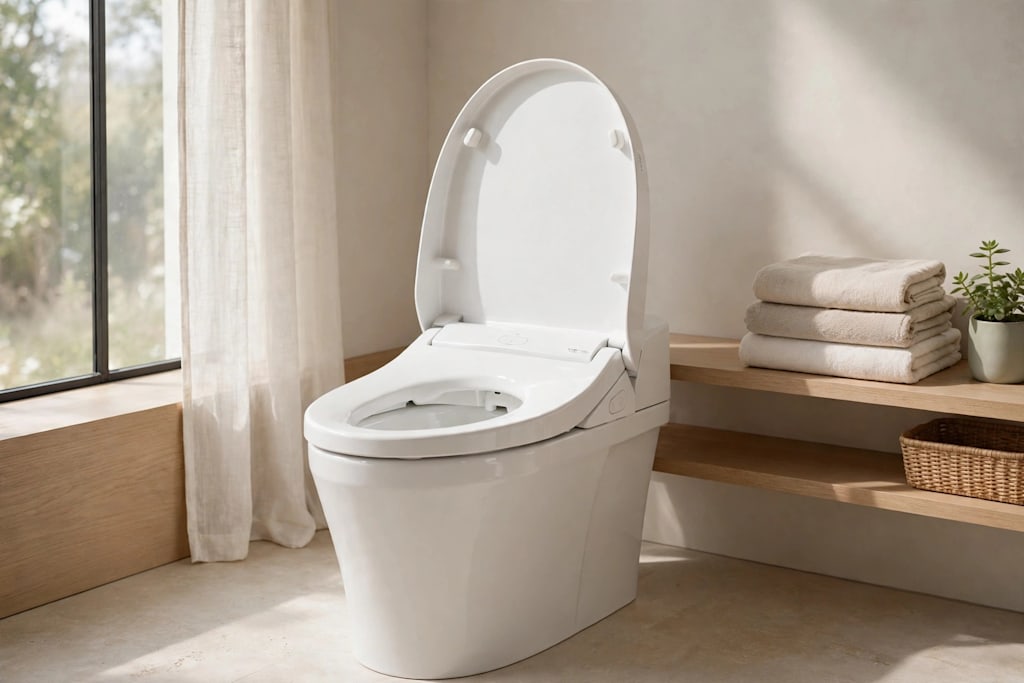
Disclosure: I write from Japan and check Japanese sources and official announcements for the stories I publish. This article was drafted with AI assistance and reviewed and fact-checked by me.
In an earlier story, I wrote about the Japanese baseball stars who treated a bidet seat as non-negotiable. Behind those stories sits a plain statistic: roughly 80% of Japanese households have a washlet, while adoption in the United States is still around 3%.
That story was about why people want one. This one is about the unglamorous reason some of them end up sending it back.
Bidet seats rarely fail on features. They fail on measurements. A washlet is not a universal-fit accessory; it is an appliance, and like any appliance it has to match the room it lands in. It must suit a specific bowl shape, reach a power outlet, and connect to your existing water supply. Three checks, ten minutes, one tape measure. Done before you order, they are the difference between a one-afternoon install and a return shipment.
Measurement one: the shape of your bowl
This is the check buyers skip, and it is the one that cannot be fudged. Bidet seats come in two shapes, elongated and round, and a seat built for one will not sit correctly on the other. It overhangs. It shifts. It never feels bolted down, because it isn't.
You don't need to know what your toilet is called. You need one measurement: from the centre of the two mounting bolt holes behind the seat to the front outer edge of the bowl. Elongated bowls measure roughly two inches longer on that line than round ones. Most modern US toilets are elongated. Round bowls are the older standard, still common in small bathrooms and older homes — exactly the bathrooms many buying guides forget exist.
Measure first, and the bewildering catalogue sorts itself. Half of it was never going to fit your toilet at all.
Measurement two: the outlet
A washlet is a powered appliance. Heated seat, heated water, dryer — all of it runs on electricity, and the cord is not long. So the second measurement is from your toilet to the nearest outlet. If the seat cannot reach power without a cable stretched across the room, you don't have an installation. You have a project.
Two practical points. First, the outlet should be GFCI-protected — the ground-fault type standard in US bathrooms — because this is an electrical appliance that works next to water. Second, treat an extension cord as a temporary test, never a permanent solution. If the only outlet is by the sink, across the room, the honest options are an electrician's visit or a rethink, and it is far better to know that before the box arrives.
Every seat needs the outlet, but the high-end ones need it most: seats that heat water instantly and continuously, instead of reheating a small tank between uses, draw power the whole time. No outlet near the toilet, no deal. Check the power before you fall for the features.
Measurement three: the water line
The good news: a bidet seat needs no new plumbing. It taps into the same supply line that fills your toilet tank, splitting the flow between the tank and the seat. The check is simply that your supply line and shut-off valve are reachable and in decent shape. If that valve hasn't moved in a decade and has corroded shut, it is a pre-existing condition worth discovering on a dry Tuesday, not mid-install.
This connection is also where the question of regional spec stops being abstract. Fittings and threads are plumbing standards, and plumbing standards are national. A seat built for the American market connects to American fittings, runs on American power and carries an American warranty. A Japanese domestic model is built for Japan's 100V supply and Japanese fittings, with no US warranty at all. That is the entire reason US-spec versions of these seats exist: so that measurement number three becomes a non-event.
The pre-purchase checklist
Tape measure out. Before ordering any bidet seat, confirm:
Bowl shape — bolt holes to front edge measured; elongated or round decided
Outlet — GFCI-protected and within the seat cord's reach; no permanent extension-cord plans
Water supply — shut-off valve reachable, working, and a line you can get a wrench on
Spec — the version made for your country's plumbing, not a Japanese domestic unit
Four lines, and everything after them — remote or side panel, tank-style or instant heating, automatic lid or not — is preference, and preference is the fun part. Get the measurements right and the seat fits your bathroom. Get them wrong, and the best seat in the world is a return label.
If this story made you think, a heart helps other readers find it — thank you for reading.
About the Creator
JIM | Japan Finds
From Nagoya, Japan. I write about the three Japanese products the world is quietly obsessed with — washlet bidet seats, Japanese kitchen knives, and real Uji matcha — checked against Japanese sources and domestic prices.
Enjoyed the story? Support the Creator.
Subscribe for free to receive all their stories in your feed.
Comments
There are no comments for this story
Be the first to respond and start the conversation.