
10,000 People Are in Line for One Blacksmith's Knives. The Wait Is Three Years.
One Echizen blacksmith, 10,000 waiting customers, and a craft the world discovered faster than it can be taught — reported from Japan.
Disclosure: I write from Japan and check Japanese sources and official announcements for the stories I publish. This article was drafted with AI assistance and reviewed and fact-checked by me.
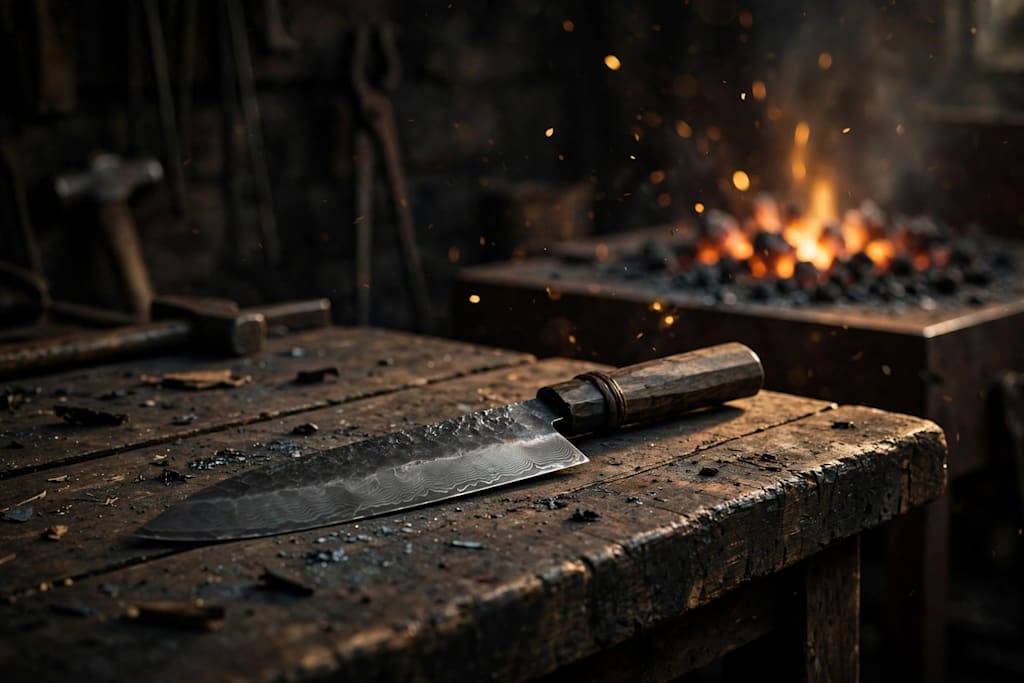
In Echizen, a blade-making city in Japan's Fukui Prefecture with a 700-year hammered-steel tradition, blacksmith Yu Kurosaki makes kitchen knives one at a time. According to Japanese craft media nihonmono, his order book holds roughly 10,000 reservations, and if you joined the queue today, your knife would arrive in about three years.
Eighty percent of his orders now come from outside Japan. The people waiting aren't collectors alone — they're working chefs in French, Spanish and Japanese kitchens, including Michelin-starred ones, on several continents.
One man. One forge. A three-year line.
The world found Japan's knife towns all at once
Japan's blade regions — Echizen, Sakai, Seki, Sanjo — spent centuries making first swords, then the kitchen knives that inherited the same steels and skills. For most of that history they served Japanese professional kitchens, quietly.
Then, in the space of a few years, the world's chefs converted. AFP reported Japan's exports of kitchen blades hitting a record ¥12 billion (about $90M) in 2021, up roughly 30% in a single year, with makers in Seki running at full capacity and still saying "we can't keep up." A Michelin-starred French chef in Tokyo told them he'd been a devotee for more than two decades.
The reasons chefs give are mechanical, not mystical. Japanese kitchen knives use harder steel (typically HRC 60–63, against roughly 56–58 for mainstream Western knives), ground thinner at a more acute angle. Harder and thinner means a keener edge that stays keen — and it also means the knife is a precision instrument with rules: no dishwasher, no twisting on bone, sharpen on a stone, not a honing rod. Chefs accept the rules because the cut is worth it. Home cooks discovered the same trade during the pandemic cooking boom, and they haven't gone back.
The supply side has a hole in it
Demand arrived in years. Supply is built in decades.
In Beverly Hills, Jon Broida of Japanese Knife Imports — a shop American sushi chefs treat as a landmark — describes the gap plainly: when interest in handmade knives was waning, workshops stopped taking apprentices because the future looked bleak. Then the foreign boom hit. "Now people are busy again, but there's a large gap," he says. Some craftsmen working today have no successor. "When they're gone, they're gone."
That's the real story behind Kurosaki's queue. It isn't marketing scarcity. It's arithmetic: a master can finish only so many blades, the generation behind him is thinner than the one behind his master, and the world's order book tripled while nobody was watching.
Two tiers, and a lesson in telling them apart
Japan's knife industry has two tiers. The forge tier — Kurosaki and his peers — is one craftsman, tiny output, collector prices, waiting lists. The workshop tier is the established makers in the same blade towns, using the same steel families and the same thin grinds, at factory scale. It's what most Japanese professional kitchens actually cook with.
The hype wants you to believe only the first tier is real. The second tier is where the craft quietly lives day to day — and learning to tell a genuine knife from either tier apart from an imitation is a small education in itself. Real Japanese makers print the steel and its hardness on the blade or the box. Imitations sold as "Japanese-style" print neither. If a listing won't tell you the steel and the hardness, it has told you everything.
Bottom line
Somewhere in Fukui, 10,000 people are waiting three years for one man's knives, and the masters behind him are retiring faster than apprentices arrive. The queue is not a marketing trick; it's a census of a craft that takes a decade to learn and a lifetime to master, meeting a world that all decided to want it at once.
So the real question isn't whether Japanese knives are worth it. It's whether this quality will still exist to buy in ten years. The blacksmiths' order books suggest an answer. Tell me in the comments — have you ever held a knife that made you understand the wait?
If this story made you think, a heart helps other readers find it — thank you for reading.
About the Creator
JIM | Japan Finds
From Nagoya, Japan. I write about the three Japanese products the world is quietly obsessed with — washlet bidet seats, Japanese kitchen knives, and real Uji matcha — checked against Japanese sources and domestic prices.
Enjoyed the story? Support the Creator.
Subscribe for free to receive all their stories in your feed.
Comments
There are no comments for this story
Be the first to respond and start the conversation.