ComedyWriting
Brahma Rakshasa and Fear: The Paradox of Knowledge and Torment
Brahma Rakshasa and Fear: The Paradox of Knowledge and Torment The concept of the Brahma Rakshasa finds its origins in Indian mythology, weaving a complex narrative about fear, knowledge, and the consequences of untamed ambition. A Brahma Rakshasa, as described in ancient Hindu texts, is a learned soul who, despite attaining immense knowledge of the Vedas and scriptures, falls prey to arrogance or fails to pass on his wisdom selflessly. As punishment, he is cursed to exist as a Rakshasa—a demonic entity. This being, who once embodied enlightenment, now roams the earth in a state of torment, consumed by an eternal struggle between wisdom and his monstrous form. The story of the Brahma Rakshasa is a deeply symbolic one, offering a profound exploration of fear, regret, and redemption. At its core, it asks us to reflect on the nature of fear and how even those who possess knowledge and power can be overwhelmed by the dread of unfulfilled duty and isolation. The Duality of the Brahma Rakshasa To understand the emotional depth of a Brahma Rakshasa, we must first appreciate the duality that defines him. Once, he was a Brahmin—a scholar revered for his wisdom and mastery of the sacred texts. Yet, despite his knowledge, he is cursed to become a Rakshasa, a being feared and shunned by society. This transition from a respected figure to a feared demon represents a fall from grace, one that carries immense emotional weight. The curse of the Brahma Rakshasa reflects the deep fear that even the most learned can face—fear of isolation, of being misunderstood, and, most importantly, fear of failing to fulfill their responsibilities. For the Brahma Rakshasa, the torment is not just in his monstrous form but in the knowledge that he once had the power to uplift others, but failed. Now, in his cursed existence, he is driven by an insatiable hunger to recite and share the knowledge he once hoarded, yet his demonic nature ensures that his words fall on deaf ears, and he remains trapped in a cycle of loneliness and regret. Fear as an Emotional Consequence The fear that haunts the Brahma Rakshasa is not the ordinary fear of physical harm or death but a profound existential dread. It is the fear of irrelevance, of being forgotten despite once holding the power to shape the minds of generations. This fear is one that resonates with many of us in our own lives. Consider the example of a teacher who, after decades of imparting knowledge, retires with the hope that their wisdom will continue to influence the world. Yet, as time passes, they realize that their teachings are fading, and the fear of being forgotten sets in. This fear, much like that of the Brahma Rakshasa, stems from the knowledge that while they had the opportunity to make a lasting impact, they may not have done enough. Similarly, many of us fear that our efforts, our knowledge, and our contributions may one day be rendered meaningless. The Brahma Rakshasa embodies this fear, reminding us that knowledge without selflessness, wisdom without humility, leads not to fulfillment but to torment. Fear of Redemption Another layer of fear that defines the Brahma Rakshasa is the fear of redemption. While cursed, the Brahma Rakshasa has the chance to redeem himself by passing on his knowledge selflessly. However, the fear that he may never find a willing listener or that his words may never have the impact he desires keeps him in a state of emotional paralysis. This fear of redemption is mirrored in the lives of many who seek forgiveness or a second chance, but are haunted by the fear that they may never be able to undo their past mistakes. For instance, a parent who has neglected their child in their early years may, in their later years, seek to rebuild that relationship. Yet, the fear that their efforts may be too little too late keeps them from trying, trapping them in a cycle of regret, much like the Brahma Rakshasa. The emotional weight of this fear is immense. It reflects the human tendency to cling to the past, to let fear of failure prevent us from seeking redemption. The Brahma Rakshasa, despite his vast knowledge, is a slave to this fear, reminding us that even the wisest can be crippled by the fear of facing their mistakes. The Role of Humility in Overcoming Fear At the heart of the Brahma Rakshasa’s tale is a lesson about the power of humility. His curse is a result of his arrogance—his belief that his knowledge set him apart from others and entitled him to hoard it. In this way, the story serves as a cautionary tale about the dangers of pride and the importance of sharing wisdom selflessly. Humility is what ultimately allows the Brahma Rakshasa to seek redemption. By recognizing that his knowledge is not his alone to keep, he can begin to free himself from his curse. However, the fear of being rejected, of being seen as nothing more than a demon, often keeps him from fully embracing this path. In our own lives, humility is often the key to overcoming fear. By acknowledging our limitations and the role that others play in our growth, we can move beyond the fear of failure and isolation. The Brahma Rakshasa’s journey reminds us that wisdom is not a solitary pursuit but one that is meant to be shared, and in doing so, we can find peace and fulfillment. Conclusion: The Legacy of the Brahma Rakshasa The Brahma Rakshasa is a deeply emotional figure, embodying the fear that even the most learned among us can face—the fear of being forgotten, of failing to fulfill our potential, and of being unable to redeem ourselves. His story serves as a reminder that knowledge alone is not enough; it must be tempered with humility, compassion, and a willingness to serve others. In the end, the Brahma Rakshasa’s curse is not just a punishment but an opportunity for growth. His fear, while overwhelming, is also a catalyst for change, pushing him to seek redemption and reminding us that it is never too late to overcome our own fears and strive for a life of purpose and meaning. Like the Brahma Rakshasa, we may all face moments of fear and regret. But if we can learn from his story, we can find the strength to confront those fears with humility and grace, ensuring that our legacy is one of wisdom, service, and lasting impact.
By Dipak Pawar2 years ago in Humor
And Then I Woke Up
As a boy, I believed that the most unfortunate gladiators were chosen to battle with beasts, and that the most fortunate were chosen to battle other gladiators. To face off against another human is a fair fight. Unlike the bear, he does not have claws that could rip off your whole face with one swing. Unlike the hyena, he does not have jaws that could snap your spine in one bite. He has a weapon, but so do you, and so none of you have an advantage. You are equals.
By Wen Xiaosheng2 years ago in Humor
10 Best Comedy Novels That Will Make You Laugh Out Loud
Laughter is a universal remedy, and comedy novels are the perfect antidote to life’s stresses. They allow us to escape into humor-filled worlds, quirky characters, and ridiculous situations. If you’re looking to lighten your mood, you’re in for a treat! Here’s a list of the best comedy novels that promise to bring joy and laughter to your reading experience.
By roberto andreas2 years ago in Humor
I’m Putting on My Nicest Boxers Today!. Top Story - October 2024.
It’s 9.00 a.m. on Monday morning. It’s raining hard. I’m outside the back door, coat on, hood up. I’ve got the blue recycling bin tipped up at a 45-degree angle and my head and shoulders are deep inside it.
By Brendan Donaghy2 years ago in Humor
The hero animals
Frog Sometime in the distant past, in a lake settled somewhere down in the woods, carried on with a frog named Freddie. Freddie dislike different frogs in the lake. He was more modest and more vulnerable, and his voice was not as clearly or as thunderous as the others. Different frogs frequently ridiculed him, calling him powerless and useless.
By nadia khanom2 years ago in Humor
The Great American Debate A Tragedy of Errors
Quirkville was a sleepy little village near the centre of political pandemonium as the 2024 election season went into full swing. That was the general consensus amongst the residents of Quirkville, anyways —each of its many occupants going about their daily lives in a similar 'out-of-the-box' way that made Quirkville one unique place to live. This year, they held a series of candidate debates in the American presidential race, hoping to spice up the usual bland political events.
By Nazmul Hossain2 years ago in Humor
Humor for Tough Times
In life’s most challenging moments, when everything seems heavy and dark, humor can be a guiding light. It’s a universal balm, a way to cope, and a reminder that even in the toughest situations, there’s room for laughter. As I reflect on my own experiences, I recognize how laughter has become a vital tool for resilience, helping me navigate difficulties with a lighter heart.
By Horace Wasmore2 years ago in Humor
The Unfortunate Tale of a Now Extinct Animal
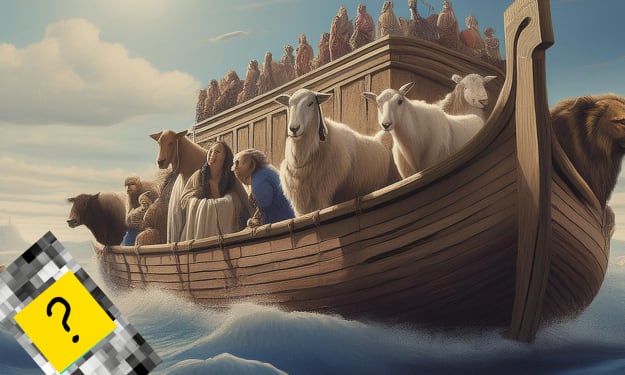
"Aww, come on!" Noah moaned as he let go of the rope to quickly snatch together his robe that just went RIPPP. His struggle was evident in his frustration. Loading animals two-by-two into an ark had been challenging. The last pair had proven the most difficult—the Farknuckle. A rare breed that's now extinct. You'll soon see why.
By Ryan DeJonghe2 years ago in Humor